Walking Up Sharp-Tailed Grouse in Saskatchewan
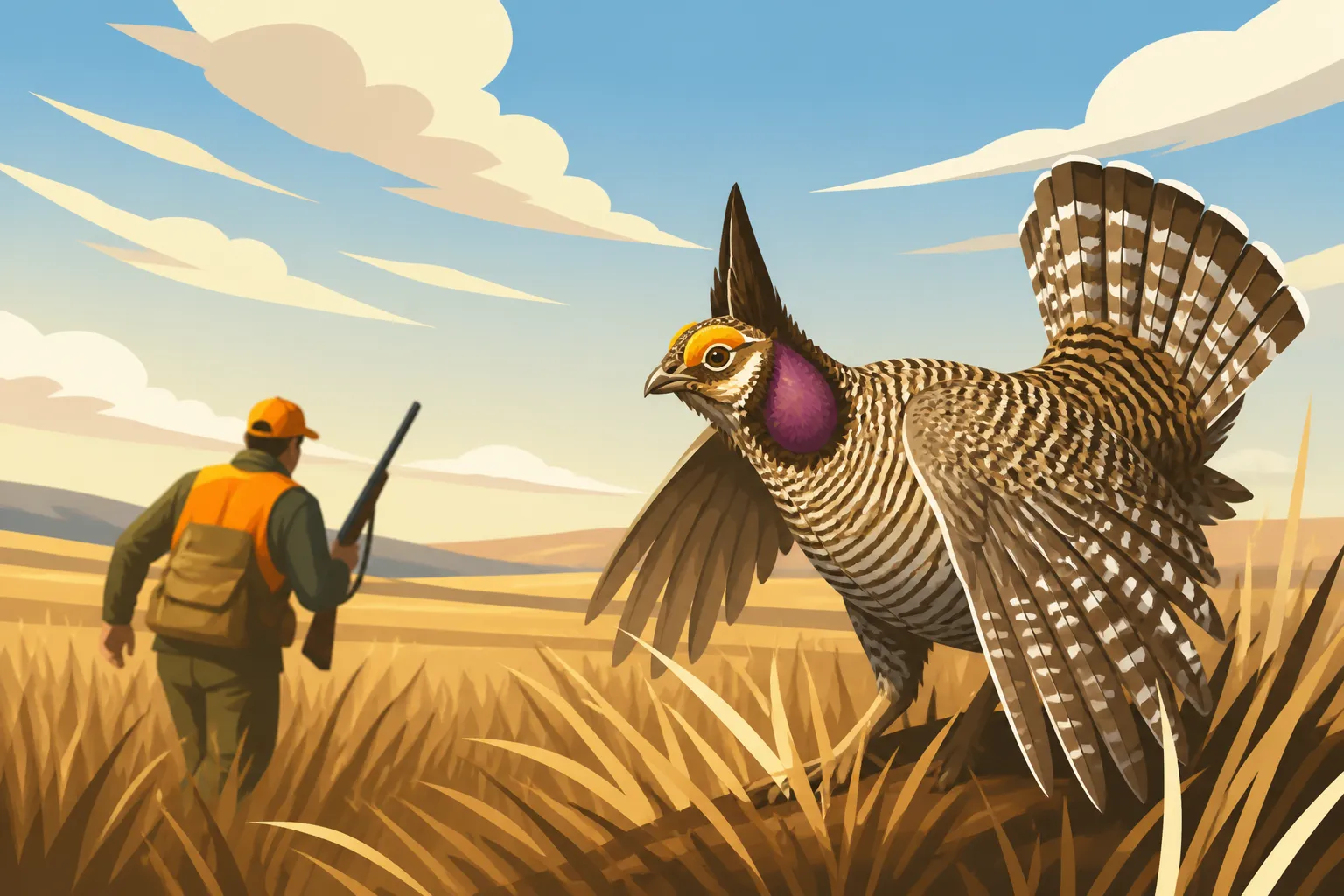
There’s nothing quite like the sudden, explosive flush of a sharp-tailed grouse from underfoot. One moment, you’re slowly picking your way through a patch of native prairie, feeling the crisp fall air on your face, and the next, a cacophony of beating wings and cackling birds sends your heart thumping. It’s a moment that gets seasoned hunters every single time. But let's be honest, finding those elusive sharptails in the vastness of Saskatchewan can feel like searching for a needle in a haystack. This guide is all about demystifying the walk-up hunt for sharp-tailed grouse, helping you understand their habitat, behavior, and how to put yourself in the best position for success.
Understanding Saskatchewan's Sharp-Tailed Grouse
Before you even think about lacing up your boots and heading afield, it's crucial to understand the very creatures you're pursuing. Sharp-tailed grouse are a quintessential prairie bird, intimately tied to the diverse landscapes of Saskatchewan. They're not just random targets; they have preferences, patterns, and habits that, once understood, can dramatically increase your chances of finding them.
Habitat Preferences and Cover
Sharp-tailed grouse thrive in a mosaic of environments, primarily native grasslands interspersed with brushy cover. Think of it as a perfect blend of open spaces for feeding and thicker vegetation for roosting, loafing, and escaping predators. You'll often find them favoring areas where tall grasses like wheatgrass, fescue, and bluestem mix with shrubby growth such as Saskatoon berry, silverberry, or willow thickets. These aren't just pretty places; they provide essential food sources in the form of seeds, buds, and insects, as well as crucial thermal and escape cover.
In Saskatchewan, this often means focusing your efforts on upland prairie, river breaks, and the edges of agricultural fields where native cover hasn't been completely converted. Look for those draws and coulees that cut through the open land – these are natural travel corridors and often hold pockets of dense brush that sharptails absolutely love. Even a small, overgrown fence line or a bluffy patch of aspens within a larger pasture can concentrate birds. They are masters of blending in, and that thick, diverse cover is their fortress against predators like coyotes and hawks. A great resource for a broader understanding of where to focus your efforts is our guide on Upland Bird Hunting in Saskatchewan.
Seasonal Behavior and Movement Patterns
Sharptail behavior shifts throughout the year, largely dictated by food availability, breeding cycles, and predator pressure. While we’re primarily concerned with the fall hunting season, knowing their year-round rhythms helps us predict their fall movements.
In the spring, sharptails gather at traditional lek sites – open areas where males perform elaborate courtship dances to attract females. While these leks aren't hunted, their presence confirms active populations in the surrounding area. By late summer, broods begin to disperse, and as fall approaches, birds start to gather into larger coveys, sometimes numbering dozens. This is when the hunting really kicks into gear.
During the early fall, sharptails are often found in grain fields, especially stubble fields of wheat, barley, or canola, where they feed on waste grain. As the season progresses and crops are harvested, they'll often retreat to denser, brushier cover during the day, moving out to feed during the early morning and late afternoon. Weather plays a huge role here; a cold snap or a fresh snowfall might push them into thicker evergreens or deeper willow bottoms for shelter, making them even harder to flush. Understanding these movements is key to successful walk-up hunting, as it helps you decide when and where to focus your efforts.
Scouting for Success
You wouldn't head out to hunt big game without scouting, and the same principle applies to sharptails. While a spontaneous walk-up hunt can be exhilarating, a bit of pre-season or even pre-hunt scouting significantly boosts your odds. It's about looking for the right terrain and knowing how to read the subtle clues the birds leave behind.
Identifying Prime Sharptail Country
The first step in scouting is identifying areas that scream "sharptail habitat." This typically means land with a good mix of tall native grasses, interspersed with brushy draws, shelterbelts, and the edges of cultivated fields. Using a powerful mapping tool like GoHunt can be incredibly beneficial here. You can pour over satellite imagery, identifying those crucial habitat transitions – where a golden stubble field meets a rugged native pasture, or where a deep coulee winds through otherwise open country. Look for irregular field edges, abandoned farmsteads, or areas marked as "native prairie" or "rangeland." These tools help you visualize the landscape before you even step foot on it, allowing you to mark potential hot spots for later investigation.
Don't just look for uniformity; look for variety. Sharptails love edges and transitions. A long, narrow bluff separating two grain fields, or a wide, grassy and brushy buffer zone along a river valley, can be prime real estate. Local knowledge from farmers or long-time residents is invaluable, too. They often know where the "birdy" spots are, having observed them for years. Consider also the proximity to water sources, especially during dry periods, as birds will gravitate towards slough edges or dugouts for water.
Reading Sign and Fresh Activity
Once you've identified potential areas on a map, it's time for boots-on-the-ground reconnaissance. Sharptails, like all wildlife, leave behind clues. Learning to read these signs is like listening to their secret language.
- Tracks: In dusty farm lanes, sandy areas, or even light snow, you can often find their distinctive three-toed tracks. Look for areas with a concentration of tracks, indicating recent activity.
- Droppings: Sharptail droppings are generally small, dark, and often have a whitish cap. Finding fresh droppings, particularly under favored roosting shrubs or along feeding routes, is a strong indicator that birds are using the area.
- Dust Baths: Sharptails love to take dust baths, especially in sandy or fine-soiled areas. These depressions, often saucer-shaped and about the size of a dinner plate, will have fine dust and possibly a few loose feathers.
- Feathers: While not always indicative of fresh activity, finding shed feathers can tell you that sharptails are present in the general vicinity. A patch of feathers with down might even suggest a predator kill, indicating a specific threat or travel route.
- Roosting Circles: After a fresh snowfall, sharptails will often leave circular patterns in the snow where they've burrowed down for the night. These are clear signs of recent overnight use and can guide you to their preferred roosting cover. Our guide on Reading Sign After Fresh Saskatchewan Snow provides excellent context for this kind of tracking.
The freshest sign will always be found in areas where birds feel safe – often denser cover where they spend the midday hours. Focus your scouting efforts there, but also check feeding areas like stubble fields in the mornings and evenings.
The Art of the Walk-Up Hunt
Once you've done your homework and found some promising ground, the real fun begins: the walk-up hunt. This isn't a sit-and-wait game; it's an active, engaging pursuit that requires stamina, keen observation, and a good understanding of how to move through the landscape.
Strategies for Still-Hunting and Flushing
The essence of walking up sharptails is a slow, deliberate pace. This isn't a race. You're not trying to cover as much ground as possible, but rather to thoroughly work promising cover. Think of it as a methodical grid search, always aware of where a bird might be holding tight.
- Work into the Wind: Always try to hunt into the wind. This is crucial for two reasons: it carries your scent away from the birds, making it less likely they'll flush prematurely, and it helps you hear the subtle sounds of flushing wings over the rustling grass.
- Zig-Zag and Pause: Instead of walking in a straight line, move in a zig-zag or serpentine pattern through the cover. This allows you to approach birds from different angles and can often induce a flush from a bird that might otherwise let you walk right past. Incorporate frequent pauses – sometimes a bird will hold until it thinks you've passed, only to flush when you stop.
- Target the Edges: Sharptails love edges. Focus your efforts on the transition zones between different types of cover: where tall grass meets short grass, where a brush line borders a field, or along the edges of a coulee. These are prime locations for them to feed, loaf, and seek refuge.
- Vary Your Pace: Don't be predictable. Mix up your slow, methodical pace with short bursts of speed, especially when approaching particularly dense cover. Sometimes that sudden burst can trigger a flush.
- Be Ready: Above all, always be ready. Your gun should be carried in a safe but accessible position, and your eyes should constantly scan the ground ahead, looking for any subtle movement or shape that doesn't belong.
Utilizing Dogs in Sharptail Hunting
While many hunters successfully walk up sharptails without a canine companion, a good bird dog can be an absolute game-changer. Dogs bring a whole new dimension to the hunt, covering ground more efficiently, finding birds you'd otherwise miss, and most importantly, helping retrieve downed birds in thick cover.
- Pointing Dogs: Breeds like German Shorthaired Pointers, English Pointers, Brittanys, and Setters are incredible for sharptails. Their ability to scent a bird from a distance and "lock up" on point allows the hunter to approach methodically, anticipating the flush. This can lead to safer, more controlled shots. The dog covers the ground, finds the scent, points, and then the hunter moves in for the flush. Our article on Using a Pointing Dog on Saskatchewan Prairie dives deeper into this specific approach.
- Flushing Dogs: Labs, Springers, and other flushing breeds are also excellent. While they don't point, their natural inclination to quarter and work cover systematically will push birds out. The key with a flushing dog is to stay close and be prepared for a sudden, unexpected flush. They excel at busting dense cover that a solo hunter might struggle to penetrate effectively.
- Benefits: Beyond finding birds, dogs are invaluable for retrieval, especially in tall grass where a downed bird can vanish instantly. This not only prevents wasted game but also respects the animal.
- Challenges: Hunting with a dog requires training and conditioning. Sharptail hunting often involves long miles in potentially hot, dry conditions, so your dog needs to be in shape and hydrated. Controlling a dog in open country where birds might run or flush wild can be a challenge, requiring solid obedience training. GoHunt can also be useful here for marking water sources for your dog.
Effective Shot Placement and Gear
When a sharptail flushes, the action is fast. These birds are strong flyers and can quickly put distance between you and them.
- Shot Size and Choke: For sharptails, most hunters opt for a 12 or 20 gauge shotgun. Shot sizes typically range from 7.5 to 6. Early in the season when birds are holding tighter, 7.5 can be effective, but as they get wilder or if you're expecting longer shots, 6 shot offers a bit more punch. For chokes, Improved Cylinder (IC) or Modified (Mod) are usually ideal, providing a good pattern density at typical flushing distances. A double barrel with one barrel choked IC and the other Modified is a versatile choice.
- Footwear and Clothing: This is a walking hunt, often covering many miles over uneven terrain. Comfortable, supportive hiking boots are non-negotiable. Look for boots with good ankle support and waterproof membranes. Dress in layers, as fall temperatures in Saskatchewan can swing dramatically. Blaze orange is required by law and is crucial for safety, ensuring you're visible to other hunters. Carrying enough water is also critical, especially if you're bringing a dog.
- Navigation and Safety: Always carry a compass and a reliable GPS device or a smartphone with a hunting app like GoHunt. Even seemingly open prairie can be disorienting. A small first-aid kit, a knife, and a way to signal for help are also wise additions. For detailed safety information, you might refer to Saskatchewan Hunter Education Requirements.
Navigating Permission and Access
One of the biggest hurdles for any hunter in Saskatchewan, especially for bird hunters looking to walk large tracts of land, is gaining access. Much of Saskatchewan's productive farmland and prime grouse habitat is privately owned.
Obtaining Private Land Access
The good news is that many landowners are receptive to ethical hunters, especially for upland birds, which are less impactful than big game. The key is respect and communication.
- Knocking on Doors: This is the most effective method. Drive the rural roads in areas you've identified as prime habitat and politely knock on doors. Introduce yourself, explain what you're hoping to hunt, and ask for permission. Be prepared to show your licence and Habitat Certificate.
- Be Respectful: Always respect "No Hunting" or "Posted" signs. Never assume access. If permission is granted, clarify boundaries, ask about livestock, and confirm any specific requests the landowner might have (e.g., stay out of certain fields, drive slowly).
- Build Relationships: If you have a good hunt, offer to share some game or even help with a chore around the farm. A small gift or thank you note can go a long way in securing future access. Building these relationships is not just about hunting access; it's about being a good neighbor in the hunting community. Our detailed guide on Knocking on Doors in Saskatchewan Farm Country offers invaluable tips for this process.
Hunting Saskatchewan's Public Lands
While private land dominates, Saskatchewan does offer various public land options for hunting. Knowing where these are and their specific rules is vital.
- Crown Land: Saskatchewan has significant tracts of Crown land, particularly in the northern forest fringe and along major river valleys. While some Crown land can be more remote, using mapping tools to identify accessible parcels is key. Always check specific regulations for the Wildlife Management Zone (WMZ) you plan to hunt, as rules can vary.
- Fish and Wildlife Development Fund (FWDF) Lands: These lands are acquired or leased by the Saskatchewan government using funds from licence sales, specifically for wildlife habitat and public hunting access. They are usually well-marked and often provide excellent bird hunting opportunities. Always consult the provincial hunting guide or the Saskatchewan Ministry of Environment website for maps and specific rules regarding FWDF lands.
- Community Pastures: These are large tracts of land managed for livestock grazing, but many allow hunting. Some are federally managed (PFRA/Ducks Unlimited Canada), others provincially, and some are patron-managed. Access rules can vary, so you'll often need to contact the pasture manager beforehand to inquire about hunting. They can be excellent places for sharptails, as the grazing often maintains the desired mix of grass and brush. Just be mindful of livestock and close all gates.
It's crucial to understand What Saskatchewan's Posted Signs Must Say to differentiate between various types of land and ensure you are legally hunting. Always double-check regulations before heading out, especially regarding ATVs or vehicles on Crown land.
Best Practices for Sharptail Hunters
Responsible hunting goes beyond simply following the law. It encompasses safety, conservation, and showing respect for the land, the wildlife, and other outdoor enthusiasts.
Safety Considerations
Safety should always be your top priority. Walking through varied terrain, often with a shotgun, requires constant vigilance.
- Hunter Orange: Saskatchewan law requires hunters to wear a minimum amount of blaze orange (400 square inches above the waist) when hunting big game, but it's an excellent practice for upland bird hunting too. In areas with mixed hunting pressure, especially on public lands, making yourself visible is paramount.
- Footing and Terrain: Sharptail country can be uneven, with hidden badger holes, rocks, and thick brush. Watch your step, especially when walking backwards or turning to take a shot. A twisted ankle can quickly ruin a hunt and become a serious safety issue in remote areas.
- Firearm Safety: Always treat your firearm as if it's loaded. Be aware of your muzzle direction, especially when navigating thick cover or hunting with partners and dogs. Know your shooting lanes and what's beyond your target. Clear your action when crossing fences or taking a break.
- Weather Awareness: Saskatchewan weather can be unpredictable. Check the forecast before you go and dress for rapidly changing conditions. Carry extra layers, water, and perhaps emergency snacks. If you're hunting in the late season, understanding Hunting Saskatchewan Winter Weather Safely is critical, as cold can set in fast.
Conservation and Ethical Hunting
Hunting is a privilege, and with that comes a responsibility to be an ethical and conservation-minded individual.
- Respect Limits: Always adhere to daily bag limits and possession limits. These are set by wildlife biologists to ensure sustainable populations. Overharvesting can quickly deplete local bird numbers. Our guide on Saskatchewan Upland Bird Seasons provides a full breakdown of these limits.
- Retrieve All Birds: Make every effort to find and retrieve all downed birds. This is not just ethical; it's also a legal requirement to prevent waste of game meat. A good bird dog is invaluable here, but if hunting without one, mark the fall zone carefully and conduct a thorough grid search.
- Leave No Trace: Pack out everything you pack in. This includes spent shell casings, wrappers, and any other trash. Leave the land cleaner than you found it.
- Respect Wildlife: Be mindful of other wildlife you encounter. Do not disturb non-game species or animals not in season. Give livestock a wide berth.
- Understand Populations: Take an interest in the broader health of sharptail populations. Factors like habitat loss, changes in agricultural practices, and severe weather events can all impact bird numbers. For instance, knowing Why Sharptail Numbers Rise and Fall gives you a better appreciation for the birds you're hunting and the ecosystem they inhabit.
By embracing these best practices, you not only ensure your own safety and success but also contribute to the positive image of hunters and the long-term sustainability of Saskatchewan's sharp-tailed grouse populations.
Sharptail Habitat & Approach Guide
To help you visualize where to focus your efforts and how to approach different areas, here's a quick guide:
| Habitat Type | Key Characteristics | What to Look For (Sign) | Recommended Approach |
|---|---|---|---|
| Native Grassland/Prairie | Tall grasses, interspersed with low brush, rolling hills. | Tracks in bare patches, dust baths, droppings. | Slow, methodical zig-zag, especially into the wind. Work edges where grass meets shorter vegetation. Use a pointing dog if possible. Pay attention to subtle depressions. |
| Brushy Draws & Coulees | Dense Saskatoon, willow, silverberry thickets, often with tall grass. | Concentrated droppings, roosting circles (in snow), heavy tracks. | Systematically work through the thickest parts. Push birds towards more open areas where shots are safer. Flushing dogs excel here. Be ready for close flushes. Work both sides of the draw. |
| Stubble Fields (Grain) | Post-harvest fields (wheat, barley, canola). | Tracks around edges, feeding birds in morning/evening. | Focus on edges, particularly where they border native cover. Hunt early morning or late afternoon when birds are feeding. Be prepared for birds to flush wild or run to cover. |
| Shelterbelts/Bluffs | Rows of trees (poplar, willow) or dense bush pockets within fields. | Droppings under trees, signs of roosting, tracks along edges. | Approach cautiously and systematically. Sharptails often roost in these during the day. Work all sides. If the bluff is large, circle it, then penetrate the interior. Expect birds to exit out the opposite side. |
| Slough Edges/Wetlands | Grass and cattail margins around water bodies. | Tracks in mud, potential dusting areas nearby. | While not primary sharptail habitat, they will use edges for water. Work the grass margins and any adjacent brush. Also good for other bird species like Pothole Hunting Prairie Ducks. |
This table is a simplified guide. Real-world conditions often present a mix of these habitats, requiring a flexible approach and constant observation.
Disclaimer
Hunting is an inherently risky activity. The information provided in this guide is for informational purposes only and is not a substitute for professional instruction, adherence to all applicable laws and regulations, and sound personal judgment. Always prioritize safety, respect wildlife, and obtain all necessary licenses and permissions before hunting. Conditions in Saskatchewan can change rapidly, and hunters are responsible for staying informed about current regulations and local conditions.