What Cropland Change Did to Prairie Game
It's easy to look across the vast, rolling fields of Saskatchewan today and marvel at the sheer scale of our agricultural production. But for many of us who hunt this incredible province, there’s a quiet worry that hums beneath the surface: what has all this cropland development really done to our wild game? The landscape has changed dramatically over generations, and with it, the habitats and lives of the animals we cherish. This guide is going to dig into those transformations, exploring how the shift to intensive cropping has reshaped Saskatchewan's prairie game populations, sometimes for the better, often with significant challenges.
The Historical Landscape of Saskatchewan's Prairies
Before the roar of the tractor engines and the endless straight lines of cultivated fields, Saskatchewan's southern half was a truly wild place. Understanding what it once was helps us grasp the magnitude of the changes we see today.
Before the Plow: Native Grasslands and Wetlands
Imagine a time when the prairie stretched out endlessly, a sea of native grasses rippling in the wind, broken only by the occasional coulee, river break, or aspen bluffs. This was the original Saskatchewan, a mosaic of diverse ecosystems that nurtured an incredible array of wildlife. Vast expanses of tall and shortgrass prairie provided endless forage and cover for massive herds of bison, and later, elk and Mule Deer Across Saskatchewan's Prairie. The landscape was dotted with millions of shallow potholes and sloughs, natural depressions that filled with spring runoff and summer rains, creating prime breeding and staging grounds for ducks and geese.
These native habitats weren't just open spaces; they were complex, self-sustaining systems. The diverse grasses and forbs offered a constant supply of food throughout the seasons. The varied topography – from the low-lying wetlands to the higher, drier uplands and the shelter of coulee bottoms – provided crucial escape cover from predators and refuge from harsh winter winds and deep snow. Pronghorn roamed these open plains, perfectly adapted to their speed and sight. Sharp-tailed grouse had their dancing grounds, and Hungarian partridge thrived in the transition zones. It was a balance, a rich tapestry where every species had its niche, and natural cycles governed life and death.
Early Agriculture: Settlement and Breaking Sod
The arrival of settlers brought the first significant alteration to this pristine wilderness. With the promise of fertile land and the push for agricultural expansion, homesteaders began to break the sod. This wasn't a gradual process in many areas; it was a rapid transformation. Small family farms emerged, each requiring land for crops and livestock. The vast native grasslands, once home to roaming herds, were systematically converted.
Initially, farming was less intensive. Fields were smaller, often interspersed with natural bluffs, shelterbelts, and uncultivated native prairie. There were still plenty of fence lines, small woodlots, and wet areas left untouched. This patchwork landscape, while already a departure from the original, still offered a degree of intermixed habitat that many game species could utilize. However, the sheer act of plowing under millions of acres of native vegetation irrevocably changed the ecological dynamics. Species like bison vanished, and others, such as elk and mule deer, found their ranges shrinking, pushing them into more marginal habitats like the Cypress Hills or river valleys. This initial wave set the stage for the even more dramatic shifts that would come with modern, large-scale agriculture.
The Era of Intensive Cropping and Modern Farming Practices
The agricultural landscape we see today bears little resemblance to the early settlement days. Over the last several decades, farming in Saskatchewan has undergone a revolution, shifting towards highly efficient, large-scale operations. This intensive cropping has brought undeniable economic benefits but has also profoundly altered the face of our hunting grounds.
The Rise of Monoculture and Large-Scale Fields
One of the most striking changes has been the widespread adoption of monoculture – the practice of growing a single crop species over vast areas. Drive across Saskatchewan's agricultural zones, and you'll witness endless fields of canola, wheat, lentils, peas, or flax, stretching for miles with hardly a break. This isn't just about the type of crop; it's about the scale. Modern farming equipment is massive, capable of cultivating, seeding, and harvesting huge acreages efficiently. This has incentivized farmers to consolidate land and remove any obstacles that hinder the efficiency of these machines.
What does this mean for prairie game? It means the gradual disappearance of the very features that once provided crucial habitat. Old fence lines, once lined with brush and small trees, are ripped out to create larger, unbroken fields. Small aspen bluffs, vital pockets of shelter and bedding cover, are often cleared or pushed back. Even those natural draws and low spots that once held water and provided diverse vegetation are now often filled in or leveled to make cultivation easier. The result is a landscape that is incredibly productive for agriculture but often ecologically simplified, offering less diversity in food, cover, and water sources for wildlife. Even for hunters using tools like GoHunt to identify potential hunting spots, the map can look like a vast expanse of green or yellow, with fewer obvious pockets of cover.
Wetland Drainage and Its Far-Reaching Consequences
Perhaps no single agricultural practice has had a more profound impact on prairie wildlife than wetland drainage. Saskatchewan's prairie landscape was naturally dotted with millions of small, shallow wetlands, often called "potholes." These weren't just puddles; they were critical ecosystems, serving as the nurseries of the prairie. They recharged groundwater, filtered water, and supported an immense diversity of plant and animal life. For waterfowl, these wetlands were life itself – vital for breeding, nesting, and raising broods.
However, from an agricultural perspective, these wetlands were often seen as impediments to farming efficiency, taking up valuable arable land. Driven by economic pressures and, at times, government incentives, extensive drainage efforts have been undertaken over many decades. Ditches are dug, culverts are installed, and entire wetland basins are systematically drained, converting them into cropland. The consequences have been devastating for many species. Wetland Drainage Hurts Saskatchewan Ducks by removing the essential shallow water habitat they need to raise their young. While waste grain in harvested fields can provide a food source for migrating birds, the critical breeding habitat is lost, impacting overall waterfowl populations. This drainage also affects species like muskrats and other furbearers that rely on wetland environments, and it alters the hydrology of the landscape, contributing to issues like increased flooding downstream during heavy rains and drier conditions during droughts.
Chemical Use and Habitat Quality
Modern intensive agriculture relies heavily on various chemical inputs, including herbicides, pesticides, and synthetic fertilizers. While these chemicals are designed to maximize crop yields by controlling weeds and pests and boosting soil nutrients, they inevitably have broader ecological impacts that ripple through the food chain and affect game species.
Herbicides, by definition, kill plants deemed undesirable in a crop field. Unfortunately, many of these "weeds" are native plants, forbs, and wildflowers that provide essential food and cover for insects, which are in turn a crucial food source for upland birds, deer fawns, and many other small mammals. When broadleaf weeds are eliminated across vast acreages, the availability of these diverse food items diminishes. Pesticides, designed to kill insect pests that damage crops, can also inadvertently harm non-target insects, including beneficial pollinators and the very bugs that young grouse or partridge chicks rely on for protein. The reduction in insect biomass can have cascading effects, weakening the food web. While chemical use is carefully regulated and farmers strive for responsible application, the sheer scale of modern agriculture means these chemicals are pervasive across the landscape. This creates an environment where, even if a field offers food in the form of waste grain, the broader ecological health and diversity of the surrounding habitat can be compromised, making it harder for certain game species to thrive.
Specific Impacts on Key Prairie Game Species
The transformation of Saskatchewan's prairies has not affected all game species equally. Each animal has its own set of ecological requirements, and their ability to adapt to a human-dominated, agricultural landscape varies significantly.
Whitetails and Mule Deer: Adapting to the Edges
White-tailed deer are truly masters of adaptation, and in Saskatchewan, they have carved out a fascinating existence alongside intensive agriculture. While the loss of large, continuous blocks of native habitat has undoubtedly shifted their distribution, whitetails have learned to thrive on the edges of this altered landscape. They are creatures of transition zones, and the interface between cultivated fields and remaining pockets of cover—whether it be a shelterbelt, a small aspen bluff, a willow ring around a slough, or even an uncultivated creek bottom—becomes prime deer country. Hunting a Slough Edge for Whitetails is a classic example of this.
These deer readily exploit crop residues after harvest, grazing on leftover grain, peas, lentils, or canola. This provides an incredibly rich, concentrated food source, particularly important for building fat reserves before winter. It's one of the reasons Why Saskatchewan Bucks Grow So Large. However, their reliance on these fragmented pockets of cover means they are often pushed into smaller, more visible areas, making them more vulnerable to hunting pressure and predation. Finding adequate bedding cover and thermal protection during harsh winters remains a challenge in areas with minimal remaining bush.
Mule deer, on the other hand, are generally less adaptable to wide-open, monoculture fields. They traditionally prefer the rugged, broken topography of coulees, badlands, and river valleys found in the southwest, like in Glassing a Saskatchewan Coulee for Mule Deer. While they will occasionally venture into cropland edges to browse or feed on stubble, they don't utilize these areas as extensively as whitetails. The loss of extensive native grasslands and the encroachment of cultivation into their traditional coulee habitats have likely impacted mule deer populations by reducing their preferred range. Their survival often depends on the integrity of these more rugged, less-farmed areas, which act as critical refugia within an agricultural mosaic.
Waterfowl: Feast or Famine on the Fields
The impact of cropland change on Saskatchewan's waterfowl is a complex story of both challenge and opportunity, a feast-or-famine scenario depending on the specific circumstances and species.
For many nesting duck species, the extensive drainage of prairie potholes has been catastrophic. These small, shallow wetlands are the essential breeding grounds, providing critical invertebrate food sources for hens and ducklings, as well as safe havens from predators. Why Wetland Drainage Hurts Saskatchewan Ducks cannot be overstated. When these wetlands are converted to farmland, the ducks lose their nurseries, leading to reduced breeding success and overall population declines in some areas.
However, for migrating waterfowl, particularly geese and sandhill cranes, the vast expanses of cultivated land, especially after harvest, present an enormous food bonanza. Fields of waste grain, whether it's wheat, barley, or peas, provide an easily accessible and highly energetic food source. This allows massive flocks of snow geese, Canada geese, and specklebellies to stage and feed in Saskatchewan before continuing their migration. Field Hunting Geese in Saskatchewan Stubble is a testament to how these birds have learned to exploit agricultural fields. While these birds benefit from the food, the underlying problem of lost breeding habitat for local nesters remains a significant concern for the long-term health of duck populations. The dynamics for waterfowl are therefore a balance between the bounty of waste grain for some migrants and the critical loss of nesting habitat for resident birds.
Upland Birds: The Struggle for Cover and Forage
For upland game birds like Sharp-tailed Grouse and Hungarian Partridge, the encroachment of intensive cropland has presented an uphill battle. These species are highly dependent on diverse native vegetation for food, cover, and nesting.
Sharp-tailed Grouse, iconic residents of the prairie, thrive in native grasslands interspersed with brushy cover. They rely on these open grasslands for their lekking grounds (dancing grounds) and for nesting, brooding, and foraging. Walking Up Sharptails on Saskatchewan Grassland often means finding those remaining pockets of native prairie or less-disturbed pastures. The wholesale conversion of native grass to cultivated fields has drastically reduced their habitat, pushing them into smaller, more isolated patches of suitable land. How Grassland Loss Changed Sharptail Range is a direct consequence of this. Without the diverse forb and insect populations found in healthy grasslands, their food sources are diminished, and their cover is fragmented.
Hungarian Partridge, while often found closer to agricultural fields, still require dense grassy cover for nesting and escape, as well as access to insects for their young. They will utilize field edges, shelterbelts, and uncultivated headlands. However, the trend towards larger, "cleaner" fields with fewer brushy fence lines, narrower road allowances, and extensive chemical use reduces the quality and quantity of these crucial edge habitats. The decline in insect populations due to pesticide use also directly impacts chick survival. While they are often found where cultivation meets brush, even they struggle when that "edge" becomes too narrow or too sterile.
The Path Forward: Conservation and Sustainable Practices
The story of cropland change and prairie game isn't just about challenges; it's also about hope and ongoing efforts to find a balance. Many dedicated individuals and organizations are working to ensure that Saskatchewan's wildlife can continue to thrive alongside its agricultural heartland.
The Role of Conservation Programs and Landowners
The health of Saskatchewan's prairie game often hinges on the decisions made by private landowners. Recognizing this, numerous conservation programs and organizations work directly with farmers and ranchers to integrate wildlife habitat into agricultural operations. Groups like Ducks Unlimited Canada, the Saskatchewan Wildlife Federation, and various land trust initiatives focus on wetland restoration, planting native cover, and implementing beneficial management practices. These programs often provide incentives, technical expertise, and even funding to landowners willing to set aside marginal lands, restore drained wetlands, or manage pastures in a wildlife-friendly manner.
The impact of these collaborations cannot be overstated. A landowner who decides to leave a swath of unharvested crop along a bush edge, or to restore a natural wetland complex, creates a vital lifeline for local game. Using advanced mapping tools, such as those provided by GoHunt, can help identify areas with high conservation potential or show where existing habitat parcels are located. The success of conservation on private land depends heavily on understanding the farmer's perspective and finding mutually beneficial solutions that support both their livelihood and the health of the ecosystem. It's a continuous conversation and a partnership that's essential for the future of prairie game.
Balancing Agricultural Productivity with Wildlife Needs
The future of prairie game lies in finding innovative ways to balance agricultural productivity with the undeniable needs of wildlife. It's not about stopping farming, but about integrating wildlife considerations into farming practices. There are many steps that can be taken to create a more harmonious landscape.
For instance, practices such as leaving unharvested strips of grain along field edges or around sloughs provide immediate food and cover for deer, birds, and other small mammals, especially heading into winter. Maintaining shelterbelts – those rows of trees planted to break the wind – is crucial, as they provide critical thermal cover and travel corridors. Planting cover crops in off-seasons can help build soil health while also offering temporary habitat and food sources. Even managing ditches and road allowances to allow native grasses and wildflowers to flourish, rather than mowing them completely bare, can create vital linear habitats and insect populations. The goal is to move towards "wildlife-friendly farming," where every management decision is considered through the lens of its broader ecological impact. This proactive approach can enhance biodiversity, support game populations, and contribute to a healthier overall agricultural ecosystem. It is a long-term investment that pays dividends for both the land and its wild inhabitants.
Hunter Advocacy and Engagement
As hunters, we have a profound stake in the health of Saskatchewan's wildlife populations and their habitats. Our engagement and advocacy are critical components of the path forward. Through our license fees, we directly contribute to provincial wildlife management and conservation programs. However, our role extends far beyond just purchasing a tag.
Active participation in organizations like the Saskatchewan Wildlife Federation provides a powerful collective voice for habitat protection and sound wildlife policy. We can advocate for policies that support landowners in creating and maintaining wildlife habitat, push for responsible land-use planning, and champion initiatives that protect critical ecosystems like wetlands and native grasslands. Furthermore, educating ourselves and others about the impacts of land use on game species is vital. When we understand the challenges, we can be better stewards and more effective advocates. Using resources like GoHunt to scout and understand land ownership can also help us be more respectful and responsible in how we interact with the landscape and landowners. By volunteering our time, supporting conservation projects, and making ethical choices in the field, we ensure that the hunting heritage and the wild game of Saskatchewan endure for generations to come.
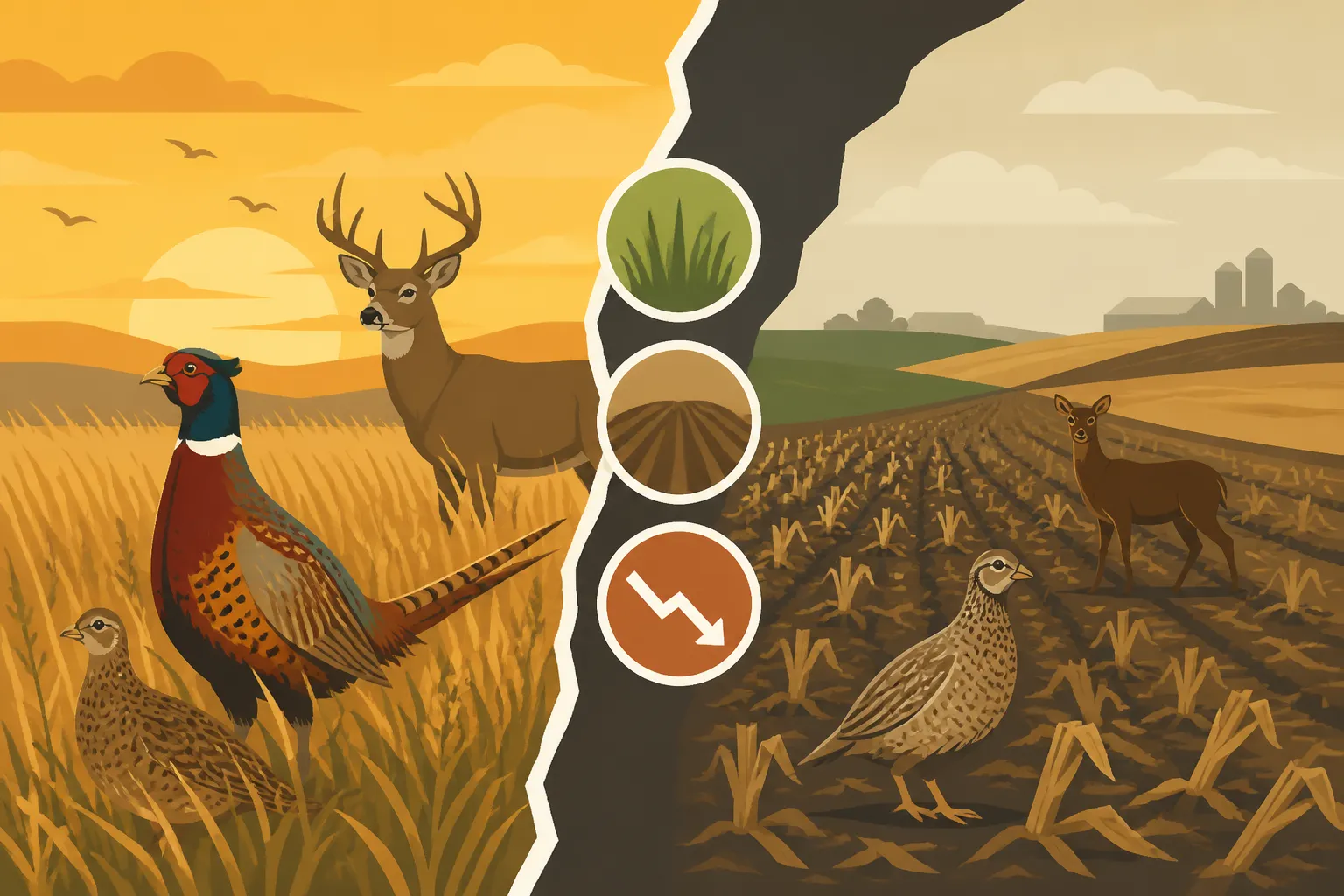
| Aspect | Pre-Cropland Dominance | Post-Cropland Dominance |
|---|---|---|
| Primary Habitat | Vast native grasslands, diverse wetlands, complex coulees | Large monoculture fields, fragmented cover, fewer wetlands |
| Whitetail Deer | Forest fringe, river valleys, large bluffs | Adapts to field edges, shelterbelts, slough rings |
| Mule Deer | Extensive coulee systems, badlands, open prairie | Confined more to rugged breaks, less use of open fields |
| Waterfowl (Nesting) | Abundant prairie potholes and diverse wetland complexes | Significant wetland loss due to drainage, reduced breeding |
| Waterfowl (Migration) | Natural food sources, staging on large lakes/marshes | Exploits waste grain in harvested fields, large field staging |
| Sharp-Tailed Grouse | Expansive native grasslands, diverse shrublands | Habitat fragmentation, reduced native grass, isolated leks |
| Hungarian Partridge | Mixed-grass prairie, shrubby cover, farm edges | Relies on remaining fence lines, narrow edges, less diverse food |
| Food Sources | Native grasses, forbs, diverse insects | Crop residues (waste grain), reduced insect diversity |
| Cover/Shelter | Extensive continuous cover, natural bluffs, dense grass | Fragmented bluffs, narrow shelterbelts, limited continuous cover |
Disclaimer
This article is for general informational purposes only and does not constitute professional advice. Laws, prices and regulations vary by location and change over time. Consult a qualified professional for guidance on your specific situation.