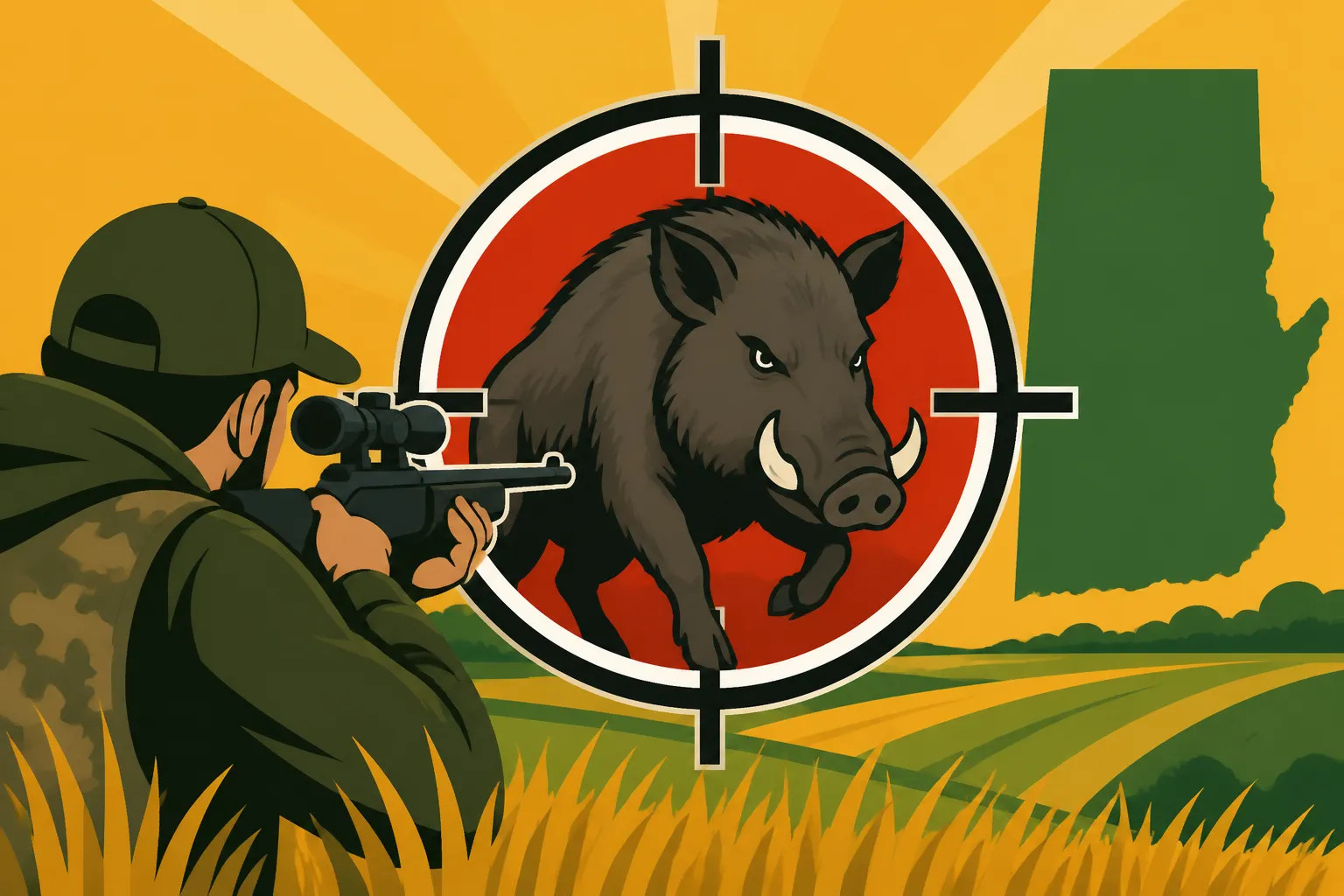
Saskatchewan’s Wild Boar Eradication Effort
Wild boars are a major headache across Saskatchewan, causing significant damage to crops, tearing up sensitive habitats, and posing a very real threat of disease transmission to both livestock and native wildlife. For hunters and landowners alike, these invasive animals represent a constant battle against destruction and uncertainty. This guide will walk you through Saskatchewan's dedicated efforts to eradicate wild boars, explaining the challenges, the strategies, and critically, how you, as a hunter or concerned citizen, can play a vital role in protecting our province.
The Problem: Why Wild Boars Are a Major Concern for Saskatchewan
It's easy to underestimate the impact of a wild boar until you've seen the devastation they can leave behind. These aren't just a nuisance; they're an ecological and agricultural catastrophe waiting to happen, and Saskatchewan is actively fighting to prevent them from getting a permanent foothold. The sheer scale of their destructive capabilities and their rapid reproduction rates make them a formidable opponent.
Agricultural Devastation and Economic Losses
For farmers in Saskatchewan, wild boars aren't just eating a bit of grain; they're trampling, rooting, and destroying entire fields. Imagine walking out to a pristine canola field, ready for harvest, only to find wide swaths of it torn up as if a rototiller went through. That's the reality wild boars bring. They'll root for tubers, insects, and buried seeds, turning valuable cropland into a pockmarked mess.
This rooting behavior doesn't just damage the current crop; it can also affect soil structure and future yields. Beyond direct crop consumption and destruction, boars can damage fences, irrigation systems, and even farm equipment. The financial implications for individual producers can be staggering, leading to lost income and increased costs for repairs and preventative measures. It's a constant worry that adds another layer of stress to an already challenging profession, impacting everything from small family farms to large-scale operations across the province.
Ecological Damage and Habitat Destruction
Beyond the farm fields, wild boars are devastating to Saskatchewan's natural ecosystems. Their incessant rooting churns up native grasslands and wetlands, destroying the delicate balance of plant communities and making it difficult for native species to thrive. This can lead to increased soil erosion, particularly in riparian areas along streams and rivers, further degrading water quality and aquatic habitats.
They're also fierce competitors with native wildlife for food resources, and their rooting can directly destroy the nests of ground-nesting birds, like pheasants and grouse, as well as small mammals. The impact on biodiversity is profound, altering landscapes that have evolved over millennia. From the aspen parkland bluffs to the open prairie, no habitat type is truly safe from their destructive habits once they establish a population. Understanding these broader ecological impacts is crucial to appreciating the urgency of the eradication efforts.
Disease Transmission to Wildlife and Livestock
Perhaps one of the most insidious threats posed by wild boars is their potential to transmit diseases. These animals can carry a host of pathogens, some of which are highly contagious and detrimental to both domestic livestock and our treasured native wildlife populations. Diseases like Bovine Tuberculosis, Swine Flu, and even Chronic Wasting Disease (CWD) could potentially be spread by wild boars.
Consider the devastating impact a widespread disease outbreak could have on Saskatchewan's agricultural economy, particularly our hog industry. It's not just about animal health; it's about trade restrictions, economic collapse for producers, and the long, arduous process of containing and eradicating such a disease. The risk to native deer, elk, and moose populations from shared diseases is equally alarming. This silent threat underscores why a proactive and aggressive eradication strategy is not just desirable but absolutely essential for the long-term health of Saskatchewan's environment and economy. Hunters already play a critical role in monitoring diseases like CWD, and wild boars add another complex layer to this challenge. Saskatchewan's CWD Testing Rules are important, and wild boars introduce new vectors.
Saskatchewan's Approach: Strategies and Programs for Eradication
Saskatchewan isn't sitting idly by while wild boars wreak havoc. The province has recognized the severity of the threat and has implemented a multi-faceted approach to try and get ahead of this invasive species. The goal isn't just control; it's complete eradication, which is a much more ambitious and challenging undertaking.
Provincial Wild Boar Control Programs
The backbone of Saskatchewan's eradication strategy involves coordinated provincial programs. These initiatives often focus on active removal through trapping and targeted hunting, often conducted by specialized teams. The provincial government understands that this isn't a problem that can be solved by individual landowners alone; it requires a strategic, province-wide effort to identify, contain, and eliminate populations.
These programs rely heavily on public reporting, which is why education and awareness campaigns are so crucial. When a sighting or evidence of wild boars is reported, rapid response teams can be deployed to assess the situation and implement control measures. The emphasis is on early detection and swift action, as small, isolated populations are far easier to eradicate than large, entrenched ones. These efforts are often a collaboration between government agencies, landowners, and sometimes even local conservation groups.
The Role of Research and Monitoring
Effective eradication isn't just about shooting or trapping; it's about understanding the enemy. That's where scientific research and continuous monitoring come in. Researchers study wild boar behavior, movement patterns, reproductive rates, and habitat preferences to develop more effective control strategies. This includes understanding how quickly they reproduce, how far they travel, and what types of cover they prefer in different seasons.
Monitoring efforts involve tracking reported sightings, using trail cameras, and even employing aerial surveys in certain areas to get a better sense of population distribution and density. This data is critical for adaptive management – continually refining strategies based on what's working and what's not. It's a constantly evolving challenge, and good data is the hunter's best friend, giving us insights into how to approach the problem more effectively. For instance, understanding How Deep Snow Moves Deer Into Cover could also apply to how cold weather might concentrate or disperse boars, which is vital for targeting efforts.
| Wild Boar Characteristic | Impact on Eradication |
|---|---|
| High Reproductive Rate | Sows can breed at 6-8 months, have 2 litters/year, 4-10 piglets/litter. Makes complete removal extremely difficult. |
| No Natural Predators | Lack of natural population checks allows rapid growth, requiring intensive human intervention. |
| Intelligent & Elusive | Quickly learn to avoid traps and hunters, making traditional hunting methods less effective for eradication. |
| Adaptable Diet | Eat almost anything (crops, roots, insects, small animals) allowing them to thrive in diverse environments. |
| Nocturnal Activity | Primarily active at night, making detection and removal challenging for human schedules. |
| Thick Hair & Fat Layer | Provide excellent insulation, allowing them to withstand harsh Saskatchewan winters better than many other species. |
| Social Structure | Live in "sounders" (groups) making it crucial to remove entire groups to avoid immediate re-population. |
| Habitat Generalists | Thrive in dense bush, wetlands, open fields, and forest fringe, making them hard to locate and remove from specific areas. |
Collaborative Efforts and Inter-Agency Cooperation
Saskatchewan's fight against wild boars is truly a team effort, extending beyond provincial programs to include cooperation with various stakeholders. This includes working closely with federal agencies, neighboring provinces, agricultural organizations, and local wildlife groups. Since wild boars don't respect borders, a coordinated approach across jurisdictions is essential to prevent them from simply moving from one area to another.
These collaborative efforts often involve sharing research findings, coordinating control measures, and pooling resources for maximum impact. For instance, knowledge gained from managing What Cropland Change Did to Prairie Game for native species might offer insights into how boars adapt to agricultural landscapes. By working together, all parties can contribute their expertise and resources, strengthening the overall eradication effort. This collective approach is a testament to the serious and widespread nature of the wild boar threat.
How Hunters Can Help: Your Role in the Eradication Effort
As hunters, we are often the first line of defense when it comes to wildlife management and conservation. Our time spent in the field gives us unique insights and opportunities to contribute to the wild boar eradication efforts. Your participation is not just helpful; it's absolutely crucial for success.
Reporting Sightings and Activity
The most important thing any hunter or outdoor enthusiast can do is report any wild boar sightings or evidence of their activity. This isn't about harvesting an animal; it's about providing critical intelligence to the provincial programs. Even if you only see tracks, rooting, or a brief glimpse of an animal, that information is invaluable.
The province often has a dedicated hotline or online portal for reporting. Make a note of the exact location (GPS coordinates if possible), the date and time, and a description of what you saw. Photos or videos are incredibly helpful. This data allows the rapid response teams to pinpoint problem areas and deploy resources effectively. Remember, early detection is key to preventing a small problem from becoming an uncontrollable infestation. Don't assume someone else will report it; be the one to make the call. Utilizing tools like GoHunt on your phone to pinpoint exact locations can make your report much more accurate and actionable for authorities.
Responsible Hunting and Control
While reporting is paramount, responsible hunting also plays a role in the broader eradication strategy, especially when it comes to containing established populations. However, it's crucial to understand that wild boar hunting in Saskatchewan isn't like deer hunting. The goal isn't just to harvest an animal; it's about reducing populations effectively. This often means being aware of specific provincial guidelines or programs that might encourage or regulate wild boar hunting.
Often, targeted efforts by professionals are more effective for eradication, but opportunistic hunting can contribute. The critical thing to remember is not to simply scare a sounder off, as this can scatter them and make them harder to track and eliminate. If you do harvest a wild boar, ensure you follow all regulations regarding carcass disposal, as this helps prevent the spread of disease. Understanding Saskatchewan Landowner Permission Law is crucial, as many sightings occur on private agricultural land. Always seek permission before entering.
Preventing Further Spread
An often-overlooked aspect of eradication is preventing the further spread of these animals, especially through accidental transport or illegal releases. This can happen if someone inadvertently transports a live animal, or worse, if individuals attempt to "stock" them for hunting purposes, which is illegal and incredibly irresponsible.
Hunters should be vigilant about suspicious activities, especially anything that looks like illegal animal transport or release. If you suspect any such activity, report it to wildlife authorities. Reporting a Poacher in Saskatchewan is not just for game animals; it extends to protecting our ecosystems from invasive species as well. Ensuring our equipment, particularly vehicles and ATVs, is clean when moving between different hunting areas can also help prevent the accidental spread of plant seeds or other organisms that might indirectly aid wild boar survival. Remember that using apps like GoHunt can help you stay on legal routes and understand designated hunting areas, reducing the risk of accidental spread across sensitive ecological boundaries.
Challenges and the Road Ahead: The Reality of Eradicating an Invasive Species
Eradicating an invasive species like the wild boar is not a simple task; it's a marathon, not a sprint. Saskatchewan faces significant challenges, and managing public expectations while maintaining a persistent, science-backed approach is key to long-term success.
The Elusive Nature of Wild Boars
One of the biggest hurdles in wild boar eradication is just how incredibly elusive and intelligent these animals are. They are primarily nocturnal, incredibly wary of humans, and have an uncanny ability to learn and adapt to pressure. If they detect hunting pressure or trap attempts, they quickly become "trap-shy" or "hunter-wise," making them exponentially harder to catch or harvest.
Their preferred habitats of dense bush, heavy cover, and difficult terrain only add to the challenge. Finding them in the vastness of Saskatchewan's landscape, particularly in areas like the Hunting Saskatchewan's Forest Fringe or Hunting a Saskatchewan Bush Bluff, requires specialized tracking skills, persistent effort, and often advanced technology. This elusiveness means that simply allowing general hunting pressure isn't enough; it requires a targeted, strategic approach, often by dedicated teams, to make a real dent in populations.
Public Awareness and Sustained Effort
While many people are aware of wild boars, a deeper understanding of the scale of the threat and the importance of eradication is still needed. Public awareness campaigns must be continuous, educating both rural and urban populations about why these animals are a problem and how everyone can contribute to the solution. The "out of sight, out of mind" mentality can be a significant barrier to sustained eradication efforts.
Maintaining political will and funding for these long-term programs is also a challenge. Eradication is expensive, labor-intensive, and often doesn't yield immediate, visible results, making it difficult to justify continued investment to some. However, the long-term cost of not eradicating them—in terms of agricultural losses, ecological damage, and disease outbreaks—would be far greater. It requires a sustained, consistent effort over many years, perhaps even decades, to truly eliminate this threat. Using platforms that promote responsible outdoor ethics, like GoHunt, can help spread critical information about the ongoing eradication efforts and the role of hunters.
Future Outlook and Hope for Success
Despite the formidable challenges, there is hope for success in Saskatchewan's wild boar eradication efforts. Countries and regions around the world have demonstrated that, with persistent, well-funded, and scientifically-informed strategies, it is possible to eradicate invasive wild boar populations. The key is never giving up and maintaining a strong resolve.
The future outlook depends heavily on continued public cooperation, dedicated government resources, and adaptive management strategies that learn from successes and failures. As hunters, our vigilance in reporting, our adherence to responsible hunting practices, and our understanding of the broader ecological implications are crucial. If we all work together, understanding that this is a shared responsibility, we can protect Saskatchewan's agricultural lands, native ecosystems, and the health of our wildlife for generations to come. This commitment ensures that species like White-Tailed Deer, Saskatchewan's Signature Animal and Mule Deer Across Saskatchewan's Prairie don't have to compete with or face diseases from these destructive invaders.
Disclaimer
This article is for general informational purposes only and does not constitute professional advice. Laws, prices and regulations vary by location and change over time. Consult a qualified professional for guidance on your specific situation.