Saskatchewan’s Upland Birds
For many of us, the thrill of big game hunting in Saskatchewan often overshadows the incredible opportunities that lie hidden in our fields, bluffs, and bush: upland birds. It can feel like a daunting task to understand the nuances of each species, their preferred hangouts, and the best ways to chase them down, especially when they're not always as visible as a whitetail buck. This comprehensive guide aims to peel back the layers of Saskatchewan's diverse upland bird world, offering practical advice and insights to help you successfully pursue these challenging and rewarding game birds.
The Allure of Upland Bird Hunting in Saskatchewan
Saskatchewan is renowned globally for its monster whitetails and waterfowl paradise, but the province offers an equally captivating, albeit often overlooked, experience for the upland bird hunter. There's something uniquely satisfying about walking the vast prairies or dense forest fringes, anticipating the explosive flush of a covey of Huns or the drumming burst of a ruffed grouse. It's a different rhythm of hunting, one that connects you deeply with the land and its smaller, yet equally spirited, inhabitants. The sheer variety of species, from the open prairie's sharp-tailed grouse to the deep boreal's spruce grouse, means there's always a new challenge and a new landscape to explore.
Unlike the often stationary waiting game of big game hunting, upland bird hunting is an active, dynamic pursuit. It's about covering ground, reading the subtle signs of bird activity, and working with a good dog – or honing your own flushing skills if you're a solo hunter. This constant movement and engagement with the environment offer a fantastic way to experience Saskatchewan's diverse ecosystems, from the rolling grasslands of the south to the thick forests of the north. It’s a hunt that strengthens your legs, sharpens your senses, and often fills your game vest with delicious rewards.
The seasons for upland birds often complement big game seasons, offering fantastic opportunities to extend your time afield or pursue a different kind of challenge. Many hunters appreciate the chance to get out in the early fall when the leaves are turning, or even late into the cold shoulder seasons when other hunting opportunities have dwindled. It’s a more accessible form of hunting for many, with less emphasis on drawing tags and more on finding suitable habitat and getting permission. Plus, the fast-paced action and the joy of a dog working a bird are experiences that can truly light up a hunter's soul.
Why Saskatchewan is a Prime Destination for Upland Birds
Saskatchewan's mosaic of prairies, parkland, and boreal forest provides an incredibly rich and varied habitat, supporting robust populations of several key upland bird species. The province's agricultural landscape, with its vast stubble fields and interspersed cover, offers prime feeding and nesting grounds for species like sharp-tailed grouse and Hungarian partridge. As you move north, the expansive bush country becomes the domain of ruffed and spruce grouse. This ecological diversity means that depending on where you hunt, you can tailor your experience to target specific birds or even plan a multi-species upland adventure.
The relatively lower hunting pressure on upland birds, especially compared to waterfowl or big game, also makes Saskatchewan a gem for these pursuits. While some popular areas see more attention, vast tracts of land, both public and private, hold excellent bird numbers that often go unpursued. This means hunters willing to scout, ask for permission, and venture a little off the beaten path can find exceptional hunting experiences. Utilizing tools like satellite imagery or apps like GoHunt can really give you an edge in identifying potential bird cover before you even step foot on the land, helping you pinpoint those lesser-known hotspots.
Beyond the numbers, the quality of the hunting experience is what truly sets Saskatchewan apart. The wide-open spaces, crisp fall air, and stunning landscapes provide a backdrop that is hard to beat. Whether you're watching a pointer lock up on a covey of Huns in a stubble field or navigating a dense aspen stand as your flusher works ahead for grouse, every moment is imbued with the wild spirit of the prairies and forests. It’s a place where hunting memories are forged not just from the birds taken, but from the journey and the beautiful surroundings.
Sharp-Tailed Grouse: The Prairie Dancers
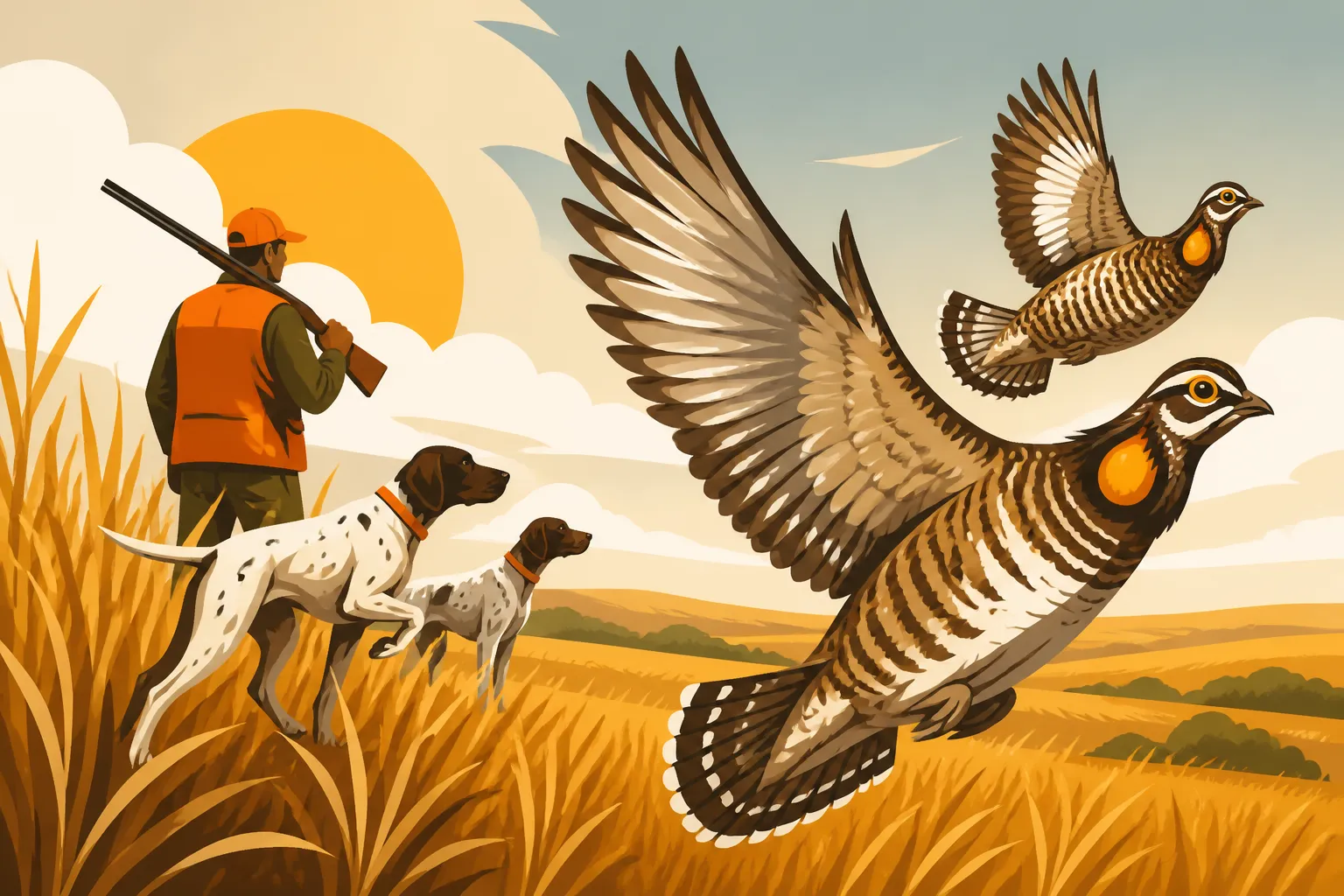
Sharp-tailed grouse are arguably Saskatchewan's most iconic upland bird, embodying the spirit of the prairie. These medium-sized grouse, often simply called "sharptails," are known for their spectacular spring dancing rituals on leks and their explosive flushes from grasslands and stubble fields. They are incredibly wary birds, making them a challenging and rewarding quarry for any upland hunter. Finding a covey of sharptails on a crisp fall morning and watching a good dog work them is a quintessential Saskatchewan hunting experience.
They are robust birds, designed for life on the open plains, capable of weathering harsh prairie winters. Their diet largely consists of grains, seeds, berries, and insects, making them adaptable to agricultural areas interspersed with native grass. When flushed, they often fly fast and far, sometimes even into the next section, requiring hunters to be quick on the draw and prepared for a significant walk to follow up on a dispersed covey. This makes them excellent birds for hunters who love to cover ground and those who enjoy the challenge of a long retrieve.
The widespread nature of sharptails across much of the province's prairie and parkland regions means that opportunities to hunt them are abundant. From the grasslands of the southwest to the aspen parkland of the central regions, they are a staple of the upland bird scene. Their numbers can fluctuate with habitat conditions and winter severity, but generally, Saskatchewan maintains healthy populations, providing consistent hunting prospects year after year.
Identifying Sharp-Tailed Grouse
Identifying sharp-tailed grouse is relatively straightforward once you know what to look for. They are brown and white mottled birds, larger than a Hungarian partridge but smaller than a domestic chicken. A key distinguishing feature is their tail: it's short, pointed, and made up of stiff, white-edged feathers that they often fan out when excited or flushed. This "sharp tail" is where they get their name. Their overall plumage is designed for camouflage in dry grasses and stubble, with intricate barring and spotting that blends seamlessly with their environment.
When flushed, they have a distinctive flight pattern. They rise with a rapid burst of wings, often making a cackling sound, and then typically fly in a fairly straight, powerful trajectory, often gaining altitude before gliding away. Their white underbelly can be quite prominent against a blue sky. On the ground, they have a somewhat upright posture, often pecking at the ground for food, and are known for their quick, agile movements. Unlike some other grouse, they prefer running to flushing if given the option, making good dog work invaluable.
One unique aspect of sharptail identification, especially for those interested in their biology, is their "lek" sites. These are traditional dancing grounds where males gather in spring to perform elaborate courtship displays. While not relevant for hunting season, recognizing these areas can sometimes provide clues to preferred habitat and historical covey locations in the fall. During the fall hunting season, however, you're more likely to identify them by their general appearance and flight characteristics as they flush from cover.
Habitat and Behavior
Sharp-tailed grouse thrive in transitional habitats where grasslands meet agricultural fields or light brush. They are quintessential birds of the prairie and aspen parkland. You’ll find them in native grass pastures, stubble fields (especially those with standing residual crop or heavier trash), hayfields, and the edges of willow bluffs or aspen groves. They utilize these diverse areas for different needs: tall grasses for nesting and roosting, stubble fields for feeding, and brushy edges for escape cover from predators.
Their behavior is heavily influenced by the weather and time of day. In the early morning and late afternoon, they'll typically be feeding in stubble fields or along the edges of grain fields. During the midday heat, or if pressure is high, they'll often retreat to thicker cover like willow runs, bush bluffs, or tall, dense native grass. They are known for "holding tight" in dense cover, making them excellent birds for pointing dogs. However, if they detect a threat early, they are equally adept at running through cover, making it tough for a dog to pin them down.
A covey of sharptails can range from a handful of birds to over twenty. When flushed, they tend to explode into the air as a unit, creating an exhilarating cacophony of wings and cackles. If you get a shot, mark where the birds land carefully. Unlike Huns that often regroup quickly, sharptails tend to scatter widely and may take a while to re-covey. This scattering means you can often find singles or pairs by patiently working the area where they settled, offering additional shot opportunities. Knowing Walking Up Sharp-Tailed Grouse in Saskatchewan is crucial for success here.
Hunting Strategies for Sharptails
Hunting sharp-tailed grouse in Saskatchewan typically involves covering a lot of ground, either on foot, often with a dog, or by driving roads and quickly walking promising cover. The key is to target their preferred habitats during peak feeding times. Early mornings and late afternoons are prime for finding them in stubble fields, particularly pea, barley, or wheat stubble, or along the edges of harvested corn or canola. If you're walking fields, focus on areas with slightly taller stubble, weed patches, or any irregularity that offers a bit more cover.
Midday hunting often requires shifting tactics to thicker cover. Look for shelterbelts, willow bluffs, or dense native grasslands, especially those adjacent to feeding fields. A good pointing dog is an invaluable asset for sharptails, as they will often hold tight, allowing the dog to point and the hunter to approach for a shot. For those without dogs, a methodical walk through potential cover, paying close attention to ground scent and any movement, is necessary. Remember to walk into the wind when possible, as this helps carry scent to your dog and masks your approach.
Another effective strategy involves hunting the fringes of Saskatchewan's forest edge, where aspen parkland transitions into true boreal forest. These areas often have a mix of native grasses, berry bushes, and small aspen stands which are ideal for sharptails. You might even encounter ruffed grouse in these mixed habitats. When hunting roads, always be mindful of shooting hours and regulations regarding discharge from or across roads. If you spot birds from a vehicle, park safely, gather your gear, and then carefully approach the area on foot, respecting private land boundaries and any "posted" signs.
Hungarian Partridge: The Nimble Coveys
Hungarian partridge, affectionately known as "Huns," are another highly sought-after upland bird in Saskatchewan. These small, grey, fast-flying birds are perfectly adapted to the province's agricultural landscape, often found in coveys that explode from cover with startling speed. Hunting Huns offers a different kind of challenge than sharptails; their smaller size and erratic flight patterns make them a true test of a shotgunner's skill. The reward, however, is a delicious bird and the satisfaction of outsmarting one of the prairie's most nimble inhabitants.
Huns are often found in similar habitats to sharptails, but they tend to prefer areas with more human disturbance, such as farmsteads, shelterbelts, and weedy field edges. They are incredibly hardy, capable of surviving harsh prairie winters by burrowing into snow or finding sheltered areas. Their diet is primarily seeds, grains, and insects, which means they thrive in close proximity to cultivated fields. These birds are strong flyers, and when a covey flushes, it can be a dizzying spectacle of grey rockets.
Saskatchewan's fertile agricultural land provides ideal conditions for Hungarian partridge, supporting healthy populations across much of the southern and central parts of the province. Their tendency to stick together in coveys, sometimes numbering two dozen birds or more, makes for exciting flushing action. While they may not be as large as a sharptail, the sheer number of birds in a covey often provides multiple shot opportunities, if you're quick enough to pick out a single bird.
Recognizing Huns
Hungarian partridge are distinctive small game birds, quite different from grouse. They are generally pigeon-sized, with a predominantly grey body, a rusty-orange face and throat, and chestnut barring on their flanks. A key identifying feature for both sexes is a dark, horseshoe-shaped patch on their breast, though this can be less pronounced in females. Their overall appearance is compact and streamlined, built for speed.
In flight, Huns are incredibly fast and agile, often flying low to the ground before gaining some altitude. They have rapid wing beats and can change direction abruptly, making them a challenging target. When flushed, they often utter a distinctive "kek-kek-kek" call, a rapid, almost machine-gun-like sound that alerts the hunter to their presence. Their flight is typically direct but can be erratic, and they tend to fan out slightly as they fly, but often land relatively close together, making follow-up hunts possible.
On the ground, they are often seen scurrying rapidly through cover. They are less prone to running long distances than sharptails, preferring to hold tight until a hunter or dog is almost upon them before exploding into the air. If you hear their characteristic call from dense cover, be ready, because a covey flush is usually imminent and incredibly fast.
Preferred Habitats
Hungarian partridge are masters of the agricultural landscape. Their preferred habitats are typically areas where cultivated fields meet dense cover. You’ll find them in shelterbelts, tree lines, dense weedy field edges, sloughs, and patches of thick bush within or adjacent to grain fields. They particularly favor areas with cereal crops like wheat, barley, and oats, as these provide both food and residual cover after harvest. Lentil and pea fields can also be attractive to Huns.
They use these varied habitats strategically throughout the day and year. Early mornings and late afternoons see them feeding in stubble fields, gleaning waste grain. During the harsher midday sun or in colder weather, they retreat to the protection of shelterbelts, dense brush, or even standing crops that provide thermal cover and protection from predators. Unlike sharptails, Huns are often found in relatively smaller, more isolated patches of cover, making them excellent birds for hunters who prefer to work smaller pieces of ground thoroughly.
Snow depth plays a significant role in their habitat selection during the late season. In deep snow, Huns will seek out areas where cover is still accessible or where the snow has drifted in a way that creates sheltered pockets. They are incredibly resilient, and understanding how they use the landscape in different conditions is crucial for consistent success. Knowing Hunting Hungarian Partridge on Saskatchewan Farms can certainly increase your odds.
Effective Hunting Tactics
Hunting Hungarian partridge requires patience, a good pair of walking boots, and often, a well-trained bird dog. The most common and effective method is walking up coveys from their preferred cover. Focus your efforts on shelterbelts, the edges of harvested fields, dense weed patches, and slough bottoms. These are all prime areas where Huns will loaf during the day or feed during the morning and evening. Walking these areas systematically, back and forth, will help you cover ground efficiently.
A good flushing dog can be a huge asset, pushing birds out of cover that you might otherwise walk past. For hunters with pointing dogs, Huns can be challenging; while they might hold for a point, they are also prone to running, forcing the dog to relocate or "creep" on point. A fast gun is also essential, as Huns burst from cover with incredible speed. It's often best to pick a single bird and stick with it, rather than swinging wildly at the entire covey.
When a covey flushes, pay close attention to where they land. While they scatter initially, Huns often regroup in relatively close proximity, especially if the cover is good. Following up on a dispersed covey can yield additional shooting opportunities as you walk up singles or small groups. Remember, these birds are small, so lead them generously. Field edges near farmyards, old abandoned buildings, and even along railway lines can also be hotspots for Huns, as these areas provide food sources and undisturbed cover.
| Species | Primary Habitat | Key Identification Features | Flight Pattern | Size (approx.) |
|---|---|---|---|---|
| Sharp-Tailed Grouse | Native Grasslands, Stubble, Parkland Bluffs | Mottled brown/white, short pointed tail, cackling flush | Fast, direct, often gains altitude | Medium |
| Hungarian Partridge | Agricultural Fields, Shelterbelts, Weedy Edges | Grey body, rusty face, horseshoe breast patch, "kek-kek" call | Very fast, erratic, low to ground | Small |
| Ruffed Grouse | Deciduous/Mixed Forests, Bush Trails | Barred brown/grey, black ruff, fanned tail with dark band | Explosive, short, often weaves through trees | Medium |
| Spruce Grouse | Coniferous/Boreal Forests, Muskeg | Dark, heavily barred, red comb (male), very tame | Short, low, direct | Medium |
| Ptarmigan | Far North, Arctic Tundra, Rock Barrens | White (winter), mottled brown (summer), feathered feet | Strong, direct, typically long distance | Medium |
Ruffed Grouse: The Forest Drummer
For those who venture into Saskatchewan's more wooded regions, the ruffed grouse is the king of the forest. Known for the male's distinctive drumming sound, which echoes through the spring and fall woods, these birds provide an exhilarating hunt in dense cover. Ruffed grouse, or "ruffs," are masters of camouflage, blending seamlessly with the dappled light and fallen leaves of their woodland homes, making them a true challenge to locate and flush.
Hunting ruffed grouse is often about enjoying the quiet solitude of the forest, punctuated by explosive flushes that will test your reflexes. These birds prefer dense, young deciduous or mixed wood forests, particularly areas with aspen, poplar, and willow thickets, often near water sources. Their diet includes buds, catkins, berries, and insects, making them quite adaptable to various forest ecosystems. When flushed, they are known for their incredibly fast, weaving flight through tight timber, often putting trees between themselves and the hunter.
While not as widespread as sharptails or Huns across the entire province, ruffed grouse are abundant in Saskatchewan's aspen parkland and throughout the boreal forest fringe and northern regions. They offer a fantastic change of pace from prairie hunting and provide a prime opportunity to explore the beauty of Saskatchewan's woodlands. Their numbers, like those of snowshoe hares, are known to follow cycles, meaning some years can be exceptionally good.
Spotting Ruffed Grouse
Ruffed grouse are medium-sized grouse, somewhat larger than a pigeon, with rich, barred plumage that can vary from reddish-brown to grey, perfectly camouflaged for their woodland environment. Their most distinctive features are the erectile black ruffs on either side of their neck (more prominent in males) and a broad, fan-shaped tail with a distinctive dark band near the tip. When flushed, they often fan this tail, making the band visible.
In flight, ruffed grouse are incredibly agile, capable of bursting from cover with an explosive, thunderous wing beat that often startles the unsuspecting hunter. They typically fly short distances, weaving expertly through dense trees and brush, making for challenging snap shots. Their flight is often accompanied by a soft, whirring sound after the initial burst. On the ground, they are surprisingly quiet and adept at slipping away unnoticed if they detect a threat.
The tell-tale sign of a male ruffed grouse in spring and fall is his drumming display. He stands on a log or rock and rapidly beats his wings, creating a vacuum that produces a deep, resonant "thump-thump-thump-thump" that accelerates into a whirring crescendo. While you're unlikely to hear drumming during the peak of hunting season (late fall), understanding this behavior helps understand their habitat selection.
Their Woodland Home
Ruffed grouse are creatures of the forest, specifically favoring young, regenerating deciduous and mixed-wood forests. They love areas with a dense understory, such as aspen and poplar stands that are 10-25 years old, willow thickets, and areas with abundant berry bushes. You'll often find them along logging roads, powerline cutlines, and natural openings within the forest, especially where there's a good mix of cover and food sources.
They utilize different parts of their habitat throughout the day. In the mornings and evenings, they'll often be foraging for food in areas with abundant berries or catkins. During midday, they might be found dusting in sandy spots along trails or roosting in denser cover. Throughout the hunting season, they remain closely tied to areas that offer protection from predators and the elements, often preferring north-facing slopes or thick conifer stands for roosting in colder weather.
Water sources, like small creeks, beaver ponds, and slough edges, also attract ruffed grouse, as these areas often have rich vegetation and insect life. The "edge effect" is particularly important for ruffs; they thrive where different habitat types meet, such as the edge of a dense forest meeting a more open clearing or a young regenerating clearcut bordering mature timber. This creates a diverse food supply and plenty of escape routes. Learning Ruffed Grouse Hunting Saskatchewan's Bush Trails is a great way to start.
Methods for Hunting Ruffs
Hunting ruffed grouse is a sensory experience, demanding stealth and quick reflexes. The most effective method is to walk slowly and deliberately through their preferred habitats. Focus on aspen and poplar thickets, the edges of clearcuts, old logging trails, and creek bottoms. Walk in a zig-zag pattern, pausing frequently, as this can often make a wary bird flush. Listen intently for their characteristic flush or any subtle movements in the underbrush.
A flushing dog can be extremely effective for ruffed grouse, as they work ahead, pushing birds into the air that you might otherwise walk past. Dogs like Springer Spaniels or Labs are excellent for this. For hunters without dogs, developing a "grouse walk" – a stop-and-go cadence that mimics a predator – can induce flushes. Often, a grouse will hold tight, then burst into flight just as you step past it. Always be ready for a shot, as the action happens in an instant.
Snap shooting is often required when hunting ruffs due to their erratic, weaving flight through dense timber. Keep your gun mounted and ready, and practice swinging quickly. Focus on shooting at the first clear opportunity, as second chances are rare. Remember to wear blaze orange for safety, as you’ll be walking in thick cover. And don't be discouraged by missed shots; ruffed grouse are considered one of the most challenging upland birds to hit on the wing due to their speed and the tight confines of their habitat.
Spruce Grouse: The North's Resident
Moving deeper into Saskatchewan's boreal forest, we encounter the spruce grouse, often called "fool hen" due to its remarkably tame nature. These birds are true inhabitants of the coniferous forests, relying heavily on spruce and pine stands for both food and cover. While not as explosively challenging as a ruffed grouse, hunting spruce grouse offers a unique experience for those willing to venture into the northern woods, often providing an opportunity for a closer, more deliberate shot.
Spruce grouse are a bird of specific tastes, primarily feeding on conifer needles, particularly spruce. This specialized diet means they are almost exclusively found in mature spruce and jack pine forests, bogs, and muskegs, making them a good indicator of healthy northern forest ecosystems. Their camouflage is superb, allowing them to disappear into the shadows of the evergreens, even when standing in plain sight.
For hunters exploring the far northern reaches of Saskatchewan, or those on moose or bear hunts, spruce grouse offer a welcome addition to the game bag. They are not typically a primary target species for many, but rather a bonus encountered in their specific habitat. Their distinctive appearance and behavior make them a fascinating part of Saskatchewan's upland bird diversity.
Characteristics of Spruce Grouse
Spruce grouse are medium-sized grouse, slightly smaller than ruffed grouse, with a distinctive dark, heavily barred plumage. Males are particularly striking, with a black breast, white spotting on the flanks, and a prominent red comb above the eye during breeding season. Females are mottled brown and grey, providing excellent camouflage against the forest floor. Both sexes have feathered tarsi (lower legs) and feet, an adaptation for navigating snowy terrain.
Unlike their ruffed cousins, spruce grouse are known for their incredibly docile and almost fearless behavior towards humans. They often remain stationary when approached, sometimes allowing a hunter to get within a few feet before flushing, if at all. This "fool hen" reputation means they are relatively easy to harvest, often making them a reliable source of camp meat for northern hunters. Their flight is typically short, low, and direct, unlike the weaving flight of a ruffed grouse.
Their vocalizations are minimal; males have a quiet hooting call during courtship, but generally, they are silent birds. On the ground, they move slowly and deliberately, often picking needles from branches. When you encounter a spruce grouse, you'll likely spot it perched motionless on a branch or walking calmly on the forest floor, rather than flushing noisily.
Where to Find Them
Spruce grouse are specialists of the coniferous forest. You will find them primarily in dense stands of black spruce, white spruce, and jack pine. They particularly favor areas with a thick, acidic understory, such as muskegs, bogs, and areas with an abundance of moss and lichen. Old logging roads and cutlines that cut through these coniferous forests are excellent places to find them, as they often forage along the edges where light penetrates the canopy.
Look for them in mature timber, especially where the spruce trees are tall and dense, providing both food and protection. They are less common in mixed-wood forests or deciduous stands, preferring the pure conifer environments. Their diet of conifer needles means they are tied to these specific trees throughout the year. If you're hunting moose or bear in the northern boreal forest, you'll undoubtedly encounter spruce grouse in the appropriate habitat.
They are relatively sedentary birds, often staying within a small home range, especially if food and cover are plentiful. This means if you find one spruce grouse, there's a good chance others are in the general vicinity, as they are not typically far-ranging. They also benefit from the thermal cover of dense conifers during harsh northern winters, roosting in thick branches to escape the cold.
Hunting Challenges and Rewards
The main "challenge" of hunting spruce grouse isn't their wariness, but rather locating their specific coniferous habitat. Once found, their tame nature often makes for an easy harvest. For hunters accustomed to fast-flying prairie birds, the spruce grouse offers a different kind of hunt – one that's more about observation and a quiet approach. The reward is a delicious meal and the unique experience of interacting with a truly wild bird that shows little fear of humans.
For ethical hunters, their tameness presents a unique consideration. Many choose to take spruce grouse with a .22 rifle or even a slingshot, preserving their shotgun shells for more challenging flushes. If using a shotgun, smaller gauges like a .410 or 28 gauge with light loads are more than sufficient. The satisfaction comes not from the difficulty of the shot, but from the immersion in the deep northern forest and the opportunity to secure fresh, wild game.
When hunting spruce grouse, focus on still-hunting or slowly walking through mature spruce and jack pine stands. Keep your eyes peeled for any movement on the ground or in the lower branches. They often blend in incredibly well, so a slow, deliberate pace and careful scanning are key. For hunters exploring Saskatchewan’s north, spruce grouse can be a delightful and unexpected bonus to any outing, providing a taste of the boreal wilderness.
Ptarmigan: The High Country Camouflage Artist
For the truly adventurous upland hunter, Saskatchewan's far northern reaches offer a chance to pursue ptarmigan. These hardy, Arctic-adapted grouse are master chameleons, changing their plumage with the seasons to blend seamlessly with their stark, often snow-covered environments. While not a common target for most hunters, ptarmigan offer an incredibly unique and challenging experience for those willing to venture into the remote, subarctic landscapes of the province.
Ptarmigan are the only grouse species to change their plumage color seasonally, turning pure white in winter to match the snow and mottled brown in summer for tundra camouflage. This adaptation, along with feathered feet for insulation and snowshoe-like traction, makes them perfectly suited for life in extreme northern climates. Their diet consists primarily of buds, berries, and willow catkins found in their harsh environment.
Saskatchewan is home to Willow Ptarmigan, and they inhabit the very northernmost fringes of the province, primarily above the tree line or in stunted boreal forest regions. This means accessing their habitat often requires significant effort, sometimes involving float planes or extensive bush travel, adding to the mystique and challenge of the hunt. They are a true trophy for the dedicated northern hunter.
Ptarmigan Species and Identification
In Saskatchewan, the primary species of ptarmigan encountered is the Willow Ptarmigan. These are stout, medium-sized grouse, roughly the size of a ruffed grouse. Their most striking feature is their seasonal plumage change. In winter, they are almost entirely pure white, except for black outer tail feathers and a black beak. Males often have a distinctive red comb above the eye during all seasons. As spring approaches, they begin to molt into a mottled brown and black summer plumage, blending with the tundra vegetation and rocks.
Their calls are quite distinctive: a harsh, cackling "go-back, go-back" or "kok-kok-kok" when flushed or alarmed. In flight, they are strong and direct, often flying long distances over open terrain before settling down again. Their pure white winter plumage against a snowy backdrop makes them surprisingly visible once they take flight, but on the ground, they are incredibly difficult to spot until they move.
While primarily white in winter, the black tail feathers are a good identifier even then. In their mottled summer/fall plumage, their stout build, feathered feet, and preference for open, rocky or stunted shrub environments help distinguish them from other grouse species found further south. Spotting them in transition, with patches of white and brown, is also common during early and late hunting seasons.
Arctic and Subarctic Habitat
Willow Ptarmigan in Saskatchewan are found in the most remote, northern regions of the province, primarily north of the main boreal forest, where the landscape transitions into tundra-like conditions. This includes areas with stunted spruce and tamarack, willow and birch thickets, rocky outcrops, and open muskegs. They are often found near the tree line, utilizing the sparse woody vegetation for cover and food.
Their habitat is characterized by its harshness: long, cold winters, short growing seasons, and often sparse vegetation. They thrive in areas where willow and birch provide essential buds and catkins for winter sustenance. During the hunting season (which extends into the colder months in the far north), they will be primarily in their white winter plumage, blending perfectly with the snow. They use depressions in the snow or dense willow thickets for shelter from winds and predators.
Accessing these areas is a significant undertaking. Hunters often fly into remote camps or use snowmobiles once the ground is frozen and snow-covered. This is not a hunt for the faint of heart or those unprepared for true wilderness conditions. It’s an adventure into the wild, remote beauty of Saskatchewan’s far north, where the game animals are as rugged as the landscape. Learning about Ptarmigan Hunting in the Far North is essential for those considering this unique hunt.
Strategies for Northern Hunters
Hunting ptarmigan in Saskatchewan is a specialized pursuit that demands significant planning and preparation for remote travel and harsh weather. Once in their habitat, the strategy is typically a methodical walk across suitable terrain, focusing on willow and birch thickets, ridges, and sheltered depressions where birds might be feeding or loafing. Keep a sharp eye out, as their camouflage is exceptional.
Unlike other grouse, ptarmigan will often hold incredibly tight, allowing hunters to walk almost directly over them before flushing. However, when they do flush, they typically fly strong and far, often over open ground, making follow-up shots difficult without a long walk. Hunters often choose to use smaller gauge shotguns or even .22 rifles for ptarmigan, especially if they are primarily looking for camp meat and want to preserve the birds.
Success in ptarmigan hunting relies heavily on proper gear for extreme cold, navigational skills for remote areas, and a resilient attitude. A good pair of binoculars can be useful for spotting birds at a distance in open terrain. For those who embrace the challenge and the wild beauty of Saskatchewan's far north, a ptarmigan hunt offers an unparalleled wilderness experience and a true test of a hunter's mettle.
Essential Gear and Preparation for Upland Hunting
No matter which upland bird you're after in Saskatchewan, having the right gear and being well-prepared is paramount for a safe, comfortable, and successful hunt. The province's varied terrain, from wide-open fields to dense bush, and its often unpredictable weather, demand thoughtful equipment choices. Skimping on essentials can quickly turn an enjoyable outing into a miserable one.
Thinking ahead about everything from your shotgun to your socks will make a significant difference. It’s not just about what you carry, but how well you've maintained it and how familiar you are with its use. A well-oiled shotgun, comfortable boots, and clothing appropriate for the weather are fundamental. Beyond that, tools for navigation and game handling ensure you can make the most of your time afield.
Preparation also extends to your physical conditioning. Upland hunting often involves a lot of walking, sometimes over uneven terrain and through dense cover. Being in good physical shape will allow you to cover more ground, reduce fatigue, and ultimately increase your chances of finding birds. Don't underestimate the physical demands, especially if you're planning a multi-day hunt.
Shotguns and Ammunition
For upland birds in Saskatchewan, a lightweight, fast-handling shotgun is ideal. Most hunters prefer 12, 20, or even 28 gauge shotguns. The 12 gauge offers the widest array of ammunition choices and excellent knock-down power, but can be heavy after a full day of walking. Many upland hunters swear by the lighter 20 gauge for its ease of carry and sufficient power for birds like grouse and partridge. The 28 gauge is a delightful choice for those who appreciate a fast-swinging, low-recoil option.
Choke selection is also important. For sharp-tailed grouse and Hungarian partridge in open country, an improved cylinder or modified choke offers a good spread for fast-flying birds. In dense bush for ruffed or spruce grouse, a more open choke like skeet or cylinder can be beneficial for those close-quarters, snap shots. As for ammunition, lead shot is generally permissible for upland birds, and common shot sizes include 6, 7.5, or 8. For larger sharptails, some prefer 6s, while 7.5s or 8s are excellent for Huns and ruffs.
Always carry more ammunition than you think you'll need. A few boxes in your vehicle and a dozen or so in your vest are a good starting point. Be sure to pattern your shotgun with your chosen loads before the season to understand its effective range and spread. And of course, practice mounting and swinging your shotgun regularly; quick, fluid movements are key to hitting fast-flushing birds.
Clothing and Footwear
Comfortable, durable, and weather-appropriate clothing is non-negotiable for upland hunting in Saskatchewan. Layers are your best friend, as temperatures can fluctuate wildly, especially during the fall. Start with a moisture-wicking base layer, add insulating mid-layers (fleece or wool are excellent), and top with a tough, water-resistant outer shell. Blaze orange is a mandatory requirement for safety during many hunting seasons, so ensure you have a vest or jacket that meets provincial regulations.
Tough, briar-resistant pants or chaps are highly recommended, especially when pushing through thick brush for ruffed grouse or walking weedy field edges for Huns. Your legs will thank you! As for footwear, waterproof, comfortable, and supportive boots are essential. You’ll be covering many miles, often through wet grass, stubble, or uneven terrain. Choose boots that are well broken-in to avoid blisters and ensure they provide good ankle support.
Don't forget accessories: a good quality hat for sun protection or warmth, gloves (even light ones) to protect your hands from brush, and sunglasses. A well-designed game vest or bird bag with ample pockets for shells, water, and harvested birds is also incredibly useful. Remember, comfort leads to endurance, which leads to more enjoyable and productive hunting days.
Dogs and Their Role
For many, upland bird hunting is synonymous with hunting with dogs. A well-trained bird dog can elevate the experience from a walk in the field to a true partnership. Dogs, whether pointers, flushers, or retrievers, are invaluable for locating birds, holding them for the shot, and, critically, finding downed birds in dense cover. A dog's keen sense of smell can detect birds that a human would undoubtedly walk past.
Pointing breeds like English Pointers, German Shorthaired Pointers, or Brittany Spaniels excel at finding and holding birds like sharptails and Huns, allowing the hunter to walk in for the flush and shot. Flushing breeds such as Springer Spaniels or Labrador Retrievers are superb at working dense cover for ruffed grouse, pushing birds into the air within shooting range. Retrievers, as their name suggests, are essential for finding shot birds, minimizing loss and ensuring ethical hunting.
Training a bird dog is a significant investment of time and effort, but the rewards are immense. If you don't have a dog, it's still entirely possible to hunt upland birds successfully, but you'll need to rely more on your own scouting, walking skills, and careful marking of downed birds. For those interested in Using a Pointing Dog on Saskatchewan Prairie or Using a Flushing Dog in Thick Cover, there are many resources available to help you train your canine hunting partner.
Using Technology
In today's hunting world, technology can be a powerful ally for upland bird hunters in Saskatchewan. While nothing replaces time afield and understanding bird behavior, modern tools can significantly enhance your scouting, navigation, and safety. Embrace technology as a supplementary aid, not a replacement for fundamental hunting skills.
GPS units or smartphone apps like GoHunt with mapping capabilities are invaluable for navigation, especially in unfamiliar terrain or dense bush. They allow you to mark covey locations, track your route, and easily return to your vehicle. Many of these apps also show property boundaries, which is crucial for respecting private land and avoiding trespass. These tools can highlight changes in terrain or vegetation types that are prime bird habitat, aiding in pre-hunt scouting. Learning Scouting With Satellite Imagery in Saskatchewan can give you a significant advantage, helping you identify potential hotspots before you even leave home.
Beyond mapping, portable two-way radios can be essential for groups hunting in thick cover where visual contact might be lost. Weather apps are also critical for monitoring changing conditions, helping you stay safe and comfortable. While it’s tempting to get caught up in the latest gadgets, remember that the most important technology is still your own eyes, ears, and instincts sharpened by experience.
Regulations, Seasons, and Ethical Hunting Practices
Understanding and adhering to Saskatchewan's hunting regulations is fundamental for a responsible and successful upland bird season. The rules are designed to conserve wildlife populations, ensure hunter safety, and maintain good relationships between hunters and landowners. Ignorance of the law is never an excuse, and staying informed is every hunter's responsibility.
Beyond the written rules, ethical hunting practices are equally vital. This includes showing respect for wildlife, the land, and other users. Ethical behavior helps ensure that hunting remains a cherished tradition for future generations. It’s about more than just filling a game bag; it's about how you conduct yourself in the field.
Saskatchewan has specific requirements for licenses, season dates, and limits that vary by species and Wildlife Management Zone (WMZ). Taking the time to read the annual hunting guide thoroughly is crucial before you head out. This guide provides all the up-to-date information you need to hunt legally and safely.
Licensing and Permits
Before you can even think about chasing upland birds in Saskatchewan, you'll need the proper licenses and permits. All resident hunters must possess a valid Saskatchewan Wildlife Habitat Certificate and an appropriate game bird license. These can be purchased through the Saskatchewan Hunting, Angling and Trapping Licence (HAL) system online, at authorized vendors, or through the S.I.N.P. (Saskatchewan's online portal). You'll need to create a HAL account if you don't already have one. Understanding Saskatchewan Hunting Licences and What They Cost and how to navigate Saskatchewan's HAL Account and Licensing is your first step.
Non-residents of Saskatchewan also require specific game bird licenses, and unlike big game, non-residents can typically hunt upland birds without an outfitter, provided they meet all other requirements. However, non-residents from outside Canada must adhere to federal firearm regulations for importing their guns. Ensure all your documentation is in order well in advance of your hunt.
It's crucial to carry your licenses and permits with you at all times while hunting and to be able to produce them upon request by a Conservation Officer. Ensure you fully understand the terms and conditions of each license, including its validity period and the specific species it covers. Planning ahead prevents any last-minute surprises or disappointments.
Season Dates and Limits
Saskatchewan's upland bird seasons typically open in early September and run through to December, though specific dates can vary by species and WMZ. It's imperative to consult the official Saskatchewan Hunters' and Trappers' Guide for the most current season dates and bag limits for each species (sharp-tailed grouse, Hungarian partridge, ruffed grouse, spruce grouse, and ptarmigan). This guide, released annually, is the definitive source of information. You can find detailed information on Saskatchewan Upland Bird Seasons there.
Daily bag limits and possession limits are set to ensure sustainable harvesting. For example, you might have a daily limit of 5 sharp-tailed grouse, with a possession limit of 15. This means you can only harvest 5 in one day, and you can only have 15 in your possession (at home, in your vehicle, etc.) at any given time. These limits are in place for a reason – to protect the populations – so adhering to them strictly is critical.
Be aware that certain WMZs might have specific restrictions or closures, or different season dates, so always verify the regulations for the exact area you plan to hunt. Double-checking the guide each year is a small effort that prevents potential fines and helps preserve hunting opportunities for everyone.
Respecting Landowners and Wildlife
A huge part of upland bird hunting in Saskatchewan occurs on private land. Gaining permission from landowners is not just a legal requirement but a fundamental ethical practice. Always ask for permission before entering private land, even if you just plan to retrieve a downed bird. Showing respect, being polite, and offering to share some of your harvest can go a long way in building positive relationships with farmers and ranchers. Understand Saskatchewan Posted Land Sign Rules and always err on the side of caution; if in doubt, don't enter.
Beyond landowners, respecting the wildlife you pursue is paramount. This includes making ethical shots to ensure a quick, humane kill, and diligently searching for any wounded birds. Wasting game meat is illegal and unethical. Take pride in utilizing the birds you harvest, whether for personal consumption or sharing with friends and family.
Finally, leave no trace. Pack out everything you pack in, including spent shotgun shells. Close gates, avoid driving on wet fields, and be mindful of livestock. Being a responsible hunter means being a good steward of the land and a respectful guest. By upholding these principles, we ensure that the privilege of hunting in Saskatchewan remains accessible and enjoyable for all.
Disclaimer
Please note that hunting regulations, seasons, and licensing requirements can change. This guide provides general information and recommendations. It is the sole responsibility of the hunter to consult the most current Saskatchewan Hunters' and Trappers' Guide and other official provincial regulations before participating in any hunting activity. Always prioritize safety and ethical hunting practices.