Bringing Firearms Into Saskatchewan
Heading up to Saskatchewan for a hunting trip is an incredible experience, but the thought of navigating international borders with firearms can be a real source of anxiety. It's not uncommon to feel overwhelmed by the paperwork and strict rules, fearing one small misstep could derail your entire adventure. This guide is here to walk you through everything you need to know about bringing your firearms into Saskatchewan, ensuring a smooth process so you can focus on the hunt itself, not the border crossing.
Understanding Canadian Firearm Import Regulations for Hunters
When you're planning a hunting trip to Saskatchewan, one of the most critical aspects is ensuring you can legally bring your hunting firearms into the country. Canada has very specific and strict regulations, and understanding them before you even pack your bags is absolutely essential. It’s not just about filling out a form; it’s about knowing which firearms are allowed and how to classify them correctly.
The Legal Framework: What You Need to Know
Canada's firearm laws are governed by the Firearms Act and its associated regulations. For hunters, the key thing to grasp is that your typical hunting rifles and shotguns usually fall into the "non-restricted" category. This is generally good news because non-restricted firearms are the easiest to bring across the border for legitimate hunting purposes. However, it's crucial to understand that what might be considered a standard hunting rifle in your home country might be treated differently in Canada. For instance, certain barrel lengths or overall lengths can shift a firearm into a restricted or even prohibited category, which are far more difficult, if not impossible, for non-residents to import temporarily.
It's not just the firearm itself, but also how it's transported and stored. These rules are in place for public safety, and while they can feel bureaucratic, they're non-negotiable. Knowing these nuances ahead of time can save you immense stress and potential legal issues at the border. Always double-check the most current regulations on the Royal Canadian Mounted Police (RCMP) website or speak with a Canadian Border Services Agency (CBSA) officer if you have any specific concerns about a particular firearm.
Eligibility and Prohibited Firearms
Not all firearms are created equal in the eyes of Canadian law. As a non-resident hunter, you're generally limited to bringing in non-restricted firearms. This typically includes most common hunting rifles and shotguns. However, certain types are strictly prohibited or restricted and cannot be brought into Canada by non-residents for hunting. This includes, but isn't limited to, automatic firearms, converted automatics, and certain handguns or firearms with specific features like short barrels or folding stocks that might put them into a "restricted" or "prohibited" class. For example, some AR-15 variants, even if used for hunting in the US, are prohibited in Canada. It’s a very common point of confusion and frustration for hunters from south of the border.
Before you even think about packing, verify that your specific firearm model is indeed classified as non-restricted in Canada. A quick search on the RCMP's Canadian Firearms Program website can often clarify this, or you can even use resources from companies like GoHunt that often provide general guidance on international travel with hunting gear. Trying to bring a prohibited firearm, even unknowingly, can lead to confiscation, fines, and potentially even being denied entry into Canada. Imagine arriving at the border, full of excitement for your Whitetail Hunting in Saskatchewan trip, only to have your prized rifle turned away. It’s a nightmare scenario that’s easily avoided with careful planning.
The RCMP Non-Resident Firearm Declaration (Form 5589)
This is perhaps the most critical piece of paperwork for any hunter bringing a firearm into Saskatchewan. The Non-Resident Firearm Declaration, also known as RCMP Form 5589, acts as your temporary license to possess and transport your hunting firearms in Canada. It's not just a declaration; once confirmed and signed by a CBSA officer, it essentially becomes your 60-day firearm license. Getting this right is paramount.
Step-by-Step Guide to Completing the Declaration
Filling out the RCMP 5589 form correctly is a straightforward process, but it demands attention to detail. You can download the form online from the RCMP website and fill it out before you arrive at the border, but do not sign it. It must be signed in front of a Canadian Border Services Agency (CBSA) officer. Here’s a basic breakdown of the steps:
- Download and Print: Get the latest version of RCMP Form 5589.
- Personal Information: Fill in all your personal details accurately, including your full name, address, date of birth, and passport number.
- Firearm Details: This is where precision matters. For each firearm you are bringing, you'll need its:
- Manufacturer
- Type (e.g., rifle, shotgun)
- Action (e.g., bolt, pump, semi-automatic)
- Caliber/Gauge
- Barrel Length (in metric, usually centimeters or millimeters)
- Serial Number
- The purpose of import (hunting is the relevant option here).
It’s a good idea to have your firearm’s manual or a clear record of these details handy. You might need to convert inches to centimeters (1 inch = 2.54 cm).
- Date of Entry/Exit: Specify your expected dates of entry and exit from Canada.
- Purpose of Use: Clearly state "Hunting" as your reason for bringing the firearm.
- Leave Unsigned: Remember, do not sign Section G (the declaration statement) until you are in front of a CBSA officer at the port of entry.
Having the form pre-filled saves a lot of time and potential stress at the border, especially if there’s a line. Many outfitters, particularly those focused on Rifle Hunting Saskatchewan's Whitetail Rut, will remind you repeatedly to have this form ready.
Costs and Validity of the Declaration
There is a fee associated with the Non-Resident Firearm Declaration. This fee, currently CAD $25, is payable at the border to the CBSA officer. They typically accept Canadian cash or major credit cards. It’s a small price to pay for legal entry and peace of mind.
Once it's declared and confirmed by a CBSA officer, your declaration (which acts as a temporary licence) is valid for a period of 60 days from the date of confirmation. This is usually more than enough time for any standard hunting trip. If your trip extends beyond 60 days, or if you plan multiple hunting trips within a year, you can apply for a longer-term Possession and Acquisition Licence (PAL) through the RCMP, though this is usually unnecessary for most non-resident hunters. Always ensure your declaration covers the full duration of your stay to avoid any issues during your return journey or if you encounter law enforcement while Hunting Saskatchewan Winter Weather Safely.
Common Mistakes When Filling Out the Form
Even with the best intentions, it's easy to make small errors that can cause delays or complications at the border. Here are some of the most common mistakes non-resident hunters make:
- Signing the Form Before the Border: This is a big one. As mentioned, the form must be signed in front of the CBSA officer. If you sign it beforehand, they might make you fill out a new one, costing you time.
- Incorrect Firearm Information: Double-checking serial numbers, barrel lengths, and calibers is crucial. A single digit or measurement error can lead to a red flag. Convert barrel lengths to centimeters accurately.
- Not Declaring All Firearms: Every single firearm you bring must be listed on the declaration. Trying to "forget" one is a serious offense.
- Bringing Prohibited or Restricted Firearms: This goes back to the eligibility section. If you show up with a firearm that isn't classified as non-restricted in Canada, it will be confiscated, and you'll face penalties. Many hunters are surprised by what falls into these categories.
- Arriving Without Cash/Credit Card for the Fee: While not a deal-breaker, it can cause unnecessary delays if you have to scramble for payment.
- Not Having a Valid Reason: While hunting is a valid reason, you need to be able to articulate your hunting plans. Having your outfitter’s contact information, hunting licence details (if pre-purchased, though often done after entry), or even a copy of your Planning a Saskatchewan Hunting Trip itinerary can be helpful.
GoHunt also offers resources that often highlight these common errors, providing helpful tips for a smoother border experience. Taking a few extra minutes to review your form meticulously will prevent hours of headache.
Crossing the Border and Transporting Your Firearms
The moment of truth arrives at the border. Being prepared and knowing what to expect can turn a potentially stressful situation into a quick and efficient one. Beyond the border, understanding the rules for transporting your firearms within Saskatchewan is equally important to ensure compliance throughout your hunt.
Border Crossing Procedures for Hunters
When you arrive at a Canadian Port of Entry, here’s a general idea of what to expect:
- Declare Immediately: As soon as you pull up to the primary inspection booth, immediately declare that you are bringing firearms into Canada for hunting. Do not wait for the officer to ask. Transparency is key.
- Provide Documentation: Present your passport, your completed-but-unsigned RCMP Form 5589, and any other relevant documentation (like proof of your hunting trip, if requested).
- Vehicle Inspection: The officer will likely direct you to a secondary inspection area. This is standard procedure for firearm declarations. They will ask you to remove your firearms from your vehicle for inspection.
- Firearm Inspection: The CBSA officer will inspect your firearms to verify the serial numbers, barrel lengths, and overall classification match what's on your declaration. They will ensure the firearms are unloaded and stored appropriately.
- Sign and Pay: Once everything checks out, the officer will have you sign the declaration, co-sign it themselves, and process your $25 fee. They will then give you a copy of the validated declaration, which serves as your temporary license. Keep this document with you at all times while hunting.
Remember, the CBSA officers are there to enforce Canadian law. Be polite, patient, and cooperative. A calm demeanor and organized paperwork will always make the process smoother. Many hunters driving up for Moose Hunting Saskatchewan's Farmland and Forest will tell you that a relaxed attitude goes a long way.
Safe Transportation Rules Within Saskatchewan
Once you’ve successfully entered Canada, the rules for transporting your firearms don’t end. Within Saskatchewan, and indeed across Canada, there are strict guidelines for how firearms must be stored and transported. These rules apply whether you're driving from the border to your hunting camp or moving between hunting locations.
For non-restricted firearms, such as your hunting rifle or shotgun, the rules are as follows:
- Unloaded: The firearm must always be unloaded. This means no ammunition in the chamber or magazine (if the magazine is attached to the firearm).
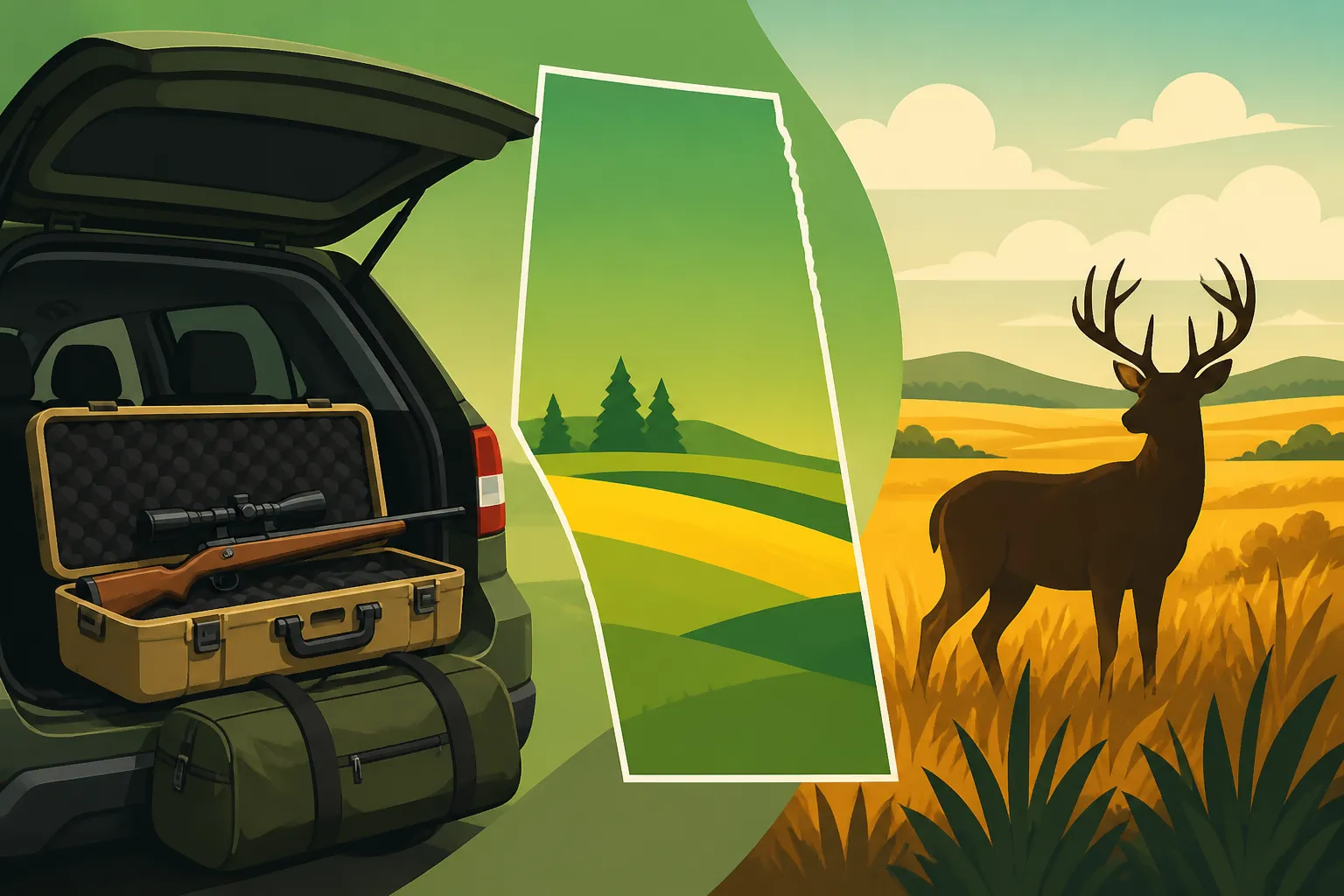
- Locked or Securely Stored: The firearm must be inoperable or rendered inoperable, or securely locked in a container or compartment that cannot be easily broken open. While a trigger lock or cable lock is a common method to render a firearm inoperable, securely storing it in a locked hard case is often preferred by hunters for protection and compliance.
- Separated Ammunition: Ammunition must be stored separately from the firearm, preferably in its own locked container, or at least in a different compartment of the vehicle. You can find more specific guidance on Ammunition Rules at the Border.
Never have a loaded firearm in your vehicle, and definitely never have one easily accessible while driving. These rules are taken very seriously, and violations can lead to severe penalties, including fines, confiscation of your firearm, and even charges. It's not worth the risk, especially when you're geared up for an amazing Black Bear Hunting in Saskatchewan experience.
What to Do If You're Delayed or Have Issues
Sometimes, despite all your preparation, things don't go as smoothly as planned. If you encounter delays or issues at the border, don’t panic.
- Stay Calm and Courteous: Maintain a respectful attitude. Getting agitated will not help your situation.
- Clarify the Issue: Ask the CBSA officer politely what the specific issue is. Is it a problem with your paperwork, the firearm itself, or something else?
- Provide Additional Information: If they ask for more documentation (like an outfitter’s letter or hunting licence details), provide it readily if you have it.
- Contact Your Outfitter: If you’re hunting with an outfitter, have their contact information handy. They are often experienced with these situations and may be able to provide necessary information or clarification to the border officials. They understand the intricacies of Saskatchewan Outfitter Licensing and Allocations and how non-residents fit into the system.
- Know Your Rights: While you must cooperate, you also have rights. If you feel you are being unfairly treated, you can ask to speak to a supervisor. However, this should be a last resort and pursued respectfully.
- Firearm Confiscation: In the worst-case scenario where a firearm is deemed prohibited or improperly declared, it may be confiscated. While frustrating, it's vital to follow all instructions from the CBSA officer to avoid further legal complications.
Remember, issues are rare if you've done your homework. Most border crossings for hunters are routine and quick, especially if you're prepared.
Alternatives and Practical Advice for Your Hunt
Bringing your own firearm is often the preference, but it's not always the only option, nor is it always the most convenient. Understanding alternatives like renting can save you a lot of hassle. Also, having a clear plan for ammunition ensures you're ready for your hunt.
Renting Firearms from Outfitters
For many non-resident hunters, especially those who prefer to avoid the complexities of international firearm travel, renting a rifle from a Saskatchewan outfitter is an excellent alternative. Most reputable outfitters catering to non-residents, particularly for popular species like White-Tailed Deer, Saskatchewan's Signature Animal, offer firearm rental services.
Here's why it's a great option:
- No Border Hassle: This is the biggest advantage. You completely bypass the RCMP 5589 declaration process and the associated stress at the border.
- Convenience: The rifle will be waiting for you at camp. You fly in, usually to Saskatoon or Regina, get picked up, and your hunting gear is ready. It simplifies your travel arrangements significantly.
- Local Knowledge: Outfitters typically provide quality hunting-appropriate firearms, often sighted in and ready to go. They'll also ensure you have the correct caliber and ammunition for the local game.
- Cost-Effective for Some: While there's a rental fee, it can sometimes be comparable to the cost and time involved in navigating firearm permits, especially if you only hunt in Canada occasionally.
Before you book, always confirm with your outfitter if they offer rentals, what calibers they have, and what the associated cost is. You might also want to ask if they can accommodate a quick sight-in session upon your arrival. Companies like GoHunt will list outfitters that provide this service in their packages for Booking a Saskatchewan Whitetail Hunt. It also removes the concern of meeting Legal Firearms and Bows for Big Game requirements when using your own.
Ammunition Rules and Considerations
Even if you rent a firearm, you’ll still need ammunition. If you bring your own firearm, you’ll definitely be bringing your own ammo. Canadian regulations on ammunition are also specific:
- Quantity Limits: You can bring a reasonable amount of ammunition for your declared hunting firearms. Generally, a limit of 200 rounds per firearm is considered reasonable for hunting purposes, but it's always wise to check the most current CBSA guidelines. Bringing excessive amounts might raise questions.
- Proper Storage: Ammunition must be stored securely and separately from your firearm. It should be in its original packaging or a dedicated ammunition case. Never transport loose rounds in a bag or pocket.
- Prohibited Ammunition: Certain types of ammunition are prohibited in Canada, such as armour-piercing, incendiary, or tracer rounds. Ensure your hunting ammunition is standard sporting ammunition.
- Purchasing in Canada: You can purchase ammunition in Saskatchewan once you’ve officially entered and have your validated RCMP Form 5589 (or an outfitter-provided firearm). You’ll need to show your declaration or a valid Canadian hunting license. Many hunters find it easier to buy common calibers once they arrive, especially if flying.
Always plan your ammunition needs carefully. Consider the number of days you’ll be hunting, potential practice shots, and the species you're pursuing. Don’t forget to consider what to include in your What to Bring to a Saskatchewan Deer Camp checklist beyond just your rifle and ammo.
Bringing your firearms into Saskatchewan doesn't have to be a daunting task. With careful planning, adherence to regulations, and a little patience, you can ensure a smooth border crossing and a fantastic hunting experience in the vast and beautiful Canadian prairies and forests.
Disclaimer
The information provided in this guide is for general informational purposes only and does not constitute legal advice. Firearm laws and regulations are subject to change. It is your responsibility to verify all current requirements with the Royal Canadian Mounted Police (RCMP) and the Canada Border Services Agency (CBSA) before traveling. The author and publisher are not responsible for any errors or omissions, or for any actions taken based on the information provided herein.