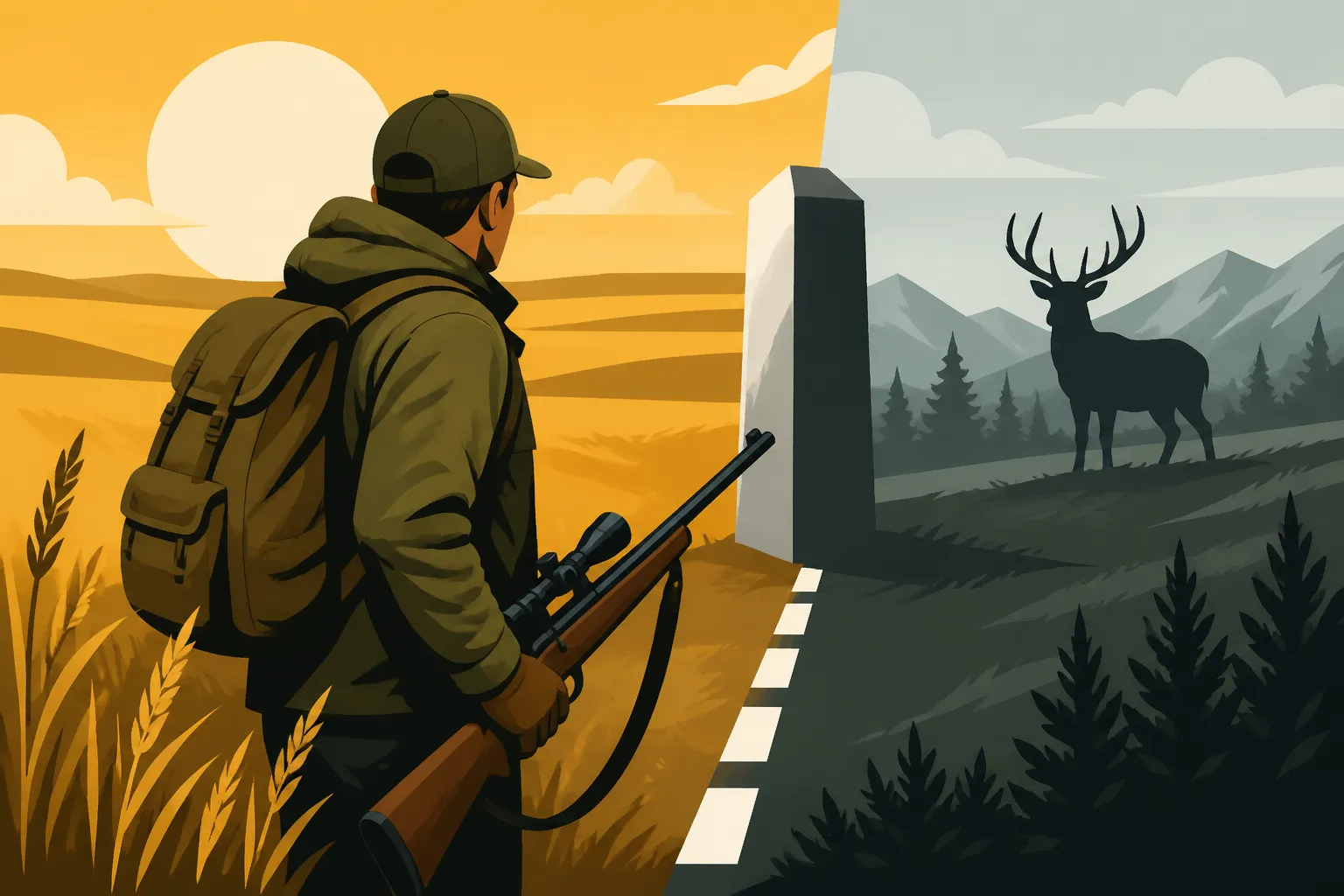
Crossing the Border With a Rifle
The thought of bringing your hunting rifle across the Canadian border can be a real headache, stirring up anxiety about paperwork, regulations, and potential delays. Many hunters dread the process, fearing a simple mistake could jeopardize their trip before it even begins. This guide is designed to demystify the entire procedure, walking you through everything you need to know to successfully and legally cross the border into Saskatchewan with your firearm, ensuring your focus remains on the incredible hunting experience awaiting you.
Understanding Canadian Firearms Laws for Hunters
Navigating another country's firearm laws can feel like wading through quicksand, especially when you're just trying to enjoy a hunt. Canada has specific regulations that hunters, particularly non-residents, need to be acutely aware of. It's not about trying to trick anyone; it's about making sure everyone is safe and knows the rules of the road. Getting this right from the start will save you a world of trouble and ensure your valuable hunting equipment is handled legally.
Non-Restricted vs. Restricted Firearms
First things first, let's talk about how Canada categorizes firearms, as this is crucial for understanding what you can and cannot bring across the border for hunting. For the vast majority of hunters heading to Saskatchewan, you'll be dealing with "non-restricted" firearms. These are typically your standard hunting rifles and shotguns – the kind of firearms you'd use for deer, moose, or upland birds. Think of your bolt-action .30-06, your pump-action 12-gauge, or your trusty .270. These are generally okay, provided you follow the declaration process.
However, Canada also has "restricted" and "prohibited" categories. Handguns, for instance, are almost universally "restricted," and their importation by non-residents for hunting purposes is generally not permitted. Certain rifles, like AR-15 variants or other military-style semi-automatics, even if legal where you come from, are often classified as "restricted" or even "prohibited" in Canada. This is a critical distinction, as attempting to bring a prohibited firearm into Canada can lead to severe penalties, including seizure of the firearm, fines, and even jail time. Always check the specific classification of your firearm before you even pack it. You can't just assume what's legal at home is legal here.
The Non-Resident Firearm Declaration Form (CAFC 909)
This form, often referred to as the CAFC 909, is your golden ticket for bringing a non-restricted firearm into Canada as a non-resident hunter. It's not a suggestion; it's a mandatory requirement. You absolutely must declare all firearms you are bringing with you. Failing to declare a firearm is a serious offense that can result in immediate seizure of your firearms, significant fines, and potentially even a lifetime ban from entering Canada. This is where many hunters get tripped up, either by not knowing about the form or by trying to gloss over the details.
The form essentially serves as a temporary registration for your firearm while you are in Canada. It's important to fill it out accurately and completely. You'll need information like the make, model, serial number, and calibre of each firearm. You can download this form online from the Royal Canadian Mounted Police (RCMP) website (the Canadian Firearms Program, specifically) and fill it out in advance, but do not sign it. It must be signed in front of a Canadian Border Services Agency (CBSA) officer at your point of entry. There's a small fee associated with validating the declaration, which you'll pay at the border. Keep this validated form with you at all times, as it serves as your proof of lawful possession while hunting. For more details on this crucial document, you might want to read The Non-Resident Firearm Declaration.
Step-by-Step Guide to Crossing the Border with Your Rifle
Taking the mystery out of the border crossing process can alleviate a lot of stress. It's all about preparation and knowing what to expect. Think of it like mapping out your hunting route; the more you know beforehand, the smoother your journey will be. Many a hunter has shown up at the border only to be sent back because they missed a crucial step.
Before You Leave Home: Paperwork and Preparation
Preparation is key. Long before you even load up your truck or pack your bags, you need to ensure all your ducks are in a row. Start by confirming your hunting plans in Saskatchewan, especially if you're working with an outfitter. Having documentation of your hunting trip, such as a confirmation from your outfitter or details of your licence application, can be helpful, though not strictly required for the firearm declaration itself. Consider looking at services like BookYourHunt to find reputable outfitters who can guide you through trip planning, including firearms logistics.
Next, identify every firearm you intend to bring. Make a list of each firearm's make, model, serial number, and calibre. Then, go to the Canadian Firearms Program website and download the Non-Resident Firearm Declaration form (CAFC 909). Print it out and fill in all the details except your signature. Double-check all numbers and spellings – a tiny error could cause a major delay. Gather any existing firearm registration documents or permits you have from your home country, as these might be requested for verification, although the CAFC 909 is the primary document for entry. Lastly, make sure your firearms are unloaded and properly cased. Hard-sided, lockable cases are not just a good idea; they are mandatory for transport. Ammunition should be stored separately, ideally in a locked container, and definitely not in the same case as the firearm. Knowing Ammunition Rules at the Border is just as important as knowing the firearm rules.
At the Canadian Border: The Declaration Process
When you arrive at the Canadian border, whether by car at a land crossing like North Portal or Regway, or by flying into an airport such as Saskatoon or Regina, the process is largely the same: you must declare your firearms immediately. This means telling the first CBSA officer you encounter, without prompting, that you have firearms with you. Do not wait for them to ask. This upfront honesty is vital; attempting to conceal a firearm or not declaring it could lead to severe legal consequences.
The officer will direct you to a secondary inspection area where they will inspect your firearms to ensure they match the details on your CAFC 909 form. They will check serial numbers and confirm they are unloaded and properly stored. This is also where you will sign the form in their presence and pay the validation fee. Once the form is validated, it acts as your temporary license and registration for up to 60 days. Keep this document with your passport and other travel documents. Remember, the CBSA officers are there to enforce Canadian law, so being courteous, cooperative, and prepared with all your documentation will ensure a much smoother process. Don't be shy about asking clarifying questions if something isn't clear, but do so respectfully.
| Document / Item | Description | Importance |
|---|---|---|
| Passport or Valid ID | Your official identification for international travel. | Essential for entry into Canada. |
| CAFC 909 (Unsigned) | Non-Resident Firearm Declaration form, pre-filled with firearm details. | Mandatory for bringing non-restricted firearms. Signed at border. |
| Proof of Hunting Trip | Outfitter booking confirmation, hunting licence application, etc. | Not strictly mandatory for firearm, but aids in confirming purpose of visit. |
| Hard-sided, Locked Firearm Case | Secure, lockable case for each firearm. | Mandatory for safe and legal transport. |
| Separately Stored Ammunition | Ammunition in a separate, secure container. | Mandatory for legal transport. |
| Relevant Permits/Registrations | Any home country firearm registrations (optional, but good to have). | May be requested for verification by CBSA. |
Ammunition, Storage, and Transport Rules
Bringing your rifle is only half the battle; knowing the rules around ammunition and how everything needs to be stored and transported is just as critical. Many hunters simply focus on the rifle itself and forget that the cartridges and carrying methods also fall under strict regulations. Don't let a simple oversight here derail your carefully planned hunting trip.
Ammunition Limits and Types
When it comes to ammunition, Canada also has specific rules. For non-restricted firearms, you are generally allowed to bring up to 200 rounds of ammunition per firearm declared. However, there's a practical limit on how much you can bring in total; typically, 5,000 rounds is the maximum a single person can transport without additional permits. For most Saskatchewan big game hunts, 200 rounds per rifle is more than enough. You're not going to need a battlefield supply!
It's also important to note that certain types of ammunition are prohibited, regardless of quantity. This includes incendiary, tracer, and armour-piercing rounds. These are not typically used for hunting, but it's crucial to be aware. Stick to standard hunting ammunition. All ammunition must be securely packaged and transported separately from your firearms, preferably in a locked container. This prevents accidents and demonstrates your commitment to responsible firearm handling. If you plan on flying, always check with your airline about their specific rules for transporting firearms and ammunition, as these can be even more restrictive than federal border regulations. This is vital, whether you're heading to Saskatchewan's boreal forest or the southern prairie for some Mule Deer Hunting Saskatchewan's Prairie.
Safe Storage and Transport Requirements
Once you've cleared the border, Canadian law continues to dictate how your firearms must be stored and transported, even within Saskatchewan. These rules are designed for public safety and apply to everyone, resident or non-resident. When you're driving to your hunting location or moving between different hunting spots, all non-restricted firearms must be unloaded and either rendered inoperable with a locking device (like a trigger lock), or kept in a non-transparent, secure container (like your hard-sided case). The key here is "unloaded." You cannot have a loaded firearm in or on a vehicle, period.
When you're at your camp or lodge, the rules for storage are equally important. Firearms must either be unloaded and stored in a secure container that cannot be easily broken into, or unloaded and rendered inoperable with a locking device. They must also be stored in a manner that they are not readily accessible to unauthorized persons. This means don't leave your rifle propped against a wall in an unlocked cabin while you're out scouting. Using a sturdy gun safe or even a secure, locked closet can meet these requirements. Responsible storage is a cornerstone of safe hunting and ensures that your valuable equipment remains secure and legal throughout your Whitetail Hunting in Saskatchewan adventure.
Common Pitfalls and How to Avoid Them
Even with the best intentions, it's easy to make a mistake when crossing an international border with firearms. The rules can be intricate, and the consequences of getting it wrong can be severe. Being forewarned about common pitfalls can help you avoid unnecessary stress and potential legal issues, ensuring your hunting trip remains enjoyable and lawful.
Prohibited Firearms and Accessories
One of the biggest traps for non-resident hunters is unknowingly attempting to bring a prohibited firearm or accessory into Canada. As mentioned earlier, handguns are generally out for non-residents, and many popular semi-automatic sporting rifles in the US are classified as "restricted" or "prohibited" in Canada. This includes many variants of the AR-15, certain AK-47 variants, and even some shotguns with specific barrel lengths or magazine capacities. It's not enough to say, "it's just a hunting rifle." Canada has a very detailed list of prohibited firearms, and it changes occasionally.
Furthermore, certain accessories are also prohibited. High-capacity magazines (those holding more than 5 rounds for most semi-automatic rifles or shotguns, and more than 10 rounds for handguns, even if the handgun itself is not permitted) are a common issue. Suppressors (silencers) are also prohibited in Canada. Don't assume that if an accessory is legal and common for hunting where you live, it will be legal here. Always verify the classification of each firearm and all accessories you intend to bring. If you're unsure, err on the side of caution or leave it at home. Consulting a Canadian outfitter, especially those listed on platforms like GoHunt, can provide valuable guidance on what is and isn't permissible.
Misunderstandings and Penalties
Misunderstanding the regulations or attempting to "bend" the rules can lead to serious repercussions. The CBSA officers are diligent, and ignorance of the law is not an excuse. If you fail to declare a firearm, or attempt to bring in a prohibited item, you could face immediate seizure of your firearms, a monetary penalty that can range from hundreds to thousands of dollars, and even criminal charges. These charges can result in jail time and a permanent criminal record, which would make future entry into Canada, or even other countries, extremely difficult if not impossible.
Beyond the legal penalties, there's the devastating impact on your hunting trip. Imagine driving all the way to Saskatchewan, only to have your rifle confiscated at the border and be turned around. Your entire investment in time, travel, and outfitter fees would be lost. This is why thorough preparation, honest declaration, and adherence to all regulations are paramount. There's no shortcut or easy way around the rules; they exist for public safety and must be followed. Understanding rules like Legal Firearms and Bows for Big Game is fundamental to a successful hunt.
Alternative Options: Renting or Borrowing a Rifle
For many, the border crossing hassle, even with all the right information, is still a deterrent. Perhaps you have a prohibited firearm at home, or you simply prefer to avoid the complexities of international firearm travel. The good news is that you have excellent alternatives available, especially when hunting with a licensed outfitter in Saskatchewan. These options can streamline your trip and remove a significant source of stress.
Renting Through a Saskatchewan Outfitter
One of the most popular and convenient alternatives is to rent a rifle directly from your Saskatchewan outfitter. Many reputable outfitters, particularly those catering to international clients, offer well-maintained hunting rifles for rent. This is a fantastic option for several reasons. Firstly, it completely bypasses the border crossing bureaucracy with your own firearm. You don't have to fill out the CAFC 909, worry about serial numbers, or deal with any potential delays at customs. Your outfitter handles all the Canadian licensing and storage for their firearms.
Secondly, outfitters typically provide rifles that are perfectly suited for the game you'll be pursuing in their area. For example, if you're on a Moose Hunting Saskatchewan's Farmland and Forest trip, they'll likely have a suitable magnum rifle. They often have ammunition readily available for purchase, simplifying that aspect as well. This allows you to travel light, often just with your hunting gear, and pick up a reliable, legal firearm upon your arrival at camp. Before booking your hunt, always inquire about rifle rental availability, costs, and ammunition options. It's an excellent way to enjoy Saskatchewan's world-class hunting without the added stress of firearm transportation. You can find many of these services by exploring reputable outfitter listings.
Borrowing a Firearm in Canada
While less common for non-residents than renting from an outfitter, it is technically possible to borrow a firearm in Canada. However, this option comes with its own set of rules and complexities. As a non-resident, to borrow a firearm from a Canadian resident, that resident must be licensed to possess that specific class of firearm, and they must lend it directly to you. You, as the borrower, are still required to hold a valid Non-Resident Firearm Declaration (CAFC 909) for the duration of your use of the borrowed firearm, even if you are not importing your own. This declaration essentially legitimizes your temporary possession.
The process involves both you and the Canadian resident appearing before a Chief Firearms Officer (CFO) to ensure the transfer is legal and that you understand your responsibilities. This can be quite time-consuming and often impractical for a short hunting trip. Therefore, for most non-resident hunters, renting a firearm from a licensed outfitter remains the far more straightforward and reliable option. Unless you have a very close friend or family member in Saskatchewan who is a licensed firearm owner and willing to go through this process with you, and you have sufficient time to arrange it, it's generally not the recommended route for typical hunting travel. Make sure you are aware of Rules for Non-Residents Hunting Saskatchewan no matter how you source your firearm.
Disclaimer
This article is for general informational purposes only and does not constitute professional advice. Laws, prices and regulations vary by location and change over time. Consult a qualified professional for guidance on your specific situation.