Elk Damage on Saskatchewan Grain Farms
It’s a frustrating reality for many agricultural producers across Saskatchewan: you spend months nurturing your crops, investing time, money, and sheer hard work, only to wake up one morning and find a herd of elk has decided your prime grain field is their personal buffet. This isn't just a minor nuisance; it can represent significant economic losses, impacting livelihoods and creating immense stress. This guide aims to thoroughly explore the complex issue of elk damage on Saskatchewan grain farms, delving into why it happens, the specific kinds of damage, what farmers can do about it, and how wildlife management plays a crucial role.
The Growing Challenge of Elk Damage on Saskatchewan Farms
For generations, elk were primarily creatures of Saskatchewan's northern forests and parklands, a magnificent sight to behold but rarely a direct concern for grain farmers on the open prairie. However, over the past few decades, their distribution and numbers have shifted dramatically, bringing them into increasing conflict with agricultural operations, particularly those cultivating valuable grain crops. This expansion of elk into traditional farming areas presents a unique and costly challenge.
Historical Context and Elk Population Trends
Historically, elk populations in Saskatchewan faced significant declines due to unregulated hunting and habitat loss in the late 19th and early 20th centuries. Through concerted conservation efforts, including reintroduction programs and habitat protection, their numbers rebounded remarkably. Today, Saskatchewan's Elk Herds and Their Range extend far beyond their traditional boreal forest and parkland strongholds, now populating many agricultural zones, particularly in the forest fringe and even into open prairie areas with suitable cover. This success story for conservation has, unfortunately, led to new challenges in human-wildlife coexistence, with expanding herds increasingly interacting with agricultural landscapes.
This population resurgence means more elk are seeking food and shelter in areas where humans live and farm. Their adaptability allows them to thrive in diverse environments, from the dense bush to the edges of cultivated fields. While it’s wonderful to see wildlife flourish, this proximity to farms inevitably leads to conflicts, especially when large numbers of animals are involved. It's a delicate balance to maintain healthy wildlife populations while also protecting agricultural interests.
Why Elk are Drawn to Farmland
The allure of a grain field for an elk herd is pretty straightforward: it’s an abundant, nutrient-rich food source, often far more accessible and concentrated than natural forage. A field of ripe wheat, barley, oats, or canola offers a caloric jackpot. Unlike deer, which tend to browse, elk are primarily grazers, and a vast field of standing grain or recently swathed stubble is essentially a massive, ready-made pasture. They also seek out the shelter that farm infrastructure or adjacent bush offers, providing cover from weather and predators while being close to their feeding grounds.
Beyond the immediate food supply, farmland often provides a mosaic of cover – bluffs, willow runs, treed shelterbelts, and uncultivated slough edges – that offers protection and bedding sites close to feeding areas. This combination of prime forage and secure cover makes agricultural landscapes incredibly attractive, especially during leaner times in their natural habitat, such as during harsh winters or dry spells. Once a herd establishes a pattern of using a particular farm, it can be incredibly difficult to break them of the habit.
The Economic Impact on Producers
The financial toll of elk damage on grain farms can be substantial, often going beyond the obvious loss of eaten crops. A herd of 50 to 100 elk can consume and trample acres of grain in a single night. Consider a situation where a farmer anticipates harvesting 60 bushels per acre, and suddenly, 20 acres are flattened or severely grazed. At current market prices, that's thousands of dollars in lost revenue from that one incident. This direct crop loss is often the most visible and immediate concern, significantly impacting a farm's profitability.
However, the costs extend further. There's the expense of repairing damaged fences, which elk can easily push over or break through, leading to livestock escaping or further wildlife ingress. There's also the indirect cost of stress and time spent trying to deter the animals, report damage, and navigate compensation programs. For some producers, persistent damage can even influence their cropping decisions, forcing them to plant less desirable, lower-value crops in certain areas or implement costly mitigation measures, adding another layer of financial burden to an already challenging profession.
Specific Types of Crop Depredation by Elk
Elk aren't just picky eaters; their sheer size and herd behavior mean they can cause a wide range of damage, often extending beyond simply consuming the crop. Understanding these different forms of depredation is key to identifying the problem and seeking appropriate solutions. The damage can vary based on the season, the crop type, and the size of the herd involved.
Grazing and Trampling of Standing Crops
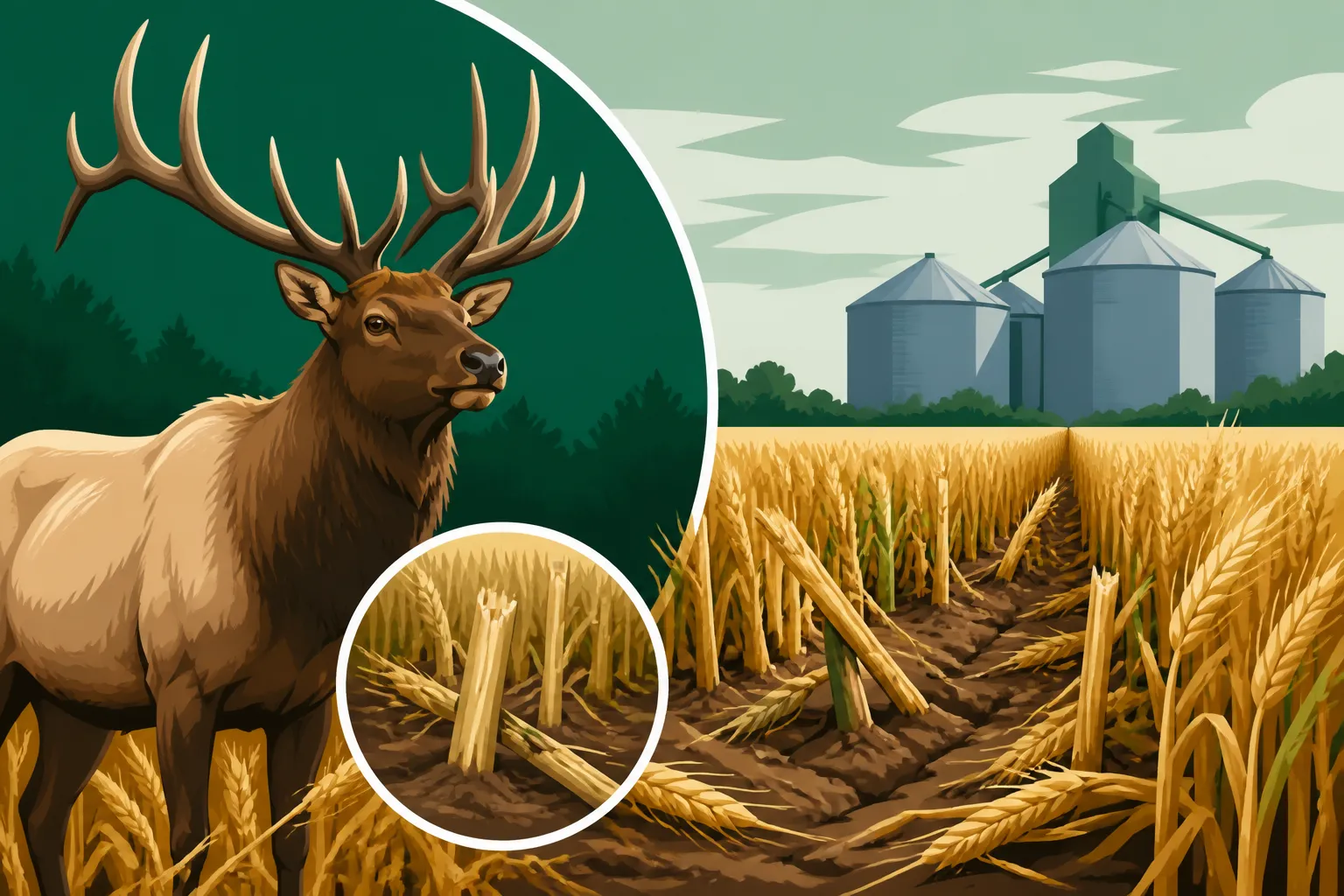
This is perhaps the most common and visible form of damage. Elk will move into standing fields of wheat, barley, oats, canola, or even pea crops, especially when the grain heads are filling out or nearing maturity. They will graze directly on the developing plants, consuming the valuable kernels and foliage. Their large bodies and hooves, however, cause just as much or even more damage through trampling. A large herd bedding down or moving through a field can flatten vast sections, making it impossible to harvest with machinery.
Imagine a farmer looking out at a perfectly golden field of ripe wheat, only to find a diagonal swath of flattened plants where an elk trail once was, or a circular "bedding crater" where a dozen elk spent the night. This kind of damage is not only frustrating but directly reduces yield. Fields that are trampled are often still harvestable in some areas, but the efficiency is significantly reduced, requiring combines to run slower, potentially missing swaths of crop, and increasing wear and tear on equipment. It's a heartbreaking sight, especially when the crop is just days from harvest.
Damage to Stored Feed and Silage
Beyond standing crops, elk also have a penchant for stored feed, particularly bales of hay, silage piles, and even grain stored in bags or temporary bins. Farmers often stack large round bales in fields or near farmyards for winter feeding. Elk, especially during harsh winters when natural forage is scarce, will tear into these bales, eating what they can and scattering the rest, exposing it to spoilage. This is a double whammy: lost feed and the wasted effort of baling it in the first place.
Silage pits or bags, while often more protected, are not immune. Elk can puncture plastic wrap with their antlers or hooves to access the fermented feed, again leading to spoilage of large quantities. This is a critical issue for livestock producers who rely on these feed reserves to get their animals through the winter. The cost of replacing damaged feed, combined with the labor involved in protecting these stores, adds considerable strain to a farm's budget.
Impact on Fences and Infrastructure
Elk are powerful animals, and a sturdy farm fence is often little more than a minor inconvenience to a determined herd. Whether it's a barbed-wire cattle fence, a page-wire sheep fence, or even a multi-strand electric fence, elk can damage it. They might push through strands, break posts, or even jump over, often getting tangled in the process, which can injure both the animal and the fence. This constant need for fence repair is another hidden cost of elk depredation.
Such damage isn't just an expense; it creates vulnerabilities for the farmer's own livestock. If fences are down, cattle or horses can escape, leading to further headaches and potential liabilities. Furthermore, elk can rub their antlers on wooden structures, small trees, or even machinery, causing cosmetic or structural damage. While less common, these incidents demonstrate the broad impact these large animals can have on the physical infrastructure of a farm.
Factors Influencing Increased Elk-Related Conflicts
The surge in elk-related farm damage isn't simply due to more elk on the landscape. It's a complex interplay of environmental shifts, land use changes, and how we manage wildlife populations. Understanding these contributing factors is crucial for developing effective long-term solutions. It’s not just one thing; it’s a combination of pressures that push elk into closer contact with human activities.
Habitat Changes and Urban Sprawl
As human populations grow and agricultural practices intensify, natural elk habitats are increasingly fragmented or altered. Forests are logged, wetlands are drained, and grasslands are converted to cropland or development. This loss of contiguous, undisturbed habitat pushes elk into areas where they previously weren't common. While "urban sprawl" might seem out of place in rural Saskatchewan, the expansion of acreages, oil and gas infrastructure, and even recreational development can impact wildlife corridors and traditional ranges.
Elk, being adaptable, learn to utilize the cover available in shelterbelts, deep coulees, or river valleys adjacent to farmed land. These linear features often provide essential travel routes and bedding sites in otherwise open agricultural regions. As their natural landscape shrinks or becomes more disturbed, the "edge" habitat created by farms becomes increasingly appealing, offering both food and proximity to cover. This constant pressure on natural spaces forces them to seek refuge and sustenance wherever they can find it.
Winter Severity and Feed Availability
Saskatchewan winters can be brutal, and the severity of these conditions directly influences elk behavior. During mild winters with less snow, elk might be able to find adequate natural forage in native grasslands, brush, or forest. However, a winter with deep, persistent snow cover makes natural forage incredibly difficult to access. When the snow piles up and crusts over, elk quickly deplete what's available in their traditional ranges.
Under such conditions, the lure of an accessible grain field or a pile of hay bales becomes irresistible. Fields of standing corn, swathed grain, or stubble fields with residual kernels become critical food sources. This is when elk damage often peaks, as animals are driven by hunger and survival instincts to exploit the easiest available food. Farmers often report the most significant issues during or immediately following periods of extreme cold and deep snow, highlighting the direct link between weather and wildlife conflict.
Hunter Access and Management Challenges
Effective wildlife management relies heavily on regulated hunting to keep populations within ecological and social carrying capacities. For elk, this means ensuring sufficient harvest levels. However, one of the biggest challenges in reducing elk depredation on farms is often limited hunter access to private lands. Many farms are posted, or landowners are simply reluctant to grant permission, leading to areas where elk can effectively become "refuges."
Even when landowners do allow hunting, coordinating hunts and achieving the necessary harvest can be tricky. Elk are intelligent and quickly learn to avoid pressure, moving to areas where they feel safe. A common scenario involves elk feeding on private farmland at night and retreating to adjacent Crown land or other private property during the day, making them difficult to target. The complexity of Hunting Elk on Saskatchewan Grain Land requires careful planning and often close cooperation between landowners and hunters. This creates a spatial disconnect where elk numbers might need to be reduced in specific conflict areas, but the opportunity for hunters to do so is limited.
Practical Mitigation Strategies for Farmers
Dealing with persistent elk damage requires a proactive approach. While there's no single magic bullet, a combination of strategies can significantly reduce crop losses and infrastructure damage. Farmers often have to adapt their tactics based on the specific behavior of the elk and the layout of their land. It's about making your farm less appealing and more difficult for elk to access.
Exclusion Fencing and Physical Barriers
One of the most effective, albeit often most expensive, long-term solutions is exclusion fencing. A properly constructed fence can physically prevent elk from accessing sensitive areas. Standard barbed wire or page wire fences are generally insufficient against determined elk. High-tensile electric fences, often seven to nine strands and reaching six to eight feet high, can be highly effective. The key is consistent voltage and proper grounding. Some farmers also use more robust woven wire fences, sometimes with a top electric strand.
While the upfront cost of installing such fencing can be substantial, particularly for large areas, it can pay for itself over time in reduced crop losses and peace of mind. For smaller, high-value parcels or stored feed sites, temporary electric netting can also be deployed. The challenge lies in fencing large, expansive grain fields, which can be prohibitively expensive. Therefore, strategic placement around key "hot spots" or high-value crops is often the most practical approach.
Hazing and Deterrent Methods
Hazing involves actively scaring elk away from fields. This can range from simple human presence – driving vehicles, walking the fields – to more sophisticated deterrents. Propane cannons, which emit loud bangs at timed intervals, can be effective, especially when moved regularly to prevent elk from habituating. Flashing lights, scarecrows, or even radios left playing loudly in fields can also offer temporary relief. However, elk are smart and quickly learn to ignore predictable deterrents, so variety and unpredictability are crucial.
Some farmers experiment with non-lethal pyrotechnic devices, like cracker shells or bird bangers, which are fired from a shotgun to create noise. These require careful use and adherence to safety regulations. The effectiveness of hazing often diminishes over time as elk become accustomed to the disturbance. Therefore, combining hazing with other methods and frequently changing tactics is key to preventing habituation. The goal is to make the area feel unsafe and undesirable for them to linger.
Strategic Crop Placement and Diversionary Feeding
Sometimes, the best offense is a good defense, and this can involve adjusting cropping patterns. If certain fields consistently experience heavy elk damage, especially those adjacent to dense cover, farmers might consider planting lower-value crops in those "sacrifice zones." These crops, such as hay or silage corn, might still be grazed, but the financial loss is less severe than a high-value grain crop. This is a tough decision, but it can be a practical way to manage risk.
Another strategy, sometimes employed in conjunction with wildlife agencies, is diversionary feeding. This involves providing an alternative food source, such as hay or low-value grain, in a designated area away from prime crops. The idea is to draw elk away from the vulnerable fields. This method has its pros and cons; while it can protect valuable crops, it can also concentrate elk and potentially lead to other issues if not managed carefully. The goal is to guide elk towards areas where their presence causes less conflict, rather than simply letting them roam wherever they please.
Government Programs and Regulatory Support
Recognizing the significant impact of wildlife damage on agricultural producers, the Saskatchewan government, through the Ministry of Environment and associated agencies, offers various programs and regulations designed to assist farmers. These initiatives aim to mitigate losses, manage wildlife populations, and foster a more balanced coexistence. It's important for farmers to understand what support is available to them.
Provincial Compensation Programs for Wildlife Damage
Saskatchewan offers programs to compensate producers for wildlife-related crop damage. The primary program is administered by the Saskatchewan Crop Insurance Corporation (SCIC), which includes coverage for damage caused by big game animals like elk. This compensation aims to partially offset the financial losses incurred when elk graze, trample, or otherwise destroy standing crops. It's not a complete replacement for lost revenue, but it provides a crucial safety net.
To claim compensation, producers typically need to report damage promptly, often before harvest, and allow adjusters to assess the extent of the loss. There are specific guidelines and deadlines for reporting. Understanding the nuances of these programs is vital for producers seeking financial relief. While these programs help with the financial burden, they don't solve the underlying problem of elk presence and behavior, making mitigation efforts equally important.
Wildlife Management Zones and Special Draws
Saskatchewan is divided into numerous Saskatchewan's Wildlife Management Zones (WMZs), each with specific hunting regulations tailored to local wildlife populations and management objectives. In WMZs where elk populations are high and causing significant agricultural damage, the Ministry of Environment may implement special hunting opportunities to increase harvest pressure. This often includes special antlerless elk draws, which allow hunters to target cows and calves, directly impacting population growth.
These special draws are critical tools for population control. For farmers experiencing chronic damage, understanding the hunting regulations in their specific WMZ, including when Saskatchewan Elk Season Dates occur, can be beneficial. They might encourage hunters to apply for permits in their area or even offer access to ethical, responsible hunters who have secured the necessary tags through the Saskatchewan Big Game Draw. GoHunt, a platform for hunters, can be a useful resource for finding relevant draw odds and application information for specific WMZs.
Collaborative Approaches and Research Initiatives
Beyond direct compensation and hunting regulations, there's a growing emphasis on collaborative approaches to wildlife management. This involves bringing together landowners, hunters, wildlife biologists, and government agencies to develop localized solutions. Initiatives like establishing landowner advisory committees or conducting targeted research on elk movement patterns in agricultural landscapes are examples of this. The aim is to create management plans that are effective, practical, and responsive to the unique challenges of specific regions.
Research into elk behavior, their use of agricultural landscapes, and the effectiveness of different deterrents is ongoing. For instance, studies might explore the efficacy of different fence designs or acoustic deterrents, or analyze the data collected through How Saskatchewan Counts Its Game Animals to inform population models. By sharing information and working together, stakeholders can better understand the problem and implement strategies that benefit both wildlife and agricultural interests, moving towards a more sustainable coexistence.
The Role of Hunting in Elk Population Management
Hunting is an integral and often necessary tool for managing elk populations, especially in areas where they conflict with human activities like farming. Without predators or controlled harvest, elk populations can rapidly grow to levels that exceed the carrying capacity of the land, leading to increased disease, habitat degradation, and, of course, more damage to agricultural crops. Regulated hunting provides a crucial mechanism for balancing these factors.
Regulated Hunting Seasons and Antlerless Opportunities
Saskatchewan’s hunting seasons for elk are carefully designed to manage populations. While antlered bull tags are often highly sought after, it's the antlerless (cow and calf) tags that are most critical for population control. These tags allow for the harvest of female animals, which directly impacts the reproductive potential of the herd. The Ministry of Environment strategically allocates these tags through the big game draw, often with higher allocations in WMZs experiencing significant agricultural damage.
For hunters, securing an antlerless elk tag can provide a fantastic opportunity to fill the freezer and contribute to conservation. For landowners, it offers a means to reduce the local elk population causing depredation. Understanding the specific regulations for Elk Hunting in Saskatchewan, including season lengths and bag limits in different WMZs, is essential for both hunters and landowners. These seasons are set based on population surveys and ongoing monitoring of herd health and distribution.
Hunter Engagement and Landowner Relationships
A key component of successful elk management on private land is fostering strong relationships between landowners and hunters. Many farmers, though frustrated by elk damage, are hesitant to allow just anyone onto their land. However, an ethical, responsible hunter can be an invaluable partner in managing elk. By granting permission to trusted individuals, farmers can help reduce elk numbers while providing recreational opportunities. This often starts with a simple conversation and a clear understanding of expectations, adhering to the principles outlined in Getting Private Land Permission in Saskatchewan.
Hunters, in turn, have a responsibility to be respectful, follow all rules, and communicate effectively with landowners. This might involve sharing harvest data, offering assistance with other tasks, or simply showing appreciation for access. Platforms like GoHunt can sometimes facilitate these connections, helping hunters find areas where tags are available and damage is an issue. A strong landowner-hunter bond can transform a problem into a partnership, where both parties benefit from reduced damage and successful harvests.
Understanding Elk Movement and Harvest Strategies
For hunters aiming to help with elk management on farms, understanding elk movement patterns is paramount. Elk are creatures of habit but can adapt quickly to pressure. They often move between feeding grounds (the grain fields) and bedding areas (nearby bush, coulees, or unpressured private/Crown land). Observing these patterns, perhaps with the aid of scouting or trail cameras, can help hunters develop effective strategies. This is especially true when attempting to target animals causing damage.
Techniques like still-hunting, ambushing along travel corridors, or even strategic calling (e.g., Bugling Elk on a Farm Edge) can be employed. However, ethical hunting means being aware of your surroundings and respecting property boundaries. Hunters should also be familiar with Saskatchewan Hunter Education and Firearms Safety regulations and ensure they are adequately prepared for the unique challenges of hunting large game like elk, especially if they are going to be out in conditions like Hunting Saskatchewan Winter Weather Safely. Effective harvest isn't just about shooting an elk; it's about making a responsible, ethical contribution to managing a specific population that is impacting agricultural operations.
| Mitigation Strategy | Description | Pros | Cons |
|---|---|---|---|
| Exclusion Fencing | High-tensile electric or robust woven wire fences to prevent access. | Highly effective long-term solution; protects high-value crops. | High upfront cost; maintenance required; impractical for very large areas. |
| Hazing & Deterrents | Using noise (propane cannons), lights, or human presence to scare elk away. | Can provide immediate, short-term relief; relatively low cost for some methods. | Elk can habituate quickly; requires constant effort and variety; limited long-term effectiveness. |
| Strategic Cropping | Planting lower-value crops in high-risk areas, or crops less appealing to elk. | Reduces financial risk for high-value crops; works with existing farm practices. | May reduce overall farm profitability; requires careful planning. |
| Diversionary Feeding | Providing alternative food sources (hay, low-value grain) away from vulnerable crops. | Can draw elk away from specific problem areas; may reduce immediate damage. | Can concentrate elk and create new problems; ongoing cost; requires careful management. |
| Increased Hunting | Utilizing regulated hunting seasons, especially antlerless tags, to reduce local populations. | Most effective long-term population control; provides recreation and meat. | Requires hunter access and landowner cooperation; elk can be difficult to hunt; success not guaranteed. |
Disclaimer
The information provided in this guide is for general informational purposes only and does not constitute professional advice. Hunting regulations, compensation programs, and wildlife management strategies can change. Always consult the official Saskatchewan hunting guide, the Saskatchewan Ministry of Environment, and other relevant provincial authorities for the most current and accurate information before making any decisions related to hunting or wildlife management on your property.