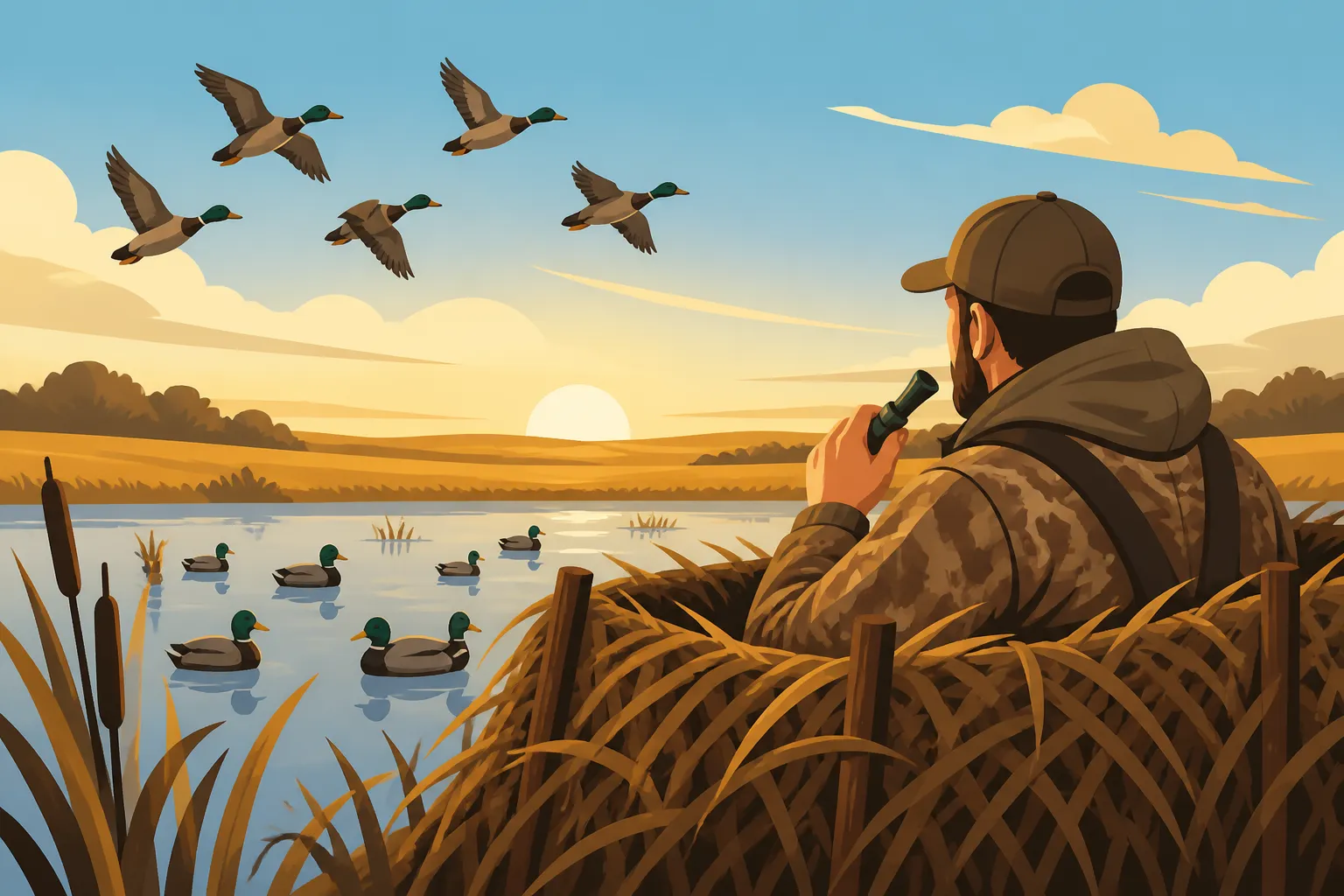
Field Setups a Waterfowl Guide Provides
One of the biggest eye-openers for hunters new to Saskatchewan waterfowl is just how much goes into a successful field hunt. It's not just a matter of tossing out a few dozen decoys and hoping for the best. The sheer scale, strategic thought, and physical effort involved in a guide's field setup are truly remarkable, and understanding this can really deepen your appreciation for the whole experience. This guide will pull back the curtain on the intricate field setups Saskatchewan waterfowl guides meticulously craft to bring those wary birds right into your shooting lanes.
The Groundwork: Scouting, Intelligence, and Securing the Scene
Before a single decoy is deployed, a truly exceptional waterfowl hunt begins long before dawn, often weeks or even months in advance. Guides aren't just guessing where the birds will be; they're operating on a foundation of intensive scouting and detailed intelligence gathering.
Reading the Landscape and Bird Movement
Think of a Saskatchewan waterfowl guide as a highly specialized detective, constantly gathering clues about the birds' daily routines. They're out on the grid roads, binoculars glued to their eyes, systematically scanning thousands of acres. They're looking for where geese and ducks are flying from their nighttime roosts, which fields they prefer for breakfast, lunch, and dinner, and exactly how they approach and depart these feeding grounds. This isn't a casual drive; it's a dedicated effort to understand the subtle shifts in patterns caused by weather, crop harvest, and hunting pressure. They'll pay close attention to crop types – a pea field might be a magnet one week, while a swathed barley field or a standing canola field edge could be the hot ticket the next. Different birds prefer different foods, and a good guide knows these preferences intimately. They're also often using tools like satellite imagery to quickly survey large areas from an aerial perspective, looking for hidden potholes, slough edges, or unique field features that might hold birds, much like you might use it for Scouting With Satellite Imagery in Saskatchewan.
Securing Prime Real Estate
Finding birds is one thing; getting permission to hunt them is another entirely, and it's a critical part of a guide's job. Saskatchewan is mostly private land, and hunters need explicit permission to access it. Waterfowl guides often spend a significant portion of their off-season cultivating relationships with local landowners, farmers, and ranchers. They secure exclusive access to prime feeding fields, sometimes for the entire season. This means knocking on doors, proving reliability, and often offering compensation for the privilege of hunting. This trust is paramount. Without these relationships, even the best scouted field is off-limits. This also explains why booking with a reputable outfitter is often the best way to guarantee you'll be hunting actively fed fields with good numbers of birds, as they've already done the legwork for Getting Permission for a Goose Field.
Decoy Spreads: More Than Just Plastic Birds
Once the perfect field is selected, the real artistry of the setup begins: the decoy spread. This is where a guide truly earns their stripes, transforming a barren field into an irresistible magnet for passing flocks.
The Sheer Volume and Variety of Decoys
When you hunt with a Saskatchewan guide, you'll quickly realize that "a few decoys" is a massive understatement. We're talking hundreds, sometimes even a thousand or more, individual decoys spread across a field. For Canada geese, you'll see large, realistic full-body decoys mixed with lighter, easier-to-transport shells or silhouettes. For snow geese, the numbers go even higher, often incorporating massive spreads of white rags or Sentry decoys to mimic a huge, resting flock. Then there are specklebelly goose decoys, meticulously placed to replicate their unique feeding posture. The sheer investment in decoys, not to mention the logistics of hauling, deploying, and retrieving them daily, is astounding. This scale creates a visual spectacle that screams "safe landing zone" to incoming birds, drawing them in from incredible distances. It's a massive undertaking, especially if you're Setting a Goose Spread in Swathed Barley.
Strategic Spreading and Species-Specific Setups
Deploying decoys isn't just about throwing them out; it's a science. Guides use various patterns – J-hooks, U-shapes, or X-patterns – all designed to channel incoming birds into a specific landing zone, usually right in front of the concealed hunters. The wind direction is paramount, as birds almost always land into the wind. Decoys are positioned to reflect this, with "feeder" decoys facing into the wind and "sentry" decoys standing guard at the perimeter. The guide will also consider the sun's position to ensure the birds get a clear view of the spread without silhouetting the hunters.
A skilled guide will also create species-specific pockets within the larger spread. Canada geese might be concentrated in one area, while a separate cluster of smaller specklebelly decoys is set nearby, often with unique flagging techniques to entice them. Motion decoys, like "flappers" or motorized wings, are also incorporated to add realism, simulating active feeding and movement that makes the spread truly come alive, particularly for Hunting Snow Geese Over a Big Spread.
Adding the Duck Factor
While many field hunts focus primarily on geese, ducks are often an exciting bonus, especially early in the season. Guides will frequently incorporate duck decoys into the spread, often along the edges of a pothole, slough, or even just a low, wet spot in the field. Mallards are the most common, but you might see pintail or wigeon decoys as well. These duck spreads are generally smaller but still strategically placed to catch the eye of passing dabblers. This gives hunters a fantastic mixed-bag opportunity and requires the guide to have an even broader knowledge of bird behavior and calling techniques. Imagine the thrill of Hunting Ducks on a Saskatchewan Stubble Field when a flock of mallards suddenly commits to your goose spread!
Concealment: The Art of Disappearing
Even the most perfect decoy spread is useless if the birds see the hunters. This is where the guide's expertise in concealment becomes critical.
Blinds, Layouts, and Pits
Saskatchewan waterfowl guides utilize a variety of blinds to keep hunters hidden. Layout blinds are incredibly popular for field hunting. These low-profile blinds allow hunters to lie down, blending seamlessly into the stubble or cover crop. They're surprisingly comfortable and provide excellent concealment as birds approach. For larger groups or specific scenarios, A-frame blinds might be used, which are portable structures designed to mimic hay bales or brush piles. In some highly trafficked fields, a guide might even have permanent pit blinds installed – underground structures that offer ultimate concealment and comfort, often equipped with heaters for those frosty late-season hunts. The choice of blind depends on the field, the weather, and the number of hunters.
The Art of Camouflage and Natural Blending
It's not enough to simply have a blind; it must be flawlessly integrated into the surroundings. Guides spend considerable time "brushing in" blinds, using natural vegetation from the very field you're hunting. This means covering layouts with stubble, straw, or whatever indigenous material is available, completely breaking up any unnatural outline. In winter, this might mean covering blinds with white sheets and snow to vanish into the landscape. Every effort is made to make the setup look as natural as possible, as if no human presence exists. This meticulous attention to detail is what separates a good guide from an average one.
Hunter Discipline: The Guide's Crucial Instruction
Even with perfect blinds, hunter discipline is paramount. A guide will constantly be on the lookout for incoming birds, using hand signals or quiet verbal cues to alert hunters. They instruct everyone to remain absolutely still, no peeking, no fidgeting, until the command to "take 'em!" is given. The guide often acts as the shot caller, determining when the birds are in the ideal range and position. This level of control and communication is vital for success, ensuring that the hunters remain invisible until the moment of truth. This discipline, combined with the guide's setup, leads to incredible opportunities for Field Hunting Geese in Saskatchewan Stubble.
Calling: The Voice that Seals the Deal
The visual appeal of the decoy spread gets the birds' attention, but it's the calling that truly convinces them to commit and drop into the kill hole.
Goose Calls and Techniques
Saskatchewan waterfowl guides are masters of the call. For Canada geese, they'll use short-reed calls, mimicking everything from the deep "honk" of a contented goose to the excited "cluck" and "murmur" of a feeding flock. They understand the nuances of volume and intensity, knowing when to call aggressively to grab attention from afar, and when to soften the calls to reassure nervous birds. For snow geese, the calling can be a chaotic symphony of high-pitched "kisk-kisk" sounds, often amplified by electronic calls (e-callers) to replicate the immense volume of a thousand snow geese. Specklebellies have their own distinctive "laughing" call, and guides will switch between calls to match the species they're trying to work. The calling isn't constant; it's a careful dance, reading the birds' reactions and adjusting accordingly. BookYourHunt often features outfitters who pride themselves on their calling expertise, highlighting guides who know how to work even the wariest birds.
Duck Calls and Decoy Play
While goose calling dominates most field hunts, duck calls still play a role, especially in mixed spreads or when ducks are working the edges. A guide might use a soft mallard greeting call, a feeder chuckle, or even a whistle to draw in pintails or wigeon. The synergy between the calling and the visual decoy spread is what makes the magic happen. The guide uses calls to convince the birds that the lifelike spread below is not only safe but the best place to be right now. They're the conductor of the orchestra, bringing all the elements together.
The Synergy of Calling and Decoys
Ultimately, the guide's field setup is a masterclass in synergy. The meticulous scouting informs the field choice. The vast array of decoys creates the visual invitation. The flawless concealment ensures invisibility. And the expert calling provides the auditory reassurance. All these elements work in concert, orchestrated by the guide, to transform a seemingly empty field into a vibrant, irresistible feeding ground that convinces thousands of migratory birds to drop their wings and commit. It's a testament to their dedication, skill, and deep understanding of waterfowl behavior. GoHunt resources often emphasize the importance of understanding these setup components when planning a trip, as it directly impacts success rates.
| Component | Primary Purpose | Species Focus | Key Considerations |
|---|---|---|---|
| Scouting | Locating active feeding fields, flight paths | Geese, Ducks, Cranes | Crop types, recent weather, bird numbers, landowner access |
| Full-Body Decoys | Highly realistic visual attraction | Canada Geese, Specklebellies | Weight, durability, cost, transport logistics |
| Shell/Silhouette Decoys | Cost-effective volume, movement simulation | Snow Geese, Canada Geese | Ease of transport, quantity needed, wind sensitivity |
| Motion Decoys | Mimicking active feeding, drawing distant birds | All waterfowl, especially wary ones | Battery life, setup time, legal restrictions |
| Layout Blinds | Low-profile hunter concealment | All field hunting | Comfort, camouflage, hunter's field of view |
| A-Frame Blinds | Group concealment, mimicking natural structures | Geese, larger groups | Portability, blending with surroundings, wind stability |
| Pit Blinds | Permanent, ultimate concealment and comfort | All field hunting | Installation cost, permanence, accessibility |
| Goose Calls | Auditory attraction, reassurance, control | Canada Geese, Snow Geese, Specklebellies | Guide's skill, call type (short reed, e-caller) |
| Duck Calls | Auditory attraction, species-specific | Mallards, Pintails, Wigeon | Guide's skill, call type (reeds, whistles) |
| Camouflage/Brushing | Blending blinds into natural environment | Hunters, blinds | Local vegetation, season (snow vs. green fields) |
| Flags | Visual long-range attraction, movement simulation | Snow Geese, Specklebellies, Canada Geese | Hunter's skill, timing, wind conditions |
If you're considering a guided waterfowl hunt in Saskatchewan, understanding these intricate field setups will give you a deeper appreciation for the work involved and the strategic thought that goes into every successful hunt.
Disclaimer
This article is for general informational purposes only and does not constitute professional advice. Laws, prices and regulations vary by location and change over time. Consult a qualified professional for guidance on your specific situation.