Hunting the Qu’Appelle Valley Coulees
Hunting the winding, broken terrain of Saskatchewan's Qu'Appelle Valley presents a unique set of challenges that can leave even seasoned hunters scratching their heads. It's not like the open prairie or the dense boreal forest; this is a world unto itself. This guide is here to unravel the mysteries of these coulees, providing you with actionable strategies to effectively scout, access, and hunt this incredibly productive and often overlooked hunting ground.
Understanding the Qu'Appelle Valley's Unique Terrain
The Qu'Appelle Valley isn't just a picturesque cut across the prairie; it's a dynamic ecosystem, a natural haven for wildlife that offers some truly rewarding hunting experiences. But you can't approach it like you would a flat stubble field or a straight cutline in the bush. The terrain demands respect, and a nuanced understanding of how game animals interact with its dramatic features.
The Coulee System and Its Appeal for Game
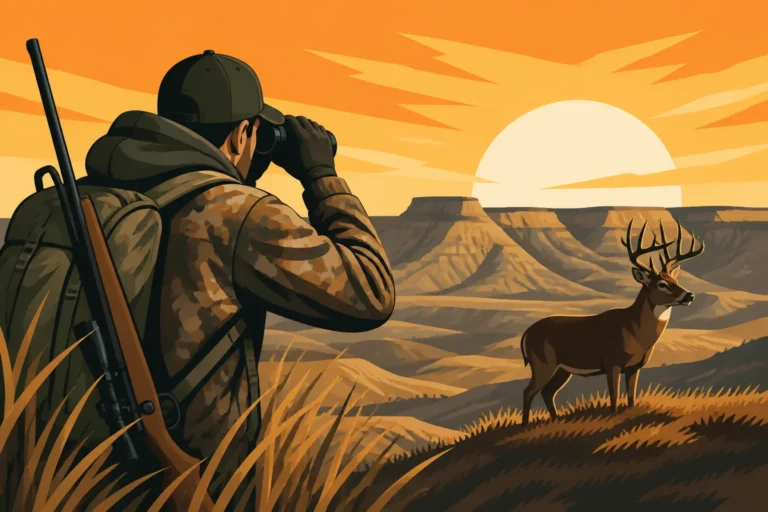
Imagine a vast, ancient river carving its way through soft earth, leaving behind a complex network of deep ravines, steep hillsides, and hidden draws – that's the Qu'Appelle Valley in a nutshell. This isn't just one big valley; it's an intricate system of interconnected coulees, each with its own microclimate and cover. For game animals, these coulees are absolute gold. They provide immediate escape cover from predators, shelter from the biting prairie winds and deep snow, and a consistent source of food.
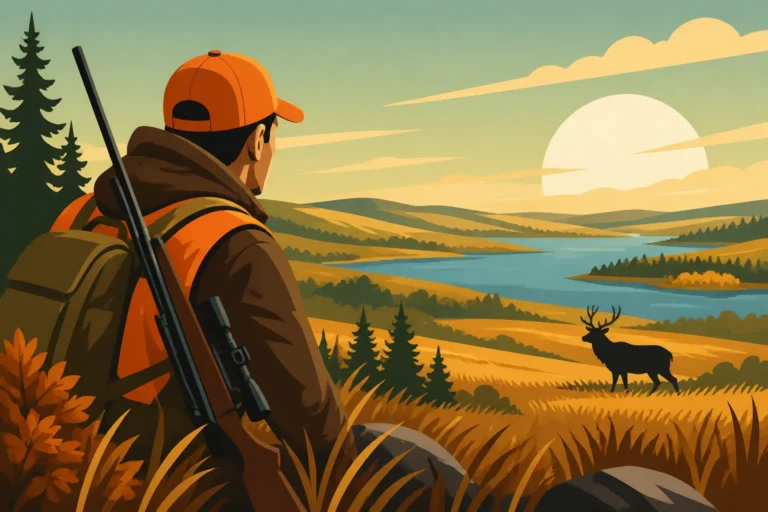
Whitetail deer, especially those older, wiser bucks, use the steep banks and thick willow bottoms as their highway, moving undetected between feeding areas and bedding sites. You'll often find them tucked into the lee of a hill on a cold day, soaking up what little sun is available. Mule deer, while more typically associated with the open prairie, can also be found making their homes in the deeper, more rugged sections of the valley, using the broken ground to their advantage for spotting danger and vanishing quickly. Predators like coyotes also patrol these natural corridors, making them excellent spots for calling. Even upland birds, like Hungarian partridge and sharp-tailed grouse, find refuge and food sources along the coulee edges and in the brushy draws. The sheer variety and density of cover make these areas critical habitat, concentrating game in a way you just don't see on the flatlands. This makes them prime locations for those willing to put in the effort.
Navigating the Topography: Challenges and Opportunities
While the coulees offer incredible advantages for wildlife, they present undeniable challenges for the hunter. You'll encounter steep inclines that will test your stamina, especially if there's snow or ice on the ground. Hidden draws can pop up unexpectedly, turning what looked like a straightforward walk into a scramble. The dense brush, often a mix of willow, saskatoon, and chokecherry, can be incredibly thick, making silent movement difficult and visibility limited. It's easy to get turned around, and a quarter-section can feel like a whole township once you're down in the breaks.
However, these very challenges are what create significant hunting opportunities. The broken ground naturally funnels game through specific choke points, such as saddles between hills, crossings over small creeks, or narrow trails along the bottom of a draw. Learning to identify these natural funnels is key. The limited visibility means that once you're down in the coulees, you're often in very close quarters with animals, necessitating a different approach than long-range glassing on the open prairie. It also means animals often feel safer, leading them to be less wary than their open-country cousins. This ruggedness also deters many hunters, meaning that if you're willing to work a little harder, you can often find unpressured animals in spots others overlook. It's truly a place where your hunting skills, not just your ability to spot from afar, come into play.
Scouting and Accessing Qu'Appelle Valley Hunting Spots
Before you even think about setting foot in the Qu'Appelle Valley with a rifle or bow, you need a solid plan. Scouting here is paramount, and understanding access is critical. The valley is a patchwork of land types, and failing to do your homework can lead to wasted time or, worse, unintended trespassing.
Mapping and Technology for Valley Hunting
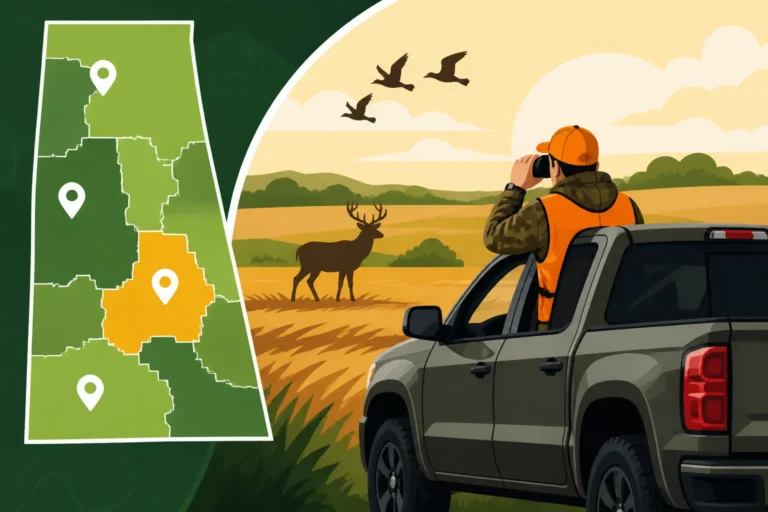
Forget simply eyeballing a map or relying solely on old memories; the Qu'Appelle Valley demands modern tools. Satellite imagery is your best friend here. Platforms like onX Hunt have revolutionized how we approach complex terrain. Before you leave home, spend hours poring over the satellite views. Look for the subtle nuances: fingers of bush extending into fields, steep drops that create natural boundaries, small water sources, and especially areas of dense, dark timber that likely hold bedding deer. You can identify potential travel corridors that animals might use to get from feeding areas in the agricultural fields above the valley down into the shelter of the coulees.
Topographical maps are equally important for understanding elevation changes, steepness, and where game might prefer to bed on north-facing slopes for cool shade in early season, or south-facing slopes for warmth in the late season. With onX Hunt, you can overlay property lines, showing you exactly where Crown land starts and private property begins. This is invaluable. Plot out your entry and exit points, potential stand locations, and likely game trails long before you're out there stumbling around in the dark. Another resource like GoHunt can provide additional data points and insights, helping you to form a comprehensive understanding of the landscape and potential game movements. Don't underestimate the power of digital scouting; it saves boot leather and helps you hunt smarter, not harder. You can learn a lot about Reading Saskatchewan Crown Land Layers on onX this way.
Gaining Landowner Permission in the Valley
The Qu'Appelle Valley winds through a mix of Crown land and privately owned agricultural land. Many of the most productive coulee systems run through deeded farmland. This means gaining landowner permission is often essential for a successful hunt. Simply assuming public access, especially near cultivated fields or residences, is a recipe for disappointment and frustration. Saskatchewan law is very clear: you need permission to hunt on private land.
The best approach is to be respectful and build rapport. Start by knocking on doors well in advance of the season, not the morning of your hunt. Dress presentably, leave your hunting gear in the vehicle, and be polite. Introduce yourself, explain what you're hoping to hunt, and ask directly for permission. Be specific about the area you're interested in, perhaps even showing them a map with your planned routes. Offer to share contact information and be clear about your intentions – for instance, that you'll be hunting on foot and will respect their land. Many landowners are receptive to responsible hunters, especially if deer or elk are causing crop damage. Some might have areas they'd prefer you avoid, or specific rules about vehicles. Always respect their wishes implicitly. Even if they say no, thank them for their time. A positive impression might open doors in the future, or they might even suggest another farmer to talk to. Read up on Knocking on Doors in Saskatchewan Farm Country for more tips on how to approach these conversations.
Hunting Strategies for the Qu'Appelle Valley
Once you've done your homework and secured access, the real fun begins. Hunting the Qu'Appelle Valley requires different tactics than simply sitting over a field or still-hunting vast tracts of boreal forest. It's about precision, patience, and adapting to the terrain.
Still-Hunting and Stand Placement in Coulees
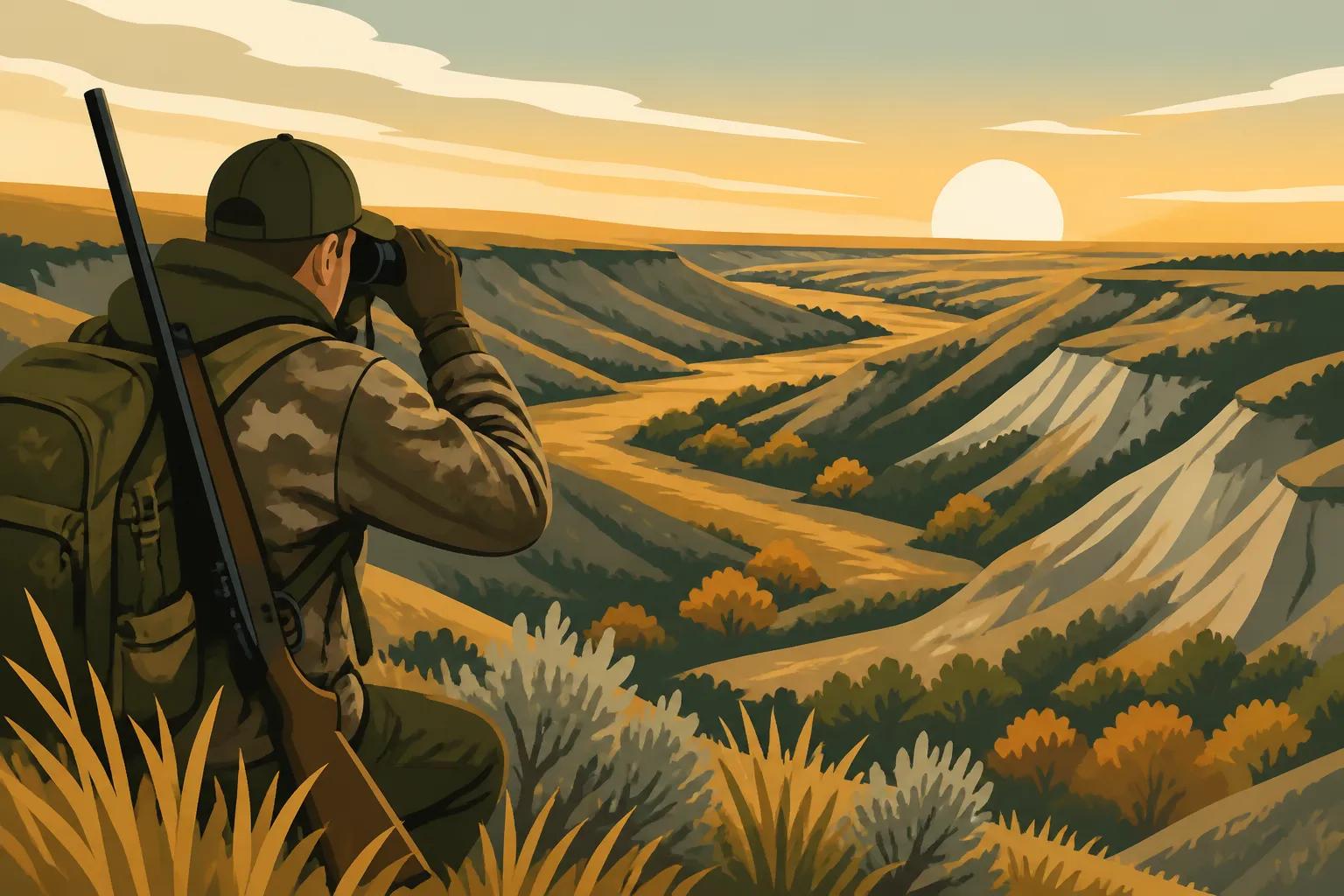
Still-hunting in the coulees is an art form. You're not covering huge distances quickly; instead, you're taking five steps, pausing, and meticulously scanning every shadow, every clump of brush, every fold in the land. Use binoculars constantly, even at close range, to pick apart cover. The steep sides mean you'll often be looking down into game, or across at a similar elevation, rather than always up. Move slowly into the wind, paying attention to not just what you see, but what you hear and smell. The crunch of dry leaves, the snapping of a twig, the faint musky scent of a buck — these are all clues. Pay close attention to trails that traverse the hillsides, or those that follow the bottom of a draw. These are the highways for game.
When it comes to stand placement, think about those natural funnels you identified during scouting. A saddle between two hills that animals must cross to get from a bedding area to a water source or feeding field can be incredibly productive. A bend in a steep coulee bottom where trails converge, or a pinch point where heavy brush meets a more open stretch, are also prime locations. Consider Hanging a Stand on a Saskatchewan Bush Edge where a coulee meets the agricultural land above. Elevated stands or ground blinds built into the dense cover can offer excellent ambush points. Always consider your entry and exit routes to avoid spooking game, especially at dawn and dusk when animals are most active.
Utilizing Calls and Rattling in Valley Terrain
Calling and rattling can be highly effective in the Qu'Appelle Valley, but you need to adjust your approach due to the acoustics of the terrain. Sound can carry surprisingly far in the still air of a coulee bottom, but it can also be muffled or distorted by the steep banks and dense cover.
For whitetail deer, especially during the rut, aggressive rattling can draw in curious bucks. The broken terrain means bucks often can't see the source of the sound, making them more likely to come in to investigate. Set up where you have good shooting lanes in multiple directions, as deer might approach from unexpected angles, often trying to circle downwind. Combine rattling with grunt calls and doe bleats to paint a realistic picture. When it comes to Grunt Calls Late in Saskatchewan's Rut, remember that during the peak, shorter, more intense sequences can often be more effective than drawn-out ones.
For coyotes, distress calls (rabbit, mouse, or even fawn bleats) can be incredibly potent. The coulees concentrate coyotes, and the broken ground allows you to set up out of sight, letting the sound do the work. Coyotes will often use the draws and cover to approach silently, so maintain constant vigilance. Be prepared for a quick shot as they pop over a rise or through a gap in the brush.
Dealing with Wind and Thermals
Wind is a hunter's constant companion in Saskatchewan, and in the Qu'Appelle Valley, it becomes particularly tricky. The wind often doesn't just blow in one direction; it swirls, especially in the deeper coulees. What might be a steady north wind on the prairie above can become an unpredictable kaleidoscope of air currents down in the breaks.
Thermals are also a significant factor, particularly in the mornings and evenings. As the sun rises, the air in the valley warms and begins to rise, carrying your scent upwards. In the evening, as the air cools, it settles and flows down into the valley bottoms. Understanding and playing these thermals is crucial for not alerting game to your presence. Always try to approach from downwind of where you expect game to be, and position your stand or hunting spot so that your scent is carried away from known bedding or feeding areas. This might mean adjusting your entry route based on the time of day, or sitting a different side of a coulee depending on the thermals. A small wind checker can be an invaluable tool to constantly monitor the true wind direction around your setup.
Game Species and Seasonal Considerations
The Qu'Appelle Valley is rich in diverse game, and understanding their habits within this unique environment is key. Each season also brings its own set of challenges and opportunities.
Whitetails and Mule Deer in the Valley
The Qu'Appelle Valley is a stronghold for both whitetail and mule deer. Whitetails here grow large, taking advantage of the rich agricultural fields for food and the dense coulees for security. You'll find them bedding in the thickest pockets of willows and aspens along the valley sides or in the numerous draws that feed into the main valley. They use the natural contours of the land to travel unseen, often sticking to trails just below the crest of a ridge or deep within the brushy bottoms. Learning to read their sign – rubs, scrapes, fresh tracks, and bedding areas – is critical, especially when Reading Whitetail Sign in Saskatchewan Bluffs. They are masters of using the topography to their advantage, often appearing silently where you least expect them.
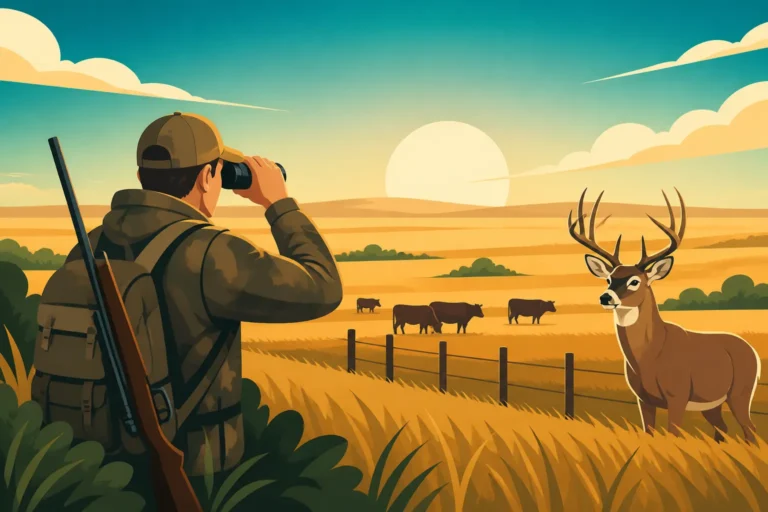
Mule deer, with their distinctive bounding gait and larger ears, are often found in the more open, rugged sections of the valley, particularly on the grassy slopes and broken rangeland portions. They prefer to use their eyesight to spot danger, making them more challenging to stalk in open areas. However, they will also dip into the coulees for shelter and food, especially during harsh weather. Differentiating between the two species quickly can be important if you're hunting in a zone with specific tag requirements. Mule deer often prefer the south-facing slopes in winter, soaking up what sunshine they can.
Other Game: Coyotes, Birds, and Small Game
Beyond big game, the Qu'Appelle Valley offers excellent opportunities for a variety of other species. Coyotes are abundant, constantly patrolling the valley for prey. As mentioned, calling them in can be very productive. You'll often spot them working the edges of fields or slinking through the coulee bottoms.
Upland birds thrive along the valley edges. Hunting Hungarian Partridge on Saskatchewan Farms and sharp-tailed grouse is a classic prairie hunt, and the shelterbelts and brushy draws within the valley offer ideal habitat. Walking up these birds with a flushing dog can be a fantastic way to spend a day, or even to add variety to a big game hunt. Ruffed grouse can be found in the thicker aspen bluffs within the valley system as well. And don't forget about snowshoe hare in the denser bush, especially after a fresh snowfall when their tracks are easy to spot. These smaller game opportunities can add a lot to your overall hunting experience and keep you engaged when big game activity is slow.
Seasonal Nuances for Qu'Appelle Hunts
The Qu'Appelle Valley changes dramatically with the seasons, and so do the hunting strategies.
- Early Archery Season (September): This is a great time to be in the valley. Deer are often still in summer patterns, hitting agricultural fields in the evenings. The dense foliage provides excellent cover for bowhunters. Focus on water sources and trails leading from bedding areas to food. The heat can be a factor, so meat care needs to be paramount.
- The Rut (October-November): This is prime time for big whitetails. Hunting the Rut in Early to Mid November in the valley means focusing on active scrape lines, rub lines, and travel corridors between doe bedding areas. Bucks are on the move, chasing does, and can be more susceptible to calling and rattling. The cooler temperatures make sitting longer in a stand more comfortable, and bucks will cover ground.
- Late Season (December): Once the snow flies and temperatures plummet, the valley becomes a critical wintering ground. Deer will yard up in the thickest, most sheltered cover, often near reliable food sources. This can mean tougher hunting conditions, with bitter cold and deep snow, making Hunting Whitetails at Thirty Below a real possibility. However, it also means deer are concentrated, and their movements become more predictable. Focus on south-facing slopes for bedding and secure thermal cover. Tracking in fresh snow can also be highly effective. Remember to pack your Winter Truck Kit for a Saskatchewan Hunt and always prioritize Hunting Saskatchewan Winter Weather Safely.
Here's a quick comparison of hunting challenges and opportunities between the Qu'Appelle Valley and the open prairie:
| Feature | Qu'Appelle Valley | Open Prairie |
|---|---|---|
| Terrain | Steep coulees, dense brush, broken ground, hidden draws | Flat, rolling hills, vast fields, minimal cover |
| Visibility | Limited, close quarters, ambushes | Excellent, long-range glassing, spotting & stalking |
| Game Movement | Funneled through draws, creek bottoms, saddles | Dispersed, patterns around feed/water, linear travel |
| Primary Game | Whitetail, Mule Deer, Coyotes, Upland Birds | Mule Deer, Pronghorn, Coyotes, Waterfowl, Upland Birds |
| Access | Mix of private & Crown, often requires permission | Primarily private, significant permission required |
| Challenges | Physical exertion, swirling winds, thick cover | Long distances, limited cover, wary game |
| Opportunities | Close-range encounters, concentrated game, less pressure | Spotting trophy animals, classic prairie hunting |
The Qu'Appelle Valley truly offers a unique and rewarding Saskatchewan hunting experience. By understanding its terrain, leveraging modern scouting tools like onX Hunt, respectfully securing access, and employing tailored strategies, you can unlock its secrets and find success in these beautiful, broken lands. It's a place that demands effort but repays it with incredible memories and challenging hunts.
Disclaimer
This article is for general informational purposes only and does not constitute professional advice. Laws, prices and regulations vary by location and change over time. Consult a qualified professional for guidance on your specific situation.