Rules on Shooting Across a Road
One of the most common anxieties for hunters, whether seasoned or just starting out in Saskatchewan, often revolves around the nuances of what's legal and safe when you're hunting near roads. It's a tricky subject because while some rules seem straightforward, the practical application in a dynamic hunting scenario can feel like a minefield. You're out in the field, a buck steps out, and suddenly you're asking yourself, "Can I shoot across that gravel road? What if it's just a dirt trail?" This guide is here to clear up that confusion, explain the explicit rules, and offer practical advice to ensure you're hunting safely and legally, without risking public safety or facing hefty penalties.
The Immutable Law: Public Safety Near Saskatchewan Roads
Let's get straight to the heart of the matter: the rules about shooting across or from a road in Saskatchewan are designed with one paramount objective in mind – public safety. Imagine an unsuspecting family driving down a seemingly quiet grid road, or a farmer working a field bordering it. A hunter, perhaps not fully aware of their surroundings or the regulations, takes a shot that could put those innocent lives in immediate danger. That's the scenario these laws aim to prevent. It's not about hindering your hunt; it's about protecting every person who uses or lives near these public thoroughfares.
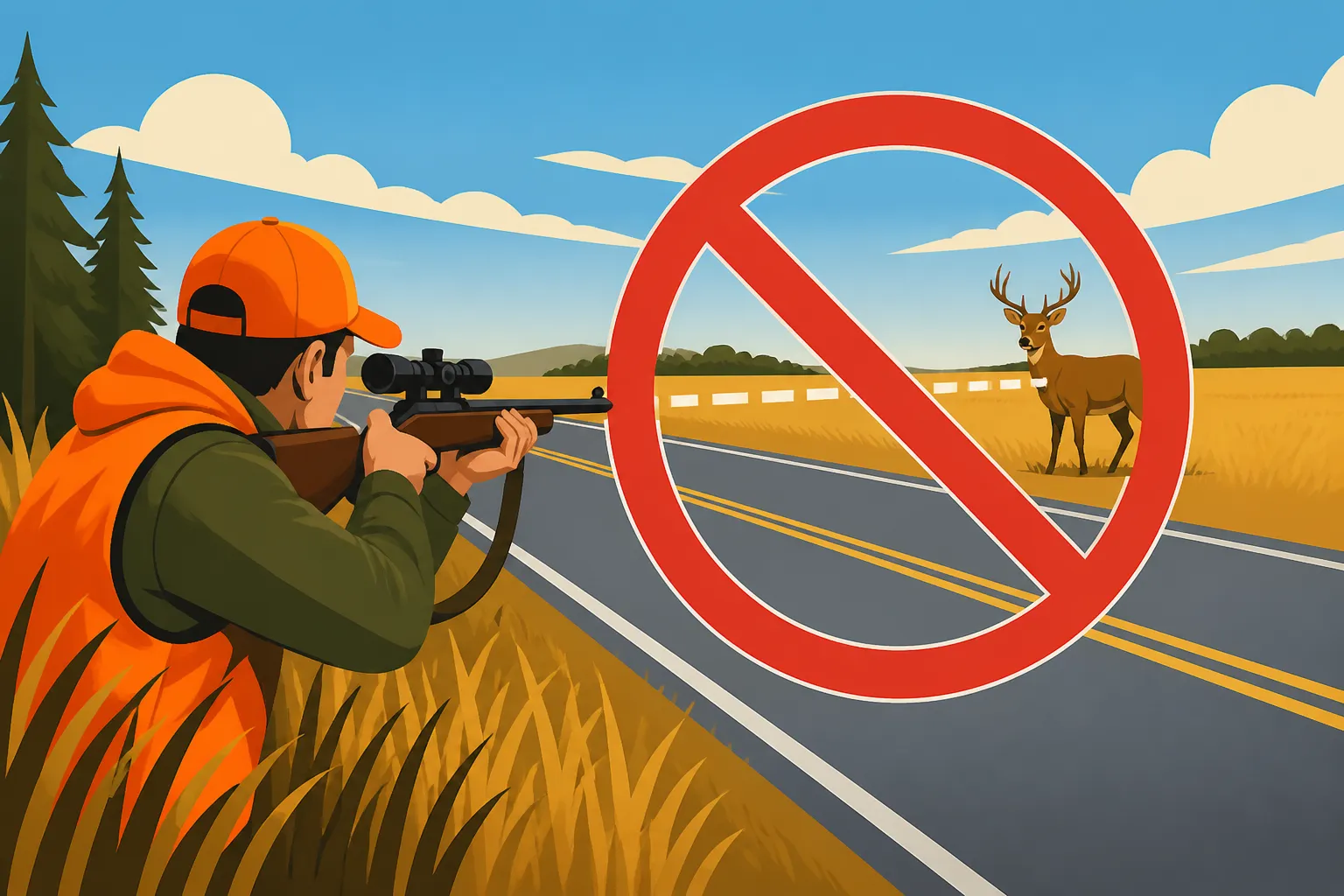
In Saskatchewan, the law is quite clear: you cannot discharge a firearm on, from, or across a provincial highway, a municipal road allowance, or an unoccupied road allowance. This might sound simple, but the definition of what constitutes a "road" or "road allowance" can sometimes be broader than you initially think. It includes paved highways, major grid roads, and even lesser-used gravel or dirt roads that are part of the public infrastructure. The fundamental principle is that any projectile from your firearm must not travel over, into, or even in the general direction of these public rights-of-way. This rule safeguards against stray bullets, ricochets, and the sheer unpredictability of a projectile's path, especially given the range modern hunting rifles offer. Violating this rule isn't just a minor infraction; it's a serious offence with significant consequences because it directly compromises the safety of the public and the image of responsible hunters everywhere.
Deciphering "Shooting Across" and What Constitutes a Road
The phrase "shooting across a road" can be a bit of a head-scratcher. Does it mean you can't aim across it, or that the bullet itself can't cross the physical boundary? In Saskatchewan, it refers to the path of your projectile. If your bullet, arrow, or slug is going to travel over any part of a public road allowance – whether paved, gravel, or even an unmaintained dirt track that's still a designated public access route – then it's illegal. This isn't just about aiming from one side to the other, but also shooting along a road if the projectile would still cross its surface or impact the other side of it at any point. It essentially creates a "no-shoot zone" that extends beyond the immediate shoulders of the road.
Understanding what qualifies as a "road" is equally crucial. It’s not just the bustling highways; it encompasses almost any designated public route. This includes main thoroughfares, secondary highways, municipal grid roads (those numbered gravel roads that crisscross the province), and even undeveloped or unoccupied road allowances. An unoccupied road allowance might just look like a grassy strip or a faint trail between two fields on a map, but legally, it's still a public access point. The key is to recognize that if the public has a right to travel there, or if it's designated as public access on a map, then the "no shooting across" rule applies. This means even seemingly remote trails or unmaintained routes in the bush or on the prairie are often subject to the same strict regulations. A mapping app like GoHunt or onX can be incredibly helpful here, as they often layer land ownership and road allowances, allowing you to clearly see these boundaries and avoid accidentally breaking the law. For hunters exploring new areas, knowing Reading Saskatchewan WMZ Map Before You Go can be invaluable for understanding these boundaries.
It's also important to differentiate this from shooting from a road. Generally, you cannot hunt or discharge a firearm from a public road or its shoulders. This rule prevents hunters from using vehicles as shooting platforms or obstructing traffic, and again, prioritizes public safety. There are extremely rare exceptions, such as for individuals with specific disabilities who have been granted special permits allowing them to hunt from a vehicle, but these are highly regulated and require explicit authorization. For the vast majority of hunters, the rule is simple: stay off the road and well away from its immediate vicinity when you're preparing to shoot.
Navigating Different Road Types and Tricky Scenarios
Saskatchewan's landscape is diverse, from wide-open prairies to dense boreal forests, and with it comes a variety of road types. Knowing how the "shooting across a road" rule applies to each can save you a lot of grief.
Paved Highways and Main Grid Roads
These are the most obvious examples. Whether it's a bustling highway like the Trans-Canada or a major provincial highway, or even a well-travelled gravel grid road, the rule is strictly enforced. The potential for unexpected traffic, pedestrians, or even farm machinery is high. You absolutely cannot shoot across these. If you're Hunting a Field of Standing Corn that borders a highway, your shot must be directed well away from the road, ensuring your projectile's path is entirely within the private land you have permission to hunt. The buffer zone effectively extends a considerable distance on either side, demanding extreme caution and good judgement.
Unmaintained Dirt Tracks and Occupied Road Allowances
This is where it can get really confusing. You might be hunting deep in the bush, on Crown land, and come across an old, barely visible two-track trail. If that trail is still officially designated as an "unoccupied road allowance" or a "public access road" on a map, the rule still applies. These allowances are often strips of land, typically 66 feet (about 20 meters) wide, reserved for public access, even if they've never been developed into a proper road. They might look like nothing more than a grassy depression or a line of trees, but legally, they are public property. You cannot shoot across them. Always consult detailed land ownership maps, like those offered by GoHunt, to identify these often-overlooked public rights-of-way. Similarly, Hunting an Old Logging Road in the North might involve traversing areas that are still public access, even if they seem abandoned.
Private Farm Lanes and Access Roads
What about a private farm lane that runs through a farmer's property? If you have permission to hunt that land, and the lane is strictly private with no public right-of-way, the official "shooting across a road" law might not directly apply in the same way. However, this is a huge "might," and exercising extreme caution is still paramount. The spirit of the law, which is public safety, should always guide your actions. Even on a private lane, there could be farm vehicles, family members, or other workers. It is always best practice to treat any defined lane or road, public or private, as a no-shoot zone. Err on the side of extreme safety. Always make sure you understand the nuances of Saskatchewan Landowner Permission Law when navigating private property.
Retrieving Game That Crosses a Road
This is another common head-scratcher. You've made a clean shot on a whitetail, and it bolts, only to collapse on the other side of a municipal grid road. What do you do? The crucial distinction here is between shooting across a road and retrieving game from across a road. You cannot shoot the animal on the road, or if it's still alive, shoot across the road to dispatch it. Once the animal has crossed onto the other side, and is either deceased or safely out of the road allowance, you must follow the correct procedure to retrieve it. This often involves ensuring the area is safe, parking your vehicle off the road, and sometimes even contacting the landowner on the other side if it's private property and you don't have prior permission. This is especially true if you are hunting near a Hunting a Field of Standing Corn or similar agricultural land.
The Heavy Hand of the Law: Consequences of Violations
Ignoring or misunderstanding these rules can lead to serious legal repercussions that will impact your hunting career and potentially your freedom. Conservation Officers in Saskatchewan are diligent in enforcing these laws, and rightfully so, as public safety is on the line.
Fines and Penalties
Discharging a firearm on, from, or across a public road allowance is not a minor ticket. It's an offence under The Wildlife Act, 1998, and can result in significant fines. These fines can range from hundreds to thousands of dollars, depending on the severity of the incident and whether other violations occurred concurrently (e.g., hunting without permission, reckless endangerment). A quick check of the Saskatchewan hunting regulations will outline the current minimum and maximum penalties for such infractions.
Licence Suspension and Equipment Seizure
Beyond monetary fines, you could face a suspension of your hunting privileges, potentially for several years. This means you wouldn't be able to apply for licences or hunt any game species in Saskatchewan for the duration of your suspension. In more egregious cases, your hunting equipment – including your firearm, ammunition, and even your vehicle if it was involved in the commission of the offence – could be seized and forfeited. Imagine losing your prized rifle or bow because of a moment of carelessness near a road. This consequence alone should underscore the seriousness of the rule.
Impact on Reputation and Future Hunting
A conviction for a hunting violation, especially one related to public safety, stays on your record. This can make it difficult to get permission from landowners in the future, as they're often wary of hunters with a history of infractions. It also tarnishes the reputation of all responsible hunters, feeding into negative stereotypes that we all work hard to dispel. If you ever have questions or witness a violation, the Saskatchewan's Turn In Poachers Line is the correct channel to report it, ensuring public safety and ethical hunting practices are upheld.
Best Practices for Hunting Near Roads
Given the strict rules and serious consequences, developing good habits when hunting near roads is non-negotiable.
1. Know Your Boundaries and Terrain
Before you even step out of your vehicle, know exactly where you are and what surrounds you. Use detailed topographical maps or mapping apps like GoHunt, which provide property lines, road allowances, and other critical information. These tools are invaluable for Scouting With Satellite Imagery in Saskatchewan and understanding the precise boundaries of public and private land, including those often-unseen road allowances. Always assume any track or maintained path is a public road unless you have definitive information otherwise.
2. Create a Wide Safety Buffer
When setting up your hunting position, establish a wide safety buffer between yourself, your intended shot, and any nearby roads. Don't use a road as a backdrop or an imagined shooting lane. Your bullet will travel further than you think. Always ensure you have a safe backstop that will contain your projectile. If you're Hunting a Bush Bluff on a Crown Quarter, ensure your shot will impact securely within the bluff and not risk crossing any public access routes on the other side.
3. Walk In, Set Up Discreetly
Avoid parking directly on the shoulder of a road and immediately stepping out to hunt. This practice not only makes you visible to potential game but also gives the impression of roadside hunting, which can draw unwanted attention from authorities or concerned citizens. Instead, park your vehicle legally and safely, then walk a good distance into the hunting area before setting up. This also applies when Hunting a Saskatchewan Quarter Section; ensure you're well within the boundaries before discharging your firearm.
4. Never Shoot "Blind"
This is a fundamental rule of firearm safety, but it's especially critical near roads. Never take a shot if you don't have a clear view of your target, the area immediately around it, and what lies beyond it. This means being absolutely certain that there are no vehicles, people, livestock, or buildings in the bullet's path, or even in the general direction of a public road. A responsible hunter always knows their target and what is beyond.
5. Landowner Relations and Respect
If you're hunting on private land that borders a public road, always have explicit permission from the landowner. A good relationship with landowners is essential for hunters in Saskatchewan. If you need to retrieve game from another property across a road, always seek permission before stepping foot on that land. This respect for private property is not only ethical but also legally required. You can find out more about Knocking on Doors in Saskatchewan Farm Country to gain permission and build these relationships.
Here's a quick summary table of common road types and associated shooting rules:
| Road Type | Public Access | Shooting Across/From Road (Projectile path crossing) | General Rule of Thumb |
|---|---|---|---|
| Paved Highway | Yes | Illegal | Absolutely no shooting from or across; wide safety buffer needed. |
| Main Gravel Grid Road | Yes | Illegal | Treat as highway; no shooting from or across. |
| Unoccupied Road Allowance | Yes | Illegal | Even if undeveloped, legally a road; no shooting across. |
| Unmaintained Forest/Prairie Track (Public) | Yes | Illegal | If designated public access on maps (e.g., GoHunt), no shooting. |
| Private Farm Lane/Access Road | No (usually) | Illegal (Strongly Advised Against) | Even if private, always exercise extreme caution due to safety. |
By adhering to these rules and practices, you not only ensure your safety and the safety of others but also uphold the reputation of hunting as a responsible and ethical pursuit in Saskatchewan. Remember, a successful hunt isn't just about filling your tag; it's about doing so safely and legally.
Disclaimer
The information provided in this guide is for general informational purposes only and does not constitute legal advice. Hunting regulations can be complex and are subject to change. Always consult the most current Saskatchewan hunting regulations published by the Ministry of Environment, or contact a Conservation Officer directly, before heading into the field to ensure you are fully compliant with all applicable laws.