Hunting Around La Ronge
Hunting around La Ronge, Saskatchewan, can feel like stepping into a vast, untamed wilderness, and for many, the sheer scale of the boreal forest and its myriad lakes is as intimidating as it is exciting. Finding good hunting ground, understanding the local game, and preparing for the unique challenges of the north requires specific knowledge beyond what you might use on the prairie. This guide will help you navigate the landscape and opportunities that await hunters in the La Ronge region, making your next northern adventure a success.
The Wild Frontier: Understanding the La Ronge Hunting Landscape
The La Ronge area isn't just a place on a map; it's a gateway to Saskatchewan's true boreal forest, an expansive realm of dense timber, granite shield, and countless water bodies. Unlike the farmlands further south, hunting here is less about glassing vast fields and more about understanding thick cover, travel corridors through the bush, and how water defines animal movement.
Geographical Features and Habitat
Imagine a mosaic of mature jack pine and spruce stands, interspersed with younger poplar and birch, all punctuated by thousands of lakes, rivers, and muskeg bogs. This is the dominant landscape around La Ronge. The Canadian Shield bedrock often pokes through, creating rocky ridges and distinct elevation changes, even if they're not dramatic mountain ranges. This varied terrain means game animals have an abundance of cover, food sources, and water, but it also means hunters need to adapt their strategies.
The thick forest provides excellent thermal cover in winter and shade in summer. The edges of muskegs, beaver ponds, and lakes create natural travel routes and feeding areas for moose and bear, offering a distinct advantage to hunters who learn to "read" these features. Clear-cuts and burned-over areas, especially those a few years post-fire, can become incredibly rich in new growth like willow and aspen, attracting browsing animals and making for prime hunting locations. This is far from the open plains hunting many visualize when they think of Saskatchewan.
Primary Game Species in the Region
While Saskatchewan is renowned for its whitetails, the La Ronge area truly shines for moose and black bear. These two species thrive in the boreal environment, finding ample forage and seclusion.
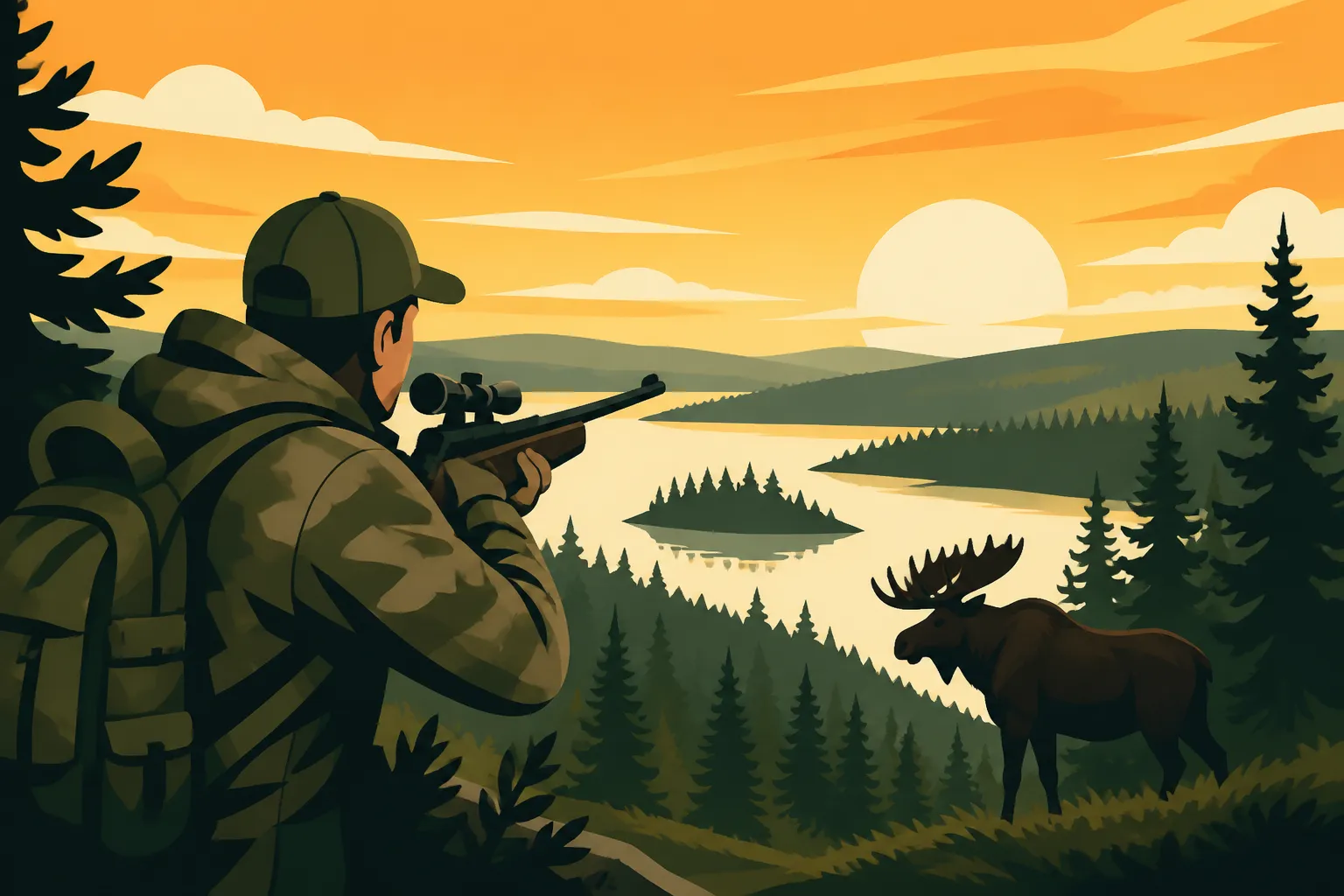
- Moose: This is prime moose country. The wetlands, willow thickets along lake shores, and regenerating clear-cuts provide ideal browse. Bulls can grow to impressive sizes here, and finding them often involves navigating difficult terrain. Calling during the rut is a highly effective, albeit challenging, strategy. Expect to work hard for your moose, but the reward is often a truly wild northern animal. For more on tactics, check out Calling a Bull Moose in the Rut.
- Black Bear: The boreal forest is home to a healthy population of black bears, including some beautiful colour phases. Baiting is a popular and effective method for harvesting bears in this region, as it allows hunters to bring bears to a known location for ethical shot placement. Spot-and-stalk can also be done, especially in areas with recent burns or abundant berry crops, but it requires much more patience and local knowledge of bear movements. Learn more about Setting a Bear Bait Site in Saskatchewan.
- White-tailed Deer: While present, whitetails in the deep boreal forest are generally less numerous and often smaller-bodied than their farmland counterparts. They tend to stick to the forest fringe or areas where logging has created more open browse. Don't expect to see the giant typicals of southern Saskatchewan, but a northern bush buck is a hard-earned trophy.
- Upland Birds: Ruffed grouse and spruce grouse are abundant, offering excellent opportunities for wingshooting during big game hunts or dedicated bird trips. Old logging roads and natural clearings are hot spots for these birds. If you're looking for more info, consider Ruffed Grouse Hunting Saskatchewan's Bush Trails.
- Waterfowl: While not the primary draw, smaller sloughs and beaver ponds can hold resident ducks. Hunters focusing on big game might find opportunities for a few ducks or geese on incidental water bodies, though serious waterfowl hunters typically head south to the grain fields.
Navigating Public Access and Crown Land Near La Ronge
One of the greatest advantages of hunting near La Ronge is the sheer amount of accessible Crown Land. Unlike the private land-dominated south, much of this northern region is publicly owned, offering extensive hunting opportunities, provided you understand how to navigate it.
Understanding Public Land
The vast majority of the land surrounding La Ronge is unallocated Crown Land, managed by the province. This means hunters generally have the right to access it for hunting purposes, subject to provincial regulations. However, "accessible" doesn't always mean "easy to get to." Access often involves traversing dense bush, using old logging trails, or accessing areas by boat via the many lakes and rivers. It's crucial to understand Saskatchewan's Crown Land Access rules and restrictions, as they can differ from private land.
Always be mindful of any signage, even on Crown Land. While rare, some areas might have temporary closures or specific restrictions. It's also important to differentiate between open Crown Land and leased Crown Land (e.g., grazing leases), where you might need to seek permission from the leaseholder, even if the hunting rights theoretically remain with the Crown. However, in the immediate La Ronge area, leased land is far less common than true wilderness Crown Land.
Using Digital Tools for Scouting and Navigation
Gone are the days of relying solely on paper maps and compasses, though those remain essential backup tools. Modern digital mapping applications are invaluable for hunting in an area like La Ronge. Programs like onX Hunt or GoHunt allow you to overlay property lines, showing you clearly where Crown Land begins and ends. This is absolutely critical when hunting areas where private cabins or developments might exist amidst the public forest.
With tools like onX Hunt, you can:
- Identify Crown Land boundaries, ensuring you're legally accessing hunting areas.
- Mark potential hunting spots, such as old clear-cuts, creek crossings, or prime moose browse areas, right from your desktop.
- Pin access points, like parking spots or boat launches, and track your route as you hike or paddle through the bush. Reading Saskatchewan Crown Land Layers on onX is a fantastic way to plan your trips and navigate the backcountry confidently.
- Utilize satellite imagery to scout for habitat changes that might indicate game sign, even in areas you've never visited before. This allows you to identify cutlines, logging roads, or muskeg edges that could be perfect travel corridors for animals.
Practical Access Considerations
While there's a lot of Crown Land, getting into it effectively requires some planning.
- Roads and Trails: The main highways (like Highway 2 and 102) provide primary access points. From these, a network of gravel roads, old logging trails, and winter cutlines branch off. Many of these are unmaintained and can be extremely rough, requiring a high-clearance 4×4 vehicle. Some might even be impassable during wet conditions. Always be prepared for mud, fallen trees, and isolated conditions. Finding a good Hunting an Old Logging Road in the North can be a gold mine for accessing untouched country.
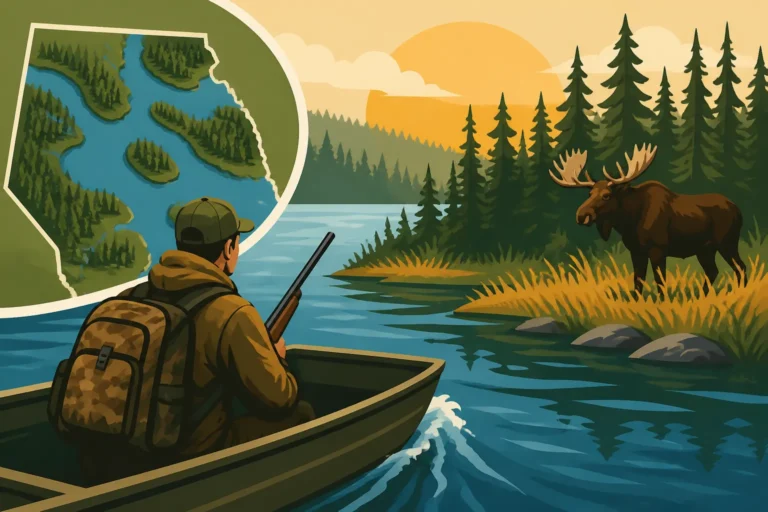
- Water Access: With thousands of lakes and rivers, boat access is often the best, and sometimes the only, way to reach prime hunting areas, especially for moose. Canoes, kayaks, or small aluminum boats with outboards can get you into remote bays, islands, and river systems where game rarely sees human pressure. Many outfitters in the area specialize in boat-based hunts. Consider exploring Hunting Saskatchewan's Northern Lake Country for opportunities.
- Foot Access: Once you leave the roads and water, you'll be on foot. The bush can be incredibly dense, making travel slow and tiring. Expect to push through thick underbrush, navigate uneven terrain, and potentially cross boggy areas. Be prepared for long, quiet stalks and the necessity of pack-out strategies for game taken deep in the woods.
Key Hunting Strategies for the La Ronge Region
Hunting in the northern forest demands a different approach than the agricultural lands to the south. Success hinges on patience, stealth, and a deep understanding of boreal animal behavior.
Moose Hunting in the Boreal
Moose are perhaps the most sought-after big game animal in the La Ronge area, and for good reason—the region consistently produces some magnificent bulls.
- Calling: During the September archery season and the early to mid-October rifle season, calling is highly effective. Cow calls, grunts, and even antler raking can bring curious bulls in close. Positioning is key; find an area with good visibility and escape routes, often near muskegs, beaver ponds, or young regrowth. Being patient and letting the calls resonate through the dense timber is crucial.
- Still-Hunting: Moving slowly and quietly through the forest, pausing frequently to glass and listen, can be incredibly productive. Focus on areas with fresh browse, tracks, and rubs. Look for moose along the edges of thicker timber and open clearings, especially early and late in the day. Pay attention to wind direction to avoid spooking animals.
- Water's Edge: Moose love water. They feed on aquatic vegetation and use shorelines and riverbanks as travel corridors. Scouting by boat or canoe can reveal hot spots and fresh sign. Setting up a blind or stand near a well-used moose trail along a lake or river can increase your odds.
Black Bear Tactics in the North
Black bears are plentiful around La Ronge, offering exciting opportunities for spring and fall hunters.
- Baiting: This is the most common and often most successful method for black bears. A well-maintained bait site, set up strategically in an area with good bear activity, allows you to observe bears, judge their size, and wait for the perfect shot. Research into Baiting Black Bear in Saskatchewan is essential for success and legal compliance. Baits typically consist of sweets, grains, and meats, designed to attract bears consistently over several weeks.
- Spot-and-Stalk: While challenging, spot-and-stalk can be effective in areas of new growth following logging or wildfires, where bears might be out feeding on berries or fresh vegetation. It requires keen glassing skills, patience, and the ability to move silently through dense cover. This method is more common in fall when bears are actively foraging.
- Travel Corridors: Bears use specific travel routes, often along ridges, old game trails, or the edges of dense cover. Setting up a stand or blind overlooking such a corridor, especially near a food source like a berry patch or an oak stand, can be productive.
Upland Birds and Incidental Opportunities
Don't overlook the potential for great upland bird hunting. Ruffed grouse will often "drum" from logs and travel along old logging paths, making them excellent targets for a walk-and-shoot hunt. Spruce grouse are a bit more docile and prefer thicker conifer stands. Carrying a shotgun along on your big game hunt can often lead to a delicious addition to camp meals. For these smaller opportunities, consider Hunting a Beaver Dam Crossing for grouse and ducks, or simply walking along any Hunting a Cutline Grid in the North.
Essential Gear and Safety for Northern Hunts
The challenging environment around La Ronge demands robust gear and a serious approach to safety. Being prepared for anything is not just good practice; it can be life-saving.
Clothing, Navigation, and Communication
- Layered Clothing: Saskatchewan's northern weather can change dramatically. Dressing in layers, with a good waterproof outer shell, is critical. Even in September, evenings can be chilly, and late October/November hunts can be downright frigid. Good quality, insulated, waterproof boots are non-negotiable, especially when dealing with muskeg or wet ground.
- Navigation Tools: While onX Hunt and GoHunt are excellent, always carry a physical map and compass, and know how to use them. A reliable GPS unit is also highly recommended. Satellite communication devices (like a satellite phone or a two-way satellite messenger) are strongly advised, as cell service is non-existent in much of the northern bush. This is vital for emergencies.
- First Aid Kit: A comprehensive first aid kit, capable of handling minor injuries and stabilizing more serious ones until help arrives, is essential. Include items for blisters, cuts, sprains, and any personal medications.
Bear Safety and Wilderness Preparedness
You are in bear country, and while black bears are generally shy, encounters can happen.
- Bear Spray: Always carry bear spray, know how to use it, and keep it accessible.
- Food Storage: Store all food and scented items in bear-proof containers or hung from trees away from your camp. Never keep food in your tent.
- Noise: Make noise while moving through dense bush to avoid surprising a bear.
- Hunting Partners: Whenever possible, hunt with a partner, especially in remote areas. Inform someone of your hunting plan, including your intended route and return time.
Winter Considerations
If you plan to hunt late in the season, or into the winter predator seasons, preparation takes on an even greater importance. Hunting Saskatchewan Winter Weather Safely is a must-read. Extreme cold, deep snow, and limited daylight hours add significant challenges.
- Warmth: Beyond layered clothing, consider portable heaters for blinds, and know the signs of frostbite and hypothermia.
- Vehicle Preparedness: If driving forest trails, a robust Winter Truck Kit for a Saskatchewan Hunt is essential. This includes extra fuel, a shovel, tow straps, jumper cables, an axe, and emergency survival gear. Snow can drift deep and quickly isolate remote areas.
- Ice Safety: If crossing frozen lakes or rivers, always check ice thickness and be aware of currents that can thin ice.
| Species | Primary Habitat | Best Method | Optimal Season | Key Challenge |
|---|---|---|---|---|
| Moose | Wetlands, willow thickets, clear-cuts | Calling, Still-hunting | Sept (archery), Oct (rifle) | Dense cover, physical exertion, heavy pack-out |
| Black Bear | Dense forest, berry patches | Baiting, Spot-and-stalk | Spring (May-June), Fall (Sept-Oct) | Identifying size, navigating heavy cover |
| White-tailed Deer | Forest fringe, old clear-cuts | Still-hunting, Stand hunting | Nov (rifle rut) | Low density, smaller animals, thick cover |
| Ruffed Grouse | Poplar/birch stands, logging roads | Walk-and-flush | Sept-Oct | Fast-flying birds in tight cover |
Hunting around La Ronge is an immersive wilderness experience, offering the chance to pursue some of Saskatchewan's most iconic big game in truly wild settings. With careful planning, the right gear, and a respect for the boreal environment, you can have an unforgettable hunt in this incredible northern landscape.
Disclaimer
This article is for general informational purposes only and does not constitute professional advice. Laws, prices and regulations vary by location and change over time. Consult a qualified professional for guidance on your specific situation.