Best Saskatchewan Ground for Mule Deer
Trying to pin down the absolute "best" ground for mule deer in Saskatchewan can feel like chasing a ghost sometimes. One year, they're thick in a particular coulee system, and the next, they've shifted entirely, leaving you scratching your head. It’s a frustrating cycle for many hunters who cherish the distinctive challenge and reward of pursuing these big-eared beauties. This guide aims to cut through that frustration, breaking down the specific types of terrain and regions where mule deer consistently thrive in Saskatchewan, and how you can identify and access these prime locations.
Understanding Mule Deer Habitat in Saskatchewan
Mule deer are creatures of distinct habitats, often favoring rugged, open country that offers both cover and expansive views. Unlike their whitetail cousins who are more at home in the bush, mule deer prefer areas where they can use their keen eyesight and prodigious bounding ability to escape danger. If you're looking for Mule Deer Across Saskatchewan's Prairie, knowing their preferred stomping grounds is the first step.
The Prairie Coulees and River Breaks
When you think of prime mule deer habitat in Saskatchewan, your mind should immediately drift to the broken country of the prairies. This isn't the flat, endless stubble field landscape you might imagine. We're talking about the deep, winding coulees, the dramatic river breaks, and the rolling hills that punctuate the southwestern quadrant of the province. These areas provide the perfect blend of escape terrain, bedding cover, and forage that mule deer crave.
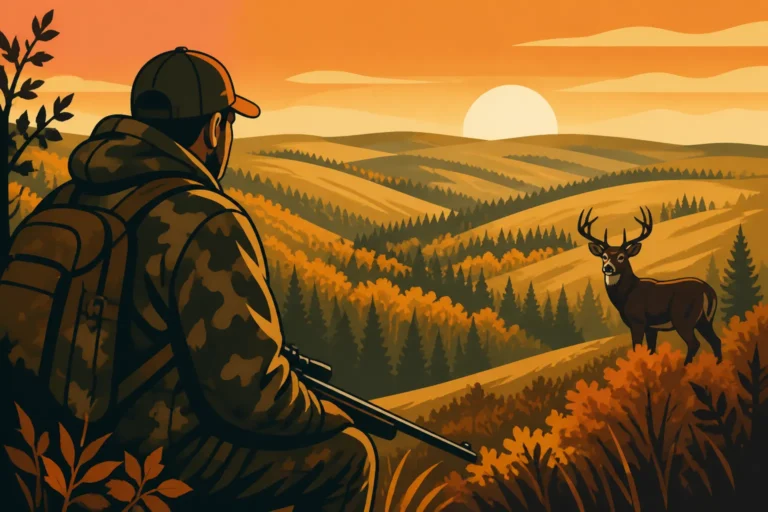
Picture a deep coulee system, carved by ancient glaciers and seasonal runoff, snaking its way through miles of open grassland. These draws aren't just ditches; they often feature steep, rocky slopes, scattered pockets of brush like saskatoon berry or chokecherry, and even small stands of aspen or willow along the bottom. This diverse topography creates natural sanctuaries, shielding deer from the harsh prairie winds and offering thermal cover in both bitter cold and scorching heat. Deer will use these broken lands for bedding during the day, moving out onto the adjacent benches and field edges to feed at dawn and dusk. Learning to recognize these features on a map, especially with tools like onX Hunt, can save you countless hours of unproductive scouting in flat terrain. Understanding the nuances of Hunting Mule Deer in Prairie Coulees is key to success.
The river breaks, particularly along waterways like the Frenchman River or parts of the South Saskatchewan River, offer a similar, if often more dramatic, environment. Here, the landscape drops sharply into river valleys, creating immense natural shelterbelts and vast expanses of wild terrain. These breaks are often more heavily treed than isolated coulees, providing even more security cover. The sheer scale of these areas means deer populations can be spread out, but once you find their core areas, you're in business. These deep valleys are also natural travel corridors, funnelling deer movement and making them predictable if you can interpret the sign correctly.
Agricultural Edges and Wintering Grounds
While mule deer prefer rugged terrain, they are still opportunistic feeders and will readily exploit agricultural fields, especially during colder months. The edges where prairie grasslands meet cultivated land can be goldmines, particularly if those fields adjoin a coulee or river break. Deer will filter out of their secure bedding areas to browse on leftover grain, peas, lentils, or even standing corn, returning to the safety of the breaks as daylight approaches. This is a common pattern for Hunting Saskatchewan's Southern Prairie big game.
Winter presents a unique challenge and opportunity for mule deer hunters. When deep snow covers the open prairie, deer seek out areas that offer both accessible forage and thermal cover. This often means congregating in the deepest, most sheltered coulees or heavy brush pockets within river valleys. These wintering grounds become critical areas, as deer will often remain in a relatively small geographic footprint for weeks or even months. Recognizing these patterns and finding these concentrations can be hugely advantageous. However, it’s important to remember that during extreme winter conditions, these deer are under immense stress, and ethical hunting practices dictate minimizing disturbance to these vulnerable populations. Observing patterns of Hunting Mule Deer After a Snowfall can be highly effective.
Key Regions and Wildlife Management Zones for Mule Deer
Saskatchewan is a big province, and while mule deer can be found in various spots, certain regions and specific Wildlife Management Zones (WMZs) are renowned for their populations. Knowing these areas can focus your scouting efforts and increase your chances of finding quality animals.
The Southwest Strongholds
Without a doubt, the southwest corner of Saskatchewan is the traditional heartland for mule deer. This region, encompassing WMZs like 1, 2, 9, 10, 11, and extending eastwards, offers the expansive mixed-grass prairie and broken topography that these deer thrive in. Areas around places like Val Marie, Eastend, and Cypress Hills are legendary for their mule deer.
The Cypress Hills, in particular, are a unique anomaly on the prairie. This elevated plateau boasts a distinct ecosystem with coniferous forests and deep coulees, providing exceptional habitat. Hunting the Cypress Hills Uplands offers a different challenge than the open prairie, with more dense cover to contend with. Similarly, the Great Sand Hills, a vast expanse of active dunes and stabilized grasslands, provides another unique, albeit challenging, mule deer environment. The broken terrain here, combined with pockets of aspen and willow, creates incredible sanctuaries for deer. Hunting the Great Sand Hills demands a different approach, often favoring long-range glassing and careful stalking.
Further east, the Missouri Coteau region, a band of rolling hills and kettle lakes stretching diagonally across the province, also holds strong mule deer numbers. This area is characterized by its hummocky topography, with numerous small coulees and draws that provide excellent cover. Hunting the Missouri Coteau can be incredibly rewarding, but it requires patience to dissect the undulating landscape. These WMZs are typically draw-only for mule deer, and for good reason – the quality of the hunting can be outstanding. Checking historical draw odds on platforms like GoHunt can give you an idea of the competition and the likelihood of drawing a tag in these prime zones.
Scattered Pockets in the Transition Zones
While the southwest is the undeniable hotspot, mule deer aren't exclusively confined there. You'll find scattered populations, often intermingled with whitetails, in the transition zones where the prairie meets the aspen parkland. These areas, like portions of WMZs 16, 17, 19, and even parts of the Qu'Appelle Valley further east, can hold surprising numbers of mule deer, especially in larger, more remote coulee systems.
These transition zones often feature a mix of cultivated land, aspen bluffs, and extensive native grasslands with significant drainages. Mule deer here will use the deeper coulees and more rugged river breaks as their core habitat, venturing into the adjacent bluffs and fields. While they might not be as concentrated as in the southwest, the sheer size and wildness of some of these areas mean that big, mature bucks can go unnoticed for years. Hunting the Qu'Appelle Valley offers a distinct experience, with its steep slopes and varied cover providing ample opportunity for those willing to put in the work. These areas can sometimes offer more readily available over-the-counter tags, making them an attractive option if you haven't drawn a premium tag in the core mule deer range.
Strategies for Locating Mule Deer Hotspots
Finding the "best" ground for mule deer isn't just about knowing the regions; it's about understanding how to scout and interpret the landscape. It's about combining modern technology with traditional woodsman skills.
Leveraging Technology for Scouting
In today's hunting world, digital mapping tools are indispensable for locating mule deer. Services like onX Hunt have revolutionized how hunters scout and navigate. Before you even set foot in the field, you can pore over satellite imagery, looking for the classic mule deer habitat features: deep coulees, abrupt changes in elevation, river breaks, and isolated pockets of cover on otherwise open land.
Consider this scenario: you've identified a WMZ that has decent mule deer numbers. Open up your mapping app and start zooming in. Look for the darkest green areas indicating heavier timber within a coulee system. Trace the coulees, noting where they intersect or widen into larger basins. Look for benches and finger ridges where deer might bed to catch the sun and scan for danger. Pay attention to how these features connect to agricultural fields; deer will often travel specific lines between bedding and feeding areas. You can often identify old farmsteads or abandoned corrals where deer might feel secure.
Using a tool like GoHunt's Insider service can provide valuable data on draw odds, unit profiles, and even harvest success rates for specific WMZs, helping you decide where to focus your efforts for a draw tag. Once you have a tag, the detailed maps from onX Hunt allow you to mark potential glassing knobs, water sources, and bedding areas. You can even overlay public land boundaries and find Finding Saskatchewan Public Land Boundaries with ease, which is crucial in areas where private land dominates. This digital reconnaissance saves immense time and gas, allowing you to prioritize which specific areas to physically scout.
Reading the Landscape and Mule Deer Sign
While technology is a fantastic starting point, nothing replaces boots on the ground and a keen eye for sign. Mule deer, especially big bucks, are masters of concealment, often blending seamlessly into their surroundings. You need to learn to "read" the landscape to identify their preferred travel routes, bedding areas, and feeding grounds.
When you're physically scouting, look for tracks. Mule deer tracks are generally larger and more rounded than whitetail tracks. Pay attention to rub lines on small bushes or trees; mule deer often rub on smaller diameter vegetation than whitetails. Look for droppings, which are typically larger and more pellet-like. Scrapes are less common for mule deer than whitetails, but they will make them, often shallower and more widely dispersed. More importantly, look for well-used trails leading into and out of coulees, particularly where they meet field edges or cross saddles in the terrain.
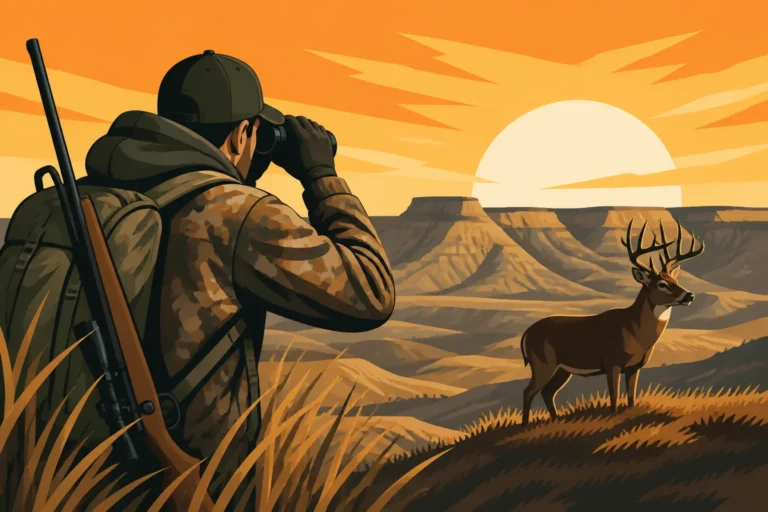
One of the most effective techniques for finding mule deer is glassing. This involves using high-quality binoculars or a spotting scope from a vantage point that allows you to see into multiple coulees or across vast expanses of broken terrain. Glassing a Saskatchewan Coulee for Mule Deer requires patience and methodical scanning. Take your time, break the landscape into grids, and look for anything that doesn't quite fit – a horizontal line in a vertical landscape, an odd-shaped shadow, or the flicker of an ear. Mule deer often bed on north-facing slopes in the summer to stay cool, and south-facing slopes in the winter to catch the sun. They'll use even the smallest dip or rise in the terrain for cover.
Understanding the seasonal movements and behavioral patterns of mule deer is paramount. Early in the season, they might be scattered, but as the rut approaches and then progresses into winter, they'll often gather in more concentrated areas. Knowing What a Mature Saskatchewan Mule Deer Weighs and how they behave can inform your hunting strategy significantly. Remember, mule deer are constantly adapting to pressure and conditions, so flexibility and thorough scouting are always your best allies.
| Habitat Feature | Mule Deer Preference | Why It's Preferred | Scouting Tip |
|---|---|---|---|
| Deep Coulees | High | Escape terrain, thermal cover, bedding | Look for intersections, heavy brush, and benches. |
| River Breaks | High | Extensive cover, travel corridors, varied forage | Follow the breaks, identify benches and secluded pockets. |
| Open Prairie (adjacent) | Medium to High (feeding) | Access to agricultural crops, wide visibility (escape) | Focus on edges where prairie meets coulees/breaks. |
| Aspen Bluffs | Low to Medium | Limited cover for mule deer, but used if near breaks | Check bluffs within or directly adjacent to broken country. |
| Thick Bush | Very Low | Too restrictive for their preferred escape method | Avoid dense forest blocks unless very broken. |
| Cropland (winter) | High | Accessible food source when other forage is covered by snow | Identify standing crops or swathed fields adjacent to cover. |
This table provides a snapshot of mule deer habitat preferences, but remember, every situation is unique. The key is to blend all these strategies – digital scouting, on-the-ground sign reading, and understanding mule deer behavior – to consistently find the best ground in Saskatchewan.
Disclaimer
This article is for general informational purposes only and does not constitute professional advice. Laws, prices and regulations vary by location and change over time. Consult a qualified professional for guidance on your specific situation.