Hunting a Frozen Lakeshore in the North
Venturing onto a frozen lakeshore in northern Saskatchewan for a hunt might sound like something out of a wilderness survival movie, but for many of us who chase game up north, it's a very real and incredibly effective strategy. The sheer isolation and brutal beauty of these landscapes can be intimidating, and the challenges of ice safety, extreme cold, and remote access are very real. This guide is here to break down how to approach hunting these unique environments, ensuring you’re prepared, safe, and maximize your chances of success when those northern big game animals use the hard water.
Understanding the Northern Frozen Lakeshore Environment
Hunting around frozen lakeshores in northern Saskatchewan is a whole different ballgame compared to the open prairies or the more accessible forest fringe. The environment itself dictates so much of the animals' movement and, consequently, your hunting strategy. It’s crucial to wrap your head around what makes these areas tick, from the ice beneath your feet to the specific species that call it home.
The Dynamics of Ice and Snow on Northern Lakes
When we talk about a frozen lakeshore, we're not just talking about a sheet of ice. This is a complex, ever-changing surface with its own set of rules and hazards. Early in the season, the ice might be thin and clear, or covered with a layer of fresh, powdery snow. As winter progresses, layers build up. You might find several feet of hard, clear ice, but then a heavy snowfall comes, insulates the ice, and creates slush pockets underneath that can quickly turn a simple walk into a dangerous ordeal. Water seeps up through cracks, saturates the snow, and then refreezes unevenly, creating treacherous overflow conditions that can get your boots soaked in moments, leading to rapid hypothermia. Pressure ridges, where ice sheets buckle and collide, are common, especially on larger lakes, creating natural travel corridors or impassable barriers for both you and the game. Knowing these dynamics means constantly assessing the ice, reading the snow, and understanding that conditions can shift rapidly with temperature fluctuations and new snowfall.
The shorelines themselves often have varying ice thicknesses. Shallows might freeze solid earlier and stay that way, but currents, underwater springs, or river inflows can create thin spots or even open water, sometimes hidden deceptively under a blanket of snow. It’s not uncommon to find areas where a stream enters the lake, keeping a section of the shore ice-free well into the deep freeze, drawing in animals for water. Furthermore, the combination of thick snow on top of ice can make travel incredibly difficult, even for tough animals like moose and wolves. They’ll often prefer to stick to paths of least resistance – maybe a wind-swept section of the lake that’s clearer of snow, or along a packed trail on the shore. Understanding these elements isn't just about safety; it's about predicting where the animals will move, where they'll feel most comfortable, and where they'll try to conserve energy.
Key Game Species and Their Habits Near Frozen Lakes
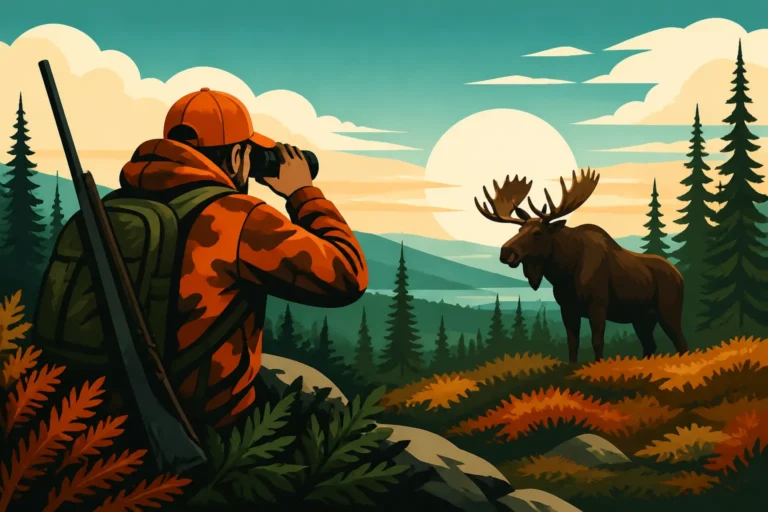
Northern Saskatchewan's frozen lakeshores are prime habitat for a few key species, primarily moose and wolves, with a scattering of whitetail deer and even elk in certain regions. Moose Hunting Saskatchewan's Farmland and Forest gives you a broader look at moose, but around these lakes, their behaviour shifts. Moose are incredibly well-adapted to deep snow and cold, but even they prefer easier travel. The frozen lake acts as a superhighway for them, especially if snow is deep in the surrounding bush. They’ll often cross bays, use islands as bedding areas, or travel long distances along the shoreline, browsing on willow, dogwood, and other brush that grows along the water’s edge or on islands. Look for their distinct, large tracks, often forming trails through shallower snow.
Wolves, those cunning predators of the North, also make extensive use of frozen lakes. A frozen lake offers an unobstructed view and a clear path, making it perfect for patrolling their territory or ambushing prey. They'll follow moose trails, check out old bait sites, and use points and islands as vantage points. You might find their tracks in the same trails as moose, as they are constantly on the hunt. For whitetail deer, while they prefer the Hunting Saskatchewan's Forest Fringe or Hunting Saskatchewan's Aspen Parkland Bluffs, they aren't entirely absent from these areas, especially if there are dense stands of timber or thick willow pockets bordering the lake. They'll often use the fringes for cover and browse, occasionally venturing out onto the lake for quicker travel or to access an island, particularly if there's good feed there. Recognizing the specific habits of each species in relation to the ice and snow is paramount to pinpointing their movements and potential ambush points.
Scouting and Planning Your Frozen Lakeshore Hunt
Okay, so you understand the environment and the animals. Now, how do you actually find them and plan your hunt without spending days aimlessly wandering through knee-deep snow and risking frostbite? Scouting for a frozen lakeshore hunt requires a blend of modern technology and good old-fashioned tracking.
Pre-Season Digital Reconnaissance with Mapping Tools
Before you even think about packing your gear, your best friend is a good digital mapping tool like onX Hunt or GoHunt. These apps are invaluable for identifying potential hotspots from the comfort of your home. Start by looking for bottlenecks – narrow sections of the lake, points of land jutting out, or islands that create natural pinch points for animals crossing. Look for areas where dense timber or heavy cover meets the lakeshore; these are often bedding areas or escape routes. Also, pay close attention to inflows and outflows of rivers or creeks, as these can be areas of open water or thinner ice, but also potential water sources or travel corridors for game. Using the satellite imagery on onX Hunt, you can often spot old logging roads or trapline cutlines that lead to the lake, providing essential access routes for you and potentially for game.
Zoom in on these potential areas and mark waypoints for future reference. Identify islands, especially those with good tree cover or visible browse, as these can be winter havens for deer or moose. Look for areas where the lake bottom appears shallower near the shore, indicating where ice might be more consistently solid for travel. Don’t forget to check historical weather patterns for the area, understanding typical snowfall and temperature ranges, which will help you anticipate ice conditions. A solid digital scout helps you arrive with a plan, minimizing wasted time and effort in truly remote and challenging terrain. It narrows down vast expanses into manageable, promising locations.
On-the-Ground Scouting for Fresh Sign
Digital maps get you in the ballpark, but nothing beats boots on the ground (or snowmobile skis on the snow) for confirming activity. Once you’re in the area, the real work of reading the landscape begins. Look for fresh tracks in the snow along the lakeshore. Moose tracks are large and distinctive, often deep. Wolf tracks will be narrower and more deliberate. Pay attention to the direction of travel and the frequency of tracks. Are they just passing through, or are they repeatedly using a certain section to browse or cross? A well-used game trail along the shoreline, or leading onto a frozen bay, is a goldmine. Reading Sign After Fresh Saskatchewan Snow is a fantastic resource for sharpening these skills.
Beyond tracks, look for browse. Moose will strip bark from certain trees or break off willow branches. Rubs on smaller trees, though more common during the rut in the fall, can sometimes still be found, indicating a larger animal has been in the area. Droppings can tell you how recent the activity is and what the animals are feeding on. Pay very close attention to ice conditions during your scout. Use an ice chisel or spud bar to test thickness, especially near points, inlets, or any discolored ice. Always proceed with extreme caution. Knowing what to look for and how to interpret it is key to transforming an area of potential into a precise hunting location.
Access and Travel Considerations
Accessing these remote northern lakeshores is often the biggest hurdle. Unless you're flying in (which some outfitters do), you'll likely be relying on snowmobiles or quads with tracks. Standard wheeled quads simply won't cut it in deep northern snow. Always travel with at least one other person, and inform someone of your route and expected return time. A well-equipped Winter Truck Kit for a Saskatchewan Hunt is essential for getting to the staging area. Once off the main roads, expect challenging travel. Snowmobile trails might be present, but often you'll be breaking your own trail. Consider how far you'll need to walk once you leave your machine.
Safety gear is non-negotiable. Beyond typical cold-weather clothing, you need emergency supplies: extra fuel, a tow rope, shovel, axe, fire-starting kit, first-aid, satellite communication device (like an inReach or SPOT), and enough food and water for longer than you expect to be out. What to Do If You Get Stuck in the Bush isn't a hypothetical; it's a real possibility. When crossing the ice, wear a floatation suit if possible, carry ice picks, and know how to self-rescue. Travel smart, stay together, and never underestimate the Canadian North.
Strategies for Hunting Northern Frozen Lakeshores
Once you've done your scouting and safely accessed your chosen area, it's time to put a hunting strategy into action. The unique nature of the frozen lake environment offers some distinct advantages, but also demands specific tactics.
Still-Hunting the Lake Edge and Islands
Still-hunting is a highly effective method when hunting frozen lakeshores, especially for moose and deer. This isn't about sitting in one spot, but rather moving slowly, deliberately, and quietly, taking a few steps then stopping for extended periods to observe and listen. The frozen lake itself can be a great asset here. If there's a light snow cover, your movement on the hard ice can be surprisingly quiet compared to crunching through deep bush snow. Focus your efforts on the transition zones – where the bush meets the lake. Animals often use these edges for cover, browsing, and travel. Move into the wind, paying close attention to every sound and shadow. Look for breaks in the brush, small points, or willow thickets where an animal might be bedded or browsing.
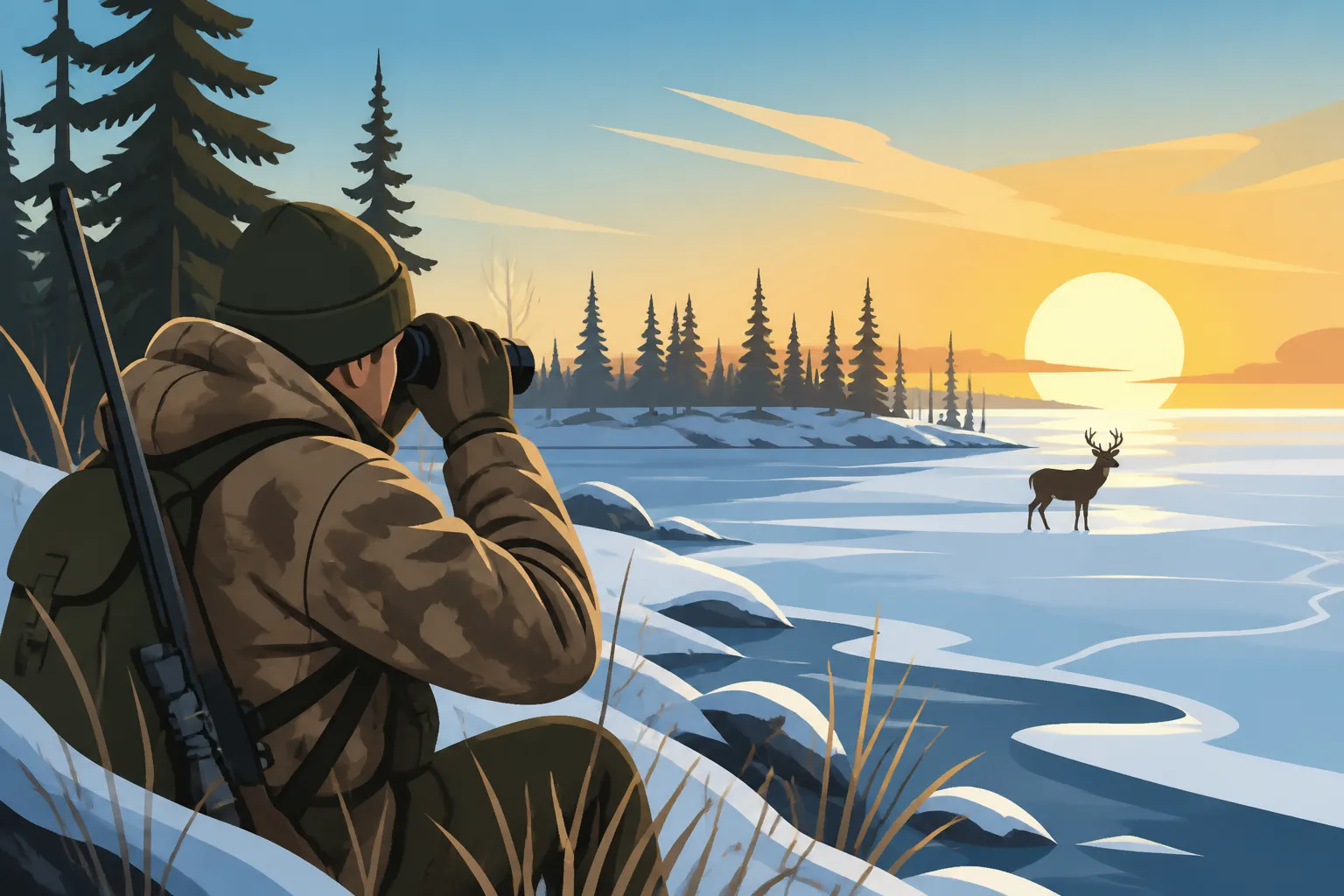
When you encounter tracks, decide if they're fresh enough to follow. Moose, particularly, can leave quite a trail, and a fresh set of tracks leading into a thick stand of spruce or onto an island is a good indication that the animal is nearby. Use your binoculars constantly, scanning the distant shoreline, islands, and any openings in the timber. Remember, in this environment, animals might be far more visible than you'd expect, especially if they're out on the ice or a sparsely treed island. Your pace should be excruciatingly slow; think minutes per step, not steps per minute. Patience is your most important tool in this method.
Stand Placement Near Crossings or Food Sources
For those who prefer to sit and wait, strategic stand placement can be incredibly fruitful. Given the vastness of northern lakes, animals often seek the path of least resistance. This means they'll frequently use specific crossing points. Look for narrow sections of a bay, an island that acts as a natural bridge between two points of land, or a prominent point that forces animals to funnel past. Using your Scouting With Satellite Imagery in Saskatchewan data from onX Hunt, identify these natural funnels beforehand. Once on the ground, confirm activity with fresh tracks.
A tree stand or ground blind should be set up downwind of these crossing points. Often, a sturdy spruce or pine provides excellent cover and a good vantage. For moose, consider their height and how they'll move through the area. A ground blind, especially one camouflaged with natural materials, can be very effective if placed carefully among shoreline willows or a cluster of spruce. Ensure your shooting lanes are clear but don't over-clear, as natural cover is key. If you've found a consistent winter food source, like a concentration of browse on an island or a specific shoreline thicket, setting up a stand overlooking it can also pay dividends, as animals will repeatedly visit these areas.
Calling Techniques for Moose and Wolves
Calling can be a potent tool, particularly for moose and wolves, in the open-yet-dense environment of a frozen lakeshore. For moose, the cow call is your primary weapon. During the late season, a lone cow call can often pique the interest of a bull still cruising for company, or even a cow. Call from a concealed position, preferably with the wind in your favour, and position yourself so that any approaching animal is forced to pass through an open shooting lane. Use a variety of calls – a plaintive, drawn-out bawl, or a series of shorter, excited grunts, mimicking a cow calling for a bull or her calf. Be patient; moose often take their time responding, circling downwind to scent-check the area before showing themselves. If you have a partner, one can call while the other watches the downwind side. Calling a Bull Moose in the Rut focuses on the rut, but the principles of good calling still apply to seeking attention.
For wolves, the frozen lakeshore provides an excellent acoustic stage. Their howls carry for miles across the open ice. A pack howl, followed by lone howls and pup distress calls, can often elicit a response. Set up similarly to moose calling, considering your wind. Wolves are incredibly wary, so choose a location with good cover that offers a wide field of view. Be prepared for them to approach cautiously, often using whatever cover is available along the shore or even distant treelines. A good strategy is to use distress calls, like a rabbit in distress, to draw in curious wolves who are always looking for an easy meal. Remember that wolves are always listening, and a well-placed series of howls at first light or last light can bring them in from surprising distances.
Safety and Preparedness on Northern Ice
Hunting northern frozen lakeshores comes with inherent risks that must be taken seriously. The remote nature, combined with extreme cold and unpredictable ice, demands rigorous attention to safety. Don’t cut corners here; your life could depend on it.
Essential Gear for Cold Weather and Ice Safety
The mantra for northern hunting is "dress in layers." Your base layers should wick moisture away from your body, followed by insulating mid-layers (fleece, down, wool) and a waterproof, windproof outer shell. Bring more layers than you think you'll need, including an extra set of gloves, socks, and a warm hat. Good, insulated, waterproof boots are critical; consider pac boots with removable liners. Staying warm while Sitting All Day in a Saskatchewan Blind is essential. Chemical hand and foot warmers are a good idea.
Beyond clothing, a dedicated ice safety kit is crucial. This includes ice picks, which you wear around your neck and can use to pull yourself out if you break through. A throw rope (at least 50 feet) is vital for rescuing a partner or being rescued. Always carry a fully charged phone in a waterproof bag, but assume no cell service and carry a satellite communication device (like an inReach or SPOT) for emergency two-way communication. A survival kit with fire-starting materials, a knife, extra food, water, a headlamp, and a first-aid kit should always be with you. A small, lightweight shovel can be useful for digging out a snowmobile or creating a windbreak. Knowing Hunting Saskatchewan Winter Weather Safely is not just about comfort, but survival.
Navigating Unexpected Ice Conditions
Even with the best scouting, ice conditions can change rapidly. Slush pockets are common, especially after a fresh snowfall when the snow insulates the ice, preventing it from thickening and sometimes causing water to push up from below. You might be walking along, and suddenly your foot sinks into a foot of water and slush. If this happens, try to move quickly to solid ground or thick ice, and change into dry socks and boots immediately if possible. Overflow occurs when water comes up through cracks and spreads across the ice surface, then refreezes. It creates a slick, uneven surface that can hide thin ice. Travel slowly and be extra cautious in these areas.
Pressure ridges are formed when ice sheets expand and push against each other, creating dramatic cracks, humps, and sometimes open water. While they can be excellent travel corridors for game if smoothed over with snow, they can also be incredibly dangerous. Always approach them cautiously, looking for stable crossings. Open water, even small patches, can persist in areas with strong currents or warm springs. Never assume ice is safe. If in doubt, stay off. The adage "thick and blue, tried and true; thin and crispy, way too risky" holds true. Continuously test the ice ahead of you with a spud bar or by dropping something heavy. The goal is to return home safely with or without an animal.
Table: Northern Lakeshore Game Activity
| Game Species | Primary Lakeshore Use | Preferred Ice/Snow Conditions | Calling Strategy | Best Hunting Method |
|---|---|---|---|---|
| Moose | Travel corridors, browse, island bedding | Deep snow in bush, packed snow/clear ice on lake | Cow calls, bull grunts (late season) | Still-hunting, stand placement at pinch points |
| Wolves | Patrol routes, ambushing prey | Open ice for travel, cover near shore | Howls (pack & lone), distress calls | Calling from elevated or concealed positions |
| Whitetail Deer | Shoreline browse, island retreats | Moderate snow cover, heavy cover near water | Fawn distress, light grunts | Still-hunting, watching cover edges |
Disclaimer
This article is for general informational purposes only and does not constitute professional advice. Laws, prices and regulations vary by location and change over time. Consult a qualified professional for guidance on your specific situation.