Calling Coyotes in Saskatchewan Stubble
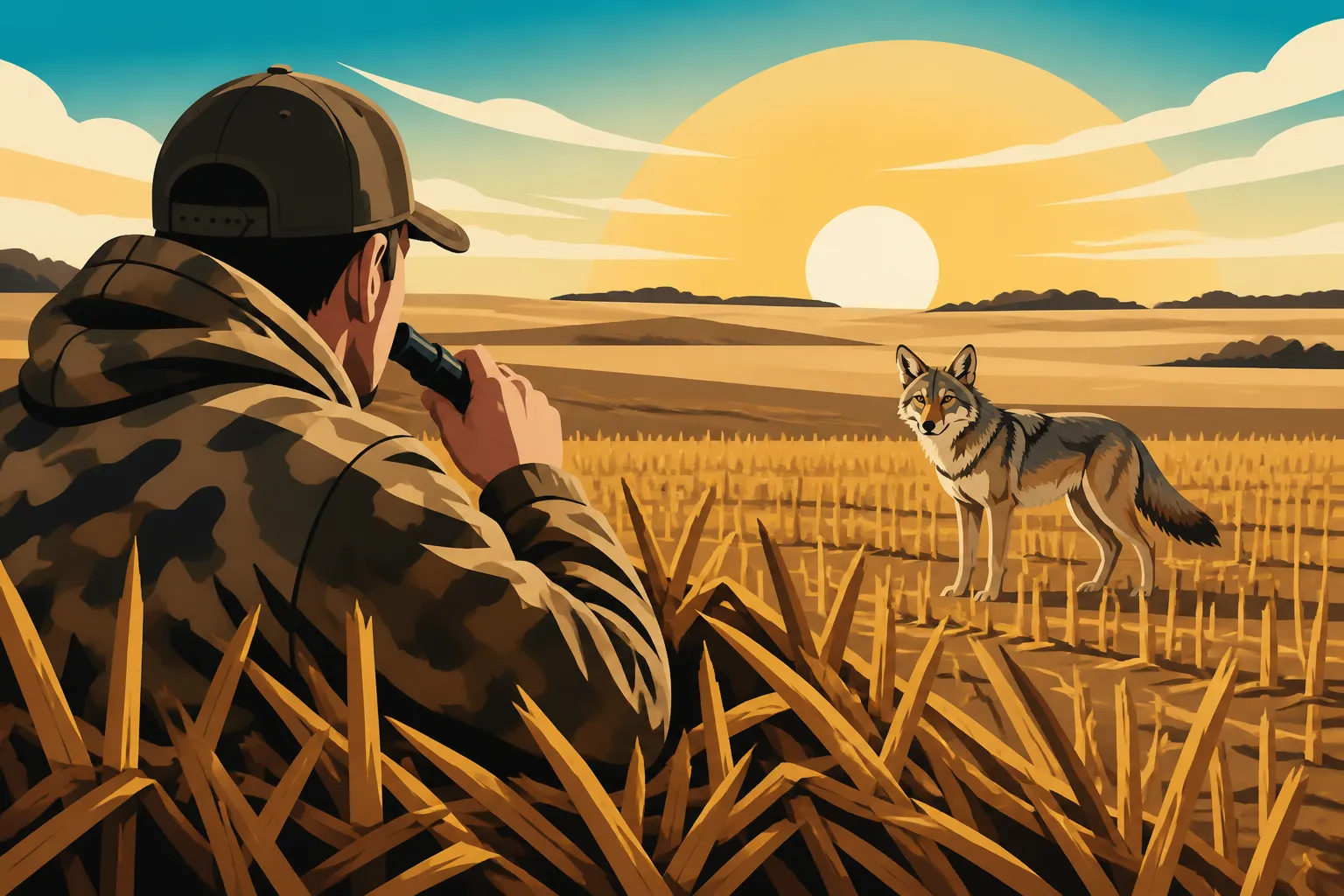
The vast, open stubble fields of Saskatchewan, while seemingly barren, can hold some of the wariest coyotes you'll ever encounter. These clever canines are masters of their environment, using every subtle fold in the land to their advantage, making a successful call-in feel like a major victory. This guide dives deep into the nuances of calling coyotes in this unique prairie landscape, offering strategies and insights to help you overcome the challenges and bring those elusive predators into range.
Understanding the Saskatchewan Stubble Field Landscape
Saskatchewan's stubble fields, particularly after the grain harvest, transform into a unique ecosystem that coyotes exploit to their fullest. Knowing what makes these areas so attractive to coyotes is your first step in outsmarting them.
Why Coyotes Love Stubble Fields
Stubble fields are far from desolate; they are vibrant hubs of activity for coyotes. After the combines have rolled through, leaving behind the remnants of wheat, barley, or canola, the ground still teems with life. Mice, voles, and shrews thrive in the insulating cover of the stubble, forming a readily available buffet for opportunistic coyotes. These small rodents are a primary food source, especially as colder weather sets in and other prey becomes scarcer. Beyond small rodents, these fields often border or contain pockets of thicker cover – willow runs, shelterbelts, or even standing cattails around sloughs – which are prime habitats for rabbits and hares. Coyotes will patrol these edges diligently, hoping to flush out a meal.
Furthermore, stubble fields often act as crucial travel corridors and hunting grounds for larger game animals like deer and sometimes even moose. Where these animals roam, there's always the potential for carrion – an injured animal, or a winter kill that didn't make it. Coyotes are exceptional scavengers and will quickly locate and capitalize on any such opportunity. The flat, open nature of stubble fields, while challenging for hunters, provides coyotes with excellent visibility, allowing them to spot prey or potential threats from a distance. They can often be found bedded down in a slight depression, enjoying the sun while keeping a keen eye on their surroundings.
Reading the Terrain for Setup Success
Success in calling coyotes in open stubble fields hinges on your ability to interpret the subtle undulations and features of the landscape. Unlike dense bush hunting, where you might only see a few yards, stubble fields demand a long view. You need to identify potential travel routes, approach corridors for coyotes, and, most importantly, a solid setup location for yourself. Look for slight rises in elevation, even a foot or two can provide a crucial vantage point. These high spots allow you to scan more effectively and project your calls further. Conversely, identifying depressions, shallow coulees, or natural draws that coyotes might use for cover as they approach is just as important.
Wind direction is not just important; it's paramount. A coyote's nose is its primary defense and hunting tool. You must always position yourself so the wind is blowing from the coyote towards you. This means a crosswind or, ideally, a slight headwind relative to the direction you expect coyotes to approach from. Never set up with the wind at your back, as your scent will be carried directly to the approaching coyote, leading to an immediate bust. Field edges, especially those bordering bluffs or tree lines, offer natural funnel points where coyotes might emerge. Even a small ring of willows around a slough can provide critical cover for a coyote making its final approach, so position yourself to have a clear shot if they use such features. If you are struggling with finding suitable cover, consider Hunting a Shelterbelt Row in Open Prairie or utilizing a subtle Hunting a Slough Ring in Open Country as your stand.
Seasonal Stubble Field Dynamics
The stubble field landscape isn't static; it changes dramatically with the seasons, and so too does coyote behavior and, consequently, your calling strategy. In the early fall, immediately after harvest, the stubble is often dense and relatively tall, offering more concealment for both coyotes and their prey. The weather is generally milder, and coyotes might be less pressured, making them potentially more responsive to calls. This is a great time to experiment with different distress calls, as young coyotes are often still dispersing and looking for easy meals.
As winter deepens, the stubble can become matted down by snow or ice, reducing its cover value. More importantly, harsh cold and deeper snow can make coyotes hungrier and more desperate. This often means they become more willing to travel and respond to calls, but they're also more cautious. In these conditions, focusing on prey distress calls, like a rabbit in distress, can be highly effective. The coyotes' need for sustenance outweighs some of their wariness. Later in winter, when breeding season approaches, more aggressive challenge howls and barks can be incorporated, particularly if you're targeting dominant males. Understanding these seasonal shifts helps you tailor your approach, from your call selection to your concealment strategy, ensuring you're always adapting to what the field and the coyotes are telling you. When there's fresh snow, knowing Reading Sign After Fresh Saskatchewan Snow can give you an edge in identifying prime calling locations.
Essential Gear for Stubble Field Coyote Calling
Having the right equipment can make all the difference when you're trying to coax a wary coyote across a wide-open Saskatchewan stubble field. It's not just about what you use, but how you use it to counter the coyote's keen senses.
Calls: Electronic vs. Hand Calls
The debate between electronic calls and hand calls is a long-standing one among coyote hunters, and in stubble fields, both have their distinct advantages and disadvantages.
Electronic Calls are incredibly versatile. They allow you to project a wide array of sounds at varying volumes, from subtle mouse squeaks to loud, piercing rabbit distress calls or aggressive howls. The ability to place the speaker away from your position, perhaps 50-100 yards downwind, means the coyote's attention is drawn away from you, focusing on the sound source. This can be crucial in open fields where concealment is minimal. Many modern e-calls, like those you might explore through resources like GoHunt, come with remote controls, allowing you to change sounds, adjust volume, and even mix calls without moving a muscle. This minimizes human movement, a huge factor when hunting sharp-eyed coyotes. However, they require batteries, can be expensive, and might lack the raw, emotional realism some experienced callers achieve with hand calls.
Hand Calls, on the other hand, offer an unmatched level of realism and control in the hands of a skilled caller. The subtle inflections, the ability to "fade" a sound, or add a dying whimper – these nuances are harder to replicate with an e-call. They are also incredibly reliable, requiring no batteries, and are much lighter and more compact. Many hunters swear by an open-reed distress call for its versatility, allowing for different tones and volumes. Closed-reed calls are often easier for beginners to master for consistent sounds. The challenge with hand calls in stubble fields is projecting enough volume across the vast expanse without sacrificing realism, and the fact that the sound originates from your position, which means you need impeccable concealment. Often, a combination of both is the most effective approach: using an e-call for the primary sequence and a hand call for subtle follow-up sounds once a coyote commits.
Here's a quick comparison:
| Feature | Electronic Calls | Hand Calls |
|---|---|---|
| Sound Variety | Vast library of realistic sounds, easy switching | Limited to caller's skill, but highly adaptable |
| Volume Control | Precise, high volume projection possible | Manual control, can be challenging in wind |
| Concealment | Speaker can be placed away from hunter | Sound originates from hunter's position |
| Ease of Use | Remote operation, consistent sounds | Requires practice and skill for realism |
| Cost | Generally higher initial investment | More affordable, good for backup |
| Reliability | Battery dependent, potential for malfunction | Always ready, no power needed |
Optics for Long-Range Detection
In Saskatchewan's open stubble fields, a coyote might pop out of a distant bluff or appear from behind a rise hundreds of yards away. Spotting them early is absolutely vital. This isn't like hunting thick timber where your world is measured in tens of yards. Here, your world is measured in hundreds, sometimes thousands, of yards. High-quality optics are not a luxury; they are a necessity.
A good pair of binoculars (10×42 or 12×50 are popular choices) should be glued to your chest. They allow you to systematically scan the vast landscape for any movement or irregular shape that might indicate a coyote. Look for the glint of sunlight off fur, a twitch of an ear, or a coyote slipping through a far-off fence line. Before and during your calling sequence, you should be constantly scanning, not just for coyotes coming to the call, but for those that might already be circling downwind or watching from a distance. The wide field of view in good binoculars helps you pick up subtle movements that the naked eye would miss.
For truly immense fields, or when you suspect coyotes are holding up at extreme distances, a spotting scope can be an invaluable tool. Magnification typically ranging from 15x to 60x can turn a distant blur into a clearly identifiable coyote, allowing you to confirm its direction of travel and plan your next move. Using a spotting scope on a tripod ensures stability, which is critical at high magnifications. This early detection gives you precious time to adjust your calling strategy, prepare for a shot, or even decide if the coyote is worth pursuing further. Remember, in open country, the coyote sees you just as easily as you see it, so early detection and minimal movement are your best friends.
Camouflage and Concealment
When you're a dark blob sitting in an otherwise flat, light-coloured stubble field, you stick out like a sore thumb. Coyotes have exceptional eyesight, particularly for movement, and they will pick you out if you don't take concealment seriously. Your camouflage pattern should ideally mimic the dry, golden, or brown tones of the stubble and any sparse vegetation. Patterns with good contrast that break up your silhouette are key. Gone are the days of simply wearing "camo"; think about blending into the texture of the field.
Beyond pattern, the way you use cover is paramount. Even a small clump of weeds, a subtle rise in the ground, or the edge of a slight depression can be used to your advantage. Try to set up with your back against something that breaks up your outline – a fence post, a small bush, or even just a slight lip in the terrain. A ground blind or a portable blind that blends with the stubble can be incredibly effective, especially if you plan to call from a static position for extended periods. The goal is to appear as a natural part of the environment. Minimize all movement, especially during your calling sequence. Keep your rifle rested and ready, and only make small, slow movements when a coyote is not directly looking your way. Wearing a full face mask and gloves is also non-negotiable, as exposed skin glows brightly in the open sun and will immediately alert a coyote.
Mastering Calling Techniques in Open Country
Calling coyotes in the wide-open stubble fields of Saskatchewan requires a refined touch. You're not just making sounds; you're painting a sonic picture, trying to convince a naturally wary predator that an easy meal is just within reach.
Starting Your Stand: The Initial Sequence
Every stand begins before you even make a sound. After you've approached stealthily and found your ideal setup location, take a few minutes to simply observe the field. Use your binoculars to scan for any coyotes already present or moving. Pay attention to wind direction, the sun's angle, and potential approach routes. Once you're confident the immediate area is clear and you're well concealed, it's time to begin.
The initial calling sequence should typically start with a distress sound, but with volume considerations. In open country, sound travels far, so don't immediately blast a high-volume call. Start with a medium volume, maybe a few excited rabbit distress squalls, lasting about 30-45 seconds. Think about a rabbit that's just been caught and is struggling. After this initial burst, go silent for a minute or two. This pause allows any nearby coyotes to process the sound and begin to move, and it gives you time to scan intensely. As the stand progresses, you can increase volume and intensity if you're not getting a response, but always start a bit softer. When you're calling coyotes at first light, the quiet stillness of dawn can make even soft sounds carry far, so adjust accordingly.
Varying Sounds and Cadence
Coyotes are smart, and they hear a lot of different sounds throughout their lives. Monotony in calling is a quick way to lose their interest. To keep them engaged, you need to vary your sounds and the rhythm, or cadence, of your calling.
If you start with a rabbit distress, and after a few minutes you're not seeing anything, consider switching to a different prey animal distress, such as a fawn in distress or a bird distress. This simulates a new opportunity. You can also vary the type of distress: from an excited, frantic squeal to a more subtle, dying whimper. Mimicking a struggling, injured animal is often more effective than just a generic loud cry. Think about the complete scenario: an animal caught, struggling, maybe pausing in exhaustion, then struggling again. This adds realism.
Another powerful technique is to incorporate pup distress calls. Coyotes are fiercely territorial and will often respond aggressively to the sound of strange pups, especially during certain times of the year. This can be a great way to bring in older, more dominant coyotes that might be wary of direct prey distress calls. If you get a coyote to respond with a howl or bark, you can then try a few challenge howls back to provoke them further. The key is to react to what the coyote is doing. If it's coming hard, keep the distress sound consistent. If it's hanging up, try a softer, more subtle sound, or a pup whine to pique its curiosity. Don't be afraid to go completely silent for several minutes; sometimes, the sudden absence of sound is what pushes a hesitant coyote to investigate.
Reading Coyote Reactions and Adjusting
This is where the art of coyote calling truly comes into play. Coyotes don't always come running in with reckless abandon. Often, they are cautious, circling downwind, or hanging up at a distance, trying to locate the source of the sound without exposing themselves. Your ability to read their body language and adjust your calling is critical.
- Coming Hard: If a coyote is trotting or running directly towards you, maintain your current calling sequence. Keep it consistent and realistic. Be ready for a shot; they can close ground incredibly fast in open fields.
- Hesitant or Hung Up: This is common in stubble fields. A coyote might stop at 200-300 yards, stare intensely, and then start to circle downwind. This is where you need to change tactics. Try switching to a softer, more inquisitive sound, like a few subtle pup whines or a very light mouse squeak. Sometimes, simply going completely silent for a minute or two can make them curious enough to take a few more steps. This is also a good time to consider a visual decoy if you have one, as it can be the final trigger to bring them into range.
- Circling Downwind: If a coyote starts circling to get your scent, you know it's suspicious. If it's still far out, you might try a very soft, drawn-out challenge howl to see if you can pull it back towards the sound. However, if it's getting closer on its downwind approach, your window is closing rapidly. Be ready for a shot at a trotting target, or recognize that it might be time to pack up and try a new stand if it busts your scent.
Remember, every coyote is different, and every stand is a learning experience. Pay attention to what works and what doesn't, and be willing to adapt your approach on the fly.
Strategic Approach and Setup Considerations
Your success in calling coyotes in Saskatchewan stubble fields isn't just about the sounds you make, but how and where you set up to make them. Strategy in these open landscapes is paramount.
Wind Direction is Paramount
Let's reiterate this because it's the single most important factor in coyote hunting, especially in open country: the wind is your master. Coyotes rely heavily on their sense of smell, and in vast stubble fields, any scent you put out will travel far and wide. If your scent cone crosses the path of an approaching coyote, your hunt is almost certainly over before it begins.
Always, always hunt into the wind, or with a strong crosswind. This means the wind should be blowing from the direction you expect coyotes to come from, towards your position, and then ideally continuing past you, carrying your scent away from where a coyote might circle. Before you even get out of your truck, check the wind. When you choose your stand location, consider how a coyote might approach. Will they try to circle downwind? Position yourself to anticipate that movement, often by setting up on the downwind edge of your expected kill zone. This forces the coyote to either approach from directly into the wind (where it can't smell you) or exposes it to a shot before it gets into your scent cone. A slight breeze is your friend, as it can help carry your calls, but a strong, gusting wind can make it difficult for coyotes to pinpoint the sound and for you to hear them approaching. Always be conscious of changes in wind direction throughout your stand.
Approaching Your Stand Undetected
The moment you step out of your vehicle, the hunt begins. In open stubble fields, your approach needs to be as silent and unseen as possible. Don't just pull up to the edge of a field, slam the door, and start calling. Coyotes are incredibly sensitive to vehicle noise and human presence.
Park your vehicle well out of sight, ideally behind a bluff, in a tree line, or down a grid road that offers concealment. Use natural terrain features, such as slight dips, drainage areas, or even the sparse vegetation along a fence line, to mask your movement as you walk to your calling position. Walk slowly and deliberately, constantly scanning ahead. Avoid skylining yourself on ridges or high points. If the field is bordered by a small bush lot or a shelterbelt, use that to your advantage, stalking along its edge until you reach your desired spot. Remember, the coyote that sees you approach will likely not respond to your calls. Some hunters even scout with tools like GoHunt or other satellite imagery to identify discreet approach paths beforehand, making sure they can slip into their chosen setup unnoticed.
Optimal Stand Locations
Choosing the right spot to set up within a stubble field is crucial for success. You need a location that offers you the best chance to see approaching coyotes, provides adequate concealment, and allows your calls to be heard effectively.
- Field Edges and Bluffs: These are prime locations. Setting up on the edge of a stubble field, particularly where it meets a treeline, a small bluff, or a willow patch, gives you several advantages. Coyotes often use these thicker covers for bedding and travel, and they'll likely emerge from these areas. This also provides a natural backdrop for your concealment, breaking up your silhouette.
- Slight Rises or Undulations: In flat country, even a small rise can offer a significant advantage. Setting up on the downwind side of a gentle knoll or a small hill allows you to project your calls over the rise, while still keeping you below the skyline. As coyotes approach, they may pop over the rise, giving you a shot, or they might try to circle, allowing you to intercept them.
- Slough Rings and Drainage Ditches: Saskatchewan is dotted with sloughs, often surrounded by willow and cattail rings. These are magnets for wildlife, including coyotes. Setting up with a good vantage point over a slough ring, or within a drainage ditch that offers concealment, can be highly effective. Coyotes use these features for cover and travel. You can even consider Hunting a Frozen Slough Crossing in colder months, as coyotes often use these as travel lanes.
- Isolated Cover: Sometimes, there will be an isolated clump of bushes, a lone tree, or even a discarded piece of farm equipment in the middle of a vast field. While these don't offer much concealment, they can serve as excellent backdrops to break up your outline if you position yourself correctly. The key is to avoid being silhouetted.
Always ensure you have clear shooting lanes in multiple directions. In these open environments, a coyote can appear from anywhere, so you need to be able to swing your rifle freely and make a clean shot. Having a stable rest for your rifle is also important, given the potential for longer shots.
Troubleshooting Common Stubble Field Challenges
Even with the best planning and gear, calling coyotes in Saskatchewan stubble fields will throw you curveballs. These animals are notoriously clever, and their environment plays right into their evasive nature.
Coyotes Hanging Up at a Distance
This is perhaps the most common frustration for coyote callers in open country. You make a perfect call, you see a coyote coming, and then… it stops. Sometimes at 300 yards, sometimes at 150, but rarely at the comfortable 50-yard mark. They're wary, they've been hunted, and they can see for miles.
When a coyote hangs up, it's telling you it's suspicious. It's heard the call, but it can't quite pinpoint the source, or something doesn't feel right. Here are a few tactics to try:
- Go Silent or Very Subtle: Sometimes, the constant calling reinforces their suspicion. Go completely silent for 30 seconds to a minute. The sudden lack of sound can often pique their curiosity enough to take a few more steps. If they don't, try a very, very soft, almost inaudible mouse squeak or a low-volume pup whine. These sounds suggest "all clear" or "easy meal" without being overly aggressive.
- Visual Decoys: This is where a good coyote or fox decoy truly shines. If a coyote is hung up, and you can deploy a moving or stationary decoy, it can often be the visual confirmation they need. Seeing what appears to be another predator or a distressed animal can often break their hesitation and bring them in the rest of the way. Place your decoy so the coyote sees it clearly, but ideally in a spot that still gives you a clear shot if they commit.
- Patience is a Virtue: Don't be too quick to pack up. A hung-up coyote might sit there for several minutes, evaluating the situation. If you've tried subtle calls and silence and they're still not moving, give them a few more minutes. They might eventually convince themselves it's worth the risk.
- Aggressive Howls (Cautiously): In some rare cases, particularly during the breeding season or if it's a very dominant male, a soft challenge howl or a few sharp barks can sometimes anger them enough to commit. However, this is a gamble, as it can just as easily send them running. Use this sparingly and only if other tactics fail.
Dealing with Multiple Coyotes
What's better than one coyote? Two, or even a small pack! While exciting, calling in multiple coyotes presents its own set of challenges, especially regarding shot opportunities and preventing the others from spooking.
- Prioritize Your Shot: When multiple coyotes are approaching, quickly assess which one offers the best, cleanest shot opportunity. Often, this is the lead animal or the one that's presenting broadside first. Focus on making that first shot count.
- Rapid Follow-Up: Coyotes are notoriously tough. If you have a semi-automatic rifle, or can operate a bolt-action quickly, be prepared for a rapid follow-up shot on another coyote. As soon as the first shot rings out, the remaining coyotes will likely bolt. If you can, pick another target immediately.
- Shot Placement is Key: In the excitement of multiple targets, don't rush your shot. Aim for the vitals. A well-placed shot on the first coyote is far better than two rushed, wounded animals. Using a legal rifle calibre for big game, if you are also using it for coyotes, ensures enough energy for clean kills.
- Calling After the Shot: Sometimes, if you drop one coyote, the others might pause briefly, confused by the sudden event. A few quick, frantic distress calls or pup whines can occasionally stop a fleeing coyote for another shot opportunity. This doesn't always work, but it's worth trying.
- Remain Still: Even after the shot, try to remain as still and quiet as possible, especially if you think there might be more coyotes in the area that haven't shown themselves yet. Often, there are other coyotes watching from a distance that you haven't seen.
Cold Weather and Deep Snow Impacts
Saskatchewan winters can be brutally cold, often with deep snow. These conditions dramatically impact coyote behavior and your calling success. When you're Hunting Saskatchewan Winter Weather Safely, you need to understand how the cold changes the game.
- Hungrier, But Warier: In deep cold and snow, food sources become scarce, making coyotes hungrier and potentially more responsive to calls. They're looking for an easy meal. However, they're also more cautious. The open, snow-covered fields offer them even less concealment, and the cold air carries sound clearly, making them more aware of distant activity.
- Focus on Distress Calls: Extremely cold temperatures and deep snow mean calories are precious. Focus heavily on realistic, high-pitched distress calls (rabbit, fawn) that mimic a vulnerable, easy meal. Aggressive challenge howls might be less effective if they're simply focused on survival.
- Strategic Bedding: In deep snow, coyotes often seek shelter in bluffs, dense willow thickets, or deep coulees. They will conserve energy. Focus your calling efforts near these known wintering areas. They might be less willing to travel long distances across open, deep snow to investigate a call. Hunting Coyotes Over a Winter Bait can be incredibly effective in these conditions, as the guaranteed food source outweighs the risk.
- Patience and Persistence: Cold weather calls for extra patience. Coyotes might take longer to respond, moving slowly through the snow. Your stands might need to be longer than in milder conditions. Dress appropriately for the weather, as staying warm and comfortable will allow you to stay on stand longer, increasing your chances.
- Reduced Visibility: Snow can make it harder for you to spot coyotes, especially if they are white or light-coloured. Pay close attention to subtle movements against the white backdrop. Conversely, a fresh snowfall can make Reading Sign After Fresh Saskatchewan Snow easier, helping you identify active travel routes.
Ethical Considerations and Safety
As hunters, we carry a responsibility that extends beyond simply harvesting an animal. Especially when hunting on private lands in Saskatchewan's agricultural heartland, ethical conduct and safety are paramount.
Respecting Landowners and Property
Saskatchewan's hunting regulations and the social contract with landowners emphasize the critical need for permission. Many stubble fields are on private land, and accessing them without explicit consent is trespassing, which carries legal penalties and severely damages the reputation of all hunters.
Before you even step foot on a field, make sure you have permission from the landowner. This often means Knocking on Doors in Saskatchewan Farm Country and building relationships. Be polite, explain what you want to do (hunt coyotes), and ask if it's okay. Offer to share any information you gather about other game on their land. Always adhere to any specific requests the landowner might have, such as avoiding certain areas, closing gates, or not driving on wet fields. If a field is posted, respect those signs absolutely. Leave no trash behind, do not damage fences or crops, and drive only on designated roads or approaches. A positive interaction with a landowner can open doors for future hunting opportunities, not just for you, but for other ethical hunters as well.
Safe Shooting Lanes and Backstops
In the generally flat, wide-open stubble fields of Saskatchewan, identifying safe shooting lanes and proper backstops is a critical safety consideration. Unlike hunting in dense bush where trees and hills absorb bullets, a rifle round can travel for miles across open prairie.
- Know Your Target and Beyond: Before you ever put your finger on the trigger, be absolutely certain of your target and what lies beyond it. Are there farmhouses, barns, livestock, roads, or other hunters in the distance? Never take a shot if there's any doubt about where your bullet will end up.
- Utilize Natural Backstops: Look for natural terrain features that can act as a safe backstop. A gentle rise in the land, a bluff, or even the bank of a deep drainage ditch can be used to contain your bullet. Try to position yourself so that any shot taken will be directed towards one of these natural safety features.
- Elevate Your Position (Carefully): Sometimes, hunting from a slightly elevated position, like a small knoll, can allow you to shoot downwards, minimizing the chance of a ricochet or a bullet traveling too far. However, be extremely cautious not to "skyline" yourself or take shots at a coyote on the very top of a ridge if you don't know what's on the other side.
- Practice Range Estimation: Knowing the distance to your target is not only crucial for accuracy but also for safety. If you don't have a solid backstop, a long shot increases the risk. A rangefinder is an indispensable tool for coyote hunting in these environments.
- Adhere to Shooting Hours: Always be aware of Saskatchewan Shooting Hours for Big Game and adhere to them, even if you are hunting coyotes. It's a general good practice for safe and responsible hunting.
Carcass Management and Reporting
After a successful hunt, the responsible management of the harvested coyote carcass is an important aspect of ethical hunting. While coyotes are not typically consumed, their disposal should be done thoughtfully.
- Remove from Visible Areas: Don't leave carcasses prominently displayed near roads, farmyards, or public access points. This can be disrespectful to landowners and alarming to non-hunters. Drag the carcass into a thicket, a deep ditch, or other out-of-the-way spot where it can decompose naturally or be scavenged by other wildlife.
- Respect Public Health: Avoid leaving carcasses near water sources or in areas where livestock might be present.
- Understand Coyote Ecology: Coyotes in Saskatchewan Farm Country play a complex role in the ecosystem. While often viewed as pests due to predation on livestock or game, they also help control rodent populations. Your hunting contributes to localized population management.
- Reporting (Optional but Recommended): In some cases, if you observe unusually high coyote numbers or signs of disease, contacting your local Ministry of Environment office or a wildlife biologist can be helpful. While not usually mandatory for coyotes, reporting unusual observations helps wildlife management.
By adhering to these ethical and safety guidelines, you not only ensure your own safety and the success of your hunt but also uphold the positive image of hunters in Saskatchewan.
Disclaimer
The information provided in this guide is for general informational purposes only and does not constitute legal advice. Hunting regulations, seasons, and licensing requirements can change. Always consult the most current Saskatchewan hunting regulations guide and relevant federal regulations before planning any hunting activity. It is the hunter's responsibility to know and obey all applicable laws and to obtain all necessary permissions.