Hanging a Stand on a Saskatchewan Bush Edge
You’ve got your eye on that perfect bush edge, haven't you? That sliver of cover where the thick woods meet the open fields, a natural funnel where deer often cruise. It's an undeniably hot spot, but the challenge isn't just finding it – it's successfully hanging a stand there without spooking every animal for miles, and ensuring it’s effective and safe for seasons to come. This guide will walk you through the meticulous steps of identifying, preparing, and installing a treestand on a Saskatchewan bush edge, helping you maximize your chances of success.
Why a Bush Edge is Prime Whitetail Real Estate
There's just something magical about a Saskatchewan bush edge when you're thinking about chasing whitetails. It’s not just a random patch of trees; it's a dynamic interface, a transition zone, and for deer, it's often the highway, the pantry, and the bedroom all rolled into one. Understanding why these edges are so productive will empower you to pick the absolute best spot for your stand, rather than just guessing.
Natural Travel Corridors
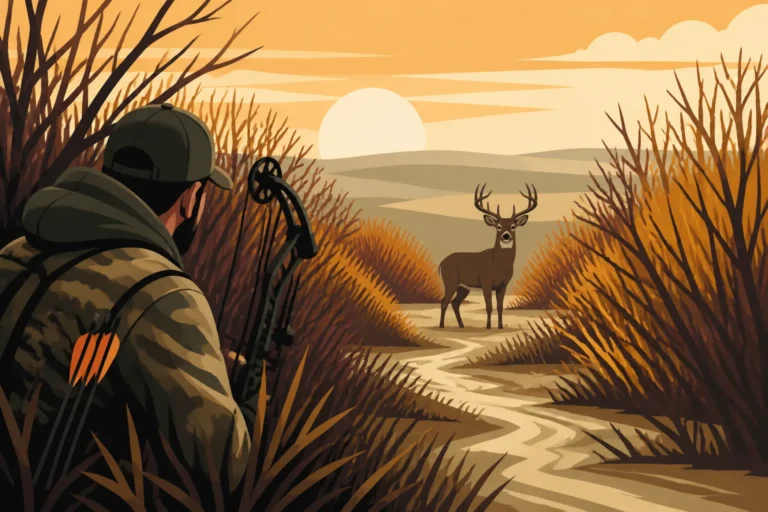
Think about it: deer are creatures of habit and efficiency. They want to move from bedding areas to feeding areas, or simply cruise looking for does during the rut, with as much cover as possible. A bush edge offers exactly that—a protective screen on one side, allowing them to feel secure while moving along the fringe of open ground. This is especially true where the edge creates a pinch point, forcing deer traffic into a narrower lane. Imagine a long, straight bush line suddenly jutting out into a field, or an inside corner where the field pushes into the bush. These are natural funnels that practically beg for a stand placement. During Saskatchewan's November rut, these edges become highways for bucks cruising scent trails and seeking receptive does, making them ideal for a productive hunt.
Food and Cover Intersections
Saskatchewan is blessed with incredible agricultural lands, and our whitetails know it. The bush edge is often where the deer’s world of safety (the dense cover of the bush) meets their primary food source (the adjacent grain fields, pea fields, or hay land). They’ll stage in the timber during daylight, browsing on natural forage, and as evening approaches, they’ll filter out into the fields to feed. Conversely, in the mornings, they’ll move back from the fields into the safety of the bush to bed down. This constant movement, driven by hunger and the need for security, creates predictable patterns along these edges. You'll often find concentrated sign here: rubs, scrapes, and well-worn trails, telling you exactly where the deer are entering and exiting.
Scouting the Perfect Bush Edge Location
Alright, you know the bush edge is where it's at. But not all bush edges are created equal. This isn't just about finding any edge; it's about finding the edge—the specific tree, the precise corner, the subtle fold in the landscape that screams "hot spot." This requires diligent, intelligent scouting, blending modern tools with old-school woodsman skills.
Utilizing Mapping Tools and Aerial Imagery
Before you even step foot in the woods, fire up your digital mapping tools. Platforms like GoHunt are invaluable for Saskatchewan hunters. You can zoom in on your Wildlife Management Zone and identify potential bush edges that border agricultural fields or natural clearings. Look for inside corners, long fingers of bush extending into fields, or natural draws that create bottlenecks. Pay close attention to subtle elevation changes, waterways, or dense patches of cover that might funnel deer movement. These apps often have satellite imagery layers that show land use changes over time, helping you understand where historical deer activity might have been or where new food sources have emerged. They can also help you identify Hunting Whitetails on Saskatchewan Crown Land, or any public access areas if you don't have private land permission yet.
| Feature Type | Why it's a Hot Spot | Ideal Stand Placement |
|---|---|---|
| Inside Corner | Funnels deer traffic, especially during rut | On the corner point, with wind consideration |
| Bush Finger/Point | Deer often follow these extensions into fields | Near the tip or along the sides, depending on prevailing wind |
| Narrow Section | Constricts movement between larger blocks of cover | Overlooking the narrowest point |
| Natural Funnel | Gully, fence line, old road leading to/from bush | Intercepting movement at the most constricted point |
| Food Source Edge | Deer transition directly from bedding to feeding | Between known bedding and feeding areas |
On-the-Ground Sign Reading
Once you've identified a few promising spots on your map, it's time to hit the ground. This is where your inner detective comes out. You're looking for concrete evidence of deer activity. Start by identifying the main trails leading into and out of the bush. Are they heavily worn, indicating consistent use? Are there fresh tracks? Look for rubs – trees or saplings where bucks have rubbed their antlers, signaling territorial marking and often a staging area before entering a field. Scrapes, patches of ground pawed clear with an overhanging branch, are also key indicators, especially during the pre-rut and rut. The fresher the sign, the better. Consider the prevailing wind direction; deer typically move with the wind in their face, or crosswind, to detect danger. Your stand needs to be positioned downwind of where you expect deer to approach. For more detailed insights, you might want to delve into Reading Whitetail Sign in Saskatchewan Bluffs.
Choosing and Preparing Your Treestand
Selecting the right treestand for a bush edge setup in Saskatchewan is crucial, not just for safety but for stealth and longevity. You’ll be dealing with various tree types, from aspen bluffs to denser spruce stands, and each presents unique challenges.
Types of Treestands for Edge Hunting
For bush edge hunting, you generally have a few solid options:
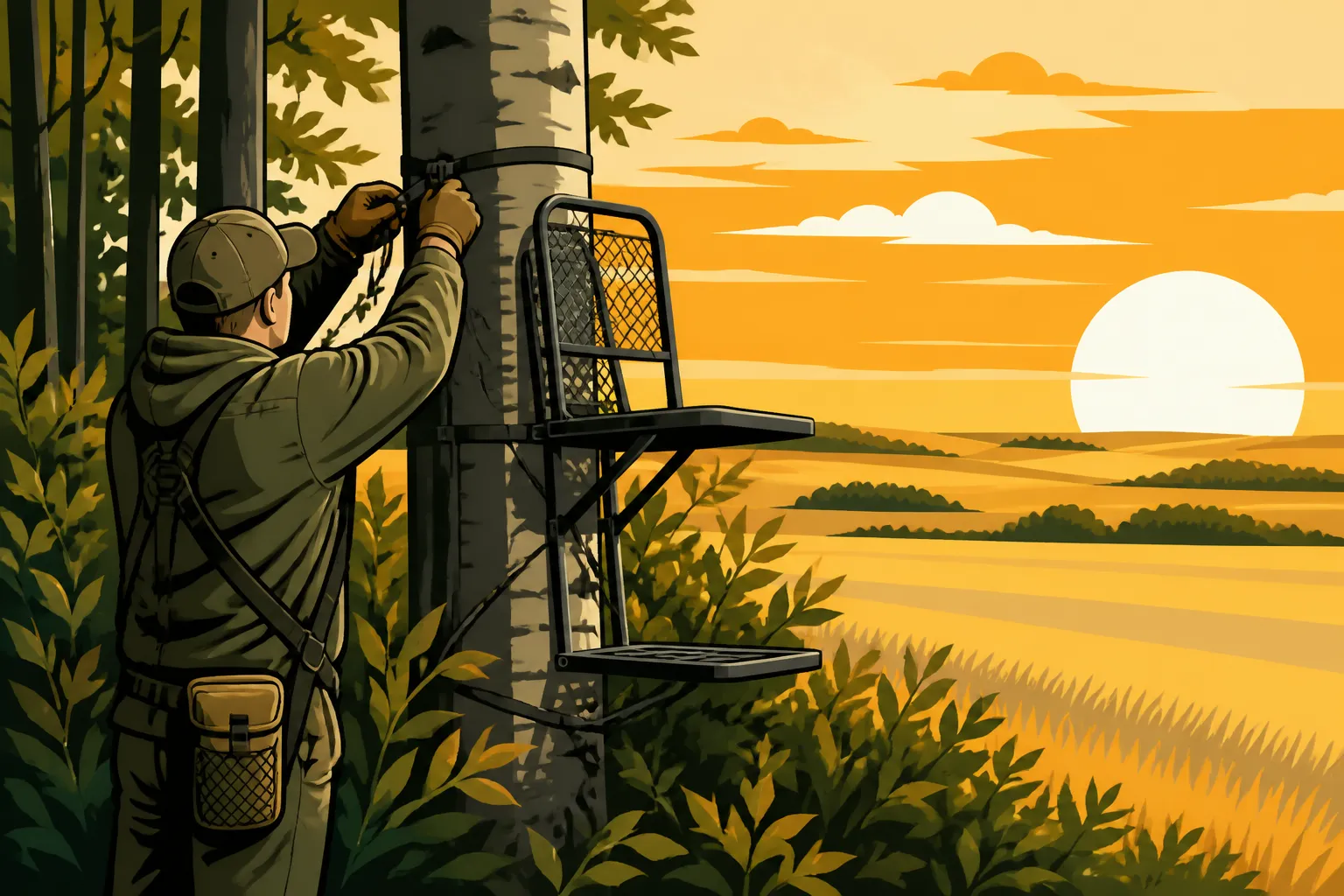
- Hang-On Stands: These are incredibly versatile and are often the best choice for bush edges. They attach directly to a single tree, allowing for precise placement in specific trees that might be otherwise unsuitable for ladder stands. They are lighter and more portable, making them ideal if you anticipate moving your stand seasonally or even mid-season. The downside is that they require climbing sticks or screw-in steps, which adds to the setup time and effort.
- Ladder Stands: If you find a consistently active spot that you plan to hunt repeatedly throughout the season, a ladder stand can be a comfortable and stable option. They offer easier access and more comfort for longer sits, which is a huge benefit when you’re Sitting All Day in a Saskatchewan Blind. However, they are bulkier, heavier, and less discreet. They require a tree with a straight trunk, which can be harder to find right on the edge where trees might be more sparse or crooked.
- Climbing Stands: While great for mobile hunters in areas with suitable, straight-trunked trees, they can be less practical right on a bush edge. The trees on the fringe might not always be straight enough, or clear enough of lower branches, to allow for safe climbing. They also limit your ability to relocate quickly if the deer patterns shift slightly off your chosen tree.
Consider the species of tree you plan to use. Poplar and aspen are common along bush edges and are generally good for stands, but always check for rot or instability. Spruce and pine offer great cover but can be difficult to get climbing sticks around due to branches.
Safety First: Harnesses and Equipment Checks
I can't stress this enough: always use a full-body safety harness. Every single time you leave the ground. A fall from a treestand can have devastating consequences, and it's simply not worth the risk. Before each season, and certainly before hanging any new stand, meticulously inspect all straps, buckles, cables, and connections on your stand and harness. Look for fraying, cracks, rust, or any signs of wear and tear. Rodents can chew on straps, and prolonged exposure to elements can degrade materials. Replace anything that looks questionable.
Carry all the necessary tools in a secure pack: a good sharp saw for clearing shooting lanes, pruning shears, a measuring tape, and a pull rope for bringing up your bow or rifle safely once you're secured in the stand. Ensure your climbing sticks are in good condition, and that any bolts or straps for your stand are tight and secure. Having a reliable Winter Truck Kit for a Saskatchewan Hunt is also wise, especially if you're out scouting or hanging stands in colder weather or remote locations.
The Actual Hanging Process
You've scouted, chosen your stand, and checked your gear. Now comes the moment of truth: getting that stand securely and stealthily into position. This is where patience, technique, and attention to detail will pay off big time.
Strategic Tree Selection and Clearing Shooting Lanes
Choosing the tree is paramount. It needs to be healthy, stable, and offer good concealment both to and from your stand, but also provide clear shooting lanes. Look for a tree that blends in with the background, perhaps a mature poplar with good branching, or a spruce that can hide your silhouette. Position yourself so that the morning or evening sun doesn't silhouette you against the sky. As for height, generally, 15-20 feet is a good starting point, but adjust based on the terrain and surrounding cover. You want to be above the deer's primary line of sight but still have ethical shooting angles.
Once you’re up and secure, clear your shooting lanes sparingly. Only cut what's absolutely necessary. Too much cutting can alert deer to your presence and create obvious gaps in the canopy that look unnatural. Focus on lanes towards your anticipated travel corridors and feeding areas, ensuring a clear path for your arrow or bullet. Remember, you want to remain hidden, so keep the cover around your stand as intact as possible. For those looking to hunt from a ground blind, choosing a good spot on the edge can be just as critical for concealment as hanging a stand, and you can apply similar principles for scouting and clearing.
Minimizing Your Footprint and Scent
Deer have an incredible sense of smell, and a bush edge is a prime location for them to detect human intrusion. Every step you take, every branch you break, every tool you touch leaves a scent signature. To minimize this:
- Approach with care: Plan your approach to the stand location, ideally using a route that deer don't typically use, or one that's easily accessible but quickly dissipates your scent.
- Wear scent-free clothing: While not a perfect solution, washing your hunting clothes in scent-eliminating detergent and storing them in scent-free bags can help.
- Handle equipment with gloves: Minimizes transferring human oils and scent to your stand and climbing sticks.
- One trip, one spot: Try to get all your hanging done in one visit per stand location. Multiple trips mean multiple scent bombs.
- Don't overstay: Get the stand up, make your adjustments, and get out. The less time you spend there, the better.
- Consider wind: Always approach and hang your stand with the wind in your favor, blowing your scent away from where you expect deer to be. Using an app like GoHunt to check real-time wind conditions can be a game-changer.
Long-Term Maintenance and Ethical Hunting Practices
Hanging a stand isn't a one-and-done deal. To ensure its effectiveness and safety for many seasons, regular maintenance is key. Plus, as responsible Saskatchewan hunters, we have an obligation to practice ethical methods and leave the land better than we found it.
Regular Inspections and Adjustments
Even the most robust treestand will experience wear and tear from Saskatchewan's often harsh weather. High winds, freezing rain, snow, and fluctuating temperatures all take their toll. Make it a point to inspect your stand before each season, and ideally, a few times during the season if it's a permanent setup. Check all straps, bolts, and cables for integrity. Trees grow, and over time, straps can become overtightened and dig into the tree, or become loose and create a hazardous situation. Adjust straps as needed to accommodate tree growth. If you notice any significant shifting or damage, address it immediately or remove the stand.
Also, observe how deer are using the area throughout the season. Sometimes, patterns change due to pressure, food availability, or even weather. Be prepared to make minor adjustments to your stand's position or trim a few more branches if a new shooting lane opens up or a better vantage point becomes apparent. This adaptability is what separates successful hunters from those who just hope for the best.
Leaving No Trace and Respecting Landowners
As hunters, we are stewards of the land. This means practicing "Leave No Trace" principles, especially when using treestands. When you eventually take your stand down for the season (or permanently), ensure you remove all climbing sticks, steps, and any other equipment you brought in. Do not leave garbage, old flagging tape, or broken gear behind. The goal is that a month after you've left, no one would know a stand was ever there.
If you are hunting on private land, fostering a good relationship with the landowner is paramount. Always ask for permission before setting up a stand, and respect their wishes regarding placement or removal. Many landowners appreciate hunters who are respectful of their property and who take care to leave things as they found them. A simple gesture like offering to help with a chore or sharing some wild game meat can go a long way in securing continued access. Building this trust is vital for Knocking on Doors in Saskatchewan Farm Country and maintaining hunting opportunities for everyone.
Remember, hanging a treestand on a Saskatchewan bush edge is an art and a science. With careful planning, diligent scouting, a commitment to safety, and respect for the land and wildlife, you’ll be well on your way to a successful hunt.
Disclaimer
Hunting carries inherent risks, and safety should always be your top priority. This guide provides general information and recommendations. Always consult and adhere to the latest Saskatchewan hunting regulations, ensure all your equipment is in good working order, and practice safe hunting methods. Consider taking a hunter education course if you haven't already to ensure you are up-to-date on all safety protocols and legal requirements.