Hunting a Willow Run for Whitetails
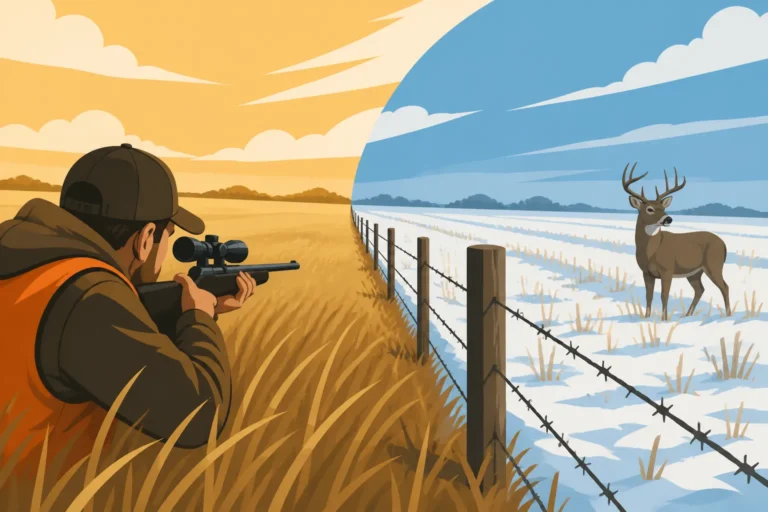
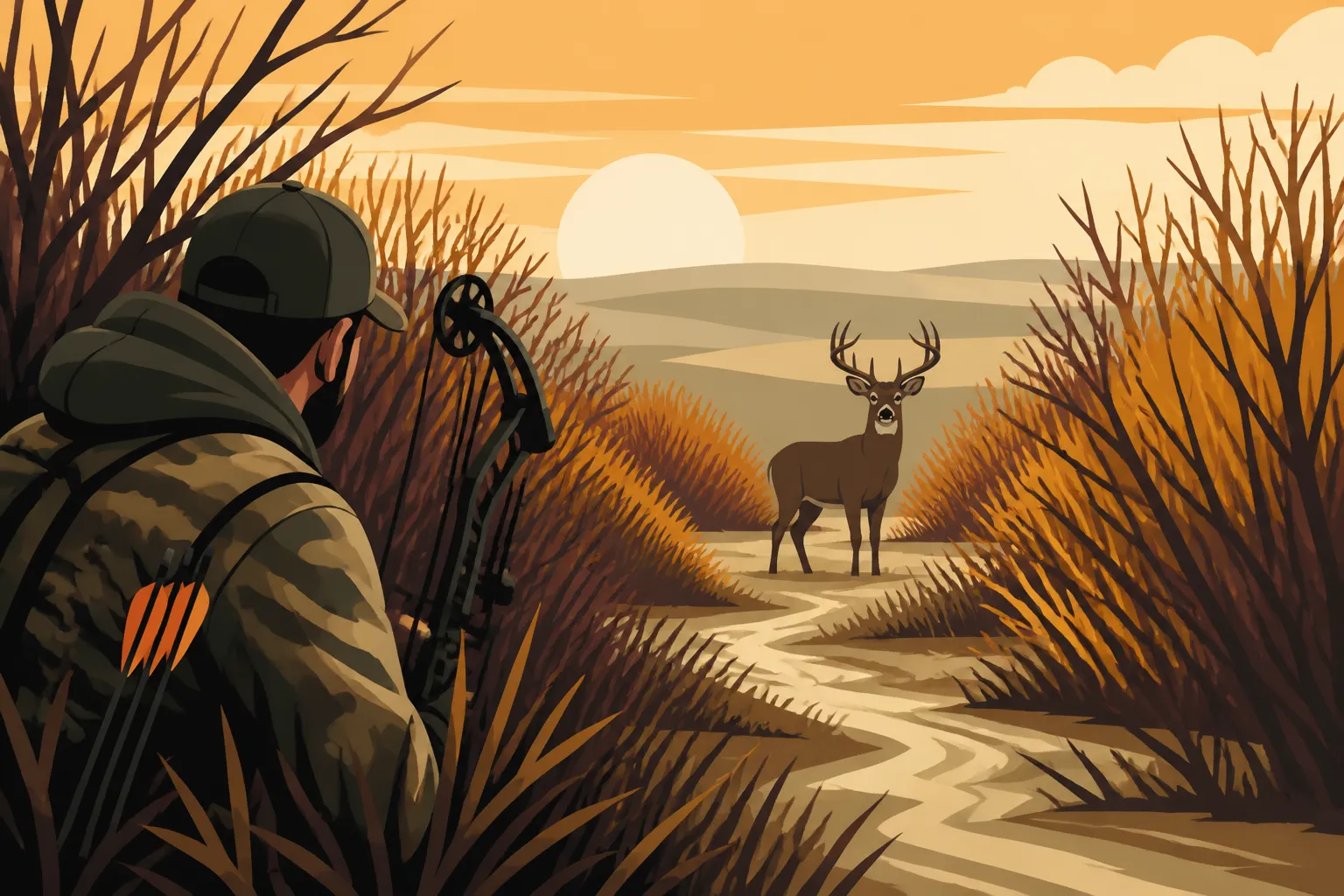
It’s a familiar frustration for any Saskatchewan deer hunter: you’re glassing a vast expanse of stubble, a picturesque aspen bluff, or a quiet coulee, and there, seemingly out of nowhere, a whitetail appears or vanishes into a narrow, unassuming strip of willows. These "willow runs" might look insignificant, almost like a glorified fence line, but they are often clandestine highways and bedding sanctuaries for mature bucks. Learning to effectively hunt these linear pockets of cover is a game-changer, turning those elusive phantoms into tangible opportunities.
Understanding Willow Runs: Whitetail Havens in the Open Landscape
Many hunters, especially those new to Saskatchewan's diverse landscape, might underestimate the humble willow run. These aren't vast forests or imposing bluffs, but rather serpentine ribbons of dense shrubbery, often only a few yards wide, that wind their way across the prairie and parkland. They hug the edges of dry sloughs, trace old creek beds, mark abandoned fence lines, or simply grow where low-lying ground retains more moisture. But don't let their appearance fool you; these unassuming strips are vital to whitetails, providing critical resources that larger blocks of cover can't always offer.
More Than Just a Row of Bushes: What Makes Them Prime Habitat
Think of a willow run not as a static feature, but as a living, breathing component of the deer's world. They are linear oases offering incredible value. First and foremost, they provide exceptional thermal cover. On a biting Saskatchewan November morning, when the wind howls across open fields, those dense thickets of willows act like a natural windbreak, allowing deer to conserve energy and stay warm. In early season heat, the shade they cast offers respite from the sun. This makes them crucial bedding areas, especially during harsh weather. A buck can be bedded just feet off an open field, completely invisible, simply because the willows are thick enough to hide him.
Beyond thermal cover, willow runs are security blankets. Whitetails are masters of using even minimal cover to their advantage, and these linear features allow them to travel from bedding areas to feeding grounds, or between larger blocks of cover, without exposing themselves fully. They can sneak along, staying out of sight and scent, making them feel safer than if they were crossing wide-open spaces. This also means they act as natural funnels, directing deer movement. If you can identify where deer are entering and exiting a willow run, or where the run itself bottlenecks, you’ve found a high-odds ambush point.
Seasonal Importance and Deer Movement Patterns
The utility of a willow run for whitetails shifts with the seasons, making understanding these patterns key to successful hunting.
- Early Season (September/October): As crops are coming off the fields, willow runs provide crucial cover as deer transition from summer feeding patterns. Bucks might still be in bachelor groups, but they'll be using these runs to move from standing crops or timber to feed on cut stubble fields. They'll also use them to bed down during the day, especially in the denser pockets. Look for rubs and early scrapes along their edges, indicating bucks are starting to mark their territory. This is a great time to be Hunting Saskatchewan's September Archery Opener.
- The Rut (November): This is when willow runs truly shine as whitetail magnets. During the breeding season, bucks are constantly on the move, cruising for does. Does, in turn, often seek out dense cover to escape persistent suitors. Willow runs, acting as both travel corridors and security cover, become high-traffic areas. Bucks will follow them, scent-checking for does, and chasing them into the thickest parts of the run. This makes them absolute hotspots for hunters during Hunting the Rut in Early to Mid November. You’ll often find fresh rubs, scrapes, and heavy track concentrations in and around these features during this period.
- Late Season (December): As the temperatures plummet and snow piles up, willow runs continue to offer critical thermal cover. Deer will bed deeper into the densest parts, often using the sunniest, south-facing slopes. Food sources become scarcer, so these runs might connect to residual standing crops, hay bales, or even deer yards in nearby heavier bush. A mature buck might spend the bulk of his day bedded in a willow run, only emerging at dusk to feed. Learning about Hunting the December Late Season Cold becomes vital here, as deer movement becomes highly dictated by weather and food.
Understanding these seasonal nuances allows you to predict how deer are using these runs and adjust your hunting strategy accordingly.
Unlocking the Secrets: Scouting Willow Runs Effectively
You can't just stumble into a willow run and expect success. Effective scouting is paramount. These linear features often conceal their secrets well, and it takes a keen eye and a strategic approach to decipher the whitetail code within them. Think of it as detective work; every track, every rub, every disturbed patch of ground tells a part of the story.
Reading the Ground: Sign, Rubs, and Scrapes
The most direct way to understand how deer are using a willow run is to get on the ground and look for sign. But this isn't just a casual stroll; it's a careful, calculated sweep.
Start by walking the edges of the willow run, paying close attention to where deer enter and exit. Look for well-worn trails leading into or out of the thicket. These "entry/exit points" are natural funnels. Once you find these, you can start looking for more specific sign.
- Tracks: Fresh tracks, especially larger ones, indicate recent deer activity. Pay attention to the direction of travel. Are they coming from a bedding area, heading to a field, or vice-versa? During the rut, you'll often see multiple sets of tracks, some larger, some smaller, indicating chasing activity.
- Rubs: Bucks will rub their antlers on small trees and saplings, especially along the edges or within the run itself. Fresh rubs, with sap still oozing, are gold. Clusters of rubs, particularly larger ones, suggest a buck is actively marking his territory or using that area frequently. Knowing how to interpret Reading Whitetail Sign in Saskatchewan Bluffs will give you a good foundation for willow runs, too.
- Scrapes: While not as common within the densest part of a willow run, scrapes are often found along its edges, especially near prominent "licking branches" where deer will scent-check. A fresh scrape, pawed out and urinated in, is a definite sign of buck activity. Look for them at the junctions of trails or where the run meets a field edge.
- Droppings (Deer Poop): Fresh droppings tell you deer have been in the area recently. The size and shape can sometimes give you an idea of the size of the deer. Clusters of droppings might indicate a bedding area within the run.
Remember to scout both inside and outside the run, looking for parallel trails that skirt the main cover. Deer sometimes prefer to travel just inside the cover, or sometimes just outside it, depending on the wind and security needs.
Leveraging Technology: Maps, Apps, and Trail Cameras
In today's hunting world, technology can significantly enhance your scouting efforts, especially for features like willow runs that can be deceptively complex.
Start with a good mapping application like GoHunt. Before you even step foot in the field, use satellite imagery to identify potential willow runs. Look for their linear shapes, changes in vegetation color, and how they connect different types of habitat – like connecting a large bush block to a grain field, or wrapping around a slough. GoHunt's layers can often show you topography, which might reveal subtle depressions where willows thrive, or how these runs act as natural travel corridors through otherwise flat terrain. This pre-Scouting With Satellite Imagery in Saskatchewan saves immense time and helps you pinpoint areas to investigate further.
Once you’ve identified promising runs, deploy trail cameras. Place cameras on well-worn trails within the run, at entry/exit points, or where the run pinches down. A good strategy is to place a camera on a rub line or a scrape line along the edge of the run. This will give you a wealth of information about deer traffic, preferred times of movement, and even specific bucks using the area. Make sure your cameras are set up discreetly to avoid disturbing deer, especially during the rut.
Using your GPS or mapping app to mark significant sign (rubs, scrapes, bedding areas) and potential stand locations as you scout is also incredibly valuable. This builds a digital map of your knowledge, which you can refer to when planning your actual hunt.
| Scouting Method | Best Used For | Seasonal Focus | Key Insights |
|---|---|---|---|
| Ground Tracking | Fresh activity, travel patterns, bedding | All seasons, especially after snow | Exact routes, recent presence, size of deer |
| Sign Reading | Buck presence, territorial marking | Early season through rut | Buck size, rutting activity, frequent use |
| Satellite Imagery | Identifying runs, connections, bottlenecks | Year-round, pre-season planning | Overall layout, habitat connections |
| Trail Cameras | Time of movement, specific deer, consistency | All seasons, ongoing monitoring | Peak activity times, individual deer, trends |
Strategic Approaches: Hunting Willow Runs for Success
Once you’ve done your homework and understand how deer are using a particular willow run, it’s time to formulate a hunting strategy. The narrow and often dense nature of willow runs means that standard hunting methods might need a tweak. Patience, stealth, and an understanding of wind direction are paramount.
The Art of the Still-Hunt: Stealth and Patience
Still-hunting is perhaps one of the most effective, yet challenging, ways to hunt a willow run. It involves moving slowly, deliberately, and quietly through the cover, stopping frequently to observe and listen. This isn't a quick walk; it's a methodical crawl, taking minutes to move mere yards.
The key to successful still-hunting in a willow run is to maximize your chances of seeing the deer before it sees or hears you. This means:
- Wind is King: Always hunt into the wind, or at least with a crosswind that carries your scent away from where you expect deer to be. Deer rely heavily on their sense of smell, and a swirling wind will ruin your hunt instantly.
- Slow, Slow, Slow: Take one or two steps, then stop for 1-5 minutes. Scan every inch of the cover ahead of you. Use your binoculars to pick apart tangles of branches, looking for horizontal lines (a deer's back), patches of solid color (body hair), or the flicker of an ear.
- Use the Terrain: If the willow run has any elevation changes or denser patches, use them to your advantage for concealment. Crouch, kneel, and move with the natural contours.
- Foot Placement: Watch where you step. Avoid crunching dry leaves or snapping twigs. A soft, deliberate placement of your foot can make all the difference. In deep snow, still-hunting can be incredibly quiet, as deer often bed just inside the edges, making them vulnerable. This is especially true when Hunting Mule Deer After a Snowfall in similar cover.
- Be Ready: Have your weapon up and ready to shoulder quickly. Shot opportunities in dense willows can be fleeting and at close range. Practice quick, fluid movements to get on target.
Still-hunting is physically and mentally demanding, but it offers an incredibly intimate hunting experience and can be deadly effective for busting out a bedded buck.
Stand Placement: Ambushing Deer in the Thick Stuff
For those who prefer a more static approach, strategic stand placement can be highly effective in willow runs, especially during the peak of the rut when deer are moving more consistently. However, it requires careful consideration due to the limited visibility and narrow nature of the habitat.
Your stand placement hinges entirely on your scouting. Identify:
- Pinch Points/Funnels: Where the willow run narrows, forcing deer into a smaller area.
- Crossing Points: Where a well-used trail crosses the run, or where the run itself crosses a fence line or low spot.
- Intersections: Where two willow runs meet, or where a run meets a larger block of bush or a field edge. These are natural congregation points.
- Bedding Areas: If you’ve identified a consistent bedding area within the run, place your stand downwind, overlooking a travel trail leading to or from it.
When hanging a stand, whether it’s a ladder stand, climber, or even a ground blind, remember:
- Wind Direction: Crucial. You need a setup that allows you to hunt specific wind directions without alerting deer. Having multiple stand locations for different winds is ideal. Consider a stand that allows you to hunt with a west wind for a run running north-south, and another for an east wind.
- Visibility vs. Concealment: You need enough shooting lanes, but also enough cover to break up your silhouette. Trim only what's absolutely necessary.
- Access: Plan your approach and exit routes carefully to avoid spooking deer. Approach quietly and ensure your scent trail isn't drifting into the run. This is a common challenge when Hanging a Stand on a Saskatchewan Bush Edge.
Because willow runs are often narrow, ground blinds can be an excellent option, providing great concealment and scent control, especially if brushed in naturally. Just ensure you have clear shooting lanes.
Small Drives and Pushing Tactics: Working with a Partner
For those hunting with one or two partners, a small, controlled drive can be a very productive way to hunt a willow run, especially if you know there’s a deer bedded deep inside or if you’ve exhausted still-hunting or stand options.
The key word here is "small" and "controlled." This isn't a chaotic group push; it's a tactical maneuver.
- The Setup: One or two hunters act as "blockers" or "standers," positioning themselves quietly and strategically at the downwind end of the willow run, or at known escape routes. They should be concealed and ready for quick shots.
- The Push: One "pusher" then quietly enters the upwind end of the willow run. The pusher should move slowly, stopping frequently, making some noise (but not excessive crashing), and looking for deer slipping out the sides. The goal isn't to blast through, but to gently encourage deer to move towards the waiting standers.
- Communication: If using radios, keep communication to a minimum and whispered. Hand signals are even better.
- Safety First: Always know where your partners are. Clearly define shooting lanes and zones of fire before the push begins. This is critical for any type of group hunting.
This method can be highly effective for Hunting a Saskatchewan Bush Bluff or similar linear cover, often catching deer trying to sneak out rather than bolt. It’s a great way to put pressure on a stubborn buck that's been consistently evading solo hunters.
Essential Gear and Safety for Willow Run Hunting
Hunting willow runs, with their dense cover and often challenging terrain, requires specific gear considerations and a strong emphasis on safety. Being prepared can make the difference between a frustrating bust and a successful harvest.
Clothing, Footwear, and Weapon Choice
Your gear needs to be robust and suited to the environment:
- Clothing: Layers are always essential in Saskatchewan's unpredictable weather. You'll want durable outer layers that can withstand snagging on branches and thorns. Quiet fabrics are paramount for still-hunting. For visibility, remember Saskatchewan's Saskatchewan Blaze Orange Rules – typically 400 square inches above the waist, visible from all sides.
- Footwear: Waterproof, ankle-supporting boots are non-negotiable. Willow runs often contain damp ground, hidden puddles, or snow. Good traction is also important for navigating uneven terrain and potential ice. Consider a slightly stiffer sole for better support and protection from unseen obstacles.
- Weapon Choice: Due to the close-range, quick-shot nature of willow run hunting, a rifle with a shorter barrel or a shotgun with slugs can be advantageous for maneuverability. Archery hunting in willow runs can be incredibly exciting but demands exceptional stealth and tight shot placement. Ensure your chosen weapon is well-sighted in and you are proficient with it at close quarters. For rifle hunters, understanding Legal Rifle Calibres for Big Game is a must.
Always carry a sharp knife, flagging tape (biodegradable, please!), a headlamp, and a small first-aid kit. A reliable GPS or mapping app like GoHunt on your phone is also critical for navigation, especially if you push deep into a long run.
Navigating Dense Cover and Ethical Shot Placement
Moving through dense willow cover can be surprisingly disorienting. Always be aware of your surroundings. If still-hunting, maintain a mental map of where you've come from and where you're going. Use prominent trees, openings, or bends in the run as landmarks.
When a deer presents itself in thick cover, ethical shot placement becomes paramount.
- Wait for a Clear Shot: Do not rush. A poor shot in thick cover is a recipe for a lost animal. Wait for the deer to step into an opening, or at least for a clear path to the vitals. Patience is a virtue.
- Identify Your Target: In dense cover, it can be easy to misidentify a deer or even confuse it with a partner if you're doing a drive. Always be 100% certain of your target and what is beyond it.
- Shot Angle: Side-on shots are always preferable. If a deer is quartering away, ensure your bullet or arrow will pass through the vitals. Avoid straight-on or straight-away shots if possible, as they have a higher risk of hitting non-vital areas or deflecting.
- Follow-Up: If you take a shot, mark the exact spot where the deer was standing, and where you last saw it. Even if the deer drops, approach cautiously. If it runs, give it time before tracking, especially if it was a good hit. Tracking in thick willows can be challenging, but vital blood trailing skills and patience will improve your chances of recovery, a topic often covered when discussing Meat Care in Saskatchewan's Cold Snaps as you'll want to get to your animal promptly.
Willow runs are dynamic, exciting hunting grounds. By understanding their role in whitetail ecology, scouting them meticulously, and employing smart, ethical hunting strategies, you’ll unlock some of the best whitetail opportunities Saskatchewan has to offer.
Disclaimer
Please note that hunting regulations, seasons, and licensing requirements can change. Always consult the most current Saskatchewan Hunters' and Trappers' Guide and provincial regulations before planning any hunting trip. Safety should always be your top priority.