Hunting a Standing Canola Field Edge
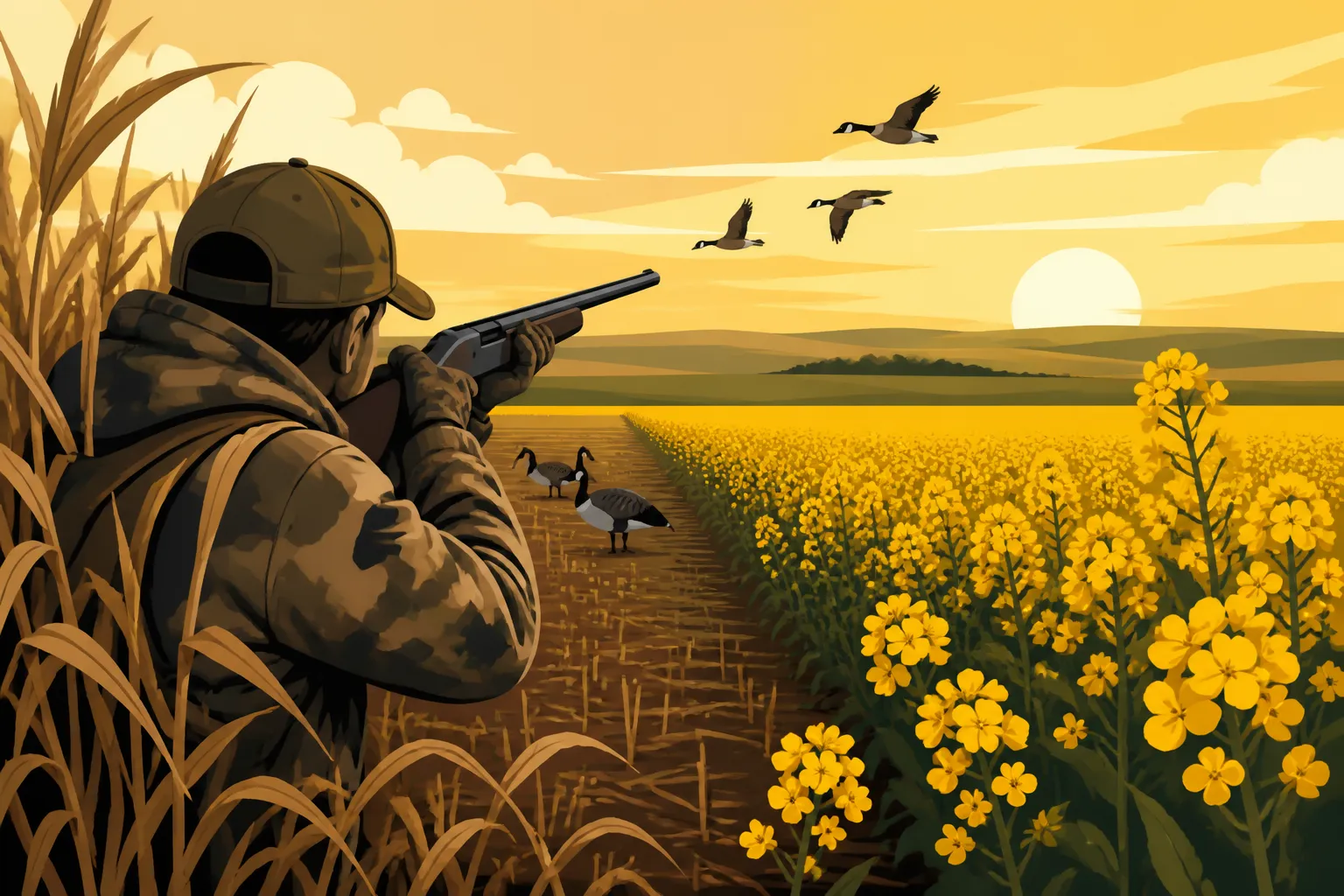
There's a unique frustration that comes with knowing a trophy buck is bedded down right on the edge of a vast, golden canola field, but being utterly unable to see him. That dense, chest-high cover offers the perfect sanctuary, and figuring out how to effectively hunt these seemingly impenetrable edges can feel like a riddle without an answer. This guide is here to unravel that mystery, providing actionable strategies to help you successfully hunt the edges of standing canola fields in Saskatchewan.
The Allure and Challenge of Standing Canola Edges
Saskatchewan's agricultural landscape is dominated by canola, and for hunters, these fields represent both immense potential and significant challenges. While they offer incredible sanctuary for big game, they also demand a completely different approach compared to traditional bush or bluff hunting.
Why Deer Love Canola Fields
Imagine a deer looking for a place to feel safe, hidden, and close to a food source. A standing canola field provides all of this in spades. The sheer density of the plants offers unparalleled visual cover, making it incredibly difficult for predators—and hunters—to spot movement within. The plants themselves also provide a consistent food source, especially for deer that will browse on the tender leaves or pods. Beyond that, the rows often create natural travel corridors, or deer will simply push their way through, creating tunnels where they feel secure. This combination of food, cover, and a sense of security makes the edge of a standing canola field a prime location for whitetails and even mule deer, particularly during the early archery season and leading up to the rifle rut. They can bed deep inside, practically invisible, and emerge to feed in an adjacent alfalfa field or transition into a treeline with ease. This is particularly true in areas like the Aspen Parkland where these fields meet bluffs and bush, creating perfect habitat transitions.
The Hunter's Dilemma in Dense Cover
As a hunter, the very things that attract deer to canola fields are precisely what make them so maddening to hunt. The most obvious challenge is visibility. Trying to spot a deer, let alone judge its antlers, in chest-high, swaying canola is incredibly difficult. It's like looking for a needle in a haystack, except the haystack is alive and moving. Even if you do spot a deer, getting a clear, ethical shot can be a nightmare. The plants deflect arrows and bullets easily, making a clean pass-through a rare occurrence.
Another significant hurdle is sound. Walking through dry, standing canola creates an immense amount of noise. Every step is a rustle, a snap, or a crunch, announcing your presence to every animal within earshot. This makes still hunting within the field itself incredibly difficult, if not impossible, without a strong wind to cover your approach. Scent is also a huge factor; canola has a distinct smell, and while deer might be used to it, any foreign scent like human odor will be carried on the wind just as easily as in open terrain. Lastly, the challenge of recovering a downed animal in a vast, dense canola field is a real concern. A deer can disappear metres from where it was shot, leaving you with a strenuous and often frustrating search. It's a testament to the cover that many hunters have stories of losing deer in these seemingly innocuous fields.
Mastering Your Scouting for Canola Edge Success
Successfully hunting a standing canola field edge isn't about luck; it's about meticulous scouting and understanding how deer use these unique environments. You need to be a detective, piecing together clues before you even set foot in the field with a weapon.
Pre-Season Intelligence Gathering
Before the season even opens, your boots should be on the ground, or at least your eyes on a map. Start by identifying fields that are likely to be planted with canola year after year. Farmers often rotate crops, but certain areas consistently grow canola. Look for fields that adjoin prime bedding cover – thick bush, bluffs, willow runs, or even dense slough bottoms. These are the natural transition zones deer will use to move between bedding and feeding. You can use tools like GoHunt or other satellite imagery applications to mark these areas and observe past cropping patterns. Pay close attention to pinch points where a canola field might narrow, forcing deer movement into a more predictable corridor.
Walking these edges in the off-season, before the canola grows too tall, can reveal invaluable information. Look for established deer trails entering and exiting the field. Are they well-worn paths leading to specific points in the bush? Are there rub lines or scrapes along the edge from previous seasons? Note any ditches, draws, or low spots that might offer a slightly less dense travel route within the field itself. Understanding these historical patterns gives you a significant advantage. This kind of pre-season work is also crucial for Reading Whitetail Sign in Saskatchewan Bluffs that might border your canola fields.
In-Season Reconnaissance with Technology
Once the season is underway and the canola is standing tall, direct access into the field can be disruptive. This is where modern technology really shines. Utilize satellite imagery, again perhaps through GoHunt, to identify subtle changes in the field, like areas of lodged (flattened) canola which could indicate heavy deer traffic or even bedding sites. Pay attention to fence lines, power lines, or drainage ditches that cut through or along the field. These often create slight breaks in the cover that deer will exploit.
Trail cameras are your best friends here. Set them up discreetly along field edges, focusing on trails entering or exiting the canola, or at strategic points where funnels or pinch points occur. You might even consider placing cameras just inside the field, facing outwards, if you can do so without creating too much disturbance. Look for patterns: When are deer entering and exiting? Are they primarily nocturnal, or are there times when they move during legal shooting hours? What size of deer are you seeing?
Combine your camera intelligence with active observation. Spend evenings glassing the field edges from a distance, perhaps from a high vantage point across the road. Note where deer emerge, how long they stay out, and which trails they use. Even subtle movements on the edge of a vast field can give you clues. The goal is to minimize your direct intrusion into the canola itself, letting technology and distant observation do the heavy lifting. This is similar to the detailed planning involved in Scouting With Satellite Imagery in Saskatchewan.
Strategic Approaches to Hunting Canola Field Edges
Hunting canola field edges requires a blend of traditional deer hunting tactics and strategies specifically adapted for this unique environment. It's about playing the wind, timing, and finding those fleeting opportunities.
Stand Placement and Wind Considerations
When hunting a canola field edge, your stand placement is absolutely critical. You want to be positioned not just to see into the field, but to cover the natural entry and exit points deer will use. Look for a large tree on the bush edge, a strategic bluff, or even a well-hidden ground blind that offers a commanding view. Your ideal spot should provide clear shooting lanes into the field where deer are likely to step out, and also along any trails running parallel to the edge.
Wind is paramount. Deer will almost always approach a field edge with the wind in their favour, scent-checking the open area before committing. You need to position yourself downwind of where you expect them to emerge. This often means having the wind blowing from the field towards you, or parallel to the field edge. Never hunt with the wind blowing into the canola where deer are likely bedded, as your scent will carry deep into their sanctuary, alerting them long before they appear. Consider prevailing winds for your chosen spot, but always be ready to move if conditions change. A portable treestand or a pop-up ground blind offers flexibility. Think about how you would approach Hanging a Stand on a Saskatchewan Bush Edge, but with the added complexity of the vast field.
Consider a setup that allows you to see both into the field a short distance and along the edge itself. Deer often skirt the very edge of the standing crop before stepping out fully. Sometimes, they will follow a depression or a subtle change in topography within the field, using it as a protected travel lane.
Still Hunting and Driving Techniques
Still hunting a standing canola field edge can be incredibly effective, but it requires patience and specific conditions. Ideally, you want a strong, steady wind blowing directly into the field, or parallel to the edge, to mask your noise and carry your scent away from the deer's anticipated path. Move incredibly slowly, taking only a few steps at a time, and then pausing for several minutes to glass and listen. Focus your eyes on any slight variations in the canola — a bent stalk, a depression, or a patch that seems slightly darker. These could indicate a deer bedded down or moving through.
If the field is particularly large and dense, a coordinated drive might be considered, but it requires careful planning and communication, especially on private land. One or two hunters can slowly push through a section of the canola while other hunters are strategically positioned on the opposite edge, or at known escape routes. The key is for the drivers to move slowly and deliberately, pausing frequently, to gently push deer towards the stationary hunters, rather than spooking them into a dead run. This is a tactic that also finds use when Hunting a Field of Standing Corn. Safety is paramount in any drive; always know where every hunter is positioned and communicate constantly. This method is often reserved for larger groups and requires landowner permission.
The Importance of Optics and Patience
When hunting canola, your optics are your most valuable tool. Forget trying to spot a whole deer; you're often looking for a flicker of an ear, the horizontal line of a back, or the subtle glint of an antler tip above the golden sea. High-quality binoculars, in at least 10×42 or even 12×50 magnification, are essential. Spend long periods systematically glassing the field edge, breaking it into small sections and scrutinizing each one. Don't just scan; really pick apart the cover.
Patience is equally crucial. Deer often spend hours bedded deep in the canola, only to emerge during the last few minutes of legal light. Be prepared to sit from mid-afternoon until dark, or from before first light until well after sunrise. That golden hour at dawn and dusk is when most of your opportunities will arise. Avoid the temptation to move around or check your phone frequently. Stay focused, stay still, and let the deer make the first move. They will often present themselves briefly, so you need to be ready the moment an opportunity arises. The ability to sit still and wait is a major factor, similar to Sitting All Day in a Saskatchewan Blind.
Essential Gear and Safety for Canola Hunting
Hunting standing canola brings its own set of gear considerations and safety protocols to ensure a successful and safe outing.
Must-Have Equipment for Dense Cover
Beyond your weapon and high-quality optics, several items will make your canola edge hunt more effective and enjoyable. First, consider clothing that is quiet and blends well with the golds and yellows of the canola, though traditional camo patterns often work fine on the bush edge. A good pair of comfortable, waterproof boots is a must. Walking through canola, especially after a morning dew or rain, will soak your lower legs. Gaiters can be a lifesaver for keeping your socks dry.
Scent control is always important, but especially when deer are so close to their bedding areas. Take all the usual precautions: scent-free laundry, sprays, and strategic use of natural cover scents if you prefer. A rangefinder is non-negotiable for judging distances into the field, where depth perception can be tricky due to the uniform cover. If you plan to still hunt, even on the edge, a sturdy trekking pole can help with balance and provide a steady rest for your binoculars. Finally, always carry a small first-aid kit, a sharp knife, and flagging tape for marking blood trails if you make a shot.
Navigating the Canola and Recovering Game
The most challenging aspect after the shot can be game recovery. Canola fields are notorious for making it incredibly difficult to find downed animals. Even if a deer drops within sight, marking the exact spot visually can be deceiving in the vast, dense yellow. This is where modern GPS devices or smartphone apps (again, GoHunt can be invaluable here) become critical. Mark the exact spot where you last saw the animal, or where you believe it went down, before you leave your stand. Drop a pin, and then use that pin to navigate directly to the spot.
When tracking, go slowly and systematically. Canola stalks can hold a surprising amount of blood, so mark your trail with flagging tape as you go. Look for bent stalks, disturbed ground, or hair. If you have access to a tracking dog, this is one scenario where they can truly shine. If you lose the trail, back out, mark your last blood, and come back with more help or at a different time, especially if the weather is cool. When recovering large animals like moose or large deer, remember the importance of proper game care, especially if the temperature is rising. Refer to guides like Field Dressing in Saskatchewan's Deep Cold if hunting late in the season. Always inform someone of your hunting plans and expected return, especially if you venture deep into a large field. Remember, Hunting Saskatchewan Winter Weather Safely emphasizes preparation, and that applies to all conditions.
Table: Pros and Cons of Hunting Standing Canola Edges
| Feature | Pros | Cons |
|---|---|---|
| Deer Attraction | Excellent cover, food source, sense of security for deer. | Deer can bed deep within, making them invisible and hard to access. |
| Visibility for Hunter | Good vantage from a tree stand on the edge, opportunities at dusk/dawn. | Extremely limited visibility into the dense field itself. |
| Hunter Noise | Quiet on the bush edge with good wind. | Very noisy when moving within the field, alerts game immediately. |
| Scent Control | Possible to manage scent from a good stand position. | Canola plants hold scent; human scent can drift deep into bedding areas. |
| Game Recovery | Easier if animal drops in sight on the immediate edge. | Extremely challenging to find downed game in dense, tall plants. |
| Access/Mobility | Relatively easy to access field edges on foot. | Difficult to traverse within the field; requires pushing through thick vegetation. |
| Hunting Opportunity | High potential for large, mature deer using the cover. | Opportunities are often fleeting and require quick, accurate shooting. |
Hunting a standing canola field edge in Saskatchewan is definitely a challenging endeavor, but it offers the potential for incredible rewards. With careful scouting, strategic planning, and the right approach, you can turn these golden fields into your next hunting success story.
Disclaimer
Hunting is an activity that carries inherent risks. Always prioritize safety, follow all local hunting regulations, obtain proper licenses, and respect private property. The information provided in this guide is for informational purposes only and should not be taken as a substitute for professional advice or hands-on experience.