Hunting a Summerfallow Field Border
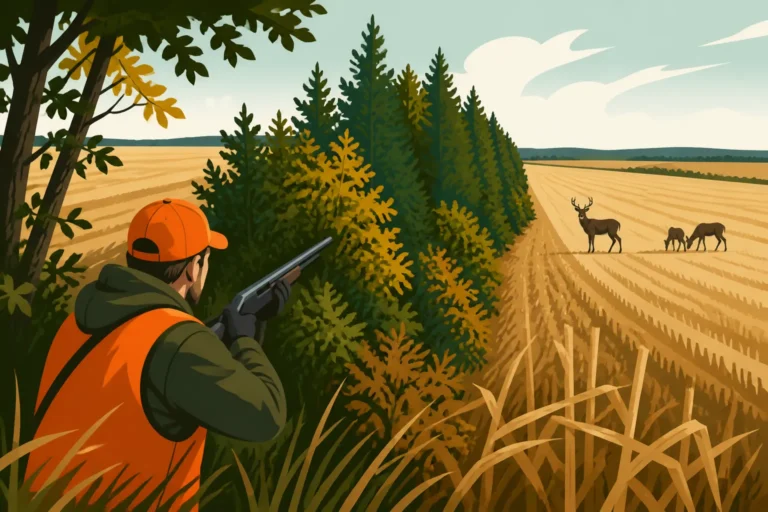
One of the most frustrating things for a hunter in Saskatchewan's vast agricultural landscape can be finding where the deer are actually holding when the crops are off or yet to be planted. Those wide-open spaces can feel intimidating, making it tough to pinpoint where a wary whitetail might feel safe. This guide is all about demystifying the art of hunting a summerfallow field border, offering practical, in-depth strategies to help you unlock the potential of these often-overlooked areas and turn frustration into successful opportunities.
Understanding What Summerfallow Means for Whitetails
Before you can effectively hunt a summerfallow field border, you really need to grasp what summerfallow is from a deer's perspective and why it can be such an attractive spot. It’s not just a blank slate; it's a dynamic part of the agricultural ecosystem that deer use in specific ways.
The Agricultural Practice of Summerfallow
For those unfamiliar with farming practices, summerfallow simply refers to land that has been deliberately left uncropped for a season. Farmers do this for a few key reasons, primarily to conserve soil moisture, allow organic matter to build up, and control weeds before planting the next year's crop. Historically, it was a much more common practice across the prairies, but even with modern techniques, you'll still find plenty of summerfallow fields dotted across Saskatchewan.
From a hunter's standpoint, this means you're looking at a field that might have a light cover of weeds, grasses, or simply bare soil, unlike the towering walls of standing canola or the neatly shorn stubble of a recently harvested wheat field. It’s a transition zone, often bordering active fields, dense bush, or riparian areas. The specific appearance of a summerfallow field can vary wildly depending on when it was worked, what kind of weed pressure existed, and the local rainfall, so don’t expect every one to look the same.
Why Deer Are Attracted to Summerfallow Edges
So, why would a smart, cautious whitetail choose to hang out near a relatively open summerfallow field? It boils down to a blend of security, resources, and travel efficiency. While it lacks the dense cover of a bush bluff or the rich food source of a standing pea field, its edges often provide crucial connections and subtle advantages.
Firstly, summerfallow often retains more moisture than a dry stubble field, leading to a richer variety of ground-level weeds and residual plant growth. These plants, even if not a primary food source, can offer a quick browse for deer moving through, or more importantly, attract insects and small rodents that predators might target, making deer feel relatively safer. More significantly, the edges of these fields are typically where cover begins or ends. Think about a shelterbelt running along a summerfallow field; deer can emerge from the protective trees, quickly scan the open area, grab a bite, or cross to another cover patch without feeling fully exposed for long periods. These edges are natural highways.
Secondly, summerfallow fields can act as excellent loafing areas, especially if there's sufficient weed growth to break up their silhouette. Deer, particularly mature bucks, don't always bed in the thickest cover. Sometimes, they prefer a spot where they can see danger approaching from a distance, allowing them ample time to react. A slightly overgrown summerfallow field, particularly on a day with a bit of wind, can offer just enough visual break for them to feel secure while still having a wide-open view. They're leveraging the openness for early detection of threats, making them incredibly tough to approach unseen.
Scouting Summerfallow Field Borders for Whitetails
You can't just drive up to a summerfallow field and expect to bump into a trophy buck. Effective scouting is paramount, and it requires a keen eye for detail, an understanding of deer behavior, and the smart use of modern tools.
Reading the Terrain and Identifying Key Features
Deer, like most animals, are creatures of habit and efficiency. They'll use the path of least resistance and the safest routes between their bedding and feeding areas. When you're looking at a summerfallow field, you need to identify the features that funnel deer movement along its borders. Look for those natural pinch points: the corners where two fields meet, a small willow run or bluff that extends into the field, a slough edge, or even a fence line where the cover on one side is better than the other. Any change in elevation, even a subtle dip or rise, can offer deer a sense of concealment.
Pay close attention to where the summerfallow meets denser cover, like a mature bush line, a shelterbelt, or a small aspen bluff. These are often primary travel corridors. Deer will often skirt the edges of these fields, dipping in and out of the protection of the brush. You'll be looking for well-used trails, fresh tracks, and any sign of rubbing or scraping on the trees or bushes along the perimeter. A single, well-worn trail leading from dense bush into the summerfallow could be a goldmine, indicating a consistent travel pattern. Scouting these transition points carefully is key to anticipating deer movement. You might find some useful insights by referencing "Reading Whitetail Sign in Saskatchewan Bluffs" to refine your search.
Utilizing Modern Scouting Tools and Ground Reconnaissance
In today's hunting world, not taking advantage of technology is like trying to navigate without a compass. Satellite imagery, often available through apps like GoHunt, is an invaluable first step when scouting summerfallow. You can zoom in and identify those shelterbelts, bush pockets, coulees, and sloughs that break up the monotony of the fields. Look for areas where different types of cover converge on a summerfallow field – these are often high-traffic zones. You can map out potential travel routes, bedding areas, and observation points without even stepping foot on the property, saving you precious time. Scouting With Satellite Imagery in Saskatchewan can help you get the most out of these tools.
Once you have a few promising spots identified from your digital reconnaissance, it's time for boots on the ground. Walk the borders, especially at dawn or dusk, observing where deer enter and exit the field. Look for fresh tracks in soft soil, particularly after a rain. Check for rubs on small trees or saplings along the bush line, indicating a buck has been passing through and leaving his mark. Scrapes, where deer paw away leaves and urinate, are also crucial indicators of a buck's presence and activity. Don't just focus on the visible tracks; try to piece together the narrative of deer movement based on all the sign you find. This ground-truthing confirms what you saw on the map and often reveals details satellite imagery simply can't capture.
| Field Type | Primary Deer Use | Hunting Strategy Implications |
|---|---|---|
| Summerfallow | Loafing, travel corridors along edges, residual browse | Hunt edges aggressively, focus on transition zones, excellent for glassing |
| Standing Crop | Bedding, heavy feeding, deep cover | Hunt ingress/egress points, field corners, rarely penetrate deep |
| Stubble Field | Feeding (post-harvest), limited cover | Dawn/dusk feeding patterns, longer shots, focus on adjacent cover |
| Pastureland | Feeding (grasses/forbs), open loafing, water access | Often open, focus on water sources, coulees, or adjacent bush |
| Dense Bush/Wood | Bedding, security, rub/scrape lines, refuge | Drive hunting (with permission), still hunting, stand hunting inside |
Effective Hunting Strategies for Summerfallow Borders
Now that you understand summerfallow fields and how to scout them, it’s time to talk about putting a strategy into action. Hunting these borders requires patience, careful planning, and often a different approach than hunting dense timber or wide-open stubble.
Choosing Your Stand or Blind Location Wisely
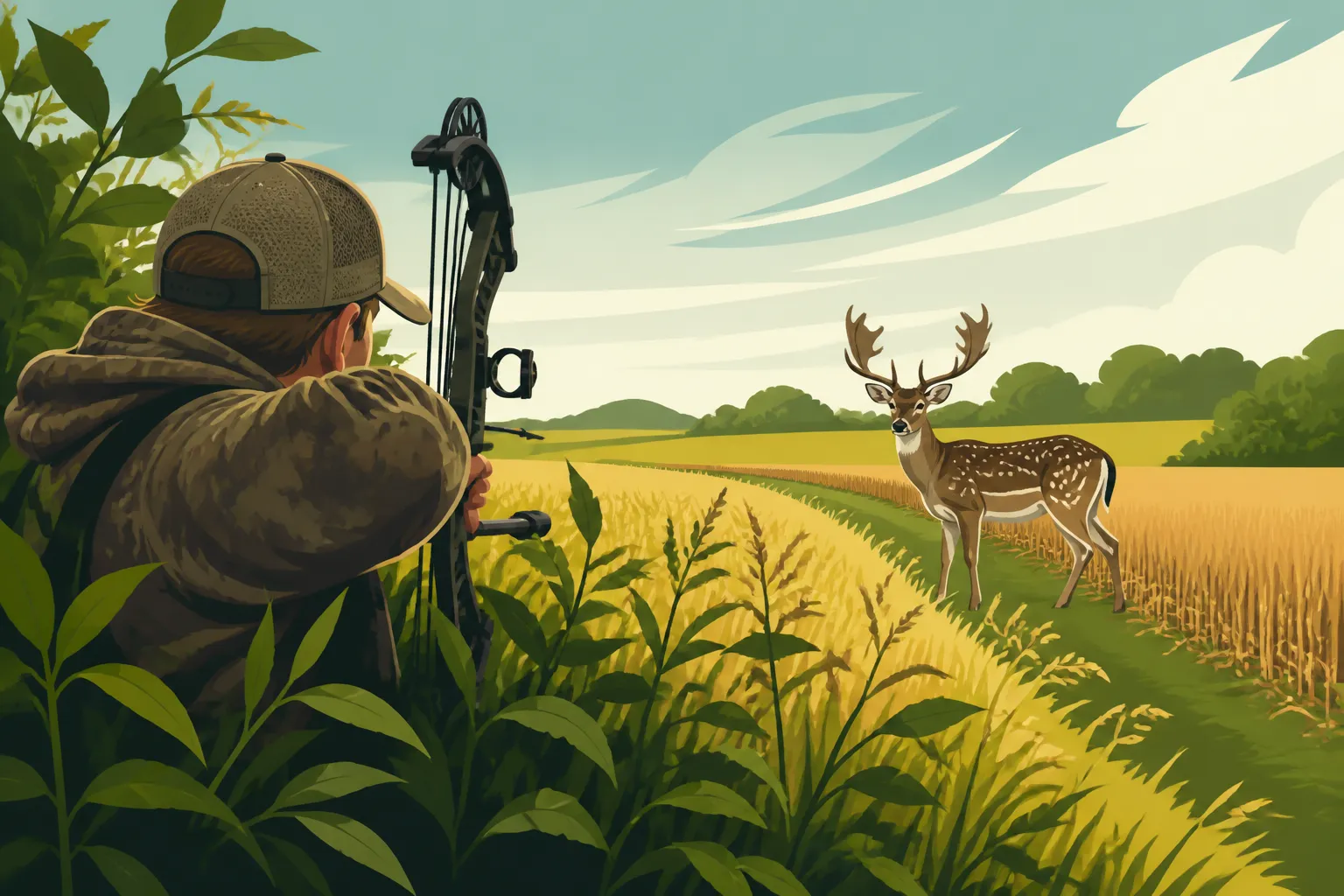
The successful hunting of a summerfallow field border often hinges entirely on your setup. Given the relatively open nature of these fields, a well-placed stand or blind is crucial for concealing your presence and controlling your scent. Look for spots where deer are naturally funneled. This might be a narrow strip of bush between two fields, a point of timber extending into the summerfallow, or even a small, isolated bluff or willow clump within the field that deer use for cover when moving across.
Consider the prevailing wind direction and how it carries your scent. Since summerfallow fields are often open, your scent will travel far. Always try to set up with the wind blowing away from where you expect deer to approach or cross. On a cold November morning, a heater in a ground blind can make all the difference, allowing you to stay on stand longer. Think about both morning and evening hunting scenarios. In the mornings, deer might be heading back into heavy cover from a night of feeding in an adjacent field, using the summerfallow edge as a travel lane. In the evenings, they might be emerging from bedding areas, traversing the summerfallow to reach a food source. Placing a stand strategically where they enter or exit the summerfallow to or from a Hunting a Shelterbelt Between Two Fields or a larger Hunting a Bush Bluff on a Crown Quarter can be incredibly effective.
Still Hunting and Spot-and-Stalk in Open Country
While stand hunting is popular, still hunting or spot-and-stalk tactics can also be incredibly productive along summerfallow borders, especially if you enjoy a more active hunt. The key here is exceptional stealth and constant awareness of the wind. With still hunting, you move slowly, pausing frequently to glass the field and its edges, using any available cover like fence lines, willow clumps, or even tall weeds to break up your silhouette. The goal is to move so deliberately that you spot the deer before it spots you.
Spot-and-stalk is particularly suited to summerfallow if there are undulating hills, shallow coulees, or small bluffs to use as cover for your approach. This is where high-quality optics become your best friend. Spend time glassing from a distance, using a good pair of binoculars or a spotting scope to locate deer. Once a target is identified, carefully plan your stalk, using terrain and wind to your advantage. This often means long, circuitous routes that might take hours, but the reward of outsmarting a wary prairie whitetail in its element is truly unmatched. Remember that deer in these open settings are extremely alert, so every step needs to be calculated.
Incorporating Calls and Rattling
Don't underestimate the power of vocalizations and rattling, particularly during Saskatchewan's peak rut, which often falls in early to mid-November. The relatively open nature of summerfallow fields can actually make calling and rattling more effective, as sound travels further and there's less thick cover to absorb it. A well-timed series of grunt calls or estrus bleats can draw in a curious buck cruising the field edges looking for does.
For rattling, the summerfallow border can be an ideal location because it often provides a good visual backdrop to conceal your movements while you're rattling. The sound of sparring bucks can carry a long way, attracting attention from a distance. Set up with a good view of the field and be ready, as bucks can appear surprisingly quickly, sometimes skirting the distant edge before closing the distance. However, be mindful of the volume; while sound travels, you don't want to overdo it. Rattling Volume in Open Parkland discusses how to adjust your approach for these environments. Just like with stand placement, consider your wind direction; you want the sound to carry downwind, but not your scent.
Overcoming Challenges and Adapting to Conditions
Hunting summerfallow field borders isn't without its hurdles. These open environments present unique difficulties that demand a hunter's adaptability and careful planning.
Managing Wind and Scent in Open Environments
One of the biggest headaches when hunting any open agricultural land, summerfallow included, is managing your scent. Without the dense canopy of a forest to swirl and diffuse scent, your human odor can travel unimpeded for vast distances. This makes meticulous scent control absolutely critical. This isn't just about using scent-eliminating sprays, though they can help. It's about a whole system: showering with unscented soap, washing your hunting clothes in scent-free detergent, storing them in airtight containers, and dressing in the field to minimize contamination.
Even with perfect scent control, wind direction is paramount. Always hunt with the wind in your favor, blowing your scent away from where you anticipate deer movement. This often means having multiple stand or blind locations for different wind directions. If the wind shifts unexpectedly, or you find yourself in a swirling eddy, it might be best to relocate or, if possible, switch to a still-hunting approach that allows you to constantly adjust your position relative to the wind. Ignoring the wind in open summerfallow country is a surefire way to educate every deer in the area about your presence.
Dealing with Hunting Pressure and Finding Overlooked Spots
Saskatchewan's reputation for big whitetails means some areas, especially prime farmland zones, can experience significant hunting pressure, particularly on weekends or during the peak of the rut. Summerfallow fields, being somewhat less "obvious" than a standing crop or dense bush, can sometimes be overlooked by less experienced hunters who stick to the most visible cover. This is your opportunity.
Look for the "unconventional" spots. Instead of the most obvious field corner, maybe it's the subtle dip in the middle of a long summerfallow field, or the small, isolated clump of willows that most hunters simply drive past. Walk a little further, explore those less accessible borders. Use your GoHunt maps to identify pieces of cover that are a long way from the road, or that require a longer walk through less appealing terrain. Often, these are the places where mature bucks will retreat to escape pressure, using the peripheral vision afforded by the open summerfallow to detect approaching danger. Remember, just because a spot looks 'easy' to access, doesn't mean it's the most productive. Sometimes, the most fruitful hunting involves Hunting Saskatchewan Ground Others Drive Past.
Adapting to Changing Conditions
Saskatchewan weather is famously unpredictable, and conditions can change rapidly, directly impacting deer behavior. A sudden cold snap can alter deer movement patterns, pushing them to seek thicker cover and conserve energy. Conversely, a warm spell might make them more active and less wary. Similarly, if an adjacent field is harvested mid-season, that changes the entire landscape. Suddenly, a food source or bedding area is gone, and deer will adapt.
Always be prepared to adjust your strategy. If heavy snow falls, deer might gravitate towards areas with standing corn or thicker bush for thermal cover, but they will still use summerfallow borders to travel if it's the most efficient route. Pay attention to how deer sign changes after a significant weather event. New tracks or rubs will tell a story. Being flexible, observing, and being willing to move your setup or change your approach based on what nature throws at you is key to sustained success when hunting summerfallow field borders. And always be ready for Hunting Saskatchewan Winter Weather Safely.
Getting Permission in Farm Country
A significant challenge for many hunters is simply securing access to private land, which much of Saskatchewan's prime summerfallow hunting takes place on. Never assume access; always get explicit permission from the landowner. A respectful, polite approach can go a long way. Start early, well before the season, and be prepared for "no" as an answer.
When you do get permission, treat the land with the utmost respect. Leave gates as you found them, don't drive off established trails, and clean up any trash. Consider offering to help the landowner with a chore or share some of your harvest. Building a good relationship with landowners is invaluable, often leading to long-term access and even insights into deer movement on their property. Remember, hunting private land is a privilege, not a right. For more tips on this, refer to Knocking on Doors in Saskatchewan Farm Country.
Disclaimer
Hunting is a regulated activity. Always consult the current Saskatchewan Hunting and Trapping Guide and local regulations before planning any hunt. Ensure you have all necessary licenses and permissions. Safety should always be your top priority.