Saskatchewan Landowner Permission Law
One of the biggest hurdles and sources of frustration for hunters in Saskatchewan, especially those new to an area or the province, is simply knowing where you can legally hunt and how to get access. The vast landscape can be deceptive, and the rules around private versus public land, and especially getting permission, can feel like navigating a legal minefield. This guide is here to untangle the complexities of Saskatchewan's landowner permission law, helping you confidently and ethically secure hunting access.
Understanding the Legal Landscape of Land Access in Saskatchewan
Saskatchewan's hunting landscape is a unique blend of private and public lands, each with its own set of rules governing access. Misunderstandings here can lead to awkward encounters, or worse, legal trouble. It's not just about knowing where the deer are; it's about knowing whose land they're on.
Saskatchewan's Landowner Rights
At the heart of Saskatchewan's land access laws are the rights of the property owner. Landowners in this province have a strong legal right to control who enters their property, whether that land is actively farmed, used for pasture, or simply left wild. This isn't just a courtesy; it's enshrined in provincial legislation. They are not obligated to grant access, and their decision, whatever it may be, must be respected. This right extends beyond the visible crop fields to shelterbelts, bush pockets, and even sloughs that may be entirely contained within their titled land. It's a fundamental principle that every hunter operating in Saskatchewan needs to understand and respect, making the act of securing permission a cornerstone of responsible hunting.
Distinguishing Crown Land from Private Land
Navigating the Saskatchewan landscape requires a clear understanding of the difference between private and Crown (public) land. Private land, as the name suggests, is owned by individuals or corporations, and accessing it for hunting almost always requires explicit permission. Crown land, on the other hand, is owned by the provincial or federal government and is generally open to public access for activities like hunting, unless specifically posted otherwise. However, even Crown land can have nuances. Some Crown lands are leased for agricultural purposes, such as grazing leases, which introduces a layer of complexity. While hunting on these leased Crown lands may technically be allowed, it's considered best practice and often legally required to contact the leaseholder, as they are essentially the "occupier" of that land and their operations could impact your hunt or vice-versa. Understanding these distinctions is crucial, and utilizing tools like mapping apps with Crown land overlays can be incredibly helpful. You can often find detailed information by Reading Saskatchewan Crown Land Layers on onX.
The Role of Wildlife Management Zones
Saskatchewan is divided into numerous Wildlife Management Zones (WMZs), which are administrative areas used to manage game populations and regulate hunting seasons and limits. While WMZs dictate what species you can hunt and when, they don't inherently grant access to private land within their boundaries. A zone might be renowned for its trophy whitetails, but if that entire zone is privately owned, you still need permission from each individual landowner. WMZs are primarily a regulatory framework for wildlife, not a land access map. Therefore, hunters must always combine their understanding of the WMZ regulations with diligent efforts to secure permission on the ground. Understanding How Saskatchewan's Zones Set Your Season is essential for legal hunting, but it does not bypass the need for permission.
The Importance of Express Permission
In Saskatchewan, the concept of "express permission" isn't just a suggestion; it's a legal requirement for accessing private land. This means you can't assume you have permission; you must actively obtain it. This principle protects both the landowner and the hunter, preventing misunderstandings and ensuring a safe, respectful hunting experience for everyone involved.
Why "No Trespassing" Isn't Always Posted
One of the common misconceptions, especially for hunters coming from areas with different regulations, is that if land isn't explicitly marked with "No Trespassing" signs, it's fair game. In Saskatchewan, this simply isn't the case. The onus is on the hunter to seek and obtain permission before entering private land. The absence of a sign does not imply consent. Many landowners choose not to post signs, either because of the cost, the effort, or simply because they believe the law is clear enough without them. This means you cannot rely on visual cues alone. Always assume private land requires permission, regardless of whether signs are visible. It’s part of the respectful hunting culture we uphold here. Detailed information about signage can be found in the guide on Saskatchewan Posted Land Sign Rules.
The Legal Definition of Express Permission
Under Saskatchewan law, express permission means a clear, direct, and unambiguous agreement from the landowner or occupier allowing you to enter their property. This isn't a vague nod or a general understanding; it's an explicit "yes." Ideally, this permission should be in writing, especially if you plan to hunt extensively on their land or for an extended period. Written permission provides a clear record for both parties and can prevent disputes. While verbal permission is often accepted, it can sometimes be harder to prove if a misunderstanding arises. Therefore, always strive for clear communication, and if possible, ask for a written note or a signed agreement, particularly if you're exploring Hunting a Saskatchewan Quarter Section or a larger parcel.
Implicit versus Explicit Consent
It's vital to differentiate between implicit and explicit consent when it comes to land access for hunting in Saskatchewan. Implicit consent, often mistakenly assumed, would be something like seeing a gate open and believing it means you're welcome to drive through. Or seeing old tracks and assuming others have hunted there recently. This kind of "implied" permission is not legally valid for hunting in Saskatchewan. The law is clear: you need explicit consent. This means a direct conversation with the landowner where they specifically state you have permission to hunt on their property. Anything less leaves you vulnerable to trespassing charges and damages the reputation of all hunters. This explicit consent also typically defines the scope of your access – what areas you can use, what you can hunt, and for how long.
How to Effectively Ask for Permission from Landowners
Asking for permission can feel intimidating, but it's a critical skill for any Saskatchewan hunter. A courteous, well-prepared approach can often open doors, literally, to fantastic hunting opportunities. Remember, you're not just asking for access; you're building a relationship.
Pre-Scouting and Research
Before you even knock on a door, a little homework goes a long way. Use online mapping tools, like those offered by GoHunt, to identify land ownership, property lines, and potential access points. This allows you to pinpoint who owns the land you're interested in and approach them with specific knowledge. Knowing details like a landowner's name, the legal land description of their property, or even recent activity on their fields (e.g., if the crop is still standing) shows respect and preparation. Avoid just randomly showing up and asking for "some land to hunt." Instead, specify which quarter section or parcel you're interested in. This initial research phase also helps you understand the general area, identify potential habitat, and mentally map out your approach. This proactive step is key to making a good first impression.
Approaching Landowners Respectfully
The manner in which you approach a landowner is paramount. Always be polite, respectful, and flexible. First and foremost, pick an appropriate time. Avoid busy times like harvest season, meal times, or late evenings. Weekends during the mid-day are often best. When you meet them, introduce yourself clearly, state your purpose (to ask for hunting permission), and be prepared to listen more than you talk. Dress appropriately – clean, presentable clothes are far better than full camo, which can sometimes be off-putting outside of the field. Offer to show them your hunting license and provide your contact information. Be ready to take "no" for an answer gracefully; pushing or arguing will only ensure you never get access to that property, or any neighboring ones, in the future. Remember, you're representing the entire hunting community. A great resource for practical tips is Knocking on Doors in Saskatchewan Farm Country.
What Information to Provide
When you're asking for permission, be prepared to share some key information about yourself and your intentions. Beyond your name and contact details, be clear about:
- What you want to hunt: Are you after deer, moose, coyotes, or birds? Be specific.
- When you want to hunt: Do you want access for a single day, a specific week, or the entire season?
- Where you want to hunt: Point out on a map (if you have one, GoHunt is great for this) the specific areas you're interested in.
- How you plan to hunt: Will you be walking, using a vehicle (and where), setting up a stand, or using a dog?
- Your commitment to safety and respect: Assure them you will close gates, avoid driving on wet fields, respect their livestock, and report any issues you notice.
It's also helpful to mention you carry hunter's liability insurance, which is often included with your Saskatchewan Wildlife Federation membership or other hunting organizations. This provides an added layer of assurance for the landowner. Offering to share any game meat, especially if you're successful with a larger animal that might cause crop damage, can sometimes be a nice gesture, though never a guaranteed path to permission.
Navigating Different Types of Land Ownership
Saskatchewan's landscape isn't homogenous; it's a patchwork of various land ownership types, each requiring a slightly different approach to securing hunting access. Understanding these distinctions is crucial for successful and legal hunting.
Private Farmland and Ranchland
The majority of Saskatchewan's agricultural belt consists of privately owned farmland and ranchland. This is the land where most whitetail, mule deer, and upland bird hunting occurs. For these properties, direct, explicit permission from the registered landowner is always required. This often means knocking on doors, making phone calls, or sending respectful letters. Be aware that the landowner may not always be the resident; sometimes, land is owned by absentee landlords or leased to a tenant. In such cases, you need permission from the occupier of the land, which could be the tenant, or directly from the owner, depending on their arrangement. Always err on the side of caution and try to get permission from both if there's any doubt. This commitment to securing proper permission also extends to situations like Getting Permission for a Goose Field, where agricultural operations are central to the landscape.
Community Pastures and Grazing Leases
These are typically large tracts of Crown land managed for livestock grazing, but they often offer excellent hunting opportunities for various species, including whitetails, mule deer, and even moose in certain areas. The crucial distinction here is that while the land is Crown land, it is occupied by a leaseholder or managed by a community pasture. For federal pastures (now often managed by provincial entities like the Saskatchewan Association of Rural Municipalities – SARM), specific regulations and contact protocols are in place. For provincial grazing leases, you must obtain permission from the leaseholder before hunting. Their livestock, infrastructure, and operations take precedence. Simply showing up on a pasture, even if it's technically Crown land, without first contacting the leaseholder is considered trespassing and can lead to fines and strained relationships. Being prepared to explain your hunting plans and how you'll avoid disturbing livestock will go a long way. More detailed information can be found in the guide on Hunting a Saskatchewan Community Pasture.
Occupied Crown Land
Beyond grazing leases, other forms of Crown land can also be considered "occupied." This might include Crown land parcels with cabins, outfitting camps, or other lease agreements for various purposes. Just because a mapping app shows it as Crown land doesn't automatically mean unfettered access, especially if there's evidence of occupancy or active use. Always use good judgment. If a piece of Crown land appears to be regularly used or maintained by an individual or business, it's prudent to inquire about permission from the occupier, even if not strictly legally mandated for general access. This demonstrates courtesy and can prevent conflicts. The guide on Hunting Occupied Crown Land in Saskatchewan offers further insights into this complex area.
Here's a quick comparison of land access types:
| Land Type | Ownership | Permission Required? | Best Practice / Notes |
|---|---|---|---|
| Private Farmland/Ranch | Individual/Corp | Always explicit | Direct contact with owner/occupier. Written permission highly recommended. |
| Community Pasture (SARM) | Provincial/Fed | Always explicit | Contact pasture manager. Respect livestock and infrastructure. |
| Provincial Grazing Lease | Provincial Crown | Always explicit | Contact leaseholder (occupier). Respect their operations. |
| Unoccupied Crown Land | Provincial/Fed | No, unless posted otherwise | Check for local restrictions, temporary closures (e.g., fire bans). Utilize mapping tools. |
| FWDF Land | Provincial | No, generally open (some rules) | Managed for wildlife, follow specific FWDF regulations. Check signage. |
What to Do If Permission is Denied or Unclear
It's inevitable that you'll face rejection or uncertainty when seeking permission. It's part of the hunting experience in Saskatchewan. How you handle these situations speaks volumes about your character as a hunter.
Respecting a "No"
Perhaps the most important rule when asking for permission is to gracefully accept "no" for an answer. A landowner has every right to deny access for any reason, or no reason at all. It might be due to previous bad experiences with hunters, ongoing livestock issues, or simply a desire for privacy. Whatever their reason, it is not your place to argue, badger, or try to change their mind. A polite "Thank you for your time, I understand" is the only appropriate response. Leaving a positive impression, even in denial, ensures that you haven't burned a bridge for future attempts (perhaps next year, or for a different species) and doesn't sour the landowner's view of other hunters. Remember, the province has clear Saskatchewan Trespass Penalties for Hunters, so moving on is crucial.
Seeking Alternative Access
A "no" on one parcel of land doesn't mean your hunt is over. Saskatchewan is a vast province with millions of acres of huntable land. If one door closes, look for another. This is where your pre-scouting and mapping tools like GoHunt become even more valuable. Look for adjacent landowners, different sections of Crown land, or even Wildlife Management Zones known for public access opportunities. Research specific areas known for public hunting, such as Public Hunting Land in Saskatchewan or specific FWDF lands. Sometimes, a denial from one landowner might lead you to discover an even better opportunity just down the road. It requires patience and persistence, but the rewards are often worth the effort.
Dealing with Unresponsive Landowners
Another common scenario is an unresponsive landowner. You might try calling, sending a letter, or knocking on the door several times, only to get no answer. In Saskatchewan, an unanswered request is not implicit permission. If you cannot get a definitive "yes," you do not have permission, and entering that land would be considered trespassing. It's frustrating, certainly, especially when you can see game on the property. However, patience is key. Try different communication methods if possible, but ultimately, if you can't establish contact and receive clear permission, you must move on to other areas. Never risk a charge over an assumption.
Consequences of Trespassing and Best Practices for Hunters
The consequences of trespassing in Saskatchewan extend far beyond a simple fine; they can damage your reputation, harm the hunting community, and lead to significant legal troubles. Understanding these repercussions and adhering to best practices is essential for responsible hunting.
Legal Penalties for Illegal Hunting and Trespassing
Saskatchewan has clear and strict laws regarding trespassing. Entering private land without explicit permission can result in significant fines. Furthermore, if you are caught hunting on private land without permission, you could face additional charges under The Wildlife Act, which carry even heavier penalties, including larger fines, potential confiscation of your equipment (vehicle, firearms, ATVs), and even license suspension or revocation. These legal ramifications are not trivial. A trespassing conviction can also be a blight on your record, affecting future hunting opportunities and even cross-border travel. The penalties are designed to deter illegal activity and protect landowners' rights, emphasizing why Saskatchewan's Trespass Law for Hunters must be taken seriously.
Ethical Obligations to Landowners
Beyond the legalities, hunters have a profound ethical obligation to landowners. These individuals are stewards of the land, often working tirelessly to produce food and manage their property. Disregarding their rights or damaging their property reflects poorly on every hunter. Ethical hunting means respecting property boundaries, avoiding damage to crops or fences, closing gates, not disturbing livestock, and leaving no trash behind. It also means clearly communicating your intentions and abiding by any specific requests the landowner makes. By upholding these ethical standards, hunters help foster goodwill and ensure continued access for future generations. This is especially important when you're Hunting Whitetails on Saskatchewan Farmland, where careful consideration for agricultural operations is paramount.
Building Positive Hunter-Landowner Relationships
Ultimately, responsible hunting in Saskatchewan thrives on positive hunter-landowner relationships. These relationships are built on trust, respect, and clear communication. A good relationship means:
- Honouring agreements: If you say you'll hunt a certain area or only use foot access, stick to it.
- Checking in: Let the landowner know when you'll be on their property and when you've left.
- Offering help: A small gesture, like offering to help with a broken fence or letting them know about something unusual you observed on their property, can go a long way.
- Sharing success (if appropriate): A thank-you note, a picture of your successful harvest, or even offering to share some of the meat can build a lasting bond.
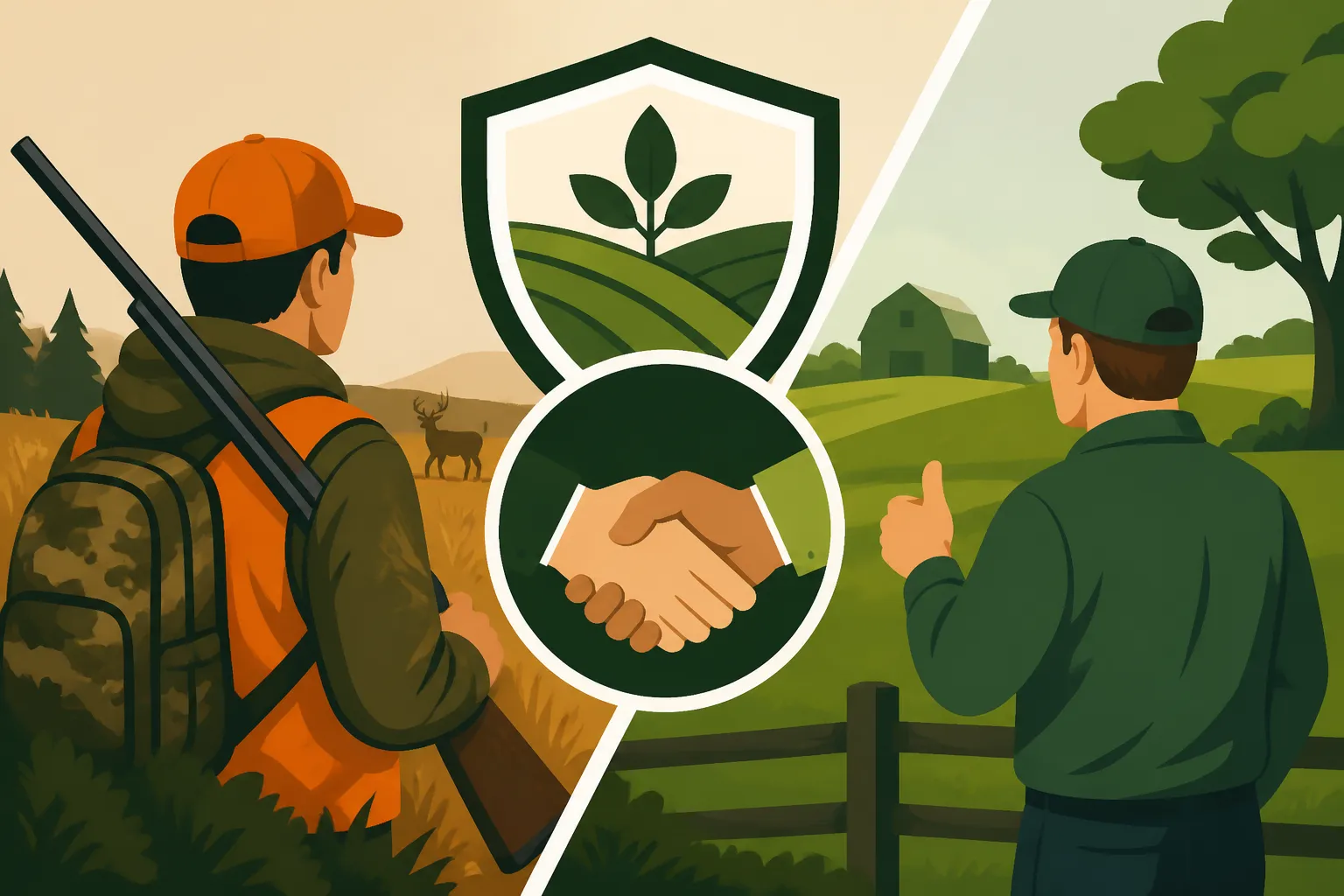
These relationships are invaluable, often leading to access to prime hunting spots year after year. They transform what could be a transactional request into a mutually beneficial partnership, demonstrating the best of Saskatchewan's hunting culture.
Disclaimer
This guide is intended for informational purposes only and does not constitute legal advice. Hunting regulations and landowner laws can change, and it is always the hunter's responsibility to consult the current Saskatchewan hunting regulations guide and relevant provincial statutes, or seek legal counsel, to ensure full compliance.