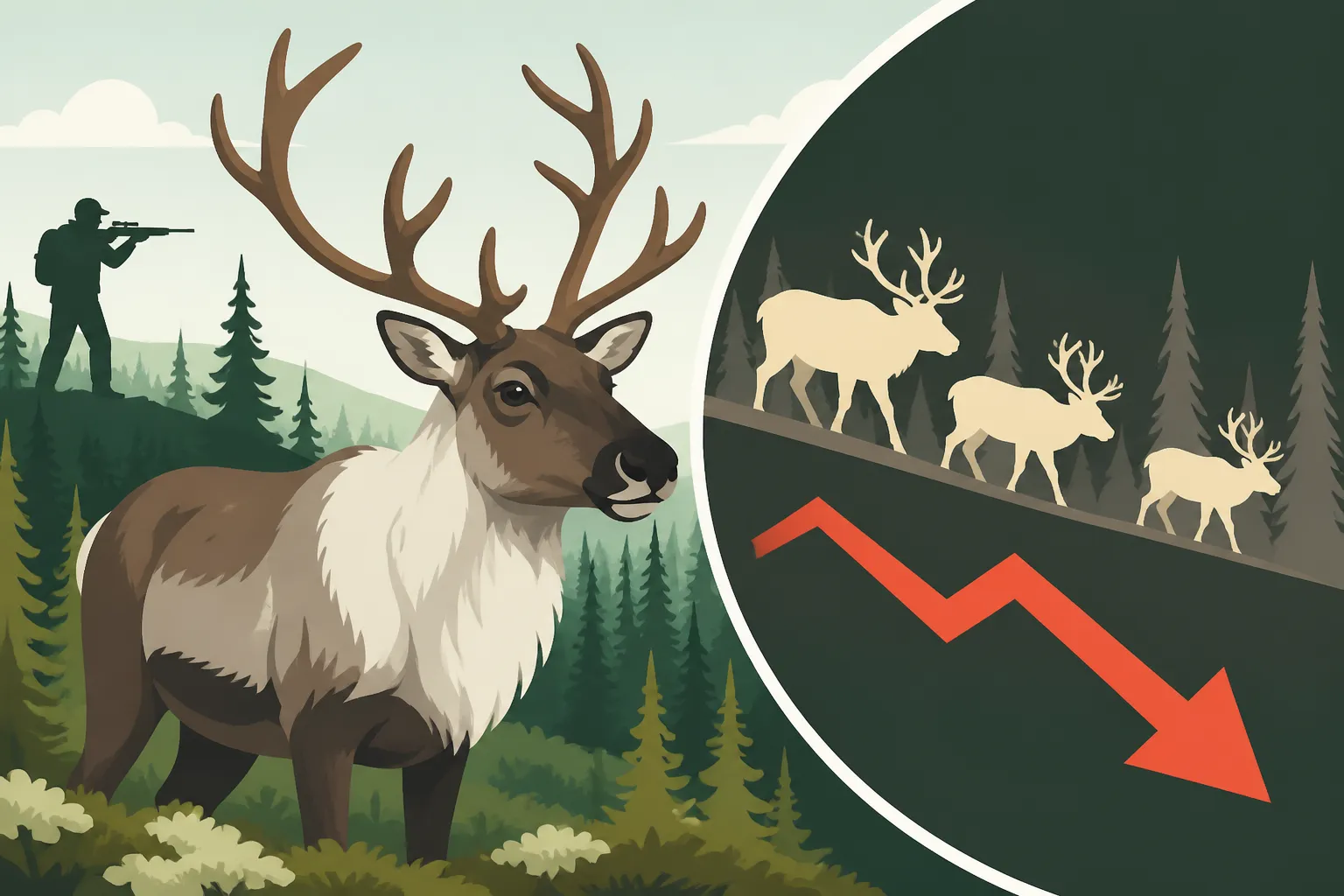
Woodland Caribou and Their Status
When we talk about hunting in Saskatchewan, we often focus on the incredible whitetails, the abundant waterfowl, or even the growing moose populations. But there's another iconic species, a true symbol of our northern wilderness, that often flies under the radar for many: the Woodland Caribou. Their presence here is a quiet, fragile thread in the tapestry of our boreal forests, and understanding their status is crucial for anyone who cares about the future of Saskatchewan's wild spaces. This guide aims to shed light on these magnificent animals, their struggles, and the important efforts underway to protect them.
The Enigmatic Woodland Caribou of Saskatchewan
For many, the word "caribou" conjures images of vast herds migrating across tundra, like those barren-ground caribou found further north. But our Saskatchewan caribou are different. They are the boreal woodland caribou, a distinct ecotype perfectly adapted to the dense, often challenging, environment of the northern forest. They're elusive, preferring solitude, and their very existence speaks to the health of their ancient home.
Identifying Woodland Caribou
Unlike the barren-ground caribou, which are generally lighter in color and tend to be found in larger, more nomadic herds, the boreal woodland caribou are typically darker, often a rich chocolate brown, with a stockier build. Both sexes grow antlers, though the bull's antlers are usually much larger and more impressive, often palmated and sweeping back. These aren't the towering racks you might see on a big bull moose, but they are distinctive, often appearing somewhat "scraggly" compared to deer or elk antlers, perfectly suited for navigating thick timber. They also have large, crescent-shaped hooves that act like snowshoes, helping them move efficiently through deep snow and soft muskeg, which is essential for survival in their preferred habitat.
Beyond their physical appearance, their behavior is a key identifier. Woodland caribou are not easily spotted. They don't congregate in open fields or on the edges of agricultural land like deer or elk sometimes do. Instead, they stick to the dense, mature forests, moving silently and using their excellent sense of smell to locate food under the snow. If you're lucky enough to spot one, it's often a fleeting glimpse of a dark shape disappearing into the trees, a testament to their shy nature.
Their Unique Northern Habitat
Saskatchewan's boreal woodland caribou are true residents of the northern wilderness, primarily found in the province's vast Boreal Forest. This isn't just any forest; it's a very specific mix of old-growth coniferous forests, peatlands, bogs, and fens. They have a particular fondness for mature, undisturbed stands of black spruce and jack pine, especially those interspersed with lichen-rich areas. Lichen, particularly arboreal lichen that hangs from trees and terrestrial lichen that grows on the forest floor, is their primary food source, especially in winter when other forage is scarce.
This reliance on old-growth forests and lichen means they need large, continuous tracts of undisturbed habitat. They are very sensitive to habitat fragmentation, which can be caused by logging, mining, oil and gas exploration, and even the creation of linear features like seismic lines or roads. These disturbances not only destroy their food source and cover but also make them more vulnerable to predators by providing easier access into their typically inaccessible territories. Their range extends across the northern half of the province, in the deeply forested parts, often far from human settlement, making them a good indicator species for the health of our northern ecosystems. To better understand these remote regions, tools like GoHunt can be useful for mapping terrain, even if directly spotting caribou is a rare feat.
Understanding Their Current Status and Population Trends
The status of woodland caribou in Saskatchewan, and indeed across Canada, is a source of significant concern for conservationists and wildlife managers. They are considered a threatened species, and their populations have been declining for decades. This isn't a problem unique to Saskatchewan, but our province plays an important role in the broader recovery efforts given the vast tracts of boreal forest we still possess.
Saskatchewan's Caribou Management Units
To manage and monitor these elusive animals, Saskatchewan, like other jurisdictions, divides its caribou range into various "management units" or "ranges." These units are designed to reflect distinct caribou populations and their specific habitats, allowing for more localized conservation efforts. Each range, often spanning hundreds or thousands of square kilometers, faces unique challenges depending on the level of industrial activity, wildfire history, and predator dynamics within its boundaries. Some of these ranges might overlap with areas often associated with other big game, but the caribou themselves stick to the deepest, most pristine sections. Understanding the nuances of these ranges is key to effective conservation.
These management units are critical because caribou don't simply exist as one homogenous population across the North. They are often fragmented into smaller, more isolated herds, each with its own population dynamics. Monitoring within these units involves everything from aerial surveys to track counts, and sometimes even collaring individual animals to track their movements and survival rates. It's a massive undertaking, and the data gathered from these units helps inform provincial and federal strategies for their protection.
Population Declines and Key Threats
The story of Saskatchewan's woodland caribou is largely one of decline. While exact numbers are notoriously difficult to ascertain for such a wide-ranging and shy species, scientific assessments consistently point to decreasing populations. This decline is multi-faceted, but habitat loss and fragmentation are widely recognized as the primary culprits. When their mature forest habitat is disturbed, it directly impacts their food supply, especially the essential lichens that grow slowly over decades. This forces them to move, often into less suitable areas, increasing stress and vulnerability.
Beyond habitat issues, increased predation also plays a significant role. As human activities alter the landscape, they can inadvertently create conditions that benefit predators like wolves and black bears, making it easier for them to access caribou habitats. For instance, new roads or seismic lines can act as corridors, allowing predators to move more freely into areas that were once natural refuges for caribou. Understanding the dynamics of species like Wolves in Saskatchewan's North is important when considering caribou predation. Additionally, factors like disease, severe weather events, and disturbance from human presence further compound the challenges these animals face, pushing their populations lower.
The Role of Habitat Fragmentation
Habitat fragmentation is arguably the most insidious threat to woodland caribou. It's not just about losing a block of forest; it's about breaking up large, continuous habitats into smaller, isolated patches. Imagine a caribou herd that needs hundreds of square kilometers of undisturbed forest to thrive. When a logging road cuts through it, or a series of seismic lines creates a grid, that continuous habitat is no longer there. This can be seen in areas around the Hunting Saskatchewan's Boreal Forest Fringe where human activity starts to meet wilderness.
These linear disturbances have several negative consequences. First, they directly remove caribou habitat and the slow-growing lichen food source. Second, they increase edge habitat, which benefits other species like moose and deer, which in turn can lead to an increase in predator populations. More deer and moose mean more wolves, and wolves, while primarily targeting deer and moose, will also prey on caribou. Third, these lines of access allow predators and humans to penetrate deeper into caribou range more easily, disturbing the caribou and making them more susceptible to hunting pressure (even though caribou hunting is not permitted) or simply stress from human presence. Finally, fragmentation can isolate caribou herds, preventing genetic exchange and making them more vulnerable to localized extinctions.
Major Challenges Facing Saskatchewan's Caribou Herds
The struggles of the woodland caribou are complex, stemming from a combination of natural and human-induced pressures. It's a delicate balance in the boreal forest, and caribou are often at the sharp end of any disruption to that balance.
Predation Pressure
While habitat loss is the overarching threat, increased predation is a significant contributing factor to caribou decline. Historically, caribou evolved to avoid predators by living in vast, contiguous patches of older forest, where predator densities were naturally lower, and by dispersing widely, making it harder for wolves to find and target them. However, as noted, habitat fragmentation changes this dynamic. Logging roads, seismic lines, and other linear features provide easy travel routes for predators like wolves and black bears into what were once inaccessible caribou strongholds.
Furthermore, these habitat changes can lead to an increase in the populations of other ungulates, such as moose and deer, which thrive in younger, regenerating forests. An increase in moose populations, for example, which might be observed in discussions about Moose in Saskatchewan's Farmland and Forest, indirectly supports a higher density of predators. More moose mean more wolves, and while wolves prefer moose, they will also opportunistically prey on caribou. The delicate balance is disrupted, and caribou, being less numerous and often more vulnerable due to their reliance on specific habitats, suffer disproportionately.
Industrial Development and Resource Extraction
Saskatchewan's boreal forest is rich in natural resources, from timber to minerals to oil and gas. These industries are vital to our economy, but their footprint often overlaps directly with critical caribou habitat. Activities such as logging, mining, and oil and gas exploration involve the construction of roads, seismic lines, pipelines, and other infrastructure, all of which contribute to habitat fragmentation. A large-scale project might mean clear-cutting substantial areas, removing the old-growth forests and lichens that caribou depend on. Even temporary access roads can have lasting impacts.
The concern isn't just the direct loss of habitat. It's also the ripple effect. Industrial development brings increased human activity, noise, and light pollution into remote areas, which can disturb caribou. It also creates avenues for recreational access (like snowmobiling or ATV use) into previously untouched areas, further fragmenting their peace and increasing the risk of encounters with people or predators. Managing these developments sustainably, with caribou conservation in mind, is a huge challenge that requires careful planning and collaboration between industry, government, and conservation groups. This is where tools that offer detailed topographical and land use information, like GoHunt, could play a role in identifying potential impact areas for sensitive species like caribou.
Climate Change Impacts
Climate change is adding another layer of complexity to the caribou's survival struggle. While perhaps less immediately obvious than habitat destruction, the long-term effects of a changing climate could be devastating. Warmer winters, for instance, can lead to more freezing rain events, which can encase the snowpack in a layer of ice. This makes it incredibly difficult for caribou to access their primary winter food source—terrestrial lichens—which grow on the forest floor beneath the snow. Imagine trying to dig through solid ice for every meal; it's physically exhausting and can lead to starvation.
Changes in temperature and precipitation patterns can also alter the composition of the boreal forest itself, potentially favoring tree species that are less suitable for caribou or impacting the growth of lichens. Increased frequency and intensity of wildfires, such as those we see discussed when considering How Wildfire Changes Northern Game Range, are another major concern. While some wildlife benefits from fire, widespread, intense fires can destroy vast tracts of old-growth forest, which takes many decades to regenerate into suitable caribou habitat. These large, unpredictable shifts make conservation efforts even more challenging.
Conservation Efforts and Recovery Strategies
Given the threatened status of woodland caribou, there are significant efforts underway at both provincial and federal levels to reverse their decline and ensure their long-term survival. These strategies are complex, multi-faceted, and require a long-term commitment.
Provincial and Federal Initiatives
Both the Saskatchewan provincial government and the federal government of Canada have a role in caribou recovery. Federally, woodland caribou are listed as 'Threatened' under the Species at Risk Act (SARA), which legally obligates the government to develop and implement recovery strategies. This often involves setting national population and distribution objectives, identifying critical habitat, and establishing management plans. Provinces, as the primary stewards of wildlife within their borders, are then responsible for implementing these strategies on the ground.
In Saskatchewan, this means developing and updating provincial caribou management plans that align with federal objectives. These plans typically include measures such as habitat protection, monitoring programs, and research initiatives. They often involve extensive consultation with Indigenous communities, local stakeholders, and industries operating in caribou range. The goal is not just to prevent further decline, but to eventually restore caribou populations to a self-sustaining level. A key component of these initiatives often involves detailed mapping and analysis of habitat use, which tools like GoHunt, even if primarily for hunters, demonstrate the capability of modern GIS mapping for ecological understanding.
Habitat Restoration and Protection
The cornerstone of any caribou recovery strategy is habitat. Since habitat loss and fragmentation are the leading threats, restoring and protecting critical habitat is paramount. This includes measures to minimize further disturbance in caribou ranges and to restore areas that have already been degraded. For example, old logging roads or seismic lines can be decommissioned and re-forested to reduce predator access and allow the habitat to regenerate. These efforts directly support the goal of maintaining large, contiguous blocks of old-growth forest.
Habitat protection also involves setting aside protected areas or implementing specific land use policies that prioritize caribou conservation within identified critical habitat. This can mean adjusting forestry practices, regulating industrial development, or mitigating the impacts of existing infrastructure. Protecting the integrity of regions like Hunting Saskatchewan's Northern Lake Country is crucial for the survival of these animals. It's a long-term investment, as the mature forests and lichens that caribou depend on take decades, if not centuries, to develop.
Monitoring and Research Programs
You can't manage what you don't measure, and for elusive species like woodland caribou, monitoring and research are absolutely vital. These programs aim to better understand caribou populations, their movements, health, and interactions with their environment. This includes techniques like aerial surveys to count animals, track detection surveys, and the use of GPS collars on individual caribou to gather data on their home range, migration patterns, and survival rates. This data is critical for assessing the effectiveness of conservation efforts and for adapting strategies as new information emerges.
Research also delves into specific threats, such as predator-prey dynamics, the impacts of industrial activities, and the effects of climate change on caribou behavior and health. Scientists study everything from their diet and genetics to how they respond to different types of human disturbance. This scientific understanding forms the basis for informed management decisions, helping to target conservation resources where they will have the most impact on Where Saskatchewan's Woodland Caribou Stand.
The Hunter's Role and Public Awareness
While woodland caribou are not a hunted species in Saskatchewan, the broader hunting and outdoor community still has a crucial role to play in their conservation. Our collective awareness and respect for these animals and their habitat are essential.
No Hunting Allowed
It's important to be crystal clear: there is no open season for hunting woodland caribou in Saskatchewan. Given their threatened status and declining populations, caribou hunting has been closed for many years. Any harvesting of this species would further jeopardize their fragile existence. This closure is a critical conservation measure, reflecting the severe challenges these animals face.
For hunters, this means that if you encounter a caribou while pursuing other game, it is not a legal target. Misidentification can be a concern, though caribou have distinct characteristics. Familiarizing yourself with the differences between caribou, moose (like What a Bull Moose Weighs in the North), and deer is paramount. This respect for species under threat is a core tenet of ethical hunting and wildlife stewardship, and it's a responsibility we all share when we venture into the backcountry.
Reporting Sightings and Respecting Their Range
Even though you can't hunt them, every interaction with wildlife in the northern forest offers an opportunity to contribute to conservation. If you're fortunate enough to spot a woodland caribou in Saskatchewan's boreal regions, reporting your sighting to provincial wildlife authorities can be incredibly helpful. Details like the location, date, number of animals, and any observed behavior can provide valuable data for monitoring efforts, especially for such an elusive species. Many provincial wildlife agencies have online reporting systems or dedicated hotlines for such observations.
Beyond reporting, simply respecting their habitat is crucial. This means minimizing your disturbance when recreating in the boreal forest. Stay on designated trails, pack out what you pack in, and be mindful of noise and your presence, particularly in remote areas. Practices like Hunting a Pipeline Right-of-Way or Hunting an Old Logging Road in the North need to be undertaken with an awareness of the broader ecological impact on sensitive species like caribou. Understanding the importance of minimal impact is part of being a responsible outdoor enthusiast and directly supports the quiet, undisturbed existence that woodland caribou need to survive and hopefully, one day, thrive again in Saskatchewan.
Summary of Woodland Caribou Status and Conservation
To give a clearer picture, here's a brief overview of the key aspects of woodland caribou and their status in Saskatchewan:
| Aspect | Description |
|---|---|
| Status | Federally listed as 'Threatened' under the Species at Risk Act (SARA). Populations are generally declining across their range. |
| Habitat | Primarily inhabit large, contiguous tracts of old-growth boreal forest, peatlands, and bogs, relying heavily on arboreal and terrestrial lichens for food. Sensitive to disturbance. |
| Key Threats | Habitat Loss & Fragmentation: Due to industrial development (logging, mining, oil/gas), wildfires, and linear disturbances (roads, seismic lines). This directly impacts food sources and creates predator access. Increased Predation: Habitat fragmentation indirectly boosts predator (wolf, bear) populations by increasing other ungulates (moose, deer) and providing easier access for predators into caribou range. Climate Change: Warmer winters, ice layers, changes in vegetation, and increased wildfire frequency impact food access and habitat suitability. |
| Conservation Efforts | Provincial & Federal Initiatives: Development of recovery strategies, critical habitat identification, and management plans. Habitat Restoration: Decommissioning old industrial lines, reforestation, and land use planning to minimize new disturbances. Monitoring & Research: Aerial surveys, GPS collaring, genetic studies, and predator-prey research to inform management. |
| Hunting Status | No Hunting Permitted: Woodland caribou hunting is closed in Saskatchewan due to their threatened status. Ethical hunters respect this closure and help with identification. |
| Public Role | Report sightings to wildlife authorities, minimize disturbance in boreal habitats, respect closures, and advocate for conservation. |
Disclaimer
This article is for general informational purposes only and does not constitute professional advice. Laws, prices and regulations vary by location and change over time. Consult a qualified professional for guidance on your specific situation.