Wolves in Saskatchewan’s North
The sight of a wolf track in fresh snow, especially in the vast, silent stretches of northern Saskatchewan, stirs something primal in a hunter. Yet, despite their iconic status, wolves are often misunderstood, viewed either as mythical beasts or simply as competition for game animals. This guide aims to pull back the curtain on these elusive predators, offering a deep dive into the lives of wolves in Saskatchewan’s North, their critical role in the ecosystem, and the unique considerations for anyone interested in their management or pursuit.
Understanding Saskatchewan's Northern Wolf Populations
Wolves are magnificent, intelligent, and incredibly adaptable animals that thrive in Saskatchewan's northern wilderness. Far from the open prairies, the boreal forest provides the dense cover and abundant prey necessary for these apex predators to maintain healthy populations. If you've ever spent time in the northern bush, the distant howl of a wolf is an unforgettable sound that truly defines the wild.
Historical Presence and Recovery
For millennia, wolves have been an integral part of Saskatchewan's natural landscape. They are deeply woven into the fabric of the boreal forest, playing their essential role as top-tier predators. Like much of North America, early European settlement and expansion led to widespread persecution of wolves, often driven by fear, misunderstanding, and perceived threats to livestock or game animals. Their numbers plummeted in many areas, and their range significantly contracted, especially in the more settled southern regions of the province.
However, the vast and remote nature of northern Saskatchewan provided a sanctuary where wolf populations could persist, even as they faced pressures elsewhere. With improved wildlife management practices, changing public perceptions, and the sheer resilience of the species, wolves have gradually recovered much of their historical range in the north. Today, they are a strong presence in the northern half of the province, a testament to the wild character of these regions. Their successful recovery speaks volumes about the incredible adaptability of these animals and the enduring wildness of places like the Churchill River country and the expansive provincial forests.
Current Distribution and Habitat
When we talk about wolves in Saskatchewan, we're primarily looking at the expansive Boreal Forest and its transition zones. This vast wilderness, stretching from the northern edge of the Aspen Parkland all the way up to the treeline, is prime wolf country. You'll find them widespread in areas like the Meadow Lake Provincial Forest, the Prince Albert Forest Fringe, and even further north into the vast, untouched regions around La Ronge and the Churchill River system. These areas offer the perfect blend of solitude, dense cover, and a rich diversity of prey species.
Their preferred habitats are typically characterized by thick stands of spruce, pine, and poplar, interspersed with muskeg, rocky outcrops, and countless lakes and rivers. Wolves are masters of travel, often utilizing old logging roads, seismic lines, cutlines, and frozen waterways to cover vast distances efficiently. For a hunter using tools like GoHunt, understanding these travel corridors is absolutely crucial. They provide a window into how wolves navigate their massive territories, often covering dozens of kilometers in a single day. These aren't animals that stick to a small patch of woods; they are constantly on the move, following their prey and patrolling their territorial boundaries.
Life in a Northern Wolf Pack
The wolf pack is a marvel of social cooperation, a tightly knit family unit where every member plays a vital role. This social structure is key to their success as predators in a challenging northern environment. Understanding these dynamics is not only fascinating but also essential for anyone hoping to truly grasp the nature of these magnificent creatures.
Pack Structure and Social Dynamics
A typical wolf pack is essentially an extended family, usually led by an alpha male and an alpha female – the breeding pair. These two are the primary decision-makers, guiding the pack's movements, hunts, and social interactions. Below them are their offspring from previous years, who act as subordinates and helpers, assisting with everything from hunting to raising the current year's pups. Pack sizes can vary considerably depending on prey availability and location, but a common pack might consist of 4 to 10 individuals. However, in areas with abundant prey, packs can grow much larger, sometimes reaching 15 or more.
The social dynamics within a pack are incredibly complex, driven by a hierarchy that, while sometimes challenged, generally ensures cooperation and efficiency. Communication is key, utilizing a wide range of howls, growls, barks, body language, and scent marking to coordinate activities and reinforce bonds. Each member has a role, contributing to the pack's survival. They work together to scout territory, defend against intruders, and most importantly, hunt. The bond within a wolf pack is incredibly strong, a testament to their intelligence and the evolutionary benefits of cooperative living. Losing an alpha or a key member can have significant impacts on the pack's stability and hunting success.
Hunting Strategies and Prey Base
Northern Saskatchewan wolves are opportunistic and highly skilled predators, with their diets primarily dictated by the availability of prey in their expansive territories. Their main targets include large ungulates like moose and caribou, which offer substantial caloric rewards, especially during the harsh winter months. You'll also find them preying on deer where those populations overlap with the boreal forest edge, such as in areas where the forest transitions into the parkland. These larger animals are usually taken down through cooperative hunting efforts, where the pack works together to test, isolate, and eventually overpower their chosen quarry.
Beyond the big game, wolves also supplement their diet with a variety of smaller animals. Beavers are a common and nutritious food source, especially in areas with abundant waterways. Snowshoe hare, while small, can be a critical food source during their cyclical population peaks. Other secondary prey might include various small mammals and birds. Their hunting techniques are a masterclass in efficiency, combining keen senses, incredible endurance, and strategic thinking. They’ll often track animals for miles, looking for signs of weakness, injury, or isolation. They have an innate ability to target the old, the young, or the sick, which helps to keep prey populations healthy and robust, weeding out less fit individuals from the herd.
The Impact of Wolves on Saskatchewan's Ecosystems
The presence of wolves is a clear indicator of a healthy, functioning ecosystem. As apex predators, they play a disproportionately large role in shaping the landscapes they inhabit, influencing everything from the behaviour of prey animals to the health of the plant communities. Their absence or decline can trigger a cascade of negative effects throughout the food web.
Predator-Prey Dynamics
The relationship between wolves and their prey is a classic example of predator-prey dynamics, a delicate balance that has evolved over millennia. Wolves exert significant selective pressure on species like Moose in Saskatchewan's Farmland and Forest and Woodland Caribou and Their Status, ensuring that only the strongest, healthiest, and most agile individuals survive to reproduce. This isn't just about reducing numbers; it's about improving the overall genetic fitness of the prey populations. When a wolf pack targets an individual animal, they are typically culling the weak, old, or diseased, which benefits the herd as a whole by preventing the spread of illness and maintaining vitality.
However, the impact of wolves on prey populations is a complex and often debated topic. While wolves naturally regulate prey, their effect is often intertwined with other environmental factors like habitat loss, severe winters, disease, and human hunting pressure. For instance, concerns about declining moose or caribou populations in some areas frequently lead to discussions about wolf control. Yet, studies consistently show that while wolves are a factor, habitat degradation, resource extraction, and climate change often play an even more significant role in the long-term health and numbers of ungulate populations. Understanding this multi-faceted relationship is crucial for effective wildlife management.
Ecosystem Health and Biodiversity
Beyond their direct impact on prey numbers, wolves contribute to the overall health and biodiversity of the ecosystem in numerous, often subtle ways. By keeping ungulate populations in check, they help prevent overgrazing, which can degrade vegetation and impact other species that rely on those plant communities. For example, fewer ungulates browsing means more food and cover for smaller herbivores and ground-nesting birds. This trophic cascade effect highlights how the actions of a top predator ripple through the entire food web.
Furthermore, wolves provide a vital food source for scavengers. Once a wolf pack has made a kill and moved on, the remains provide sustenance for a host of other animals, including ravens, magpies, coyotes, and wolverines. This ensures that energy from the ecosystem's top levels is recycled, supporting a diverse array of life. Their mere presence also influences the behaviour of prey animals, making them more vigilant and forcing them to use different parts of their habitat more strategically. In essence, wolves are not just part of the ecosystem; they are architects of it, fostering a dynamic and resilient environment.
Hunting and Management of Northern Wolves
For many hunters, pursuing a wolf in Saskatchewan's North represents the ultimate challenge. It demands patience, keen woodsmanship, and a deep understanding of these intelligent animals. Wolf management in Saskatchewan aims to balance maintaining healthy wolf populations with addressing concerns about their impact on ungulate numbers and, occasionally, livestock.
Regulations and Seasons
Hunting wolves in northern Saskatchewan is generally quite open for residents, reflecting the healthy populations found in the vast boreal forest regions. Unlike species like moose or elk, which are often draw-only and have strict bag limits, wolves typically have a long season, often open year-round in many northern Wildlife Management Zones (WMZs). In some specific northern zones, residents may even be able to harvest multiple wolves, with either a generous bag limit or no bag limit at all, depending on the specific WMZ and current provincial regulations.
It is absolutely paramount that any hunter interested in pursuing wolves consults the most current Saskatchewan Hunters' and Trappers' Guide. Regulations can and do change, and what's legal in one WMZ might be different in another. You also need to ensure you understand Saskatchewan's Wildlife Management Zones and where exactly the boundaries lie, especially if you're venturing into transition zones between open and restricted areas. While non-residents are generally restricted to hunting wolves only through an outfitter, residents have more flexibility, but always, always verify the most up-to-date rules before heading out. Safety and legality are non-negotiable, particularly when hunting in remote northern areas.
Techniques and Considerations for Hunters
Hunting northern wolves is an experience unlike any other, demanding a unique blend of skill, patience, and often, sheer luck. These are some of the most intelligent and wary animals you’ll ever pursue, making success a truly hard-won achievement. One of the most common and effective techniques involves calling. A skilled caller can imitate wolf howls, distress calls, or even pup distress calls to try and draw a curious or territorial wolf within range. This requires immense patience and a keen ear, often sitting for hours in frigid conditions, especially during late season.
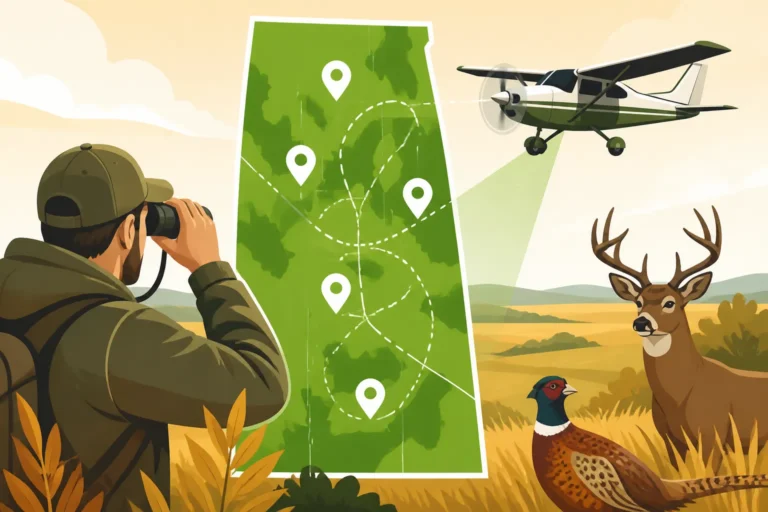
Another method, particularly effective in areas with burns, open cutlines, or frozen lakes, is spot-and-stalk. Using good optics like binoculars and spotting scopes, hunters will glass vast areas, looking for movement or tracks. This is where tools like GoHunt can really shine, allowing you to study satellite imagery for potential travel corridors, vantage points, and areas of dense cover where wolves might bed. Understanding Scouting With Satellite Imagery in Saskatchewan can be a game-changer for identifying potential areas. Once a wolf is spotted, the stalk begins, often over challenging terrain and requiring careful attention to wind direction and cover.
For many, hunting wolves after a fresh snowfall provides the best opportunity, as tracks become clear indicators of recent activity. Following a fresh track, however, can turn into a multi-day pursuit, testing a hunter's endurance and resolve. In some areas, where legal and regulated, baiting can be used, although this is more commonly associated with trapping or snaring programs than typical rifle hunting. No matter the method, preparedness is key. Hunters often spend long hours still-hunting through dense bush, utilizing snowshoes or skis to navigate deep snow. Remember, the boreal forest is wild and unforgiving, so having a Winter Truck Kit for a Saskatchewan Hunt and knowing about Hunting Saskatchewan Winter Weather Safely are crucial.
Here's a quick overview of key considerations:
| Factor | Description |
|---|---|
| Season | Often long, sometimes year-round in northern WMZs for residents. Always check current regulations for your specific zone. |
| Primary Prey | Moose, caribou, deer (where available). Focus on areas with healthy populations of these animals. |
| Habitat | Dense boreal forest, muskeg, old cutlines, frozen waterways, forest fringe areas. Wolves use these for travel, hunting, and denning. |
| Methods | Calling (howls, distress), spot-and-stalk (especially in open areas or after snow), tracking. Patience and stealth are paramount. |
| Gear | Quality optics, suitable rifle (see Legal Firearms and Bows for Big Game), warm winter clothing, snowshoes/skis, GPS, emergency kit. |
| Challenge | High. Wolves are highly intelligent, elusive, and have excellent senses. Success often comes from persistence and deep knowledge of their behavior. |
Ethical Considerations and Conservation
Hunting any animal requires respect, but hunting a wolf, an animal that embodies the spirit of the wild, carries an added layer of ethical responsibility. The goal should always be a clean, humane kill. Due to their intelligence and resilience, wounding a wolf is a scenario every hunter hopes to avoid. This means knowing your rifle, practicing regularly, and understanding your effective range. It’s not a situation to take a marginal shot.
Beyond the shot, ethical hunting also involves understanding the wolf's role in the ecosystem and supporting sound conservation practices. While many hunters are concerned about wolf predation on preferred game species, responsible management understands the necessity of apex predators. Conservation efforts often involve balancing predator numbers with prey populations, sometimes through regulated hunting or trapping, to maintain ecological health. Participating in wolf hunting is, for many, a way to connect with the raw wilderness and contribute to the informed management of these incredible animals in a truly wild landscape. Respect for the animal, for its place in nature, and for the regulations is paramount.
Disclaimer
Please note that hunting regulations, seasons, and licensing requirements in Saskatchewan are subject to change. It is the responsibility of every hunter to consult the most current Saskatchewan Hunters' and Trappers' Guide issued by the Ministry of Environment before planning or undertaking any hunting activity. This guide provides general information and should not be considered a substitute for official government regulations.