What Whitetails Eat Through a Prairie Winter
For many hunters, the thought of a Saskatchewan winter brings images of deep snow and bitter cold. But for the whitetail deer that call our prairies home, winter isn't just an inconvenience; it's a relentless struggle for survival, largely defined by what they can and cannot find to eat. Understanding what whitetails consume during these challenging months is key to appreciating their resilience and predicting their movements. This guide dives deep into the dietary habits and survival strategies of Saskatchewan's whitetails when the landscape is blanketed in white.
The Harsh Reality of Winter Forage on the Saskatchewan Prairie
When the snow flies and temperatures plummet, the lush buffet of spring, summer, and fall quickly disappears. For whitetails, the prairie winter becomes a game of limited options and high stakes, where every calorie counts. Their ability to survive hinges on adapting their diet to whatever meager resources remain accessible.
The Scarcity of Natural Browse
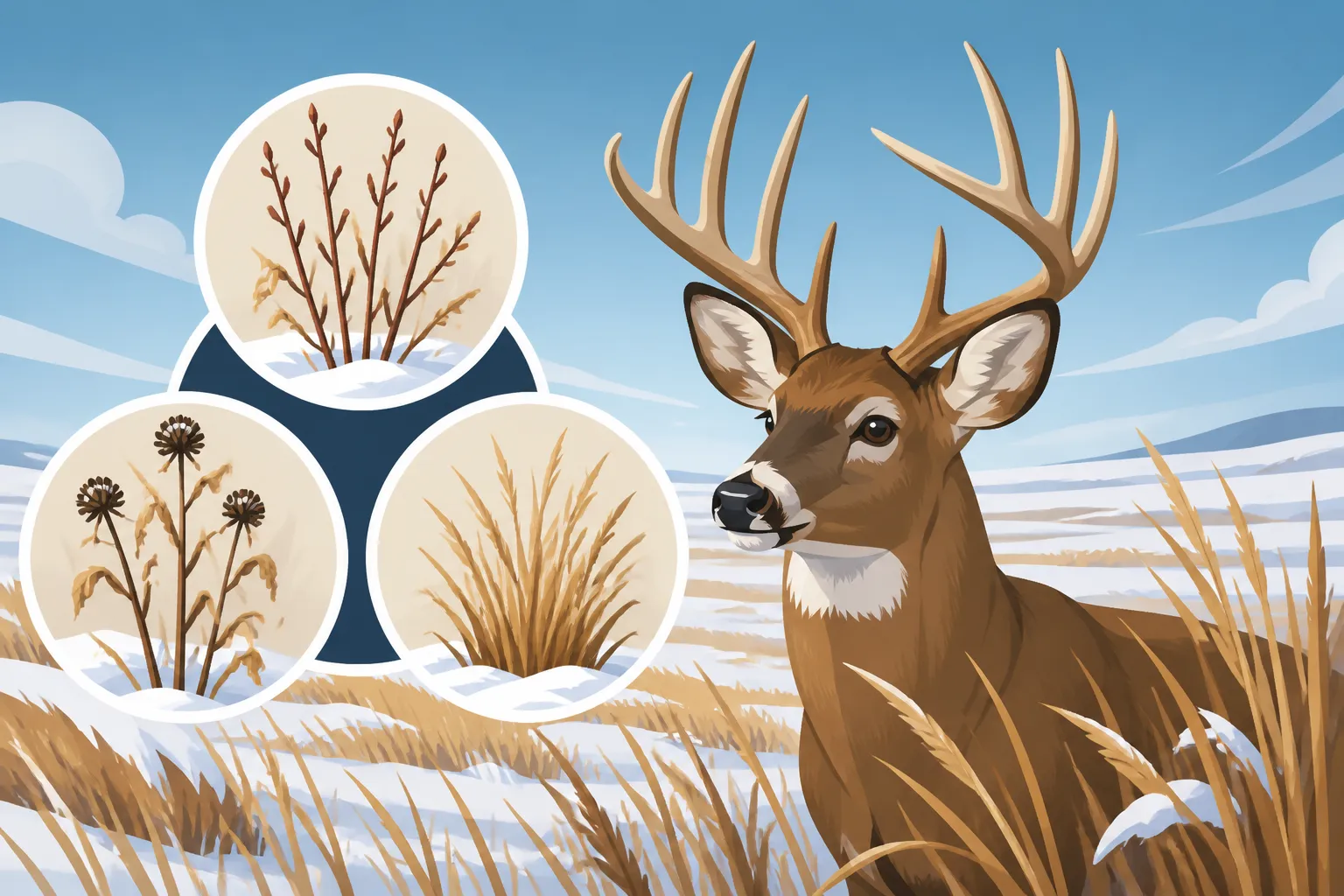
In the thick of a Saskatchewan winter, natural browse becomes incredibly sparse. We're not talking about lush green shoots or abundant acorns here. The deciduous leaves are gone, and most native forbs are buried or dormant. What’s left? Woody browse – twigs, buds, and the bark of specific trees and shrubs. Think of species like willow, aspen, saskatoon, and red-osier dogwood. Deer will strip the bark off younger saplings, leaving tell-tale rub marks high up the trunk where the snow line allows them to reach. This isn't their preferred diet, but it's often the only game in town when the ground is frozen solid and covered in deep snow.
However, the nutritional value of this woody browse is significantly lower than summer forage. It's high in fiber and low in digestible energy, making it a poor substitute for their preferred foods. A whitetail needs to consume a lot of it just to maintain body temperature, let alone build up energy reserves. The sheer volume required means deer spend a significant portion of their short winter days constantly foraging, moving from one clump of willows to the next, trying to extract enough sustenance. This ceaseless search for food can wear them down, especially if they aren't already carrying good fat reserves from the fall.
How Snow Depth Dictates Accessibility
Snow isn't just cold; it's a massive barrier. A few inches of light snow might be a minor inconvenience, but once the snow piles up to a foot or more, especially if it’s crusted or heavy, it dramatically impacts a deer's ability to reach food. What was once available browse just a few weeks prior can become completely locked away under a hard-packed blanket of white. This is particularly true for ground-level forage, which is often crucial for their winter diet.
Deep snow also restricts their movement, making it harder to travel between disparate food sources and escape predators. We've all seen deer "yard up" in heavy timber during severe winters, a survival mechanism where they create a network of trails to conserve energy. This phenomenon, often seen when How Deep Snow Moves Deer Into Cover occurs, concentrates deer in smaller areas, increasing competition for the limited food within those yards. If the winter is long and harsh, these food sources can become completely depleted, leading to starvation. Deer are forced to make tough choices: expend precious energy to break new trails to find scarce food, or hunker down and hope for a thaw.
Tapping into Agricultural Lifelines
While natural browse is critical, the agricultural landscape of Saskatchewan provides whitetails with another, often more substantial, source of winter sustenance. These human-altered environments offer high-energy food that can literally make the difference between life and death for a deer in the depths of winter.
Grazing on Leftover Stubble Fields
After the combines have moved through, our vast prairie fields are left with an abundance of "waste grain" – kernels that were dropped or missed during harvest. For a whitetail, a field of swathed barley, spilled wheat, or dropped peas is like hitting the jackpot. This waste grain is incredibly energy-dense compared to woody browse, providing the carbohydrates and calories necessary to fuel their metabolic furnaces and maintain body heat in the biting cold. They'll meticulously pick through stubble fields, sometimes for hours, pawing away light snow to get at every last kernel.
This is why hunters often observe deer movement patterns that revolve around these fields, especially at dawn and dusk. A field that might seem empty to the untrained eye could be a vital food source, drawing deer from miles around. We often find ourselves Hunting a Swathed Grain Field at Dusk or a Hunting a Standing Canola Field Edge for this very reason. The ease of access, combined with the high nutritional value of the grain, makes these agricultural leftovers an indispensable part of a prairie whitetail's winter diet, especially when their natural forage options are completely locked down.
The Temptation of Standing Crops and Bale Yards
Sometimes, farmers are unable to harvest all their crops before the snow and frost set in, leaving fields of standing canola, corn, or even cereals. To a starving deer, these fields represent an emergency larder. While foraging in standing crops is not without risk, as it exposes them to predators and potential human conflict, the reward of accessible, high-energy food can outweigh the danger. Deer will cautiously enter these fields, often on the edges, to browse on the remaining plants.
Similarly, bale yards – where farmers stack hay bales for livestock – become magnets for deer. Bales of alfalfa, clover, or even grain hay provide both shelter from the wind and a readily available food source. While they are often primarily for cattle, deer will feed on the hay that spills from the bales or even nibble directly at the exposed sides. This is a common sight in some of the more settled areas of the province. It's a testament to their adaptability and desperation that whitetails will risk proximity to human activity for these critical calories. For hunters scouting winter range, checking the edges of these bale yards can offer significant insights into local deer populations and their wintering habits, particularly when using tools like GoHunt to mark potential feeding areas.
Survival Strategies and Nutritional Needs
Whitetail deer aren't just passively enduring winter; they have evolved sophisticated physiological and behavioral strategies to survive it. Their winter diet is deeply intertwined with these adaptations, allowing them to stretch limited resources as far as possible.
Metabolic Slowdown and Energy Conservation
As winter progresses, whitetails undergo a remarkable metabolic slowdown. Their heart rate, respiration, and overall activity levels decrease, effectively putting them into a semi-hibernated state. This physiological change reduces their energy expenditure, allowing them to conserve precious fat reserves built up during the more abundant months of fall. It's like turning down the thermostat on their internal furnace. This means they need fewer calories than they would in summer, but the need for quality, digestible food remains paramount to fuel even this reduced metabolic rate.
This metabolic adjustment also means that certain types of food become more important. They prioritize easily digestible carbohydrates found in waste grain over the high-fiber, low-nutrient woody browse whenever possible. This strategy helps them extract maximum energy from minimal intake, a critical factor when every mouthful counts. Their digestive system itself adapts to better process woody material, but it's an inefficient process compared to digesting grains or lush vegetation. Understanding these adaptations is crucial when Reading Whitetail Sign in Saskatchewan Bluffs and trying to decipher where deer are spending their precious energy.
The Critical Role of Fat Reserves
The true secret to a whitetail's winter survival isn't just what they eat, but what they ate before winter arrived. The fall months are a frantic period of gorging, where deer accumulate significant fat reserves. This fat, stored throughout their body, acts as their primary energy bank during winter. When food is scarce or inaccessible, their bodies tap into these reserves, slowly metabolizing the fat to produce energy and maintain body temperature. A buck that went into winter with a thick layer of fat from a successful fall of feeding has a far greater chance of emerging healthy in spring than a lean one. This is one of the reasons Why Saskatchewan Bucks Grow So Large – they have access to incredible forage in the fall, allowing them to pack on the pounds.
A long, severe winter can deplete these fat reserves completely. When a deer runs out of fat, it begins to metabolize muscle tissue, leading to rapid weight loss and eventually starvation. This is particularly devastating for does carrying fawns and for young deer who haven't had a chance to build up substantial reserves. Monitoring local conditions, such as snow depth and prolonged cold snaps, can give us clues as to how tough the winter is on our deer populations, and knowing this can influence our hunting strategies in the following seasons.
Impact of Habitat and Human Influence
The landscape structure plays an enormous role in providing whitetails with both food and shelter during the relentless Saskatchewan winter. Where deer choose to spend their winter days is often a direct reflection of where they can find the most accessible food combined with adequate cover.
Shelterbelts and River Valleys as Winter Havens
In the vast, open expanse of the prairie, shelter is just as vital as food. Shelterbelts—those lines of trees planted by farmers to protect fields and farmsteads—and the natural treed cover along river valleys and coulees become critical wintering areas. These sheltered spots offer protection from the brutal winds, reducing the energy deer must expend to stay warm. Within these areas, deer find what little browse is available, often nibbling on the lower branches of deciduous trees and shrubs that grow thicker in these protected pockets. It's a combination deal: warmth and food. You'll often find deer Hunting a Shelterbelt Between Two Fields or spending significant time within a Hunting a Saskatchewan River Valley for these combined benefits.
These areas also tend to hold snow differently. Snow drifts might pile up deeply on the windward side, but the leeward side of a shelterbelt or the bottom of a coulee can have shallower, softer snow, making it easier for deer to move and paw for residual forage. This microclimate effect is crucial. Experienced hunters, or those using mapping tools like GoHunt to analyze terrain and cover, know to focus their efforts on these sheltered havens, as they are key to deer survival when temperatures drop to thirty below and the wind howls.
The Role of Supplemental Feeding
The question of supplemental feeding for wild deer during harsh winters is a complex one, often debated among wildlife managers and concerned citizens. While the intention is almost always good – to help deer survive a tough winter – the practice can sometimes do more harm than good. Artificially concentrating deer in one area to feed can increase the risk of disease transmission, such as Chronic Wasting Disease (CWD), and make them more vulnerable to predators. It can also disrupt their natural foraging behaviors and migration patterns.
However, in certain regulated instances, under strict guidance from wildlife authorities, emergency feeding might be considered for specific populations. Generally, wildlife agencies advise against public supplemental feeding due to these ecological risks. For hunters, understanding the natural food sources and survival mechanisms is always the preferred approach, encouraging healthy, self-sustaining deer populations rather than creating dependency. Knowing where deer naturally find their food in winter, and where they might seek refuge as outlined in Where Saskatchewan Whitetails Bed in Snow, helps us understand their natural resilience.
| Winter Food Source Category | Examples | Nutritional Value | Accessibility Challenges |
|---|---|---|---|
| Natural Browse | Willow twigs, aspen buds, saskatoon shoots | Low-Moderate Energy, High Fiber | Deep snow, ice crusts, limited availability |
| Waste Agricultural Grain | Spilled wheat, barley, canola, peas | High Energy, Digestible Carbs | Deep snow, wind scour, competition |
| Standing Crops | Unharvested corn, canola, cereals | Moderate-High Energy | Snow depth, farmer permission, exposure |
| Hay/Silage Bales | Alfalfa, clover, grain hay (from farmyards) | Moderate Energy, Fiber | Proximity to human activity, competition |
| Fallen Berries/Seeds | Rose hips, chokecherries (if accessible) | Variable Energy | Rarity, snow cover |
The whitetails of the Saskatchewan prairie are truly tough creatures, masters of survival in an unforgiving landscape. Their winter diet is a direct reflection of their environment, a mix of tough woody browse and opportunistic grazing on the bounty of agricultural fields. Understanding these dietary shifts and the strategies deer employ to conserve energy is not just fascinating; it's essential for anyone who appreciates these magnificent animals and spends time in their world. Knowing what they eat and where they find it can even help you predict deer movement, whether you're out Hunting Saskatchewan Winter Weather Safely or simply observing wildlife.
Disclaimer
This article is for general informational purposes only and does not constitute professional advice. Laws, prices and regulations vary by location and change over time. Consult a qualified professional for guidance on your specific situation.