How Many Days a Non-Resident Bird Hunter Gets
It can be incredibly frustrating trying to decipher hunting regulations, especially when you're a non-resident looking to experience the incredible bird hunting Saskatchewan has to offer. The rules around how long you can actually be in the field can seem complicated and often lead to confusion, potentially jeopardizing a well-planned trip. This guide will break down exactly how many days a non-resident bird hunter gets in Saskatchewan, helping you plan your adventure with confidence and avoid any costly misunderstandings.
Understanding Saskatchewan's Non-Resident Bird Hunting Rules
Saskatchewan is world-renowned for its phenomenal waterfowl hunting, attracting enthusiasts from across North America and beyond. With millions of ducks and geese staging here during migration, it's truly a bucket-list destination. However, to ensure sustainable populations and manage hunting pressure, particularly from non-residents, the province has specific regulations in place that differ significantly from those for residents. These rules aim to balance the economic benefit of tourism with the conservation of these vital resources, ensuring that the hunting heritage can be enjoyed for generations to come.
Why Non-Resident Rules Are Different
You might wonder why non-residents face different restrictions than residents. The core of it often comes down to a few key factors: conservation, economic impact, and managing hunting pressure. While Saskatchewan residents contribute to the province's wildlife management through various fees and taxes year-round, non-residents are often seen as an additional source of pressure on game populations during peak seasons. By limiting their hunting days, the province can better control harvest rates and ensure that the local ecosystem isn't overwhelmed. Furthermore, these regulations often work in conjunction with the outfitting industry, which plays a significant role in the province's tourism economy. It’s a carefully crafted system designed to protect the resource while still allowing access to this world-class hunting experience.
Migratory Birds Versus Upland Birds
It's crucial to distinguish between migratory game birds (ducks, geese, sandhill cranes) and upland game birds (sharptailed grouse, Hungarian partridge, ruffed grouse). While both offer fantastic hunting opportunities in Saskatchewan, the regulations, especially for non-residents, can vary. The daily limits, possession limits, and most importantly for this discussion, the season lengths or permitted hunting periods for migratory birds, are often more tightly controlled by both provincial and federal regulations. For upland birds, non-residents generally have more flexibility regarding hunting days, often aligning more closely with the full resident season dates, provided they hold the correct provincial license. This article will primarily focus on the migratory bird regulations, as that's where the specific "day limits" come into play for non-residents.
The Two 5-Day Hunting Periods for Non-Residents
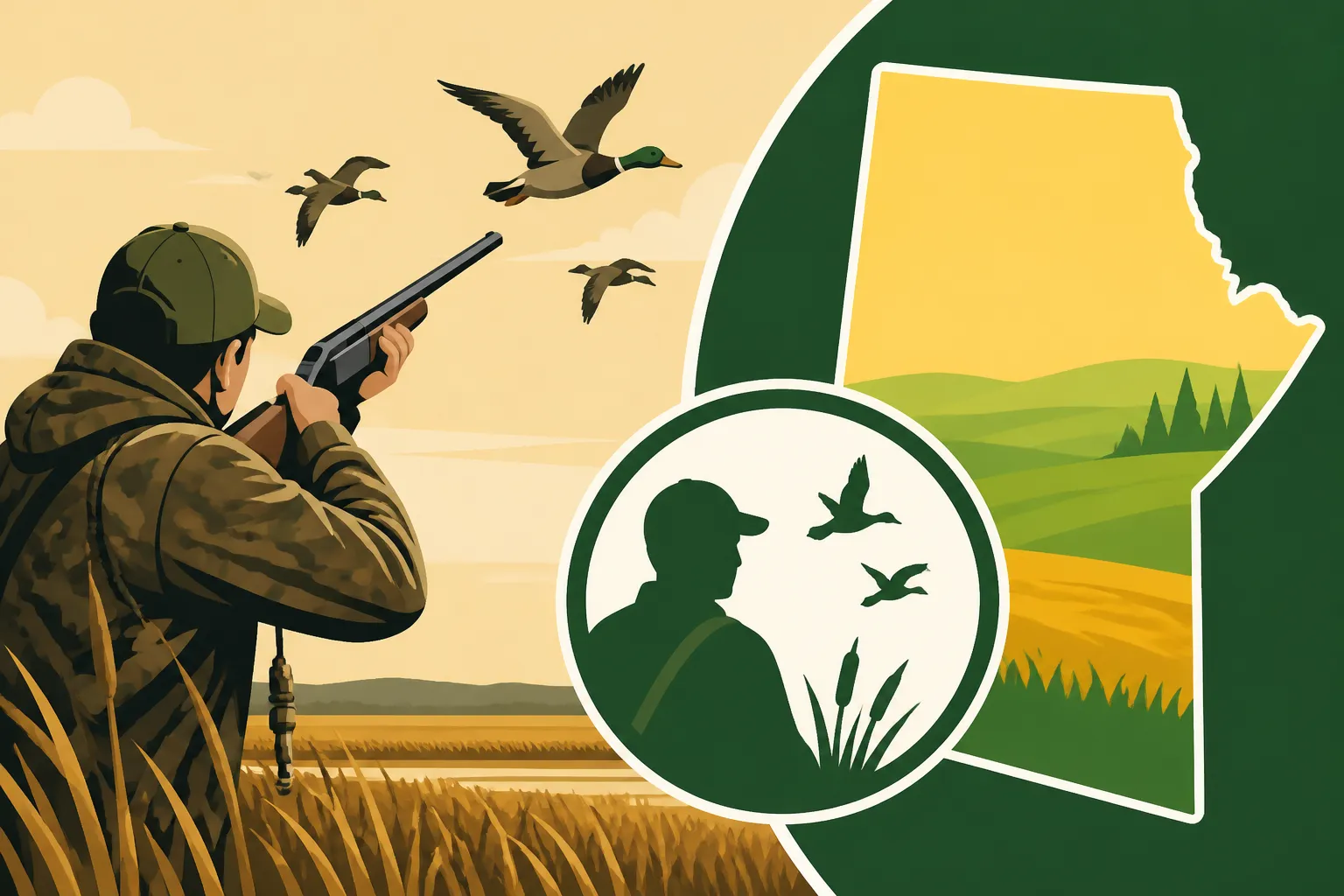
Here's the critical piece of information that every non-resident bird hunter needs to understand: as a non-resident of Saskatchewan, you are restricted to hunting migratory game birds for a maximum of two separate five-day periods within the province's established open season. This isn't a continuous ten-day period, nor can you spread out your days individually. It's strictly two distinct blocks of five consecutive days each.
How the 5-Day Terms Work
When you purchase your Saskatchewan Non-Resident Migratory Game Bird Licence, you'll be required to declare your chosen 5-day hunting periods. These periods must be consecutive within each block. For example, you can choose to hunt from September 10th to September 14th, and then again from October 5th to October 9th. You cannot hunt September 10th, then September 12th, and then September 15th, trying to string together non-consecutive days. Once a 5-day period begins, it counts for five days, regardless of whether you actually hunt every single one of those days. This means careful planning is essential to maximize your time in the field. It’s a system unique to Saskatchewan that often catches first-time non-resident bird hunters by surprise, so make sure to double-check these dates before committing. You'll find more details on these specific rules in our guide on Saskatchewan's Five-Day Game Bird Terms.
Example Scenarios for Planning Your Dates
Let's walk through a couple of examples to really drive this home.
- Scenario 1: Maximizing Two Trips. You might plan a trip in early September to target early-season ducks and geese. You could declare September 1st to September 5th as your first 5-day term. Then, if you want to experience the peak of the goose migration, you might return later in the fall and declare October 15th to October 19th as your second 5-day term. This allows for two distinct hunting experiences within the same season.
- Scenario 2: One Extended Trip. Perhaps you're making a single, longer trip to Saskatchewan. You can still only hunt migratory birds for two 5-day terms. So, if you arrive for two weeks, say from October 1st to October 14th, you might declare October 1st-5th as your first term, and October 9th-13th as your second term. This would leave you with some days in between where you could potentially hunt upland birds (if licensed and within season) or explore other activities. The key is that those two 5-day blocks are your only migratory bird hunting windows. If you happen to be on a longer trip, using a tool like the GoHunt app can help you keep track of which days are your designated migratory bird hunting days and which days might be open for other hunting pursuits or scouting.
Planning Your Saskatchewan Bird Hunt as a Non-Resident
Successfully planning a non-resident bird hunt in Saskatchewan requires careful attention to detail, especially with the 5-day term limitations. It’s not just about booking flights and packing gear; it’s about strategically aligning your hunting days with peak migration and prime field conditions.
Logistics and Timing Your Visit
The timing of your visit is paramount. Early September offers fast-paced duck hunting and resident geese, while late September through October often brings the massive waves of migrating geese. Depending on what species you’re most interested in, you'll want to schedule your two 5-day periods accordingly. Many hunters choose to use one period early in the season for ducks and smaller geese, and another later for the big Canada goose push. Remember to factor in travel days, scouting days, and any days where you might focus on upland birds if you have the appropriate license. Consider flying into major hubs like Saskatoon (YXE) or Regina (YQR) and renting a vehicle, as much of the best bird hunting takes place in the agricultural heartland, a reasonable drive from these cities. For those considering an outfitter, understanding Why Non-Residents Need an Outfitter can provide valuable insights, though many bird hunters opt for a self-guided experience.
Getting the Right Licences and Permits
Before you even step foot in a stubble field, you need the correct paperwork. As a non-resident, you'll need:
- A Saskatchewan Wildlife Habitat Certificate: This is a base requirement for all hunters in the province.
- A Saskatchewan Non-Resident Migratory Game Bird Licence: This is the provincial licence that outlines your two 5-day terms.
- A Federal Migratory Game Bird Hunting Permit and Canadian Wildlife Habitat Conservation Stamp: This is a federal requirement for anyone hunting migratory birds anywhere in Canada. You can purchase this online from Environment and Climate Change Canada.
It's also essential to confirm all requirements for Saskatchewan Migratory Bird Permits well in advance of your trip. Don't forget any required hunter education certification from your home state or province, as you might need to prove it.
Scouting and Gaining Land Access
Unlike some other jurisdictions, Saskatchewan has a strong tradition of private land ownership, and most of the prime agricultural land where waterfowl feed is privately held. This means getting landowner permission is absolutely essential. You cannot just pull off the road and hunt without it.
- Scouting: This is where modern tools shine. Using satellite imagery apps like GoHunt can be invaluable for identifying potential fields, water sources, and roosting areas. You can pre-scout from home, marking promising sections. Once you're on the ground, traditional road-scouting at dawn and dusk to locate bird patterns is key. Observing flight lines, feeding habits, and roosting locations will inform where you need to seek permission. Our guide on Scouting Fields for Saskatchewan Waterfowl offers more in-depth tips.
- Permission: Once you've identified a field, the next step is to knock on doors. Be polite, respectful, and prepared to be told "no" occasionally. Many landowners are happy to grant access to courteous hunters. It's a good practice to offer to share some of your harvest. Remember, getting permission for Getting Permission for a Goose Field can make or break your hunt.
Comparison of Hunting Days for Migratory Birds (Non-Resident vs. Resident)
| Hunter Type | Migratory Bird Hunting Days | Upland Bird Hunting Days | Key Requirement |
|---|---|---|---|
| Non-Resident | Two 5-day periods (10 days total) | Full season (with provincial license) | Declare 5-day periods in advance |
| Resident | Full season (no specific day limits within season) | Full season (with provincial license) | Provincial license only |
Note: Both hunter types require a Federal Migratory Game Bird Hunting Permit.
Important Considerations Beyond the Days Afield
Your bird hunting experience in Saskatchewan involves more than just the number of days you can hunt. There are other crucial regulations and ethical considerations that every non-resident hunter must be aware of to ensure a legal, safe, and enjoyable trip.
Non-Toxic Shot and Blaze Orange Rules
For all migratory bird hunting in Saskatchewan, and indeed across Canada, you must use non-toxic shot. This is a federal regulation designed to protect waterfowl from lead poisoning, which can occur when birds ingest spent lead pellets. Make sure your shotgun shells are clearly marked as "non-toxic" (steel, bismuth, tungsten, etc.) before you arrive. This applies to all ducks, geese, and cranes. Read more about Non-Toxic Shot Requirements for Waterfowl to ensure compliance.
Regarding blaze orange, while it's a mandatory requirement for big game hunting in Saskatchewan, it is not specifically mandated for migratory bird hunting when you are in a stationary blind or concealed. However, if you are walking up upland birds or moving through cover, especially during the big game season, wearing blaze orange is highly recommended for safety. Always prioritize safety, and if there's any doubt, wear it.
Respecting Landowners and Local Communities
Saskatchewan's hunting culture thrives on good relationships between hunters and landowners. When you're out Hunting a Saskatchewan Quarter Section or any private land, always be an exemplary ambassador for hunting. This means:
- Always ask for permission, every time. Even if you've hunted there before, check in.
- Drive respectfully on rural roads. Be mindful of dust, livestock, and children.
- Close all gates. This is non-negotiable.
- Don't litter. Pack out everything you pack in, and perhaps a little extra.
- Report any damage or issues you notice. This builds trust.
- Offer game meat or a small gift as a thank you. A gift card for a local business or a thank-you note goes a long way.
These actions not only ensure you'll be welcomed back but also help maintain a positive image for all hunters. The goodwill you foster directly impacts the future of hunting access for everyone. Utilizing tools like the GoHunt app can also help you identify property boundaries with greater accuracy, ensuring you only approach the correct landowners for permission.
Hunter Safety and Ethical Practices
Saskatchewan's diverse landscapes offer incredible hunting, but with great opportunity comes great responsibility. Always follow the fundamental rules of firearms safety: treat every firearm as if it's loaded, always point the muzzle in a safe direction, be sure of your target and what is beyond it, and keep your finger off the trigger until you're ready to shoot.
Ethical hunting also means making clean, humane shots, retrieving all downed birds, and adhering to bag and possession limits. Knowing your effective shooting range and not attempting shots beyond your skill level is paramount. Consider taking extra time to set up your spread and concealment when Field Hunting Geese in Saskatchewan Stubble to ensure birds are committed and within range. Furthermore, understanding how to handle and care for your game meat, especially if you're dealing with varying fall temperatures, is crucial. Our article on Meat Care in Saskatchewan's Cold Snaps can provide useful advice. The goal is to hunt responsibly, respect the game, and uphold the traditions of fair chase.
Disclaimer
Please note that hunting regulations can change. While every effort has been made to provide accurate and up-to-date information, it is the hunter's responsibility to consult the official Saskatchewan Hunters' and Trappers' Guide and federal migratory bird regulations for the current year before planning and undertaking any hunting activities.