Hunting a Cypress Hills Timber Pocket
Hunting a timber pocket in Saskatchewan's unique Cypress Hills can feel like cracking a secret code. Unlike the wide-open prairie or the dense boreal forest, these isolated, often steep, forested areas hold deer differently, presenting a challenge for hunters accustomed to other terrains. This guide will walk you through understanding these pockets, effective scouting, and proven hunting strategies to increase your success in this one-of-a-kind landscape.
Understanding the Cypress Hills Ecosystem and Deer Behavior
The Cypress Hills stand as an anomaly in the vast Saskatchewan landscape—a plateau of elevated terrain, forested slopes, and deep coulees that remained unglaciated during the last ice age. This unique geological history has created a habitat distinct from anything else in the province, and it's crucial to understand this to effectively hunt its timber pockets.
Unique Habitat Features
Unlike the endless stretches of aspen parkland or the dense coniferous forests of the north, the timber pockets in the Cypress Hills are often isolated stands of Lodgepole Pine, Spruce, and Aspen, nestled within rugged coulees and along steep escarpments. These pockets can range from a few acres to much larger blocks, often surrounded by open prairie or cultivated land. The elevation changes here are significant for Saskatchewan, creating microclimates that influence vegetation and animal behavior. Deer, particularly mature bucks, use these timbered areas for thermal cover, bedding, and security, especially when pressured. They offer refuge from the harsh prairie winds and deep snows, providing both food sources (like browse and mast crops) and thick sanctuary. It’s not uncommon to find areas with incredibly thick underbrush and fallen timber, making travel difficult but providing ideal hiding spots for wary deer.
The mix of conifer and deciduous trees provides diverse forage throughout the year. In the spring and summer, deer will browse on aspen and willow new growth. As fall progresses, they might seek out areas with berry bushes or even scattered oak patches if present, though these are less common. Winter sees them relying heavily on conifer needles and whatever accessible browse they can find, often yarding up in the thickest timber pockets where snow depth is manageable and thermal cover is best. Recognizing these habitat nuances is your first step to success. Understanding How Deep Snow Moves Deer Into Cover is especially important in the Cypress Hills.
Deer Movement Patterns
Deer in the Cypress Hills don't behave exactly like their prairie or forest fringe cousins. While they still utilize field edges for feeding, their primary security lies deep within the timber pockets and the rugged terrain. During the early morning and late evening, deer will often move out from the timbered coulees to feed in adjacent agricultural fields or native grasslands. However, midday activity, especially during hunting season, often sees them retreating to the densest parts of the timber. Bucks, particularly mature ones, will use the steepest, most unaccessible timbered slopes as bedding areas. They'll often bed on benches or ledges that offer excellent visibility downwind and upwind, allowing them to detect threats from multiple directions.
The rut, which typically peaks in early to mid-November, shifts these patterns slightly. Bucks become more mobile, cruising timber edges and checking traditional scrape lines within the woods, but they still heavily rely on the timber for cover. During the hunting season, you'll often find that deer will skirt the edges of these timber pockets, using the transition zones between dense cover and open areas as travel corridors. Understanding these corridors and where deer funnel through pinch points—natural constrictions in the landscape—is paramount. Think about how deer move from a bedding area in one timber pocket to a feeding area in another, or to a water source. These movements are often dictated by the topography, using the folds and draws of the land to remain concealed.
Scouting Strategies for Timber Pockets
Effective scouting in the Cypress Hills is a blend of digital homework and on-the-ground legwork. Given the rugged and often private land nature of much of the region, doing your homework before you ever set foot in the woods is crucial.
Pre-Season Digital Scouting
Before you even leave your couch, modern technology offers incredible insights. Satellite imagery through platforms like GoHunt is invaluable for breaking down the vastness of the Cypress Hills. Start by identifying the timber pockets—these will show up as darker green areas contrasting with the lighter greens and yellows of grasslands and fields. Look for pockets that offer a combination of dense cover, proximity to water sources (sloughs, dugouts, springs), and access to potential feeding areas like agricultural fields or native browse. Pay close attention to the contours of the land. Steep slopes, narrow draws, and benches are all key features. Use the topographical layers to identify potential bedding areas on high ground within the timber, escape routes along ridges, and natural funnels where deer traffic might be concentrated.
Identify potential access points, but also mark areas that appear inaccessible. Often, the harder it is to reach, the more likely a mature buck is using it as a sanctuary. You'll want to mark potential stand locations near pinch points, saddles, or areas where multiple trails converge. Moreover, use tools like GoHunt to check property boundaries and landowner information. This allows you to focus your physical scouting efforts on land you can legally access, whether it's Crown land or private land where you've secured permission. Don't forget to check out Scouting With Satellite Imagery in Saskatchewan for more tips on digital reconnaissance.
On-the-Ground Reconnaissance
Once you’ve done your digital homework, it's time to hit the ground. Ideally, this happens well before the season, perhaps in late summer or early fall, to minimize disturbance during hunting season. Your goal is to confirm what you saw on the maps and find fresh sign. Walk the perimeter of promising timber pockets first, looking for heavily used trails entering and exiting the woods. Pay attention to how deer transition from open areas into the timber—they often use specific, well-worn paths. Once you venture inside, look for rubs and scrapes, which are clear indicators of buck activity. Rubs tell you where bucks are marking territory and travelling, while scrapes often indicate primary rutting activity areas.
Follow faint trails deeper into the timber, especially focusing on benches and ridges. Look for bedding areas, identifiable by flattened grass or bare earth, often with good views in one direction and thick cover behind. During your scouting, pay attention to prevailing wind directions and how they swirl in the varied topography of the Cypress Hills. A perfect stand location on a map might be useless if the wind is constantly swirling and giving your scent away. Mark these findings, especially fresh sign, on your GoHunt app or physical map. Understanding Reading Whitetail Sign in Saskatchewan Bluffs can greatly aid your ground scouting efforts, helping you interpret what you find.
Effective Hunting Methods for These Unique Areas
Hunting Cypress Hills timber pockets requires adaptability and a strategic approach that respects the challenging terrain and the wary nature of the deer that call it home.
Still-Hunting and Spot-and-Stalk
Given the often-dense nature of these timber pockets and the propensity for deer to bed in thick cover, still-hunting can be incredibly effective. This method involves moving slowly, taking a few steps, then stopping for several minutes to glass and listen. Use your binoculars constantly, not just for scanning open areas, but for picking apart the dense timber for a horizontal line that shouldn't be there, a flick of an ear, or the glint of an antler. The key is stealth: move quietly, use the wind to your advantage, and be patient. Focus on areas where you've identified bedding sign or heavy trail crossings. Still-hunting is particularly effective during mid-day when deer are often bedded down. You're not trying to cover miles; you're dissecting small areas with extreme focus.
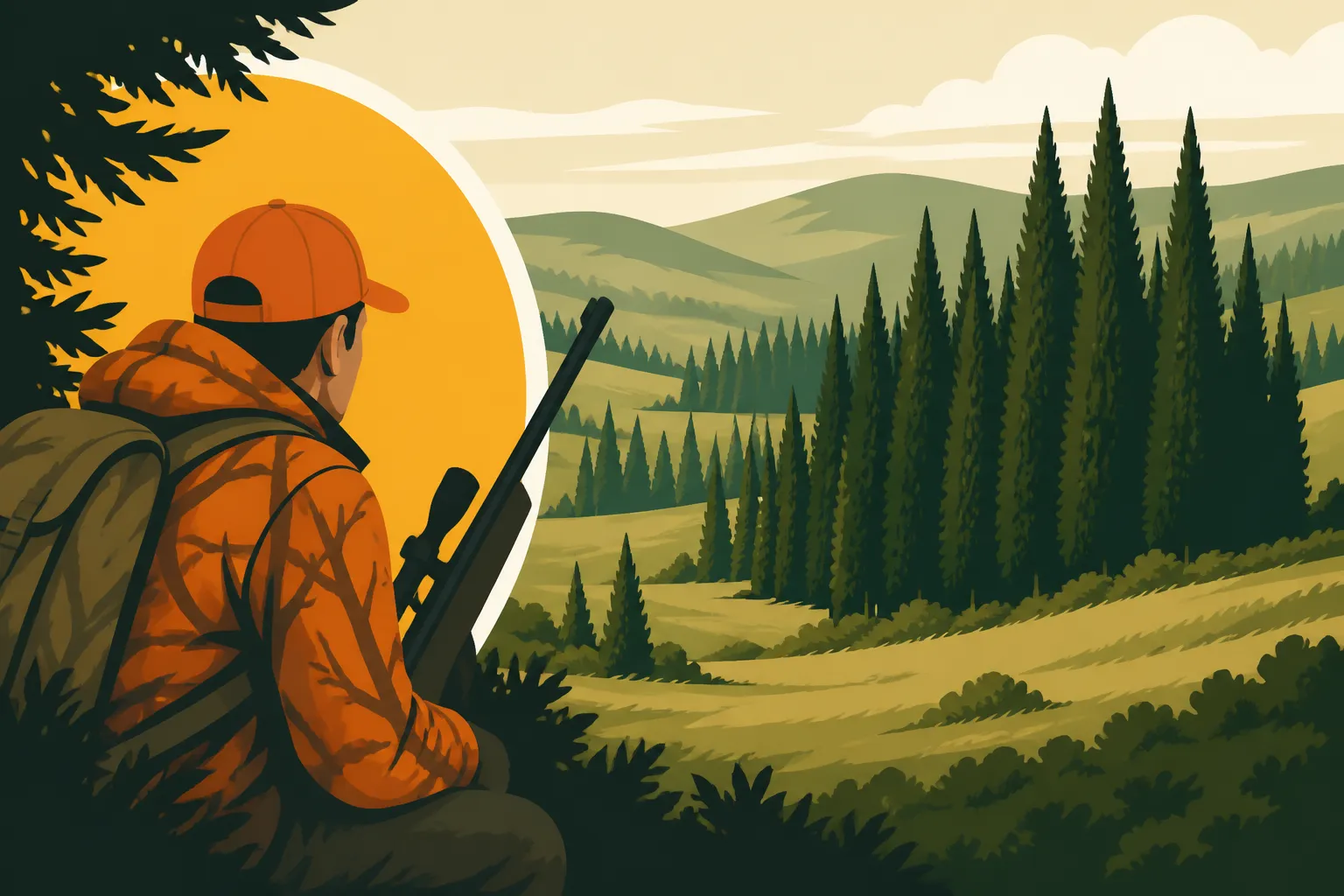
Spot-and-stalk is another viable tactic, especially if you can get to a high vantage point overlooking timbered coulees and pockets. This often involves climbing one of the higher prairie ridges to glass below into the timbered slopes. If you spot a deer, the challenge then becomes planning a stalk through the broken terrain and dense cover without being seen, heard, or smelled. This method is best suited for cooler, windier days when the rustling leaves or swaying branches can help mask your movement and scent. A successful spot-and-stalk often means taking a circuitous route, sometimes even backing out and coming in from a completely different direction, always mindful of the wind and terrain. Remember, these are not flat-land deer; their escape routes and sightlines will often be uphill or into the densest parts of the coulees.
Stand Hunting Considerations
While mobile methods are often preferred, strategically placed stands can be highly effective, especially during the rut or in specific feeding/bedding corridors. The challenge in the Cypress Hills is finding a spot where a stand offers a clear shooting lane and a consistent wind. Look for pinch points where deer are funneled by topography, such as a narrow neck of timber between two coulees, or a low saddle connecting two larger timbered blocks. These are natural travel corridors. Similarly, stand placement along the edges of timber pockets, especially those bordering agricultural fields or prime browse areas, can be productive during feeding times.
Consider elevated stands or ground blinds that offer concealment and a good view. Poplar trees and Lodgepole Pines often provide good natural cover for treestands. If using a ground blind, ensure it's brushed in well and set up far enough in advance that deer become accustomed to its presence. Pay meticulous attention to your entry and exit routes to avoid spooking deer. The goal is to get into and out of your stand without disturbing the area. On those cold, late-season hunts, a well-placed, heated ground blind can make all the difference, allowing you to sit longer and take advantage of deer movements during the coldest parts of the day. For strategies in another type of challenging terrain, you might consider tips for Hunting a Saskatchewan Bush Bluff.
Gear and Safety Considerations for Mountainous Terrain
Hunting the Cypress Hills is not like hunting the flat prairie. The terrain demands specific gear choices and a heightened awareness of safety.
Essential Equipment
Your gear choices should prioritize durability, warmth, and versatility. Layering is critical for Saskatchewan's unpredictable fall and winter weather. Start with moisture-wicking base layers, add insulating mid-layers like fleece or down, and top it off with a waterproof and windproof outer shell. Good quality, insulated, waterproof boots with excellent ankle support are non-negotiable for navigating steep, uneven terrain, especially if you're Hunting Mule Deer After a Snowfall. The cold can be bone-chilling, so reliable gloves, a warm hat, and a neck gaiter are also crucial.
Beyond clothing, a sturdy backpack capable of carrying extra layers, water, snacks, first-aid, and game processing tools is essential. Given the ruggedness, having a reliable GPS device or a smartphone app like GoHunt with downloaded maps is paramount for navigation and marking game locations. A good set of binoculars, preferably 10×42 or 12×50, will be your best friend for picking apart the dense timber and distant slopes. Don't forget a headlamp, a knife for field dressing, and rope or game bags for packing out meat. Blaze orange, as required by Saskatchewan regulations, should also be part of your outer layer for safety, ensuring you meet Saskatchewan Blaze Orange Rules.
Navigating Challenging Terrain
The varied topography of the Cypress Hills, with its steep hills, deep coulees, and thick timber, presents unique navigational challenges. Always know your route in and out, and carry a compass as a backup to your GPS. The dense timber can disorient you quickly, and cell service can be spotty. When traversing steep slopes, take your time, watch your footing, and use trekking poles for stability, especially when carrying a heavy pack. Pay attention to changes in elevation and how they impact your exertion levels. Carrying enough water is critical, even in cooler weather, as strenuous activity on uneven ground can lead to dehydration.
One of the biggest safety concerns is retrieving game from steep, timbered areas. If you're lucky enough to harvest an animal in a hard-to-reach spot, have a plan for extraction. This might involve quartering the animal and making multiple trips, or using a game cart where feasible, though carts are often difficult to employ in the steepest sections. Always hunt with a buddy or let someone know your exact hunting location and expected return time. The Cypress Hills are beautiful but unforgiving if you're unprepared. Thinking about Hunting Saskatchewan Winter Weather Safely will serve you well in this unique environment.
| Aspect | Open Prairie Hunting | Cypress Hills Timber Pocket Hunting |
|---|---|---|
| Primary Challenge | Spotting game at long distances, lack of cover | Navigating rugged terrain, dense cover, swirling winds |
| Typical Habitat | Grasslands, stubble fields, shelterbelts | Lodgepole Pine/Spruce/Aspen pockets, deep coulees |
| Scouting Focus | Field edges, pinch points, feeding patterns | Bedding areas, escape routes, thermal cover, funnels |
| Hunting Method | Spot-and-stalk (long range), field edges, blinds | Still-hunting, close-quarters spot-and-stalk, strategic stands |
| Gear Emphasis | Optics, long-range rifle, insulated clothing | Rugged boots, GPS, layering, durable pack, binoculars |
| Deer Behavior | More open movement, cautious about sky-lining | Utilizes topography for concealment, relies on thick cover for safety |
Disclaimer
Please remember that hunting regulations and conditions can change. Always consult the most current Saskatchewan Hunters' and Trappers' Guide and local land access rules before planning your hunt. Safety should always be your top priority in the field.