Saskatchewan’s Record Elk and Where It Fell
It’s easy to get lost in the sheer scale of Saskatchewan, and when you dream of finding a record-book elk, that vastness can feel even more daunting. Most hunters spend years, if not decades, pursuing a mature bull, let alone one that could etch its name in the record books. This guide isn't just about one specific animal; it’s about understanding the almost mythical conditions that allow such giants to exist in our province, inspiring you to understand the potential of Saskatchewan’s elk herds and where your own trophy dream might just become a reality.
The Legend of Saskatchewan's Record Elk
When we talk about a "record elk," we're generally referring to an animal that scores exceptionally high according to established organizations like Boone & Crockett or Pope & Young. These organizations meticulously measure antlers, considering everything from beam length and mass to tine length and spread, accounting for both typical (symmetrical) and non-typical (asymmetrical, with abnormal points) characteristics. A true record elk is more than just big; it's a genetic marvel that has lived long enough in ideal conditions to express its full potential.
Saskatchewan, while perhaps more widely known for its monstrous whitetail deer, has quietly produced some truly spectacular elk over the years. The story of the record elk for our province is often whispered among hunters, a testament to the wildness and rich habitat that can be found here. These aren't just big animals; they are survivors, wise old bulls that have evaded hunters, predators, and harsh winters for many seasons. Each point on their impressive antlers tells a story of growth and resilience. The sheer size and mass of these antlers are often jaw-dropping, making them a true crown jewel for any hunter fortunate enough to encounter one. It truly underscores the potential within our provincial herds, proving that Saskatchewan is a legitimate destination for pursuing magnificent animals, as any hunter considering Elk Hunting in Saskatchewan will tell you.
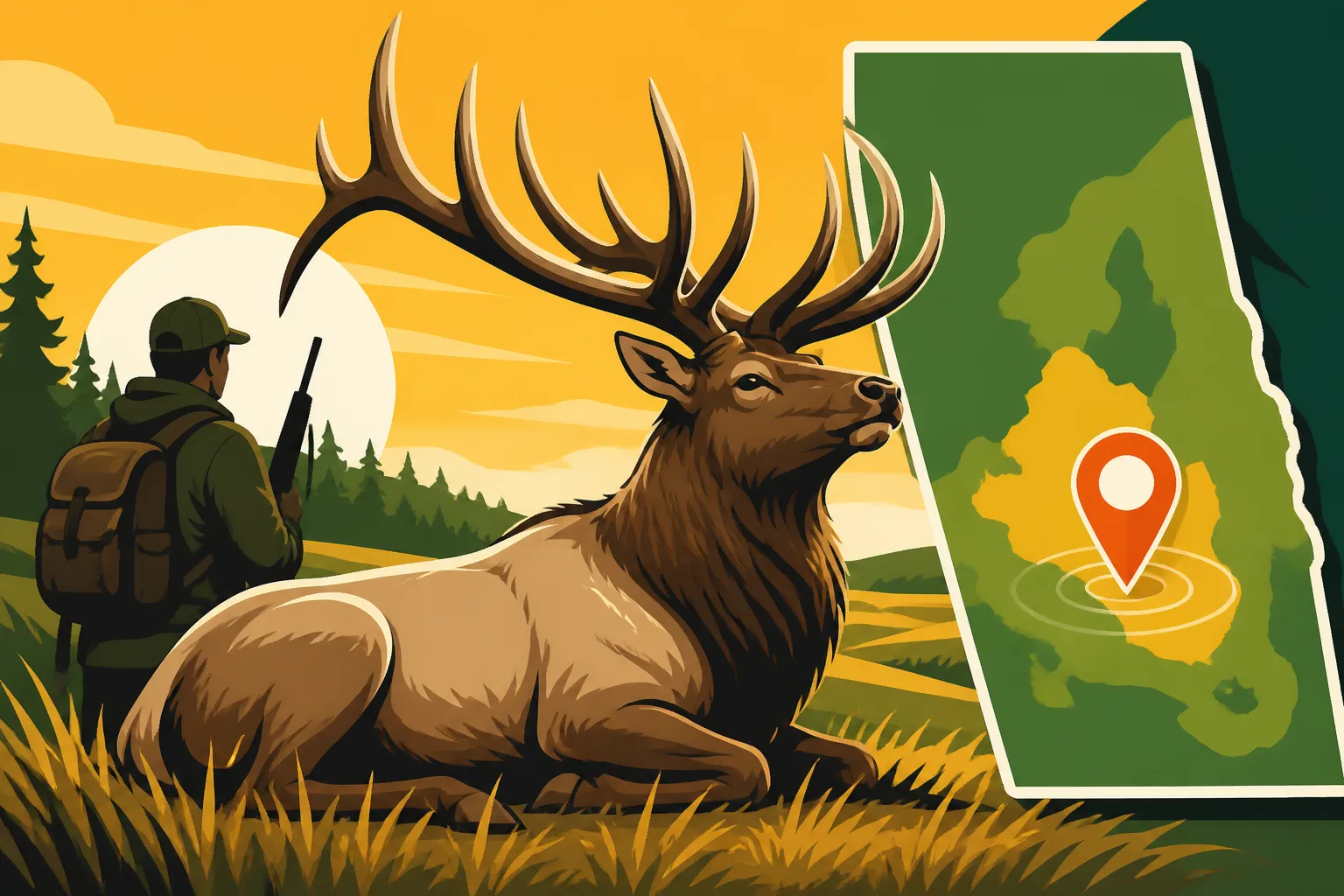
While specific details about the provincial record elk—the exact date, the hunter, or the precise quarter section—can sometimes be elusive due to the privacy often afforded to such a momentous harvest, the general consensus points to the richer, more sheltered areas of the province. These areas combine ample forage with dense cover, providing everything a bull needs to grow old and develop an impressive rack. Such a record elk is a source of immense pride for the province, showing what can happen when healthy populations, rich habitat, and sound game management practices align. It certainly fuels the fire for anyone dreaming of adding their own entry to Saskatchewan's Trophy Record Book.
Where Giants Roam: Understanding Saskatchewan's Elk Habitat
Elk are majestic creatures, and unlike deer, they have more specific habitat requirements, especially when it comes to supporting the kind of growth needed for record-book antlers. In Saskatchewan, you won't find significant elk populations just anywhere. They tend to be concentrated in particular regions where the landscape offers a crucial combination of food, cover, and water, allowing these animals to thrive and reach their full potential.
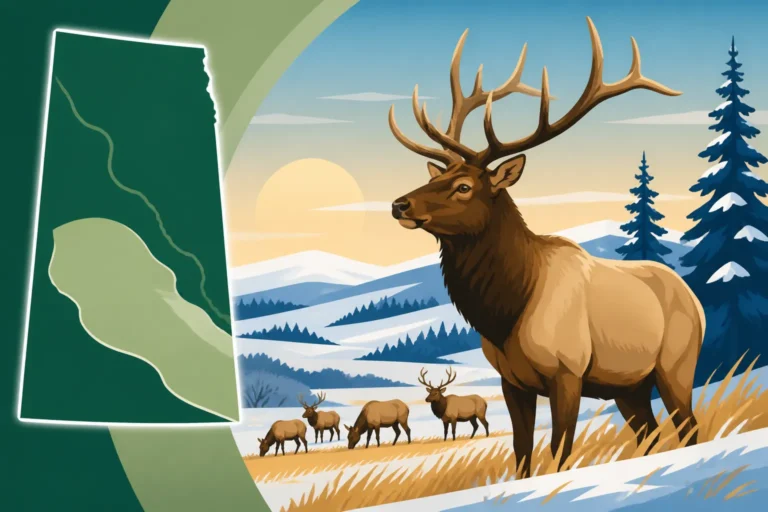
One of the prime areas for elk in Saskatchewan is the vast forest fringe. This transitional zone, where the northern boreal forest gives way to the aspen parkland and agricultural fields, provides an almost perfect environment. Here, the elk can utilize the dense forest cover for security, bedding, and thermal protection, especially during harsh winters. When you're Hunting the Forest Fringe for Big Bucks, you're often in prime elk country too. The edges of these forests often border agricultural fields, offering an irresistible buffet of high-energy forage like oats, wheat, and canola. This consistent access to rich, nutritious food sources throughout the year is absolutely vital for developing impressive antler growth and body mass. The cover of the bush allows older bulls to escape pressure and live long enough to fully mature.
Beyond the forest fringe, significant elk herds can also be found in specific river valleys and upland areas that break up the prairie landscape. Places like the Porcupine Hills or parts of the Qu'Appelle Valley offer unique pockets of dense brush, timber, and rugged terrain, providing the necessary security and diverse forage. While not as widespread, these isolated areas can hold incredibly healthy populations due to their natural sanctuaries. Areas like the Cypress Hills also support a unique, resilient herd. When discussing Where Saskatchewan's Elk Herds Live Today, it's clear these distinct ecosystems play a critical role. Hunters often find success pursuing these animals in the more rugged, less accessible pockets of these regions, where elk can find refuge and grow without constant human disturbance.
The challenges of hunting in these diverse landscapes are real. In the forest fringe, visibility can be limited, requiring patience and a keen understanding of elk movement patterns. In the more open parkland, elk become incredibly wary, often moving under the cover of darkness or in the thickest bluffs. Understanding these habitat nuances is key to knowing where to focus your efforts. Many hunters leverage tools like GoHunt to analyze habitat maps and identify potential elk strongholds before ever setting foot in the field, helping them strategize their approach to areas that might hold a monster bull.
The Anatomy of a Record-Book Elk: Factors for Growth
Growing an antler rack large enough to compete in the record books is not a simple feat; it's a complex interplay of several critical factors that must align perfectly over many years. In Saskatchewan, we're fortunate to have many of these elements in abundance, contributing to our reputation for producing truly massive elk.
First and foremost are genetics. A bull elk must have the inherent genetic blueprint for massive antler growth. This isn't something a hunter can control, but healthy, diverse elk populations, like those found in Saskatchewan, naturally produce individuals with superior genetics. These genes dictate the potential for overall size, mass, and the number of points an animal can grow. When you look at the sheer size and presence of What a Bull Elk Weighs in Saskatchewan, it's evident that the gene pool here is capable of producing truly impressive animals.
Nutrition is arguably the most crucial environmental factor. Elk are ruminants, and they require a tremendous amount of high-quality forage to fuel their large bodies and, critically, to grow those impressive antlers year after year. Saskatchewan's agricultural landscape, particularly in the forest fringe and parkland areas, offers an almost unparalleled food source. Access to protein-rich crops like peas, lentils, oats, and alfalfa, combined with natural browse and grasses, provides a consistent, high-energy diet. This abundance of nutrients not only helps the elk survive harsh winters but also provides the building blocks for rapid and sustained antler growth during the spring and summer. The impact of agricultural areas on game size cannot be overstated, especially when you consider Hunting Elk on Saskatchewan Grain Land and the nutritional boost those fields provide.
Age is the final, non-negotiable component. A bull simply cannot grow a record-class rack if it doesn't live long enough. Elk typically reach their prime antler growth years between 7 and 11 years of age, though some exceptional individuals can continue to produce impressive antlers beyond that. This means a bull must evade predators (both four-legged and two-legged) for many seasons. Sound game management, including specific draw allocations and controlled hunting pressure in certain zones, plays a vital role in allowing a portion of the bull population to reach these advanced ages. This is a critical factor in why our province occasionally produces such monsters. Understanding the growth cycles and knowing When the Elk Rut Peaks can also give insights into the physical demands and recovery periods these animals undergo annually, impacting their long-term antler development.
Here's a quick look at how these factors contribute to a truly magnificent elk:
| Factor | Impact on Antler Growth | Saskatchewan's Advantage |
|---|---|---|
| Genetics | Determines inherent potential for antler size & mass | Healthy, diverse populations with strong bloodlines |
| Nutrition | Fuels rapid development and sustained growth | Abundant agricultural crops and natural forage |
| Age | Allows for full expression of genetic potential | Effective game management and controlled hunting pressure |
| Habitat | Provides security, cover, and low-stress environment | Extensive forest fringe, parkland, and river valleys |
| Winter Stress | Can impact recovery and subsequent antler growth | Generally favorable winters, rich pre-winter food sources |
Pursuing Your Own Saskatchewan Elk Dream
While the prospect of tagging the next record elk is a truly rare aspiration, consistently hunting in Saskatchewan's best zones with patience and strategic planning can absolutely put you in a position for an incredible bull. The dream of a giant is what keeps many of us going, year after year, through the long waits and cold hunts.
One of the biggest hurdles for elk hunters in Saskatchewan is undoubtedly the draw system. Unlike some other species, elk hunting in most zones is allocated through a highly competitive draw. This means you can't just buy a tag over the counter and head out. You need to apply, build priority (in some cases), and hope your name is pulled. This system, while frustrating at times, is a key component of why Saskatchewan produces such big elk, as it helps manage harvest rates and allows bulls to mature. Understanding Saskatchewan's Big Game Draw is step one, and it requires careful planning, often years in advance, to choose the right zone to apply for. Many hunters use resources like GoHunt to research draw odds and historical success rates for specific zones to maximize their chances.
Once you secure that coveted tag, scouting becomes paramount. Elk are intelligent and elusive, especially the older, bigger bulls. They know how to survive. Pre-season scouting, both in person and using modern tools, is absolutely essential. Satellite imagery, which can be explored in depth when Scouting With Satellite Imagery in Saskatchewan, allows you to identify potential bedding areas, travel corridors between cover and food sources, and water sources. Look for areas with dense cover adjacent to agricultural fields, as this is often where the biggest bulls will stage before heading out to feed. Fresh sign—large tracks, droppings, rub lines, and wallows—will tell you if elk are using the area.
During the season, tactics vary based on the habitat and time of year. In early season archery, or during the rifle rut, calling can be incredibly effective. Mastering bugles, cow calls, and chuckles can draw in curious bulls, especially when they're actively searching for cows or challenging rivals. This is particularly true if you are Bugling Elk on a Farm Edge, where sound travels and bulls are often concentrated. For late-season hunts, or in areas with more open visibility, spot-and-stalk can be deadly. Glassing large areas from elevated positions at dawn and dusk to locate feeding animals, then carefully planning an approach, requires skill and patience. Often, hunting near the edges of prime agricultural lands, as discussed in Hunting Elk on Saskatchewan Grain Land, can be incredibly productive, as elk will often move into these fields to feed during low light hours.
Remember, even after years of applying and extensive scouting, success is never guaranteed. But the pursuit of a Saskatchewan bull elk, particularly one with the potential to be a true giant, is an experience unlike any other. It’s a challenge that tests your patience, your skills, and your resolve, and it offers the potential for a memory that will last a lifetime.
Disclaimer
This article is for general informational purposes only and does not constitute professional advice. Laws, prices and regulations vary by location and change over time. Consult a qualified professional for guidance on your specific situation.