Hunting the Missouri Coteau
The Missouri Coteau in Saskatchewan is a legendary landscape for hunters, famed for its rolling hills, deep coulees, and incredible game habitat. Yet, its vastness and often fragmented nature can be incredibly intimidating for those who haven't spent much time there. This guide is all about helping you understand this unique hunting area, unraveling its secrets, and empowering you with the knowledge to pursue your quarry effectively in this truly special part of the province.
Unpacking the Unique Landscape of the Missouri Coteau
The Missouri Coteau isn't just another stretch of prairie; it's a geological marvel that stretches across southwestern Saskatchewan, a product of ancient glacial activity that left behind a complex tapestry of hills, depressions, and natural drainage systems. This dramatic topography is a stark contrast to the flat farmlands found elsewhere, and it profoundly impacts how game animals live and how hunters must approach their pursuit.
Glacial Moraines and Rolling Terrain
Imagine a landscape sculpted by colossal ice sheets, grinding and pushing earth into massive piles and ridges. That's essentially what created the Missouri Coteau. It's a land of glacial moraines, characterized by endless rolling hills, steep slopes, and countless depressions that hold water, creating marshes and potholes. This isn't flat, open country where you can see for miles in every direction. Instead, it’s a series of folds and undulations that hide draws and valleys, making it feel much more intimate and challenging to navigate. The elevation changes provide natural travel corridors and bedding areas for wildlife, far different from the typical shelterbelts or bluffs you might find in flatter agricultural zones.
Abundant Potholes and Native Grasslands
One of the defining features of the Coteau is its incredible density of potholes and sloughs. These wetland depressions, formed by melting glaciers, dot the landscape like a mosaic, providing critical water sources and habitat for a huge variety of wildlife, especially waterfowl. Surrounding these wetlands, and covering the hills themselves, are vast expanses of native grasslands. This isn't cultivated land for the most part; it's untouched prairie, often covered in dense grasses and brush that offer superb cover. This combination of water and thick cover means that animals rarely have to travel far for their basic needs, making the Coteau a true wildlife oasis. When you're out there, you'll notice how the terrain forces you to constantly adjust your sightlines and often makes long-range glassing a series of short, intensive scans rather than broad, sweeping views.
Key Game Species of the Missouri Coteau
The varied terrain and rich habitat of the Missouri Coteau make it a hotspot for several sought-after game species. Knowing which animals thrive here and understanding their habits in this specific environment is crucial for a successful hunt.
Whitetail and Mule Deer Pockets
While Saskatchewan is renowned for its large whitetail deer, the Missouri Coteau also boasts a healthy population of mule deer, often overlapping with whitetail range. Whitetails tend to favour the denser pockets of brush, the willow-choked coulees, and the edges of larger sloughs. They'll use the rolling hills to sneak around unseen, rarely exposing themselves on open hilltops. If you're Hunting a Saskatchewan River Valley nearby, you'll see similar patterns of deer using the deep cuts for cover and movement. Mule deer, on the other hand, often prefer the more open, sparsely treed coulee bottoms and the expansive native grasslands. They use their keen eyesight and incredible hearing to detect threats from afar, often bedding on higher ground to survey their surroundings. Glassing a Saskatchewan Coulee for Mule Deer is a prime tactic here, using the natural contours to your advantage. You'll often find both species sharing the same general area, though mule deer typically stick to the more exposed, broken terrain while whitetails cling to the thickest cover.
Waterfowl and Upland Bird Bonanza
The sheer abundance of potholes and small lakes throughout the Coteau makes it a paradise for waterfowl hunters. Ducks of all kinds—mallards, pintails, wigeon, canvasbacks, and more—thrive here, nesting in the surrounding native grasslands and feeding in the grain fields that occasionally break up the wild country. Pothole Hunting Prairie Ducks is a classic experience, often involving walking up to sloughs or setting up small decoy spreads. Geese also frequent the Coteau, using the larger water bodies for roosting and flying out to nearby agricultural fields to feed. Beyond the wetlands, the native grasslands and brushy draws are prime habitat for upland birds. Sharp-tailed grouse perform their spring dances on the numerous leks (dancing grounds) and are abundant throughout the fall. You can spend days Walking Up Sharp-Tailed Grouse in Saskatchewan, enjoying the crisp autumn air. Hungarian partridge, often found along the edges of fields and in dense brush, also offer fantastic hunting opportunities.
Predators and Other Wildlife
The rich prey base in the Coteau naturally attracts a healthy population of predators. Coyotes are ever-present, using the broken terrain and thick cover to stalk their meals. Their calls echoing across the hills at dawn or dusk are a common soundtrack to a Coteau hunt. You might also encounter red fox, badger, and various furbearers. The remote nature of some Coteau regions means you could also spot a variety of non-game animals, from deer and elk to various raptors circling overhead. Being aware of these other inhabitants not only enhances the hunting experience but also helps you read the land better. A sudden burst of commotion from a flock of sharptails might alert you to a coyote on the prowl, for instance.
Navigating Access and Planning Your Coteau Hunt
One of the biggest hurdles for hunters in the Missouri Coteau is navigating land access. Much of this prime habitat is privately owned, but there are also important public land opportunities if you know where to look and how to approach them.
Private Land Permission: The Golden Ticket
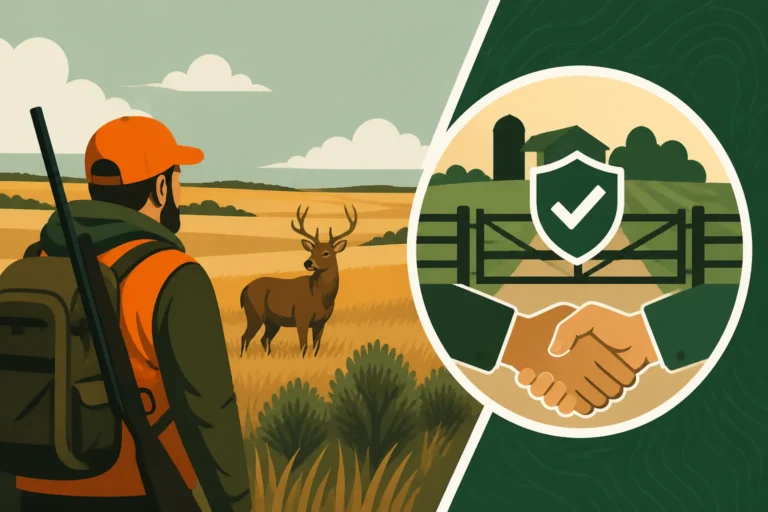
Given the agricultural patchwork that often borders or intertwines with the Coteau's wilder areas, much of the best hunting ground is on private property. Securing permission from landowners is often the "golden ticket" to hunting success here. This requires diligence, respect, and often, a bit of old-fashioned charm. Always approach landowners well in advance of the season, if possible. Dress neatly, be polite, and clearly state your intentions. Offer to share your game, help with chores, or assist with crop damage if you get lucky. Carrying a map, like those found on tools such as onX Hunt, can be incredibly helpful when discussing specific parcels of land. It allows you to clearly identify the quarter sections you're interested in and show the landowner exactly where you plan to be. Remember, a handshake and mutual respect go a long way in rural Saskatchewan. The principle of Knocking on Doors in Saskatchewan Farm Country is absolutely paramount here.
Unlocking Public Land and Community Pastures
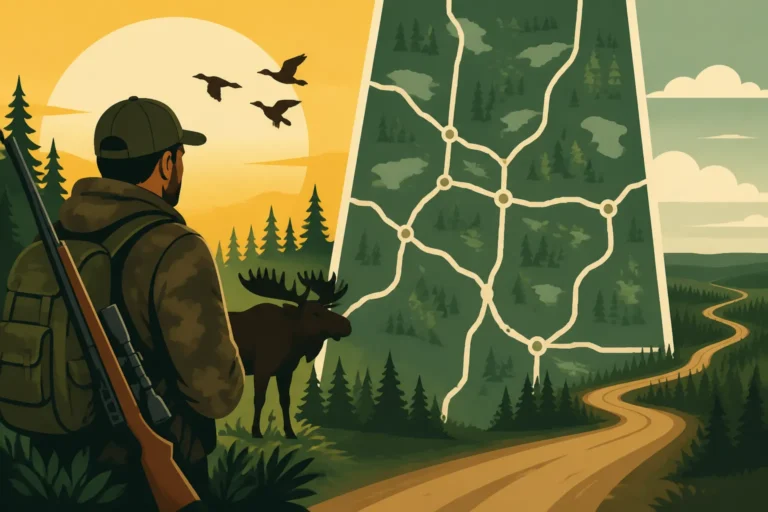
While private land dominates, there are still excellent opportunities on public lands. Saskatchewan's Crown land system has scattered parcels throughout the Coteau, though they can be less contiguous and harder to identify than in some northern zones. Mapping apps like onX Hunt are indispensable for layering satellite imagery with land ownership data, allowing you to pinpoint these public parcels right down to the quarter section. You can literally see the boundaries of Crown land, often denoted as "Provincial Crown" or "Federal Crown," which can then be cross-referenced with your physical location via GPS. This is a game-changer for finding those hidden gems.
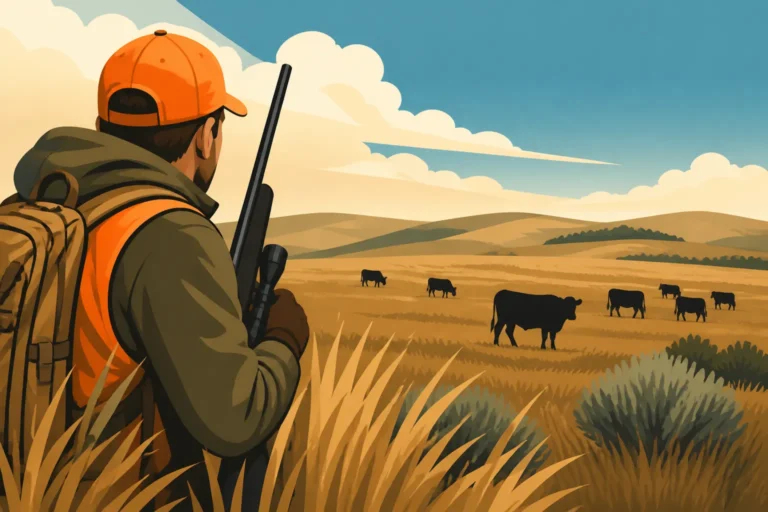
Additionally, Hunting a Saskatchewan Community Pasture is another excellent option. These pastures, managed provincially or federally, are large blocks of native grassland used for grazing livestock but are often open to hunting. Each pasture usually has a manager or board of directors you'll need to contact well in advance to understand their specific hunting regulations, access points, and any restrictions they may have in place to protect livestock. They are often incredibly helpful resources if you approach them respectfully. Always remember that cattle might still be present during hunting season, so exercise extreme caution and be aware of your surroundings.
Leveraging Technology for Land Navigation
In a landscape as complex and vast as the Missouri Coteau, technology is your friend. Paper maps are a good start, but digital tools elevate your scouting and navigation. Apps like onX Hunt allow you to:
- See Property Boundaries: Instantly identify private versus public land, including Crown land parcels, provincial parks, and community pastures. This helps you avoid accidental trespass and target areas where you have legal access.
- Identify Landowners: While it won't give you contact information directly, it often provides landowner names, which can be useful when you're doing your research or asking around in local communities.
- Scout from Home: Use satellite imagery to identify promising habitat features like coulees, willow runs, water sources, and potential bedding areas without putting boots on the ground.
- Track Your Movement: Keep track of where you've been, mark waypoints for sign, game sightings, or boundary lines, and ensure you're always aware of your location.
Another valuable tool, especially for overall hunt planning and draw strategy, is GoHunt. While onX Hunt focuses on in-field navigation and land ownership, GoHunt can provide broader insights into species distribution, draw odds, and general area analysis, which can be a complementary resource when deciding where in the Coteau to focus your efforts. Together, these tools can dramatically improve your planning and success rates by turning vast, intimidating landscapes into navigable hunting grounds.
Coteau Hunting Tactics for Success
The distinct characteristics of the Missouri Coteau demand specialized hunting tactics. What works on flat agricultural land won't always cut it here, and adapting your approach to the rolling hills and dense cover is key.
Mastering the Art of Glassing
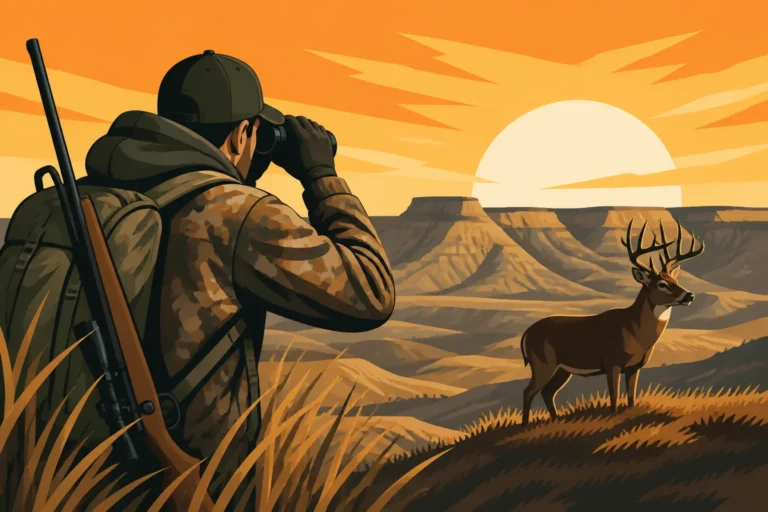
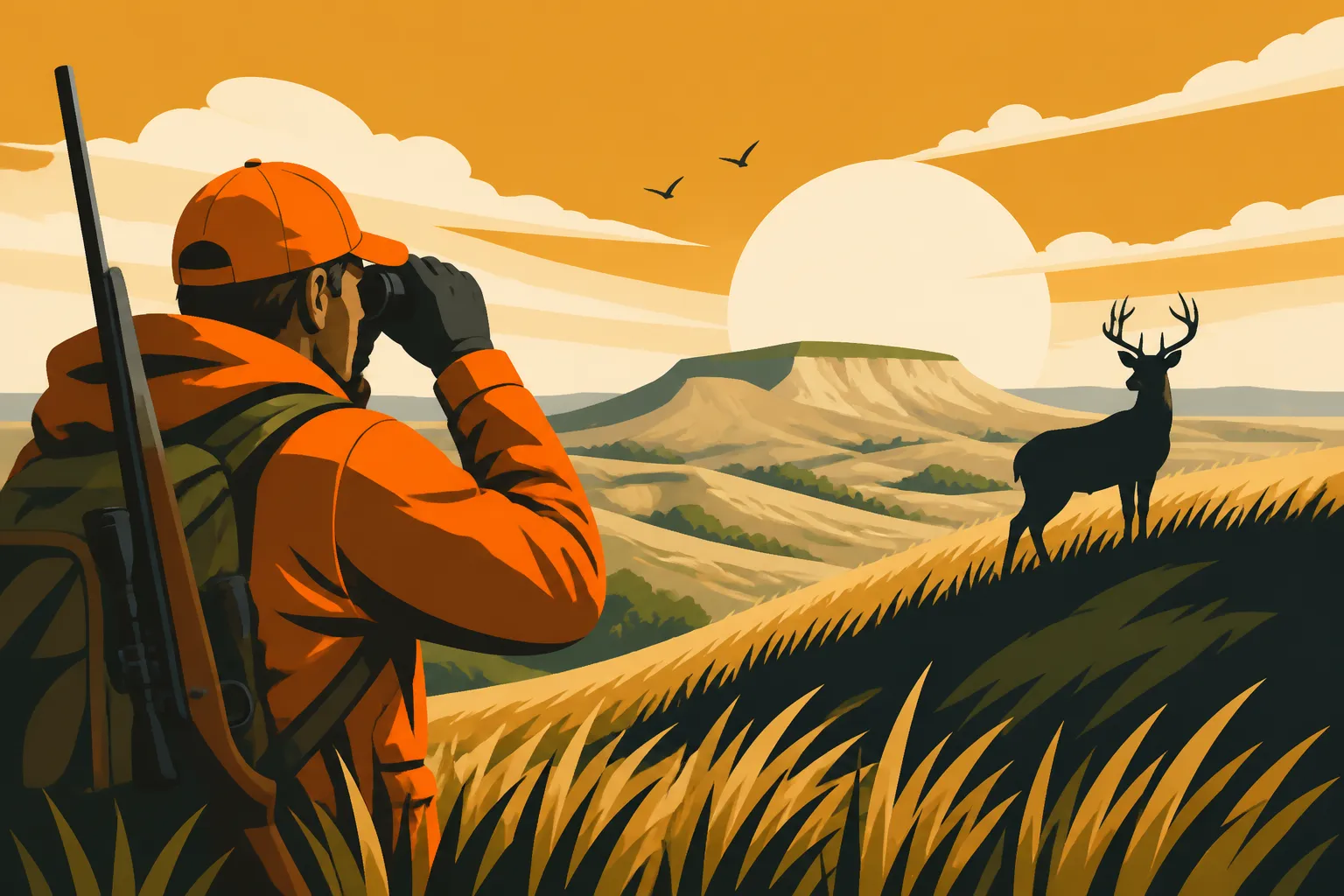
In a landscape defined by rolling hills and deep coulees, glassing is perhaps the most important skill you can hone. Unlike open prairie where you might spot a deer a mile away, in the Coteau, you're looking for small clues in a sea of broken terrain. Find the highest point you can access, set up a good pair of binoculars or a spotting scope on a tripod, and systematically pick apart the opposing hillsides and coulee bottoms. Pay close attention to shaded areas, the edges of willow thickets, and any subtle movement. Animals often blend in incredibly well with their surroundings, so look for horizontal lines (a deer's back) in vertical cover (tall grass or brush). Hunting a Prairie Coulee Bottom often starts with careful glassing from above. Take your time; spend at least 15-20 minutes systematically scanning an area before moving on. This method is particularly effective for mule deer, which tend to be less skittish if they feel secure in their bedding location.
Still-Hunting and Stalking the Breaks
Once you've spotted an animal or identified a promising area, the next challenge is getting within range. Still-hunting—moving slowly and deliberately, stopping frequently to observe—is highly effective in the Coteau's varied cover. Use the topography to your advantage, staying below ridgelines and using draws and brush to mask your approach. The constant changes in elevation can make judging distance tricky, so practice with a rangefinder. For a direct approach on a bedded animal, a patient stalk is required. This often means using every available fold in the land, every clump of brush, and even small changes in wind direction to get close. The density of cover here means you can often get surprisingly close to animals without them realizing you're there, but it also means they can disappear just as quickly.
Utilizing Calls and Natural Funnels
While the Coteau isn't always thought of as a calling hotspot, it absolutely can be. For whitetails, especially during the rut, rattling antlers and grunt calls can be highly effective in the more treed or brushy areas. The undulating terrain can carry sound surprisingly well, but also absorb it, so consider your setup carefully. Rattling Volume in Open Parkland considerations apply here—don't overdo it with aggressive rattling if the deer are wary. Coyotes respond well to distress calls, and the broken land provides excellent ambush opportunities. Look for natural funnels created by the terrain—narrow draws, saddles between hills, or points where dense cover meets more open ground. These are prime spots for stand placement or setting up for a stalk, as animals will naturally use these easier travel routes.
Here's a quick reference for common Coteau hunting scenarios:
| Scenario | Target Species | Recommended Tactic | Key Considerations |
|---|---|---|---|
| Deep Coulee System | Mule Deer, Whitetail | Glassing from elevation, careful still-hunting | Wind direction, escape routes, judging distance |
| Pothole-dense Grassland | Waterfowl, Sharptails | Jump-shooting, decoy spreads, walking up birds | Non-toxic shot, retriever dog, respecting boundaries |
| Brushy Draws & Willow Thickets | Whitetail, Huns | Slow stalking, rattling/grunting (rut), flushing birds | Scent control, quiet movement, visibility |
| Open Native Prairie Hills | Mule Deer, Coyotes | Long-range glassing, spot-and-stalk, predator calling | Cover for approach, elevation changes, wind detection |
| Grain Field Edges (rarely) | Whitetail, Geese | Evening sits, ground blinds, field scouting | Landowner permission, access points, pattern of game |
Being Prepared for Weather and Terrain
Finally, always be prepared for the unpredictable Saskatchewan weather. The Coteau can experience dramatic temperature swings, especially in the fall, and winds can be relentless. Dress in layers, carry plenty of water, and have emergency supplies. The terrain itself can be challenging; expect steep climbs, uneven footing, and dense brush. Good quality, broken-in hiking boots are non-negotiable. Always let someone know your hunting plans and expected return time, especially if you're venturing into more remote areas with spotty cell service. This challenging but rewarding landscape offers incredible opportunities, but it demands respect and thorough preparation.
Disclaimer
This article is for general informational purposes only and does not constitute professional advice. Laws, prices and regulations vary by location and change over time. Consult a qualified professional for guidance on your specific situation.