Hunting a Winter Trapline Trail
Winter hunting in Saskatchewan can be an incredibly rewarding experience, but it often presents challenges that require a different approach than what you might use in milder weather. One of the most overlooked yet consistently productive strategies for finding game, especially in the northern reaches, is hunting a winter trapline trail. These historic routes, carved out by generations of trappers, often offer an invaluable key to unlocking remote areas and consistently encountering animals, and this guide will walk you through how to effectively leverage them for your next hunting adventure.
The Allure and Challenge of Trapline Trails
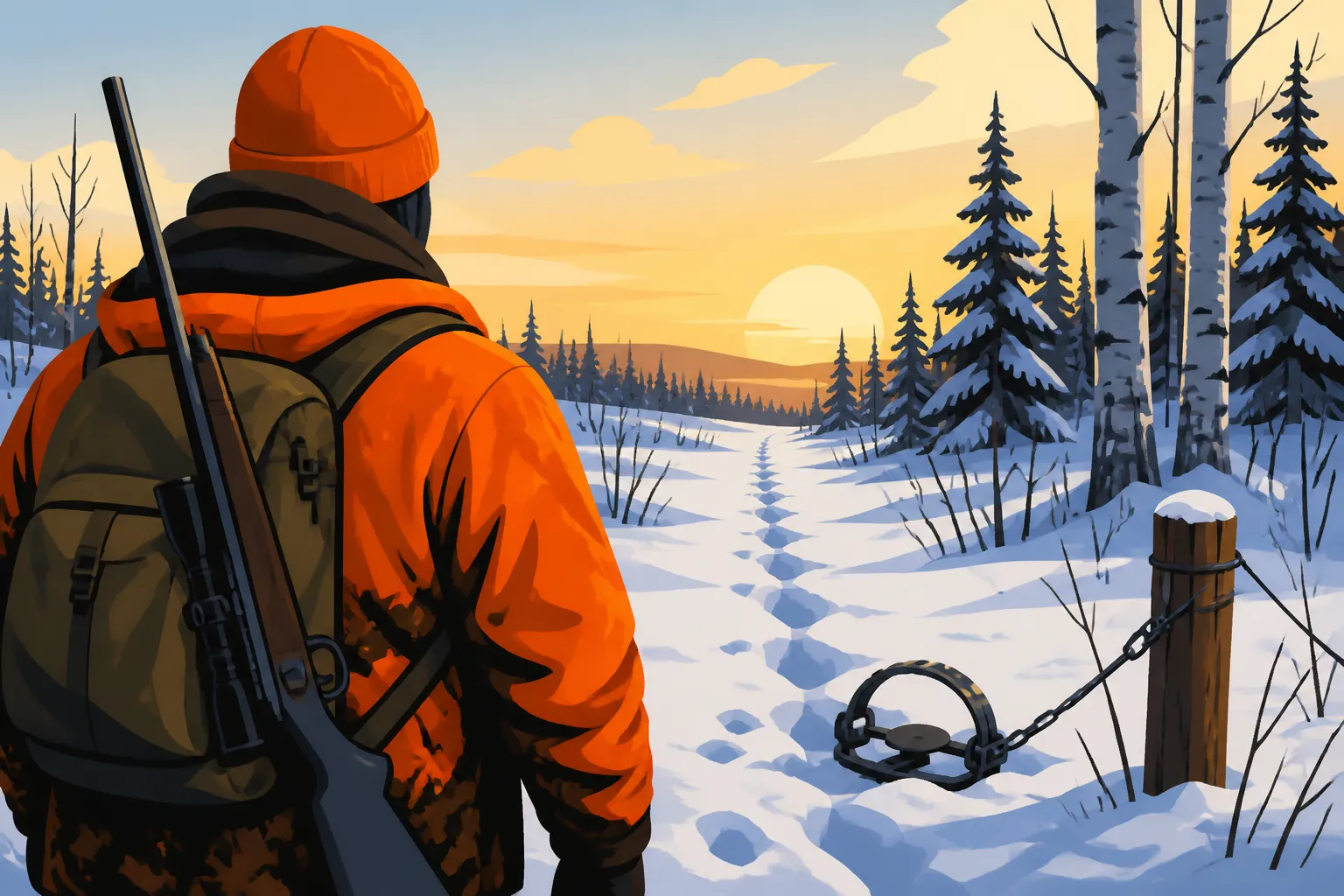
There’s something truly special about following an old trapline trail. These aren't just paths; they're historical arteries winding through the Saskatchewan bush, and they tell stories of past seasons, hardy trappers, and the wildlife that still thrives along them. For a hunter, these trails offer a unique blend of accessibility and isolation, leading you deep into prime habitat while often providing the only clear lanes of travel. It’s a way to step back in time and experience the bush as those before us did, but with the added modern advantages of planning and gear.
Why Trapline Trails are Game Magnets
Trapline trails, whether active or long abandoned, are inherently designed to intersect prime wildlife habitat. Trappers, by nature, are keen observers of the land and its creatures. They knew where the beavers built their dams, where the marten travelled, and where the moose browsed. As such, these trails often follow natural contours like ridge lines, parallel creek beds, cross low-lying muskegs, and cut through dense cover. This isn't random; it's a deliberate placement that puts them right in the travel corridors and feeding areas of numerous big game species, like moose, elk, and deer, not to mention furbearers and predators.
For big game, these trails act like magnets in the winter. Snow makes travel difficult, and any cleared or even packed path becomes a highway. Deer, moose, and elk will often prefer to walk on a packed trail rather than push through deep snow. This conserves their energy, which is critical for survival in the harsh Saskatchewan winter. You'll find countless tracks on these trails, from the subtle print of a fox to the unmistakable drag of a moose hoof. The trails themselves often create valuable edge habitat – the transition zone between the path and the dense bush – which is always a hotspot for game movement. Imagine a trail winding along a Hunting a Beaver Dam Crossing, providing easy access to prime willow browse for moose.
Beyond travel, trapline trails can also lead to critical wintering areas. Animals will often yard up in specific stands of timber or thick cover when snow gets deep and temperatures plummet. These trails can lead directly into or alongside such areas, giving you access that would otherwise be impossible. You might find a Hunting a Muskeg Island of Spruce bordered by a trapline, offering a dense sanctuary for deer or moose. When the snow is chest-deep in the bush, these trails become critical lifelines for animals and hunters alike.
The Unique Demands of Winter Hunting on Trails
Hunting these trails in the heart of winter is not for the faint of heart. Saskatchewan winters demand respect, and venturing into the bush, even on a well-defined trail, requires meticulous preparation. The cold is, of course, the most obvious challenge. Temperatures can easily drop to -30°C (-22°F) or colder, with wind chill making it feel much worse. This affects everything from your comfort and safety to your gear's performance and even how quickly you need to process an animal. Hunting Saskatchewan Winter Weather Safely is paramount, and understanding hypothermia symptoms is a must.
Snow depth is another major factor. While a packed trail makes travel easier for game, fresh snowfall can quickly erase tracks and make walking a slog, even on a trail. Deeper snow off-trail makes any attempt to follow a wounded animal incredibly difficult and slow. You need to consider the snow's consistency – is it light and fluffy, or heavy and wet? This impacts noise, visibility, and how animals will move.
Isolation is also a real consideration. Many of these trapline trails lead far from main roads, sometimes miles into remote areas where cell service is non-existent. Breaking down, getting lost, or injuring yourself out there can quickly turn into a life-threatening situation. This isn't like hunting close to home; it requires a much higher level of self-sufficiency and preparedness. Even something as simple as getting a vehicle stuck on a snow-drifted trail can strand you for hours, or even days, if you're not equipped with a Winter Truck Kit for a Saskatchewan Hunt.
Scouting and Understanding the Trail System
Before you even step foot on a trapline trail with your rifle or bow, effective scouting is crucial. This isn't just about finding tracks; it's about understanding the entire system, how game uses it, and how you can best position yourself for success. Modern tools can be incredibly helpful here, but nothing beats old-fashioned boots-on-the-ground observation.
Leveraging Technology for Trail Reconnaissance
In today's hunting world, mapping apps have become indispensable, especially for navigating complex landscapes like the boreal forest. Platforms like onX Hunt are game-changers. They allow you to overlay satellite imagery with various land ownership layers, which is crucial when dealing with Crown land in Saskatchewan. You can often spot old cutlines or existing trails that might correspond to trapline routes, even if they're overgrown. By zooming in, you can identify terrain features, dense cover, potential bedding areas, and pinch points where animals are likely to cross or funnel onto the trail. Reading Saskatchewan Crown Land Layers on onX can save you countless hours of blind searching.
Another excellent tool is GoHunt, which offers similar mapping capabilities and often has valuable public land data. The key is to spend time digitally scouting before your trip. Mark potential access points, note areas where the trail seems to connect different types of habitat (like a dense spruce stand to a poplar bluff), and look for any anomalies that might suggest game activity, such as openings or small clearings adjacent to the trail. You can also trace the trail's path to estimate distances and understand how far you might need to walk or drive in. This pre-planning allows you to arrive with a solid game plan rather than just wandering aimlessly.
Don't forget the power of talking to locals. Old-timers, in particular, often know where historical trapline routes exist and which ones are still actively maintained, or at least used by local traffic. They can provide invaluable insights into traditional game movement patterns and identify trails that might not even show up on satellite imagery if they're very old and overgrown. Combining digital maps with local knowledge gives you the most comprehensive picture.
Reading Old Sign and Current Activity
Once you're on the ground, the real detective work begins. Trapline trails are like open books in the snow, offering a wealth of information. Your first priority is to differentiate between old, frozen tracks and fresh, recent activity. A well-trained eye can tell the difference in snow. Fresh tracks will have crisp edges and often show powder kicked up from the animal's movement, while older tracks will be softened by wind and sublimation, often appearing more rounded and less defined. Reading Sign After Fresh Saskatchewan Snow becomes a critical skill here.
Look for consistency in tracks. Are there multiple sets of tracks moving in the same direction? This could indicate a small herd of elk or deer. Are moose tracks consistently showing up at a particular intersection or where the trail approaches a dense patch of willow? This tells you where they're feeding or bedding. Pay attention to how the animals are using the trail – are they simply passing through, or are they stopping to browse along the edges? Look for rubbed trees, particularly with moose or deer, indicating territorial marking or rutting activity if it's earlier in the season. Even older rubs can show historical use patterns.
Another thing to look for is droppings. Fresh droppings can tell you what the animals are eating and roughly how recently they were in the area. Frozen, older droppings still indicate consistent use over time. Also, don't just focus on the trail itself. Look 10-20 yards off the trail on both sides. Animals often travel near the trail, ducking into cover quickly. A large depression in the snow just off the trail could be a fresh bed, indicating an animal bedded down for the day. These are all clues that, when pieced together, paint a picture of wildlife movement and concentration.
Strategies for Hunting Trapline Trails
Hunting a trapline trail effectively requires a blend of patience, stealth, and sometimes, a little brute force. The strategy you employ will largely depend on the specific trail, the species you're pursuing, and the number of hunters in your party. Remember, these trails are linear, which offers both advantages and disadvantages.
Still-Hunting and Stand Placement
Still-hunting is arguably one of the most effective methods for hunting trapline trails, especially if you're a solo hunter or working with one other person. This involves moving incredibly slowly and deliberately, taking a few steps, then pausing for several minutes to scan, listen, and observe. The key is to blend into the environment and mimic the slow, natural movements of animals. In winter, every sound carries further, so pay attention to crunchy snow or snapping twigs underfoot. Wear soft, quiet layers. Focus on moving into the wind, or at least across it, to prevent your scent from spooking game ahead of you.
When still-hunting, always be looking ahead, especially where the trail bends or goes over a rise. Animals will often be feeding or crossing within easy view, but will quickly disappear into the bush if they detect you. Think about ambushing rather than chasing. This technique is particularly effective for Hunting a Poplar Bluff at First Light or along a dense forest fringe where the trail offers a clear view into transitional habitat.
Stand placement is another fantastic option, especially if you’ve scouted and identified a particularly active section of trail or a choke point. This might be where a dense section of bush bottlenecks the trail, or where two trails intersect. A small, portable treestand or even a carefully chosen ground blind (natural or pop-up) can be used. The advantage here is minimizing your scent and movement. You can sit for extended periods, especially during peak movement times like dawn and dusk. Just make sure you pick a spot that offers good visibility up and down the trail, and preferably allows for a shot into the adjacent cover where animals might be moving. Staying warm when Sitting All Day in a Saskatchewan Blind is non-negotiable.
Driving or Pushing Sections
For groups of two or more, driving or pushing sections of a trapline trail can be a highly productive strategy, especially for deer or elk. This involves one or more hunters (the "pushers" or "drivers") slowly walking a section of the trail, attempting to push game towards other hunters (the "standers" or "blockers") positioned at strategic points further down the trail. This can be particularly effective on longer, relatively straight sections of trail that offer limited escape routes for game.
The pushers move methodically, making some noise if desired to keep animals moving, but still paying attention to where game might break off the trail. Standers need to be in position well before the push begins, often 1/4 to 1/2 mile down the trail, situated where they have good visibility and a safe shooting lane. This requires careful coordination, often using radios, to ensure everyone is safe and aware of each other's positions. Safety is paramount, and clear communication about lines of fire and hunter locations is absolutely essential.
For mule deer, especially in open parkland or coulee country where traplines might run, a spot-and-stalk from a distance after an initial push might also be an option if the animal breaks into more open terrain. However, in the dense boreal forest of Hunting Saskatchewan's Boreal North, pushing is usually about getting the animal to cross the trail within range of a waiting hunter. Remember to coordinate with the Quad and Side-by-Side Rules on Crown Land if you plan to use motorized vehicles for access, and be mindful of not pushing game onto private land where you don't have permission.
Essential Gear and Safety for Trapline Trail Hunting
Hunting winter trapline trails is an incredible experience, but it’s one that absolutely demands the right gear and a serious commitment to safety. You're often deep in the wilderness, far from immediate help, and unpreparedness can quickly lead to dangerous situations.
Winter Apparel and Footwear
Your clothing system needs to be designed for warmth, moisture management, and quiet movement. Layering is key: start with a good quality base layer that wicks moisture away from your skin, even if you’re barely sweating. Cotton is a definite no-go in cold weather; opt for merino wool or synthetics. Your mid-layers should provide insulation, such as fleece or down, and your outer layer needs to be windproof, water-resistant, and durable. In Saskatchewan's extreme cold, heavy insulation is a must, especially for sitting still. Think about a warm parka, insulated bibs or pants, and a good quality hat and neck gaiter that can cover exposed skin.
Hands and feet are critical for staying comfortable and preventing frostbite. Insulated, waterproof boots are non-negotiable, and they need to be rated for extreme cold. Consider boots with removable liners so you can dry them out each night. Wear good wool or synthetic socks, and bring an extra pair to change into if your feet get damp. For your hands, a layering system often works best: thin liner gloves for dexterity, covered by warm, insulated mittens or heavy gloves. Keeping a hand warmer in your mittens can make a huge difference, especially during periods of inactivity.
Beyond the main apparel, always pack extra layers. A spare hat, gloves, and a warm fleece layer can be a lifesaver if conditions change unexpectedly or if you get wet. Dressing for Saskatchewan's November Cold is a skill you'll hone over time, but always err on the side of too much warmth rather than too little.
Navigation and Emergency Preparedness
This cannot be stressed enough: do not venture onto remote trapline trails without reliable navigation. Your phone's GPS is a great tool, but cold temperatures can rapidly drain battery life. Always have a backup, such as a dedicated GPS unit or, at minimum, a compass and a physical map. Even better, know how to use them both. Familiarize yourself with the area beforehand, marking your starting point and potential bailout routes.
Beyond navigation, a comprehensive emergency kit is essential. This should include:
- Fire starting supplies: Waterproof matches, a lighter, fire starter cubes.
- First-aid kit: Tailored for wilderness injuries, including trauma dressings, pain relievers, and any personal medications.
- Shelter: An emergency blanket or bivy sack.
- Signaling devices: A whistle, signal mirror, and potentially a satellite messenger (like an InReach or Spot device) for two-way communication outside of cell service. This is critical in remote areas where Saskatchewan Cell Coverage Ends quickly.
- Headlamp or flashlight: With spare batteries.
- Knife/Multi-tool: For general utility.
- Cordage: Paracord can be used for many things, from shelter building to emergency repairs.
- High-energy snacks and water: Even in cold weather, staying hydrated is important. Water bottles should be insulated to prevent freezing.
Finally, always tell someone your exact hunting plan, including where you're going, your intended route, when you expect to return, and who to call if you don't check in. This "float plan" is your most basic but most crucial safety measure. Remember that once you've harvested an animal, the work isn't over. Getting a large animal like a moose or elk out of the bush, especially on a narrow trail, can be incredibly challenging. Having a plan for Getting a Deer Out on a Frozen Trail or quartering an animal for transport is vital.
Conclusion
Hunting a winter trapline trail in Saskatchewan is a truly immersive and effective way to connect with the province's rich hunting heritage and its incredible wildlife. It demands respect for the elements, meticulous planning, and a deep understanding of game movement. By leveraging modern mapping tools like onX Hunt or GoHunt, diligently reading the signs left in the snow, and employing smart hunting strategies, you can unlock access to areas teeming with game. Just remember, the real trophies are often the lessons learned, the challenges overcome, and the unforgettable moments spent deep in the silent, snow-covered bush.
Disclaimer
This article is for general informational purposes only and does not constitute professional advice. Laws, prices and regulations vary by location and change over time. Consult a qualified professional for guidance on your specific situation.