Insurance a Saskatchewan Outfitter Should Carry
When you're planning a hunting trip, especially to a place like Saskatchewan that's known for incredible game, you're not just booking a date on a calendar; you're investing a significant amount of time, money, and emotional energy. It's completely understandable to feel a knot of anxiety about what happens if something goes sideways, whether it's a guide getting hurt, property damage, or the hunt being cancelled altogether. This guide is here to shed light on the crucial topic of outfitter insurance, helping you understand what it covers and why it’s so important for your peace of mind when venturing into the Saskatchewan bush or prairie.
Why Outfitter Insurance Matters to You, The Hunter
Let's be real: hunting is an inherently unpredictable activity. You're dealing with wild animals, often in remote or challenging terrain, and sometimes under extreme weather conditions. While we all hope for the perfect hunt, unexpected events can and do occur. This is precisely why understanding an outfitter's insurance coverage isn't just a nicety; it's a fundamental part of your due diligence, helping to protect your experience, your safety, and your financial investment.
Protecting Your Financial Investment
Think about it: you've likely saved up for this hunt, bought your plane ticket, maybe even rented a vehicle. A guided hunt in Saskatchewan isn't a cheap endeavour, and rightfully so, given the expertise, equipment, and land access involved. What if, due to an unforeseen circumstance on the outfitter's end – perhaps their lodge suffers a fire, or a key piece of equipment breaks down, or a guide gets seriously ill – your hunt needs to be postponed or even cancelled?
Without adequate insurance, the financial repercussions could be devastating for the outfitter, potentially leaving them unable to offer refunds or reschedule your trip. For you, this means not only losing out on the experience but also potentially losing a substantial sum of money. A properly insured outfitter has a safety net, allowing them to handle such disruptions more professionally and equitably. It protects their business, yes, but by doing so, it indirectly protects your booking and your deposit. When you're considering What a Saskatchewan Guided Hunt Costs, you're often paying months, if not a year, in advance, making this financial protection all the more critical.
Covering Unexpected Accidents and Injuries
The wilderness, while beautiful and thrilling, can also be unforgiving. Accidents, though rare and hopefully minor, are always a possibility. A fall from a tree stand, a mishap with a vehicle on a bush trail, or even an unexpected encounter with aggressive wildlife could lead to serious injury. While your outfitter is committed to safety, incidents can happen.
This is where an outfitter's liability insurance steps in. If you, as a client, were to suffer an injury due to the outfitter's negligence, or if their equipment caused damage, their insurance would typically cover the medical expenses, legal fees, and potential settlements. Without this coverage, you could be left with mounting bills and a very difficult legal battle, adding immense stress to an already traumatic situation. Knowing your outfitter is adequately insured provides a layer of reassurance that should the unthinkable happen, there's a system in place to help manage the fallout. It’s about being prepared for life's curveballs, even when you're focused on the thrill of the hunt. This consideration is particularly vital when you're preparing for something like Hunting Saskatchewan Winter Weather Safely or Spring Bear Hunting Saskatchewan's Cutlines, where conditions can be challenging.
Ensuring Ethical and Professional Operations
An outfitter who invests in comprehensive insurance isn't just ticking a box; they're demonstrating a commitment to professionalism, ethical business practices, and the well-being of their clients and staff. Reputable insurance providers often have standards and requirements that outfitters must meet to qualify for coverage. This can include safety protocols, properly maintained equipment, and adherence to local regulations.
By carrying robust insurance, an outfitter signals that they take their responsibilities seriously. It implies a level of diligence in how they conduct their operations, from maintaining their vehicles and facilities to training their guides. Think of it as an indicator of their overall business health and integrity. When you're vetting potential outfitters and asking Questions to Ask Before Booking, their insurance status is a key piece of the puzzle that speaks volumes about their commitment to a legitimate and safe operation. It also stands in stark contrast to Illegal Outfitting and How to Spot It, which often lacks any form of legitimate business practice, including insurance.
Types of Insurance a Saskatchewan Outfitter Typically Carries
Just like there are different hunting methods for different species, there are various types of insurance policies that a professional outfitter should have. Each serves a distinct purpose, collectively creating a comprehensive safety net for their business and their clients. Understanding these different types will help you ask the right questions and evaluate the level of protection your outfitter provides.
Commercial General Liability CGL Insurance
This is arguably the most crucial type of insurance for any business that interacts with the public, and outfitters are no exception. Commercial General Liability (CGL) insurance protects the outfitter from claims of third-party bodily injury or property damage that occur on their premises or as a result of their operations.
Imagine this scenario: you're staying at the outfitter's lodge, and you slip on an icy step that hadn't been cleared, breaking your arm. Or perhaps, during the hunt, one of the outfitter's vehicles, through no fault of your own, veers off a trail and causes damage to your personal ATV parked nearby. In both cases, the CGL policy would likely step in to cover your medical costs or the repair/replacement of your damaged property, as well as any legal defence costs if you decide to sue. This coverage is fundamental because it addresses the everyday risks associated with operating a hunting business where clients are present and equipment is in use. It covers incidents that are not related to a specific professional service, but rather the general conduct of their business.
Professional Liability Errors & Omissions E&O
While CGL covers accidents and physical damage, Professional Liability, often called Errors & Omissions (E&O) insurance, covers claims arising from professional advice or services that result in financial loss or injury to a client. For an outfitter, this could be nuanced but incredibly important.
Consider a situation where an outfitter or guide provides incorrect advice about local regulations or hunting zones, leading to a hunter unintentionally violating a law and facing fines or loss of game. Or, perhaps the outfitter makes a representation about the hunt's conditions or success rates that turns out to be misleading, causing a client to incur significant costs for a hunt that didn't meet reasonable expectations based on that advice. While most hunts come with no guarantees, claims of negligence related to professional guidance could potentially fall under E&O. It's about protecting against financial harm caused by a mistake or omission in the professional services provided, rather than a physical accident. This is another reason why How to Vet a Saskatchewan Outfitter involves looking beyond just the flash, and into their operational integrity.
Property and Equipment Insurance
An outfitter's operation relies heavily on physical assets: their lodge, cabins, vehicles, ATVs, blinds, decoys, and other hunting gear. Property and Equipment insurance protects these valuable assets from perils such as fire, theft, vandalism, and certain natural disasters.
Think about a remote hunting camp in the boreal forest fringe. If a wildfire, unfortunately, swept through and destroyed their cabins and storage sheds, or if a quad was stolen from their property, this insurance would help them rebuild and replace essential equipment. Without it, an outfitter could face catastrophic losses that might force them out of business, leaving clients who have booked future hunts in a lurch. This policy helps ensure the continuity of their operations, which in turn means your booked hunt is more secure. For outfitters who operate in areas like the Hunting Saskatchewan's Boreal North or Hunting Saskatchewan's Forest Fringe, having robust property coverage is non-negotiable due to the remoteness and potential for natural events.
Workers' Compensation WCB for Guides and Staff
In Saskatchewan, like many places, businesses that employ staff are generally required to have Workers' Compensation Board (WCB) coverage. This insurance protects the outfitter's employees (guides, camp cooks, administrative staff) if they are injured or become ill as a direct result of their work.
If a guide is injured while tracking game, setting up a blind, or transporting clients, WCB would cover their medical expenses, rehabilitation costs, and lost wages. This protects the employee from financial hardship and also protects the outfitter from direct lawsuits by injured staff. For you, the hunter, knowing that the guides and staff are covered by WCB means that the outfitter is operating a legitimate business with proper protections for their team. It speaks to a responsible employer, which is often a good sign of a well-run, ethical operation that cares for all involved.
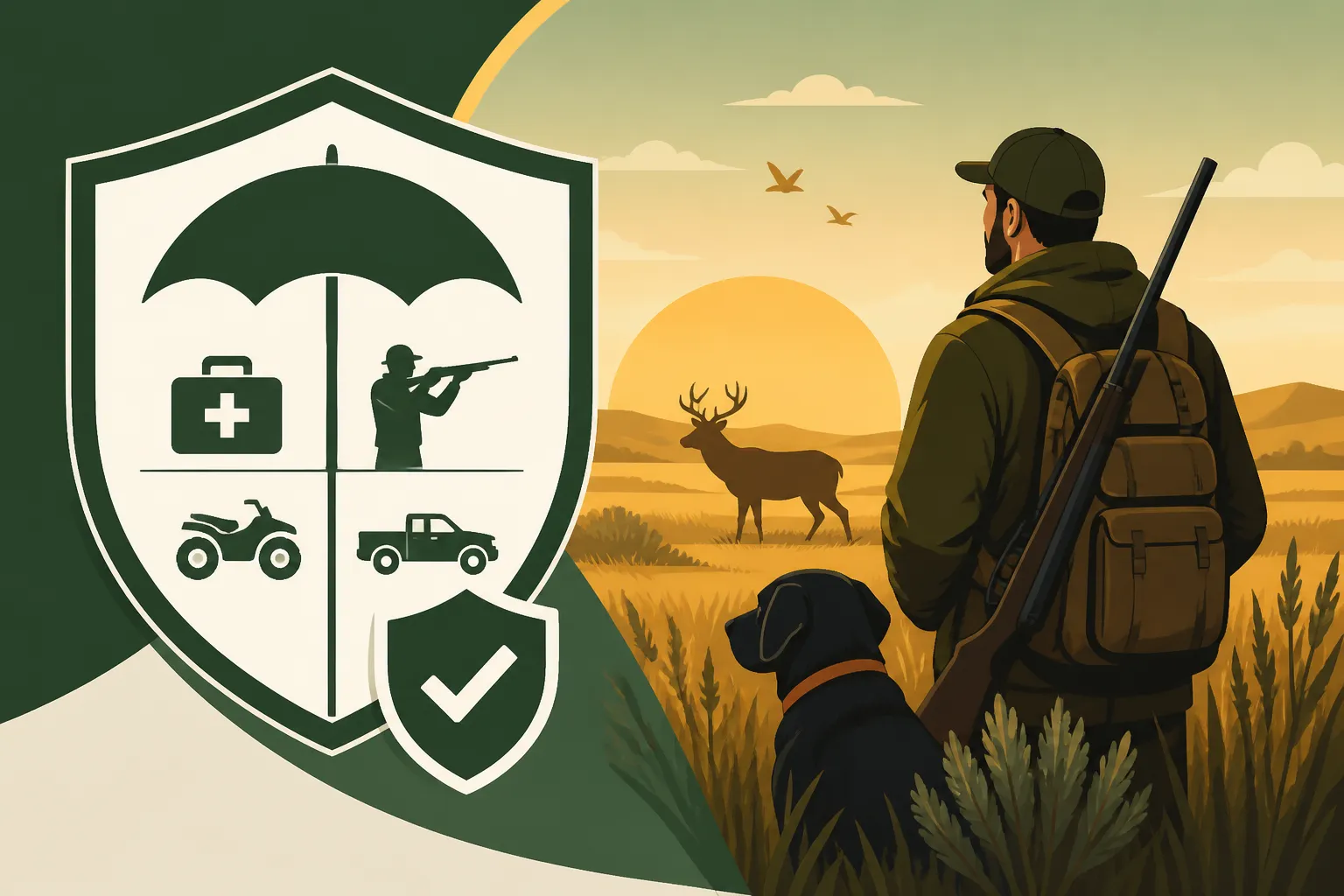
Here's a quick comparison of what different insurance types generally cover:
| Insurance Type | What it Covers (Generally) | Key Benefit for Hunters |
|---|---|---|
| Commercial General Liability (CGL) | Third-party bodily injury, property damage (e.g., slip and fall, vehicle damage to client gear) | Protection if you're injured or your property is damaged due to outfitter's general operations |
| Professional Liability (E&O) | Claims from professional negligence, errors, or omissions (e.g., incorrect advice leading to penalties) | Protection from financial loss or issues arising from specific professional services/advice |
| Property & Equipment Insurance | Damage/loss to outfitter's assets (lodge, vehicles, gear) due to fire, theft, natural events | Ensures outfitter can continue operations; protects your booked hunt from outfitter's asset loss |
| Workers' Compensation (WCB) | Injury or illness of outfitter's employees/guides sustained during work | Indicates a professionally run operation that protects its staff, promoting safety and continuity |
What Insurance Might Not Cover (and How to Plan for It)
While an outfitter's insurance is vital, it's equally important to understand its limitations. There are certain situations and personal coverages that fall squarely on your shoulders as the hunter. Recognizing these gaps beforehand allows you to plan appropriately and ensure you're fully protected for your Saskatchewan adventure.
Trip Cancellation and Interruption Insurance Your Responsibility
This is a big one that often catches hunters off guard. An outfitter's insurance policies generally protect their business from liabilities and property loss. They do not typically protect your personal investment if you, the hunter, need to cancel or cut short your trip.
Life happens. You might have a family emergency, a sudden illness, or an unexpected work commitment that forces you to cancel your dream hunt. Or perhaps you're on the hunt, and you get injured (unrelated to outfitter negligence) and need to leave early, or your flight home gets severely delayed due to weather. In these scenarios, the outfitter is unlikely to be able to offer a full refund, especially if you're cancelling close to the hunt date, as they will have already incurred costs and likely turned away other clients. That's where personal trip cancellation and interruption insurance becomes your best friend. This policy can reimburse you for non-refundable deposits, travel expenses, and other costs if your trip is cancelled or interrupted for covered reasons. When you're thinking about Saskatchewan Deposit and Cancellation Terms, remember that your personal travel insurance can be the ultimate safety net for your investment. It’s highly recommended to look into Saskatchewan Hunt Cancellation Insurance as a separate policy, especially if you’re traveling a long distance.
Personal Gear Loss or Damage
As much as we all love our hunting gear – those perfectly broken-in boots, that custom rifle, that brand-new optics setup – an outfitter's insurance will not cover its loss, theft, or damage. Your prized rifle falls out of the truck on a bumpy road, your binoculars get dropped in a slough, or your bag goes missing at the airport. These unfortunate events are typically not the responsibility of the outfitter.
Your homeowner's insurance policy might offer some coverage for personal property, even when you're away from home, but it often has limitations, especially for high-value items or if travelling internationally. It's wise to review your existing policies or consider purchasing a supplemental travel insurance policy that specifically covers valuable sporting equipment. Always document your gear, especially serial numbers, before you leave home. This foresight can save you a lot of grief and money if something happens to your cherished equipment during your hunt, whether you're Hunting Whitetails in Saskatchewan's Forest Fringe or Hunting Saskatchewan's Prairie.
Extreme Weather or Unforeseen Circumstances
Sometimes, Mother Nature or global events throw a wrench into even the best-laid plans. Blizzards that close roads for days, extreme heatwaves affecting game movement, unprecedented wildfires, or even a widespread public health crisis – these are "acts of God" or force majeure events that are often beyond an outfitter's control and may not be fully covered by their standard insurance.
While some outfitters might offer options to rebook or credit towards a future hunt in such situations, they are generally not legally obligated to provide a full refund if the event is truly outside their control and affects their ability to operate. Your personal Travel Insurance for a Hunting Trip may offer some protection for these scenarios, depending on its specific terms. It's crucial to understand the outfitter's policy on What Happens If Weather Ruins the Hunt before you book, and to have a conversation about contingency plans. Being prepared for the potential impact of conditions, especially when Hunting the December Late Season Cold or dealing with a dry fall, is part of being a responsible hunter.
How to Verify an Outfitter's Insurance and Due Diligence
You wouldn't buy a truck without checking under the hood, so why book a significant hunting trip without asking about the outfitter's operational safety nets? Being proactive about verifying an outfitter's insurance is a critical step in Choosing the Right Saskatchewan Outfitter and protecting your investment and experience.
Asking Direct Questions and Requesting Proof
The most straightforward way to learn about an outfitter's insurance is simply to ask them directly. Don't be shy or feel like you're being intrusive; any reputable outfitter will understand and appreciate your thoroughness. Here are some key questions you should pose:
- "What type of liability insurance do you carry, and what are its coverage limits?"
- "Do you have Workers' Compensation coverage for your guides and staff?"
- "Can you provide proof of your current insurance coverage, such as a certificate of insurance?"
A professional outfitter should be able to readily provide you with a Certificate of Insurance (COI) from their provider. This document will list their coverage types, limits, and policy dates. Always make sure the dates are current! If an outfitter hedges, gets defensive, or is unable to provide this information, consider it a red flag. It's an indicator that their business practices might not be as transparent or robust as you'd like. Remember, Signing an Outfitter Liability Waiver is common practice, but it doesn't negate the need for the outfitter to be properly insured themselves.
Checking for Proper Licensing and Association Memberships
In Saskatchewan, outfitters are required to be licensed by the province. This licensing process often includes requirements for adequate insurance coverage as part of operating legally. So, verifying their provincial license is a good proxy for ensuring they meet basic insurance standards. You can inquire about Saskatchewan Outfitter Licensing and Allocations to understand the provincial framework.
Beyond licensing, many reputable outfitters are members of professional associations, such as the Saskatchewan Outfitters Association. These associations often have codes of conduct, ethical guidelines, and sometimes even minimum insurance requirements for their members. While membership doesn't replace direct insurance verification, it adds another layer of credibility and can indicate an outfitter's commitment to industry standards and professionalism. When you're doing your homework on How to Vet a Saskatchewan Outfitter, checking for these affiliations is a smart move.
Using Reputable Booking Platforms
When you're first casting your net to find a Saskatchewan outfitter, online booking platforms can be a valuable resource. Websites like BookYourHunt or GoHunt often act as aggregators for guided hunts, featuring numerous outfitters. While these platforms do not replace your personal due diligence, many of them have their own vetting processes for the outfitters they list.
Some platforms might require outfitters to provide proof of insurance and licensing before they can be featured. They might also gather client reviews, which can give you insights into other hunters' experiences with an outfitter's professionalism and handling of unforeseen circumstances. While these platforms are helpful for initial discovery and comparing options, always follow up with direct communication with the outfitter to confirm all details, including their current insurance status, before you finalize any booking. Remember, these platforms are a starting point, not the end of your investigative journey. Looking for an outfitter for Black Bear Hunting in Saskatchewan or Waterfowl Hunting Saskatchewan's Grain Fields can start here, but the personal touch is essential.
Disclaimer
This article is for general informational purposes only and does not constitute professional advice. Laws, prices and regulations vary by location and change over time. Consult a qualified professional for guidance on your specific situation.