Emergency Plans in Saskatchewan’s Bush
Heading out into Saskatchewan's wild can be an incredible adventure, but the vastness and unpredictable nature of the bush mean that things can go wrong quickly, leaving you far from help and feeling isolated. Whether you're a seasoned hunter or planning your first trip, having a solid emergency plan isn't just a good idea – it's absolutely essential for your safety and peace of mind. This guide will walk you through the critical steps of preparing for the unexpected, ensuring you can tackle potential emergencies with confidence.
Understanding the Realities of Saskatchewan's Backcountry
Saskatchewan's hunting grounds are incredibly diverse, stretching from the wide-open southern prairies with their coulees and river breaks to the dense boreal forest in the north. This variety means different risks, but one constant remains: the potential for isolation. Cell service often disappears once you leave the main highways, and even seemingly accessible areas can quickly become remote when conditions change. Understanding these realities is the first step in preparing for an emergency.
Common Scenarios That Can Lead to Trouble
It’s easy to think "it won't happen to me," but the bush doesn't care about your experience level. A simple misstep, a sudden change in weather, or a mechanical failure can turn a great day into a dire situation. Hunters get lost every year, sometimes just a few hundred yards from their vehicle, because the bush disorients. A sprained ankle deep in a cutline, miles from the truck, is more than just inconvenient; it can be life-threatening if you're alone and unprepared. Vehicle breakdowns are another common culprit. Your trusty truck or quad, which felt invincible on the trail, can suddenly become a cold, immobile piece of metal in freezing temperatures, leaving you stranded with no easy way out. Even a short walk to retrieve game can turn into an overnight ordeal if you get turned around in unfamiliar territory or if dusk falls faster than you anticipated.
Weather, too, plays a huge role. Saskatchewan can experience rapid temperature drops, sudden blizzards, or torrential downpours. What starts as a mild fall day can quickly plunge into extreme cold, especially as you move into late season. Hunting Saskatchewan Winter Weather Safely is a crucial topic for anyone venturing out when temperatures drop. Hypothermia isn't just a northern problem; it can strike even in moderate cold if you're wet and exposed. Similarly, early season hunts can bring unexpected heat waves, leading to dehydration or heatstroke if you haven't planned for it. The sheer scale of the landscape means that even if you're hunting within a few hours' drive of a major centre like Prince Albert or Meadow Lake, you can still find yourself in true wilderness that takes emergency services hours to reach, if they can even pinpoint your location. This is why self-reliance and proper planning are paramount.
Navigating Wildlife Encounters and Other Environmental Hazards
Beyond getting lost or injured, the bush presents other challenges. Saskatchewan is home to formidable wildlife, including black bears and moose, especially as you venture into the Hunting Saskatchewan's Boreal North or Hunting Saskatchewan's Forest Fringe. While most wildlife encounters are benign, unexpected confrontations can occur. Understanding Wildlife Safety in Saskatchewan Bear Country is critical, knowing how to react if you stumble upon a sow with cubs or a territorial bull. It's not just the big game, either. Smaller creatures can pose risks: tick-borne illnesses are a concern in certain areas, and even seemingly harmless insects can cause allergic reactions.
Then there are the environmental hazards unique to our landscape. Water crossings, whether frozen or flowing, present their own dangers. Thin ice on sloughs and lakes, particularly early or late in the season, is a silent threat. Rivers and creeks, often swollen after heavy rains, can have deceptively strong currents. Overestimated depths or slippery banks can lead to falls or lost gear. Furthermore, the vastness means that certain terrains can be incredibly challenging: deep muskeg, dense willow thickets, or rocky outcrops can hide dangers, making travel slow and increasing the risk of injury. Knowing how to assess these risks and avoid unnecessary exposure is a key part of your emergency plan.
Essential Pre-Trip Planning and Communication
True preparedness begins long before you even leave your driveway. It’s about being proactive, understanding your chosen hunting area, and establishing reliable communication channels. This kind of meticulous planning helps mitigate risks and provides a lifeline should the unexpected occur.
Developing a Detailed Trip Plan and Sharing It
One of the most fundamental steps you can take is to create a detailed trip plan, often called a "float plan" even if you're not on the water. This plan should include your exact hunting location, proposed routes, expected return times, the names of everyone in your party, and details about your vehicle. Even if you're just going for a day hunt, leave this information with a trusted person who knows when to expect you back and what to do if you don't check in. For longer trips, establish regular check-in times. If you're working with an outfitter, they will usually have their own robust communication protocols, which is one of the many benefits of booking a guided hunt, especially for non-residents. Platforms like BookYourHunt often feature outfitters who explicitly detail their safety and communication plans as part of their package descriptions, making it easier to choose a guide aligned with your safety priorities.
Your trip plan should also consider alternative routes or exit strategies in case your primary path becomes impassable. Think about where you might be able to find help, even if it's just the nearest occupied farmyard. For those venturing into truly remote areas, especially on Crown land, even a basic understanding of nearby infrastructure or significant landmarks can be invaluable. It’s not just about getting to your hunting spot, but also about knowing how you'll get out if conditions change or an emergency arises. Detailed maps, especially those with topographical information and land ownership layers, are non-negotiable. Studying these maps beforehand can help you identify potential escape routes, natural shelters, or areas to avoid.
Must-Have Communication and Navigation Tools
In Saskatchewan's expansive wilderness, relying solely on cell service is a gamble you don't want to take. Many prime hunting areas, particularly in the northern zones or deep in the agricultural bluffs, have spotty or non-existent cellular coverage. Therefore, carrying dedicated communication and navigation tools is absolutely essential. A satellite messenger, such as a Garmin inReach or Zoleo, is perhaps the most vital piece of gear. These devices allow you to send and receive text messages, share your GPS location, and, most critically, send an SOS signal to a 24/7 monitoring centre, even when miles from any cell tower. This direct line to emergency services can be a lifesaver. Ensure your device is fully charged, has an active subscription, and you know how to use it before you head out. Cell Service at a Saskatchewan Camp is rarely reliable enough for emergency use.
Beyond satellite communicators, traditional navigation tools remain indispensable. A reliable GPS unit (and knowing how to use it) should be a standard part of your kit. But technology can fail, so always carry a physical map of your hunting area and a compass, and know how to use them together. Mark your starting point and critical landmarks on your map. Even in familiar territory, unexpected fog, heavy snow, or dense bush can disorient you. Think of these tools as redundant layers of safety. For instance, GoHunt's mapping features are great for initial scouting, but nothing beats a downloaded map on your device and a physical map as a backup when you're actually in the field where data might not exist. Pack extra batteries or a power bank for all your electronic devices. In the cold, batteries drain much faster, so keeping them warm is also part of the strategy.
Your Emergency Kit: What to Carry and Why
Your emergency kit isn't just a collection of random items; it's a carefully assembled assortment of tools designed to help you survive and signal for help. Every hunter, regardless of the length of their trip, should have at least a basic kit on their person and a more comprehensive one in their vehicle.
The Core Survival Essentials
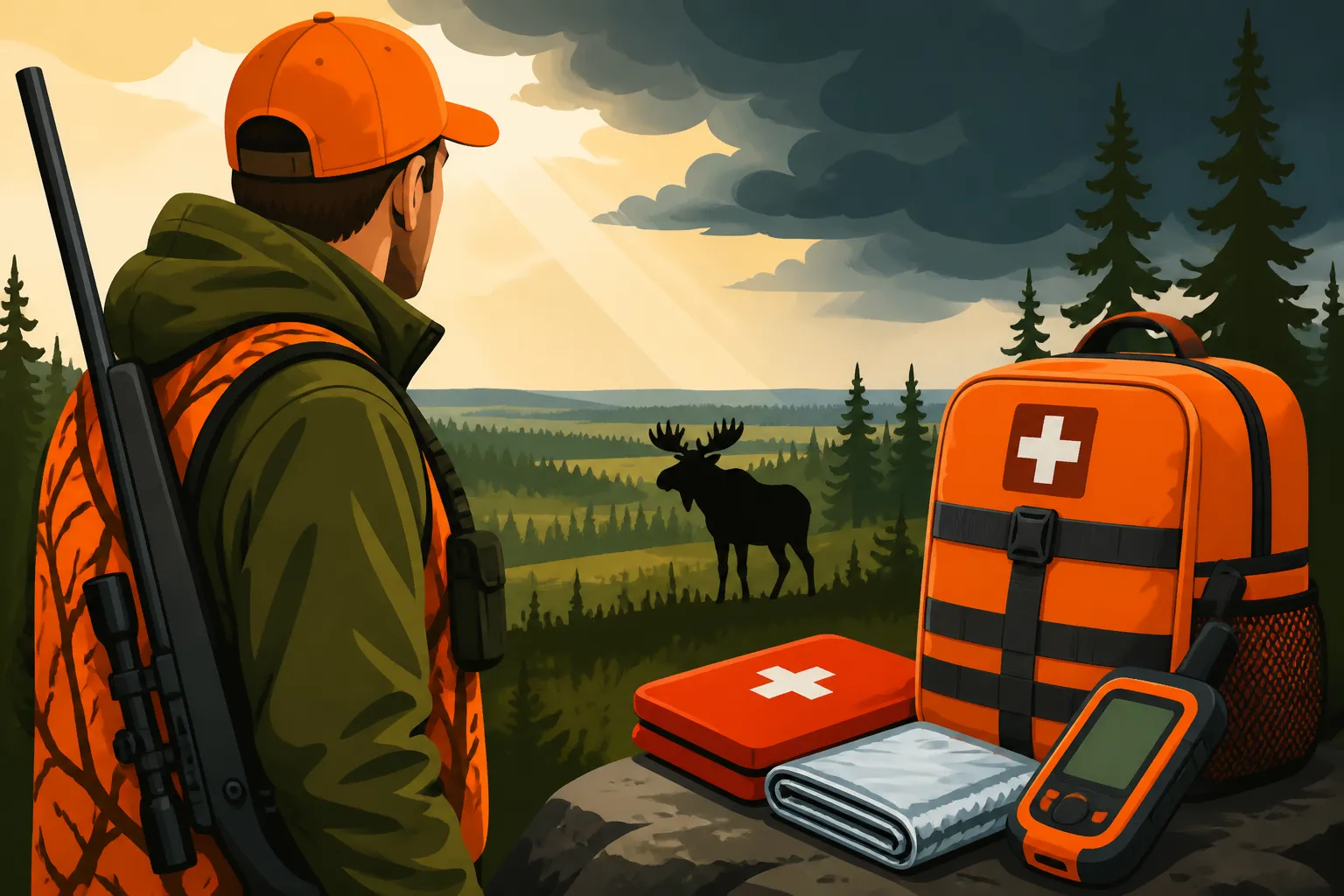
When you find yourself unexpectedly spending a night in the bush, the core survival essentials become your best friends. First and foremost, you need to be able to make fire. Carry multiple fire-starting methods: waterproof matches, a reliable lighter, and a ferro rod with some tinder. Fire provides warmth, helps dry wet clothing, purifies water, and acts as a powerful signal. Next is a comprehensive first aid kit. This isn't just for major trauma; it's for blisters, cuts, sprains, and minor injuries that can become debilitating if not addressed. Include pain relievers, bandages, antiseptic wipes, moleskin, and any personal medications you might need. Knowing basic first aid, perhaps from a Saskatchewan Hunter Education Requirements course, is just as important as having the supplies.
Shelter is another critical element. While you might not carry a full tent for a day hunt, a robust emergency blanket, a lightweight tarp, or even a large garbage bag can make a huge difference in retaining body heat and protecting you from the elements. Staying dry is paramount, so consider waterproof outer layers even on sunny days. Finally, water purification. Even if you carry water bottles, having a way to purify water from natural sources (like a filter straw, purification tablets, or the ability to boil water) ensures you won't run out. Dehydration can quickly impair judgment and physical ability, making an already tough situation even worse.
Specialized Gear for Saskatchewan Conditions
Given Saskatchewan's unique and often extreme weather, certain specialized items should be part of your emergency preparations, especially for those venturing out in colder months. Layered clothing, ideally made from wool or synthetic materials that retain warmth even when wet, is essential. Avoid cotton. Always pack an extra warm hat, gloves, and socks – losing heat from your head and extremities is rapid. Dressing for Saskatchewan's November Cold will often involve multiple layers. A small, bright signal mirror and a loud whistle are excellent signaling devices that require no batteries and can be effective over long distances. Remember the universal distress signal: three blasts of a whistle or three flashes of light.
For vehicle-based hunts, your emergency kit in the truck needs to be even more robust. This includes extra fuel, jumper cables, a good tow strap, a shovel, tire repair kit, and tools. What to Do If You Get Stuck in the Bush often involves digging yourself out or calling for a tow, but you need to be prepared to spend the night if help is hours away. A Winter Truck Kit for a Saskatchewan Hunt would also include a powerful flashlight or headlamp with extra batteries, a saw or axe for clearing downed trees, and plenty of high-calorie, non-perishable food. Think about items that can address a variety of problems, from a broken bootlace to a deep cut, or a night out in minus thirty.
Here's a quick checklist for your personal emergency kit:
| Item | Purpose | Notes |
|---|---|---|
| Satellite Messenger/PLB | Emergency communication, tracking | Always charged, active subscription, know how to use |
| GPS (with downloaded maps) | Navigation, location tracking | Extra batteries/power bank |
| Physical Map & Compass | Backup navigation | Waterproofed, know how to use |
| Fire Starters | Warmth, signaling, water purification | Multiple methods: lighter, matches, ferro rod, tinder |
| First Aid Kit | Injury treatment | Personal meds, pain relievers, bandages, antiseptic |
| Emergency Blanket/Tarp | Shelter, hypothermia prevention | Lightweight, compact |
| Headlamp/Flashlight | Illumination | Extra batteries, keep warm in cold |
| Whistle | Audible signaling (3 blasts = distress) | Attached to jacket or bag |
| Signal Mirror | Visual signaling | Effective over long distances on clear days |
| Multi-Tool/Knife | General utility, repairs | Essential for many tasks |
| Water Filter/Tablets | Hydration | Backup to carried water |
| High-Energy Snacks | Sustenance, morale | Non-perishable, easy to eat |
| Extra Warm Layers | Hypothermia prevention | Hat, gloves, socks (wool/synthetic) |
Reacting When Things Go Sideways: Steps to Take
Despite the best preparations, emergencies can still happen. The critical factor then becomes your response. Panic is your worst enemy, so knowing a clear set of steps to take can make all the difference.
The "STOP" Method and Staying Put
The moment you realize you're lost, injured, or facing an unexpected challenge, the most important thing you can do is STOP. This isn't just a clever acronym; it's a proven survival strategy:
- S – Stop: Immediately cease movement. Do not wander further into unknown territory or deeper into a problem.
- T – Think: Calmly assess your situation. What happened? What resources do you have? What's the immediate danger?
- O – Observe: Look around you. Identify landmarks, note the weather, listen for sounds (roads, water, animals). Are there any signs you can read to determine direction or danger?
- P – Plan: Based on your assessment, formulate a plan. Is it best to stay put and signal, or try to self-rescue? Which direction should you travel if you must move?
Often, the best plan is to stay put. If you’ve told someone your plans and expected return, staying in one location significantly increases the chances of searchers finding you. Wandering around makes you harder to locate and can worsen your situation, leading to further injury, exhaustion, or becoming even more disoriented. Find a relatively open, safe spot, and prepare for a potentially long wait. This is where your emergency kit comes into play. If you've been doing a lot of movement, you might have left a track for searchers to follow. If you continue moving, you erase those tracks and make it harder for searchers. For non-residents, especially those Rules for Non-Residents Hunting Saskatchewan, staying put near an expected hunting area or travel route dramatically improves the efficacy of an outfitter's emergency plan.
Signaling for Help and Self-Rescue Strategies
Once you’ve stopped and assessed, your next step is to signal for help. Your satellite messenger is your primary tool here, as it sends a direct signal with your exact GPS coordinates. Activate the SOS function only when truly necessary, as it initiates a full-scale rescue operation. Beyond electronic signals, visual and audible signals are crucial backups. Build a large signal fire (three fires in a triangle is a universal distress signal) in an open area, using green boughs to create smoke during the day. Use your signal mirror on sunny days, sweeping it across the horizon in the direction of any potential aircraft or distant light. At night, a powerful flashlight can be used to flash SOS in Morse code (three short, three long, three short). Your whistle, too, is a powerful tool. Three short, sharp blasts repeated is the international distress signal, effective far beyond the human voice.
If self-rescue becomes your only viable option (e.g., if you're certain of your direction to a known road or landmark, and communication is impossible), proceed cautiously. Conserve your energy. Mark your path as you go, breaking branches or creating cairns so you can retrace your steps if needed. If injured, use items from your first aid kit to stabilize the injury as best you can. A broken leg or arm might need a splint made from branches and clothing. Remember that your goal is not necessarily to "walk out" but to get to a more accessible or visible location, or to slow down the progression of an injury until help can arrive. When hunting for large animals like moose, having a plan for Quartering a Moose Alone in the Bush includes being prepared for prolonged periods in the field, so those survival skills extend beyond emergency situations. Even small details, like being able to read Reading Saskatchewan Wildfire Closure Maps can help avoid putting yourself in situations where an emergency is more likely.
Working with an Outfitter's Emergency Plan
For many, especially non-residents, a guided hunt with a licensed Saskatchewan outfitter is the preferred way to experience our rich hunting opportunities. One of the significant advantages of booking through an outfitter is the comprehensive emergency planning and resources they bring to the table.
What to Expect from a Reputable Outfitter
A reputable Saskatchewan outfitter is not just about helping you find game; they are also responsible for your safety in the field. They will have extensive knowledge of the local terrain, weather patterns, and potential hazards, from thin ice to wildlife hot spots. Before your hunt, they should clearly outline their emergency protocols. This typically includes:
- Communication Systems: Outfitters often utilize satellite phones, two-way radios, or satellite messengers in areas with no cell service. They'll have a system for checking in with their guides in the field at regular intervals.
- Medical Preparedness: Guides are usually trained in wilderness first aid and carry comprehensive first aid kits. They'll know the quickest routes to medical facilities or how to coordinate a medical evacuation.
- Evacuation Plans: They'll have pre-determined plans for different types of emergencies, whether it's a vehicle breakdown requiring another truck, or a serious injury necessitating a helicopter evacuation. This might involve direct contact with local EMS or private air ambulance services.
- Knowledge of the Land: Your guide's intimate knowledge of the specific Hunting a Saskatchewan Quarter Section or vast Crown land block means they know where to find shelter, water, and where the easiest egress routes are.
Platforms like BookYourHunt or GoHunt are excellent resources for finding licensed outfitters. When researching, don't hesitate to ask prospective outfitters about their specific emergency plans, guide training, and communication capabilities. It's a key part of choosing the right outfitter. A good outfitter will be transparent and proud of their safety protocols.
Your Role as a Hunter in an Outfitted Emergency
Even with a top-notch outfitter, you still have a crucial role to play in your own safety. First, be honest about your physical condition and any medical issues before the hunt begins. This allows the outfitter to plan accordingly and ensures they have critical information in an emergency. Second, listen to your guide. They know the area and the risks. If they say a certain area is unsafe or suggest a particular course of action, trust their judgment. Third, carry your personal emergency essentials, even on a guided hunt. While your guide will have a kit, having your own satellite messenger, personal first aid items, and fire starters provides an extra layer of redundancy.
If an emergency arises during a guided hunt, follow your guide's instructions immediately. They are trained to handle these situations. Stay calm, provide them with any information they need, and assist as requested. Remember that your guide is working to ensure your safety, and cooperation is key to a successful resolution. In some cases, outfitters might even suggest reviewing their specific Saskatchewan Guide Insurance and Liability policies so you understand the scope of their responsibility, though your own travel insurance should cover medical evacuation. Ultimately, a guided hunt provides an enhanced level of safety and emergency preparedness, but it doesn't absolve you of your own responsibility to be prepared and communicate effectively.
Disclaimer
This article is for general informational purposes only and does not constitute professional advice. Laws, prices and regulations vary by location and change over time. Consult a qualified professional for guidance on your specific situation.