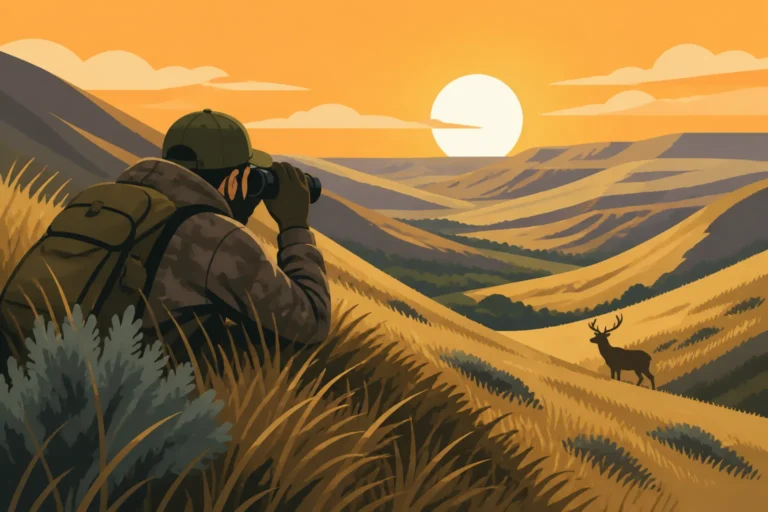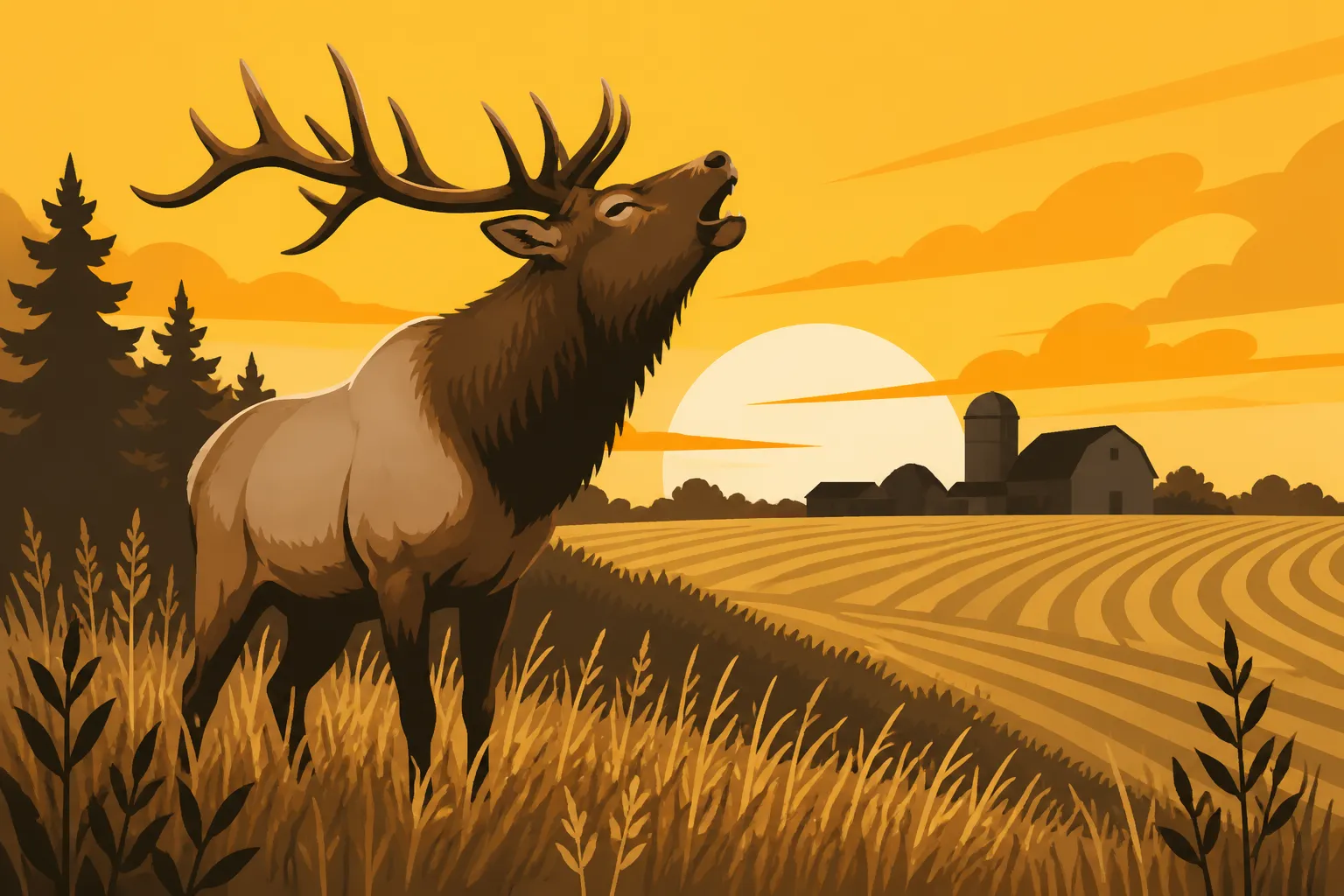
Bugling Elk on a Farm Edge
The thrill of hearing a bull elk scream across a remote mountain range is a classic hunting dream, but for many of us in Saskatchewan, those majestic animals are increasingly calling the farm edge home. This unique environment presents its own set of challenges—you're not in the Rockies, you're often right beside a field where a combine might have been running yesterday—and traditional calling tactics often need a serious rethink. This guide is all about dissecting the specific behaviors of elk living near agricultural land and providing you with the bugling strategies needed to successfully draw in a bull from the very fringes of civilization.
Understanding Elk Behavior on Farm Edges
Elk living on the border of agricultural land behave differently than their wilderness counterparts. They are creatures of opportunity and security, often leveraging the abundant food sources of fields while still needing nearby cover for safety. Grasping these habits is the first step toward effective bugling.
Feeding Patterns and Crop Preferences
One of the biggest draws for elk to farmland edges is, quite simply, food. While natural forage like grasses, forbs, and browse is still on the menu, the sheer caloric bounty of agricultural crops is often irresistible. Elk are particularly fond of certain grains, and their preferences can shift throughout the season. In the late summer and early fall, they might be found raiding standing canola, lentils, or pea fields. As harvest progresses, they’ll move to feed on shattered grain in swathed barley or oat fields, or even glean corn kernels left behind. This provides a consistent, high-energy diet that helps them put on weight for the rut and the coming winter. Understanding which fields are actively being used for feeding is paramount. Often, they’ll focus on fields adjacent to dense cover, creating a distinct pattern of movement between food and safety.
Security Cover and Travel Corridors
Even with a pantry full of grain, elk still need places to feel safe and disappear. On farmland edges, this usually means dense bluffs of aspen, thick willow runs along sloughs, or deep, brushy coulees. These pockets of cover provide thermal protection from the elements, a place to bed down unseen, and crucially, an escape route from human disturbance. You'll often find elk using these cover strips as travel corridors, moving from bedding areas to feeding grounds under the cloak of darkness or during low-light hours. Identifying these key pieces of cover and the worn trails leading in and out of them is critical intel. A good way to start is to use satellite imagery from tools like GoHunt to pinpoint likely bedding areas and travel routes before you even step foot in the field, then verify your findings on the ground.
Pressure and Nocturnal Habits
Elk, like most large game animals, become increasingly wary under hunting pressure. On farm edges, this pressure can come not only from hunters but also from daily human activity like farming operations, vehicle traffic, and even domestic animals. This constant disturbance often pushes elk to become largely nocturnal, particularly mature bulls. They may only emerge from their cover after dark to feed in fields and retreat well before dawn. This can be incredibly frustrating for hunters hoping to intercept them during legal shooting light. Recognizing this tendency means you might need to adjust your approach, focusing on calling during the very first and last minutes of the day, or setting up closer to their bedding cover to catch them as they transition. Hunting a Saskatchewan community pasture might offer slightly less pressure than privately owned farmland, but elk are adaptable regardless.
Timing Your Bugle: The Saskatchewan Elk Rut
The elk rut is an electrifying time to be in the woods, or in our case, on the edge of a stubble field. But the timing and intensity of that rut, and thus the effectiveness of your calling, can vary significantly.
Peak Rut Windows in Saskatchewan
In Saskatchewan, the elk rut generally kicks off in late August and can run well into October, with the most intense activity usually peaking in the latter half of September. This is when bulls are most vocal, actively bugling to challenge rivals, gather cows, and announce their dominance. During this window, you'll hear the full range of elk sounds—high-pitched whistles, guttural grunts, and deep chuckles. This is undoubtedly the prime time to be out there with your calls. However, it's not a uniform event; localized conditions, herd dynamics, and even specific weather patterns can shift the exact peak. Checking Saskatchewan Big Game Season Dates is crucial to ensure you're hunting during the open season for elk.
Pre-Rut and Post-Rut Strategies
Outside the peak rut, your calling strategy needs to adapt. During the pre-rut, typically late August to early September, bulls are still building their harems and establishing dominance, but they might be less responsive to aggressive bugles. Soft cow calls and subtle bull grunts might be more effective in these early stages, designed to simply locate elk or pique a bull's curiosity without directly challenging him. You're trying to whisper, not shout. As for the post-rut, from mid-October onwards, bulls are often exhausted, having spent weeks fighting, chasing, and breeding. They might be solitary or in smaller bachelor groups, focused on feeding and recovering. Aggressive bugling at this point is often counterproductive. Instead, subtle cow and calf talk, or even just soft grunts, can sometimes draw in a curious or lonely bull looking for company, though success rates will generally be lower.
Weather's Influence on Calling
Weather plays a surprisingly significant role in how elk respond to calls. A calm, cool morning with a slight mist hanging in the air is often ideal; sounds travel well, and elk are generally more active. Overcast days without strong winds can also be excellent. Conversely, strong winds can make it incredibly difficult for calls to carry, and elk often hunker down, making them less vocal and less inclined to move. Heavy rain or a sudden cold snap can also dampen activity. When planning your hunt, keep an eye on the forecast. A sharp drop in temperature after a mild spell, for instance, can sometimes kickstart activity. Knowing Hunting Saskatchewan Winter Weather Safely can also help you prepare for unexpected cold fronts.
Mastering the Call: Bugling Techniques for Farmland Elk
Calling elk effectively isn't just about making noise; it's about mimicking their language and understanding what their responses mean, especially in the nuanced environment of a farm edge.
Locating Bugles and Challenge Calls
When you’re hunting the farm edge, the goal isn't always to get an immediate visual on an elk; often, it’s to locate them first. A good locator bugle, a loud, drawn-out call, can serve this purpose. You're trying to elicit a response from a bull without necessarily inviting a confrontation. Once you hear a response, you can begin to gauge the bull's location and disposition. If a bull answers aggressively, it might be time to switch to a challenge bugle—a more broken, choppy, and assertive call that mimics a rival bull. This can sometimes incense a dominant bull enough to come investigate, especially during the When the Elk Rut Peaks in Saskatchewan. However, remember the context: a bull on a farm edge might be more cautious than one deep in the wilderness, so gauge his reaction carefully.
Cow and Calf Talk for Enticement
While bugles grab attention, cow and calf calls are often the closer, more seductive tools in your arsenal. The various mews and chirps of a cow can signal availability, while calf distress calls can tap into a bull’s protective instincts or simply suggest that a herd is present. These calls are particularly effective when a bull is "hung up" at a distance, unwilling to commit fully to a bugle. Soft, pleading cow mews can often be the final push needed to bring a cautious bull into range. You might also integrate a full sequence: a few cow mews, followed by a light calf chirp, and then a soft, breathy grunt from a bull. This paints a picture of a small, vulnerable herd, which can be irresistible to a dominant bull looking to expand his harem. Learning to effectively use these calls is just as important as mastering the bugle itself.
Deciphering Elk Responses
One of the hardest parts of elk calling is understanding what the elk are telling you back. A bull that bugles aggressively and closes distance quickly is likely a dominant, hot bull. One that bugles, then moves away, might be herding his cows or simply not interested. A bull that "chuckles" after a bugle is often a sign of a challenging bull on his way in. On the other hand, if a bull goes silent after your call, he might be sneaking in silently, or he might have spooked. This is where patience and observation are critical. Use a rangefinder to mark distances to key landmarks, and keep your eyes peeled. Platforms like GoHunt often have forums or resources where experienced hunters share tips on interpreting elk language, which can be incredibly helpful. The more you hunt and call, the better you’ll become at reading these subtle cues.
Strategic Setups for Farm Edge Elk
Hunting the farm edge requires a different kind of strategic thinking than hunting deep forest. You often have less cover, more open sightlines, and distinct topographical features to contend with.
Wind Direction and Approach
Ignoring the wind is a surefire way to send elk scattering. Elk have an incredible sense of smell, and any human scent detected will almost guarantee they bust out. When setting up, always approach your calling location with the wind in your face or quartering into it. This means your scent is blowing away from where you expect the elk to come from. Furthermore, consider how the wind might swirl in gullies or over bluffs. On wide-open farm fields, crosswinds can be particularly tricky, making it harder to predict how your scent will travel. Use a wind checker constantly. It’s better to circle around and take more time to get into a good downwind position than to rush in and blow your chances.
Concealment and Shooting Lanes
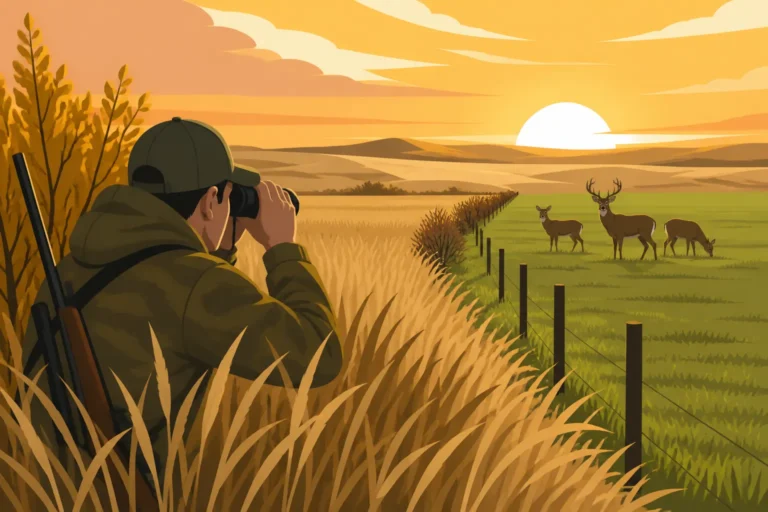
On farm edges, dense cover is often fragmented, meaning you might not have a huge stand of timber to hide in. This makes using whatever natural concealment is available—a clump of willows, a fence line overgrown with brush, the edge of a standing crop like corn or even a small rise in the terrain—absolutely critical. You need to be able to disappear from sight, especially when an elk is approaching. But concealment isn't just about hiding; it's also about creating clear shooting lanes. You don't want to get caught with a bull at 50 yards behind a screen of branches you didn't account for. Clear small lanes if possible before an encounter, or pick a spot where natural openings exist. Remember that elk can be surprisingly quiet, especially when coming into a call, so be ready to shoot as soon as they become visible.
Using Terrain to Your Advantage
The subtle undulations of farmland can be your best friend or worst enemy. A small coulee, a shallow drainage ditch, or even a slight rise in a field can be used to break up your silhouette and provide a strategic advantage. When a bull bugles back, try to move to a position where he has to come over a rise or around a bend to see you. This allows you to control the engagement, giving you precious seconds to draw your bow or shoulder your rifle as he appears. Conversely, avoid silhouetting yourself on a hilltop, as this will make you an easy target for their keen eyesight. Knowing Scouting With Satellite Imagery in Saskatchewan can help you pre-plan these terrain-based setups. A simple contour line on a map might represent the perfect hidden approach or calling vantage point.
Addressing Challenges and Adapting Tactics
Hunting elk on the farm edge isn't without its unique frustrations. From silent bulls to noisy machinery, you’ll need to be flexible and persistent.
Dealing with Unresponsive Bulls
We’ve all been there: you let out what you think is a perfect bugle, and… crickets. An unresponsive bull can be incredibly frustrating. On farm edges, bulls might be wary due to pressure or simply content with their current situation. If a bull isn't responding, don't immediately give up. Try a different type of call—switch from an aggressive bugle to soft cow mews, or a lost calf call. Wait longer between calling sequences. Sometimes, a silent bull is actually sneaking in to investigate. If he’s truly unresponsive, don't chase him across open fields. Instead, try to reposition downwind, get closer to suspected bedding cover, and try again from a fresh angle. Sometimes, moving 200-300 yards can change everything. Persistence, patience, and adapting your calling volume and style are key.
Managing Farm Equipment Noise and Disturbance
This is a challenge unique to farm edge hunting. The rhythmic hum of a nearby pump jack, the distant rumble of a tractor, or even the sound of cattle lowing can interfere with your calling and the elk's ability to hear you. While you can't control the local farmer's schedule, you can adapt. Try to hunt areas where farming activity is less intense, or plan your hunts for weekends or evenings when machinery is typically quiet. If you know a particular field is being worked, focus on adjacent cover or move to a different area. On other occasions, the noise can be a mixed blessing: a well-timed tractor might briefly distract an elk, allowing you to move into a better position unnoticed. Always be aware of your surroundings, and don't mistake farm noise for an elk.
Hunting Pressured Elk
Elk that live near human habitation and are regularly hunted quickly become wise. They learn to move silently, travel mostly at night, and avoid open areas during daylight. Hunting these pressured elk requires stealth, patience, and often, less aggressive calling. Instead of trying to pick a fight, focus on subtle, conversational calls. Use light cow mews to sound like a lone, available cow, or soft grunts to suggest a contented bull. You might have more success in the fringes of dawn and dusk, pushing closer to bedding areas. Consider setting up and waiting patiently rather than actively stalking and calling. Think of it more like Hunting Whitetails in Saskatchewan's Forest Fringe—you're playing a waiting game in thick cover. Using an app like GoHunt for land ownership details can also help identify potential low-pressure areas, especially on private land where permission has been secured.
Post-Hunt Considerations and Ethical Practices
Successfully bugling in an elk is just part of the journey. What happens after the shot is equally important, particularly when hunting in agricultural landscapes.
Ethical Shot Placement and Tracking
An ethical shot is paramount. When hunting elk, aim for the vitals—the heart and lungs—to ensure a quick, humane kill. These are large animals, and a poor shot can lead to a long, difficult, and potentially unsuccessful recovery. Once the shot is taken, give the animal time, especially if it's a marginal hit. If you see it go down, great. If not, wait at least 30 minutes to an hour for a lung shot, and longer for a gut shot, allowing the animal to expire or stiffen up. When tracking, be methodical. Look for blood, broken branches, disturbed leaves, and tracks. In the relatively open ground of farm edges, tracking can sometimes be easier than in dense bush, but elk can still cover ground quickly. Always follow up thoroughly, even if it's getting dark. Learning about Meat Care in Saskatchewan's Cold Snaps can also help you prepare for the practicalities of processing your elk.
Carcass Care in Farmland Environments
Once you’ve recovered your elk, proper carcass care is crucial, especially in warmer early season conditions. Field dress the animal quickly to allow it to cool down, removing all entrails. If you're far from your vehicle, quartering the animal might be necessary. Hauling out an entire elk, which can weigh upwards of 700-1000 pounds, is a monumental task. Consider having a game cart, ATV, or even a second vehicle ready to help with extraction. Be mindful of where you're dressing the animal; avoid contaminating fields or leaving a messy site. Pack the meat in game bags to keep it clean and protect it from flies and dirt. If you’re processing it yourself, remember that elk meat is excellent and versatile.
Landowner Relations and Reporting
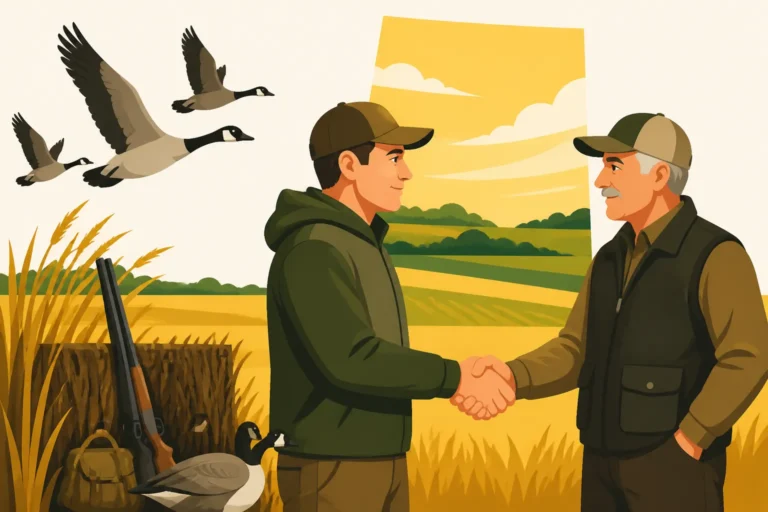
Hunting on farmland almost always involves private land, making good landowner relations absolutely critical. Always ensure you have explicit permission before hunting. This means Knocking on Doors in Saskatchewan Farm Country and respecting their property. If you harvest an elk, it’s a good practice to inform the landowner, thank them for the opportunity, and perhaps even offer some of the meat. This goodwill goes a long way in securing future hunting opportunities. Also, remember your legal obligations for tagging and reporting your harvest to Saskatchewan Environment. Knowing the rules around Saskatchewan Landowner Permission Law and Saskatchewan Posted Land Sign Rules is essential for a responsible hunter. Maintaining respectful relationships with landowners ensures that these valuable farm edge hunting opportunities remain available for everyone.
Disclaimer
The information provided in this guide is for general educational purposes only and is not a substitute for professional advice or for consulting the official Saskatchewan hunting regulations. Always refer to the current Saskatchewan Hunters' and Trappers' Guide for precise and up-to-date rules and regulations. Hunting involves inherent risks, and hunters should always prioritize safety, ethics, and responsible land use.