Hunting Saskatchewan Winter Weather Safely
The biting cold of a Saskatchewan winter can be daunting, turning what should be an exciting hunting adventure into a grueling, even dangerous, ordeal if you're not prepared. Many hunters, even seasoned ones, underestimate just how quickly conditions can change out here, leading to frostbite, hypothermia, or getting hopelessly stuck miles from anywhere. This comprehensive guide is designed to equip you with the knowledge and strategies to not only survive but thrive during a winter hunt in Saskatchewan, ensuring both your safety and your success.
Understanding Saskatchewan's Winter Landscape and Hazards
Saskatchewan winters are legendary for a reason, and it's not just the crisp, clean air. It’s a landscape that demands respect, where beauty and danger often coexist in the same breathtaking view. Truly understanding what you’re up against is the first step in preparing for a safe and successful winter hunt.
The Brutality of Prairie and Boreal Cold
When we talk about cold in Saskatchewan, we're not just talking about temperatures hovering around freezing. We're talking about conditions that can literally take your breath away. Average daytime lows in January can easily dip to -20°C (-4°F), but it's not uncommon for temperatures to plummet to -30°C (-22°F) or even -40°C (-40°F) with the wind chill. This isn't just uncomfortable; it's genuinely dangerous. The dry air often makes it feel colder than the thermometer indicates, and exposed skin can suffer frostbite in minutes.
The wind is a relentless force across our vast prairies, amplifying the cold significantly. A seemingly mild -15°C day can feel like -30°C when a brisk 20 km/h wind whips across the open stubble fields. Even in the seemingly more sheltered boreal forest fringe areas, wind can channel through treed bluffs and cutlines, creating bitter drafts. Knowing the difference between actual air temperature and the "feels like" temperature due to wind chill is absolutely crucial for planning your attire and limiting your exposure.
Navigating Snowfall and Ice Conditions
Winter in Saskatchewan brings snow, sometimes a gentle dusting, other times a full-blown blizzard that can bury vehicles and obscure trails. Snow depths vary dramatically across the province and throughout the season. Early December might see a few inches of powder, while late January or February could mean drifts several feet deep, especially along field edges or in sheltered coulees. These depths pose significant challenges for travel, whether you're on foot, in a truck, or on a quad. What looks like solid ground can be a deceptive layer of snow over hidden obstacles or even open water.
Frozen sloughs, potholes, and river systems are common hunting areas, but they present a major risk. While many smaller bodies of water freeze solid enough to walk on, larger ones or areas with currents can have dangerously thin ice, even in the deepest cold. A seemingly innocuous snowdrift might conceal a culvert or a deep ditch, making a simple walk across a field a perilous venture. Always assume ice is unsafe until you have thoroughly checked it, and even then, exercise extreme caution.
The Rapid Change of Winter Weather
Perhaps one of the most frustrating and dangerous aspects of Saskatchewan's winter weather is its unpredictable nature. You might wake up to a clear, calm, and relatively mild day, only for a blinding blizzard to roll in by noon, dropping visibility to zero and sending temperatures plunging. These rapid changes, often fueled by Arctic air masses, can strand hunters, cause disorientation, and quickly lead to hypothermia.
It's not just blizzards; temperature swings can also be dramatic. A week of -30°C can be followed by a few days of above-freezing temperatures, only to drop back down just as quickly. These fluctuations affect ice thickness, snow consistency, and animal movement. The golden rule for winter hunting here is constant vigilance over weather forecasts, not just for the day you plan to hunt, but for the entire duration of your trip and even the following day. Always have a contingency plan in case the weather turns hostile quicker than anticipated.
Essential Gear and Clothing for Extreme Cold
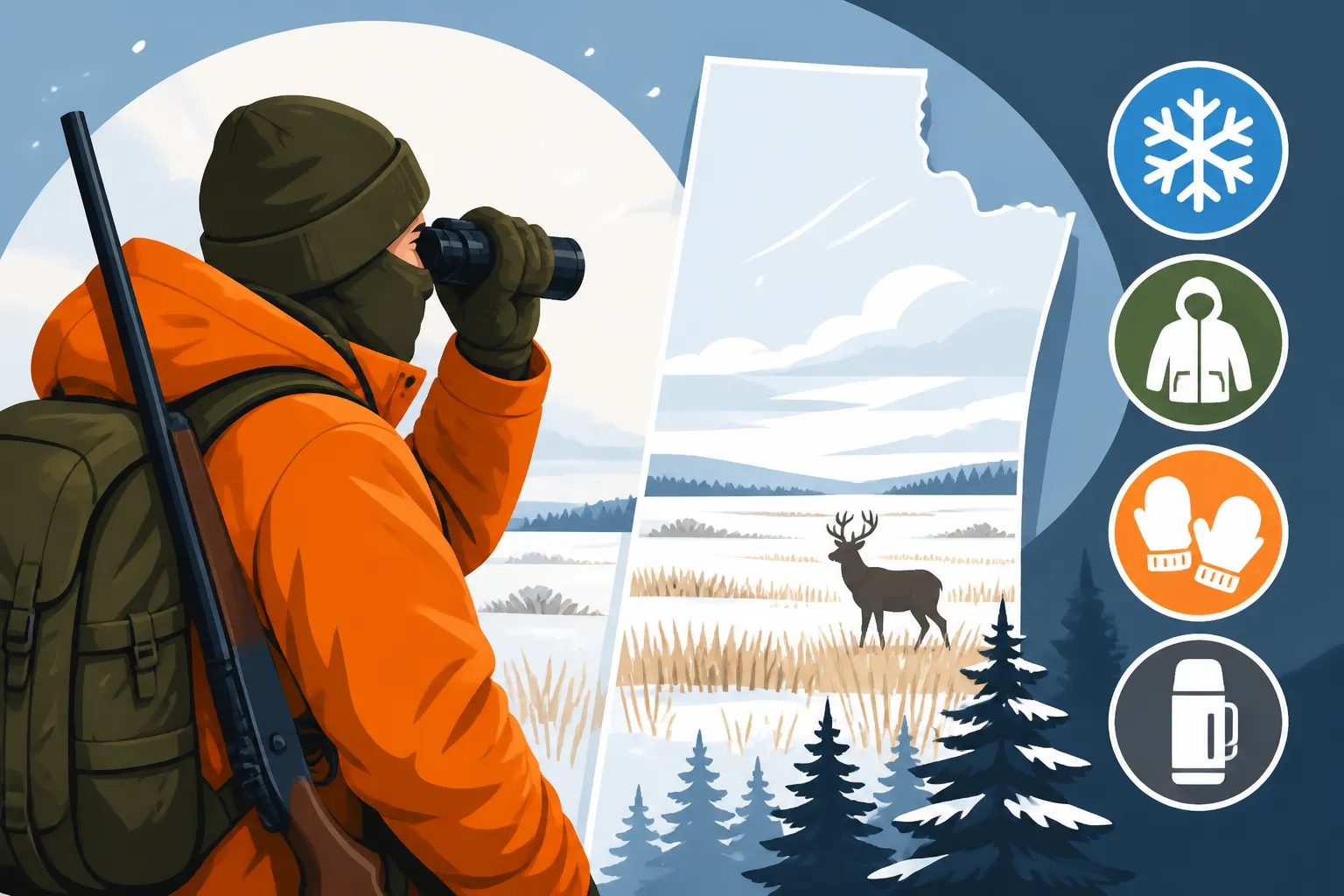
Staying warm is paramount when hunting in Saskatchewan's winter. This isn't the time for shortcuts or compromising on quality. The right gear isn't just about comfort; it's about survival. You need a system that adapts to exertion, rest, and changing conditions.
Layering for Optimal Warmth and Moisture Management
The key to staying warm in extreme cold is layering, a system that traps warm air close to your body while allowing moisture to escape. Start with a high-quality base layer made of merino wool or synthetic materials. These fabrics wick sweat away from your skin, preventing that clammy, cold feeling that sets in when you stop moving. Cotton is an absolute no-go; it absorbs moisture and loses all insulating properties when wet, turning into a cold, heavy sponge.
Next comes your mid-layer, which provides the bulk of your insulation. Fleece, down, or synthetic puff jackets work wonderfully here. Depending on how active you'll be, you might even have multiple mid-layers. For instance, a lighter fleece for walking in, and a heavier down jacket to throw on when you're sitting still in a blind. Finally, your outer shell needs to be windproof and waterproof, yet breathable. This is your shield against the elements—the biting wind, blowing snow, and any unexpected precipitation. Brands like Stone Glacier or First Lite offer excellent layering systems designed for cold-weather hunting, but even good quality local outdoor gear stores can set you up with the right components.
Protecting Extremities: Head, Hands, and Feet
Your head, hands, and feet are your body's radiators, and protecting them is crucial to maintaining core body temperature. For your head, a warm, insulated hat is a must, preferably one that covers your ears. A balaclava or neck gaiter can provide additional protection for your face and neck from windburn and frostbite, especially when glassing in open areas. Goggles can also be invaluable for protecting your eyes from wind and blowing snow, especially if you're using a quad or snowmobile.
Hands are tricky because you need both warmth and dexterity. A layering system for your hands works best: thin, touch-screen compatible liners under a pair of heavy, insulated gloves or mitts. Many hunters prefer mitts for maximum warmth and then slip out a finger or two from the liner to operate firearms or calls. For your feet, forget about fashion. Invest in high-quality, heavily insulated winter boots, preferably rated for extreme cold (like -40°C or colder). Brands like Baffin or Muck Boots are popular for their warmth and durability. Pair these with thick merino wool socks, and consider bringing an extra pair to change into if your feet get damp. Don't forget chemical hand and foot warmers – they can make a huge difference during long hours in a blind.
Emergency Survival Kit Essentials
Even with the best planning, things can go wrong. A well-stocked emergency survival kit isn't optional; it's a non-negotiable part of hunting in Saskatchewan's winter. This kit should include multiple ways to start a fire (waterproof matches, lighter, fire starter), extra high-calorie food (energy bars, nuts), and a way to melt snow for water if necessary. An emergency shelter, like a heavy-duty space blanket or a lightweight tarp, can provide critical protection if you're stranded.
Communication is key when things go sideways. While cell service is surprisingly good in many populated areas, it quickly vanishes once you head into the true wilderness or even just a few miles off the main grid roads. A satellite messenger device, such as a Garmin inReach or Zoleo, is highly recommended as it allows you to send and receive messages and, most importantly, send an SOS signal from anywhere. Always carry a physical map and compass in addition to your GPS or smartphone mapping app, as electronics can fail in extreme cold. Finally, ensure you have a comprehensive first-aid kit. Consider preparing a dedicated Winter Truck Kit for a Saskatchewan Hunt that stays in your vehicle, stocked with shovels, traction aids, extra fuel, blankets, and a tow strap, ready for any roadside emergency.
Strategic Planning for Winter Hunts
Successful and safe winter hunting in Saskatchewan isn't about luck; it's about meticulous planning. You can't just wake up and decide to go; you need to anticipate challenges and prepare for every eventuality. This involves a deep dive into weather, communication, and understanding the subtle shifts in game behavior.
Thorough Pre-Trip Weather Monitoring
Before you even think about heading out, make weather monitoring a ritual. Don't just check one source; cross-reference multiple reputable weather apps and websites. Environment Canada is usually a good starting point for official forecasts, but local news outlets or apps like AccuWeather or The Weather Network can offer slightly different perspectives or more detailed hourly breakdowns. Pay close attention to temperature, wind speed and direction, snowfall accumulation, and most critically, the wind chill factor. A small change in wind speed can make a huge difference in how long you can comfortably sit on stand.
Beyond the general forecast, try to understand local microclimates. The wind might be brutal on an open prairie field, but a nearby bluff or heavy cover in a coulee could offer significant thermal protection. Also, look beyond your planned hunting day. What's the forecast for the night after your hunt? What about the day you plan to travel home? Knowing if a major storm is brewing can help you decide whether to shorten your hunt or delay your departure. If the conditions look truly awful – severe cold warnings, blizzard warnings, extreme wind chills – sometimes the safest and smartest move is to postpone the hunt altogether. No animal is worth risking your life over.
Crafting a Detailed Communication and Emergency Plan
Hunting alone in winter is inherently riskier. If you do, or even if you're with a group, a robust communication and emergency plan is absolutely vital. Before you leave home, tell someone reliable your exact hunting location, your intended route, when you expect to return, and specific check-in times. Stick to these check-in times religiously. If you don't check in, your contact person should know exactly what to do and who to call (local RCMP or conservation officers).
Understand that cell service in rural Saskatchewan is often spotty at best. Many prime hunting areas are in dead zones. This reinforces the need for satellite communication devices mentioned earlier. Discuss rendezvous points with your hunting partners in case you get separated or your vehicles become stuck. Ensure everyone knows the nearest towns, hospitals, and major roadways. It's also wise to have a copy of your hunting license, emergency contacts, and medical information readily accessible. Knowing What to Do If You Get Stuck in the Bush – whether your truck is buried in a drift or you're disoriented in a whiteout – could literally save your life.
Understanding Game Behavior in Winter Conditions
Animals, especially big game like whitetails and moose, adapt their behavior significantly in winter. They become experts at energy conservation and seeking thermal cover. Whitetails, for instance, will often "yard up" in dense evergreen stands, thick willow runs, or deep coulees that offer protection from wind and deep snow. These areas, like a Hunting a Saskatchewan Bush Bluff or a Hunting a Willow Run for Whitetails, become critical sanctuaries. Knowing Where Saskatchewan Whitetails Bed in Snow is essential, as they will often stick to these areas for warmth.
Their feeding patterns also shift. They'll minimize movement, often feeding more heavily during milder parts of the day or concentrating on high-energy food sources. Identifying these crucial bedding and feeding areas is key. The good news is that fresh snow often makes it easier to read sign. Learning to decipher tracks, rubs, and browse lines in the snow will tell you a story about recent animal activity. This ability to interpret Reading Sign After Fresh Saskatchewan Snow becomes an invaluable scouting tool, guiding you to areas where game is concentrated and actively moving, thereby maximizing your hunting efficiency and minimizing unnecessary exposure to the cold.
On-the-Ground Tactics and Safety Protocols
Once you're out in the field, even with the best gear and planning, it's the moment-to-moment decisions and adherence to safety protocols that will determine your well-being. Winter hunting requires a different mindset—one focused on conservation of energy and constant awareness of your physical state.
Staying Hydrated and Fueled
It's a common misconception that you don't need to worry about hydration in cold weather. In reality, you're still losing fluids through respiration, sweating from exertion, and simply processing the cold air. Dehydration, combined with the cold, can significantly increase your risk of hypothermia and impair your judgment. Carry plenty of water, but be mindful that it can freeze. Insulated bottles or a thermos filled with warm water, tea, or even a low-sodium broth are excellent choices. Keeping bottles inside your jacket or sleeping bag can also help prevent them from freezing solid.
Just as important as hydration is caloric intake. Your body is burning a massive amount of energy just to stay warm in sub-zero temperatures. Pack high-energy, easily digestible snacks like trail mix, chocolate, jerky, and energy bars. Don't skip meals, and try to eat warm food if possible. A small backpacking stove can be invaluable for heating water for drinks or instant meals, providing internal warmth and a morale boost when sitting still for hours, especially when you're Sitting All Day in a Saskatchewan Blind.
Recognizing and Preventing Cold-Related Injuries
Hypothermia and frostbite are not just abstract risks; they are very real dangers in Saskatchewan's winter. Hypothermia occurs when your body loses heat faster than it can produce it, leading to a dangerously low core body temperature. Early symptoms include shivering, confusion, slurred speech, clumsiness, and apathy. It's critical to recognize these signs in yourself and your hunting partners. If you suspect hypothermia, get the person out of the cold, remove any wet clothing, provide dry layers, and offer warm, sweet drinks. In severe cases, seek immediate medical attention.
Frostbite is the freezing of body tissue, most commonly affecting fingers, toes, ears, and nose. It starts with numbness, stinging, or aching, and the skin may appear waxy, pale, or grayish-blue. Never rub a frostbitten area, and avoid re-warming if there's a chance it could refreeze. The best prevention is proper layering, covering exposed skin, and keeping extremities dry. Pay close attention to how your body feels; if a body part feels unusually cold or numb, take immediate action to warm it up. Remember, overexertion and excessive sweating can quickly lead to hypothermia once you stop moving, as wet clothing loses its insulating properties.
Safe Travel on Foot and Vehicle
Traveling through winter conditions, whether on foot or by vehicle, requires extra precautions. When walking on snow-covered ground, be aware of hidden hazards like rocks, stumps, or uneven terrain. Snowshoes can be a lifesaver in deeper snow, making travel less exhausting and preventing post-holing. If you're walking across frozen bodies of water, even a Hunting a Frozen Slough Crossing, remember the advice about ice safety – test the thickness frequently and never cross alone if possible.
For vehicle travel, your truck or ATV needs to be winterized. Ensure your block heater is working, carry recovery gear like a shovel, tow strap, and traction mats. Let someone know your route, especially if you plan to travel on less-maintained grid roads or trails. Be mindful of Quad and Side-by-Side Rules on Crown Land, ensuring you are legally operating your vehicle. Remember that winter roads, especially secondary ones, can drift shut quickly, potentially stranding you. Always have sufficient fuel, and consider bringing an extra jerry can. When hunting on private land, ensure you have explicit permission from the landowner, as getting stuck or breaking down on someone's property without their knowledge can lead to serious issues and damage relationships. Apps like GoHunt can sometimes assist with land ownership identification, though direct contact and permission remain paramount.
Post-Harvest Care and Winter Logistics
The hard work doesn't stop once you've successfully harvested an animal in Saskatchewan's winter. In fact, the unique challenges of the cold present both advantages and disadvantages for field dressing and transporting your game. Proper care at this stage is crucial for ensuring the quality of your hard-earned meat.
Field Dressing and Meat Care in Sub-Zero Temperatures
One of the undeniable benefits of a successful winter hunt is the natural refrigeration provided by the cold. Sub-zero temperatures are fantastic for rapidly cooling a carcass, inhibiting bacterial growth, and preserving the meat. However, there are also challenges. Field Dressing in Saskatchewan's Deep Cold requires specialized techniques and awareness. Your hands will get cold quickly, even with gloves, so having hand warmers at the ready and perhaps an extra pair of gloves is essential. Work quickly and efficiently, but don't rush to the point of making mistakes.
The ground can be frozen solid, making it difficult to properly position the animal or get it off the snow. You'll want to get the animal completely gutted and skinned as soon as possible to allow the body heat to escape. If the temperature is extremely low (say, below -15°C), be careful not to let the meat freeze solid too quickly on the outside, which can trap heat inside and lead to spoilage. Hang the carcass if possible, or prop it open to ensure air circulation. Protect it from scavengers like coyotes and ravens, which are always on the lookout for an easy meal in winter.
Transporting Game in Winter
Once the animal is field-dressed, the next hurdle is getting it out of the bush. A sled or toboggan can be an absolute game-changer in snow, making it much easier to drag a deer or even quarters of a moose or elk back to your vehicle. If you've been successful in your Whitetail Hunting in Saskatchewan efforts, a good sled can prevent injury and excessive exhaustion. If you're fortunate enough to have permission and access, a quad or snowmobile can significantly ease the burden, but ensure you follow all regulations for their use on public or private land.
When loading the game onto a truck or quad, secure it properly to prevent it from shifting or falling off. If you have a long drive back, consider covering the carcass with a tarp to protect it from road grime and to slow down superficial freezing if the temperatures are extremely low, which can cause cracking and freezer burn. For larger animals, transporting quarters is usually more practical. Keep the meat cool but avoid letting it freeze completely solid if you plan on taking it to a butcher immediately, as thawing and refreezing can affect quality. For longer storage, refer to best practices for Meat Care in Saskatchewan's Cold Snaps, which might involve hanging in a cool, sheltered shed or garage.
Planning for Extended Stays and Contingencies
Remote winter hunts, especially for larger game like moose or elk in the northern forests, often involve extended stays at camps, whether a cabin, wall tent, or even a backcountry spike camp. Planning for these situations requires foresight into logistics. Ensure you have ample fuel for heating and cooking, as well as backup generators or additional heat sources. Snow clearing tools, like shovels and perhaps a small snowblower for larger camps, are essential for maintaining access.
Always build flexibility into your plans. Winter weather can be highly unpredictable, and travel delays, road closures, or unexpected blizzards can throw a wrench into even the best-laid schedules. Have extra food, water, and fuel on hand for an additional day or two beyond your planned stay. It's often better to ride out a storm in a secure camp than to risk traveling in dangerous conditions. Being prepared for these contingencies means you can truly enjoy the unparalleled beauty and challenge of a Saskatchewan winter hunt, rather than constantly worrying about what might go wrong.
| Category | Essential Items | Purpose |
|---|---|---|
| Layering System | Merino wool/synthetic base layers | Wicks moisture, primary warmth layer |
| Fleece/down/synthetic mid-layers | Provides bulk insulation, adaptable to activity level | |
| Windproof, waterproof, breathable outer shell (jacket & pants) | Protects against wind, snow, and rain; allows moisture vapor to escape | |
| Extremities | Insulated hat (covers ears), balaclava/neck gaiter | Prevents heat loss from head/neck, protects face from windburn |
| Layered gloves (liners + insulated over-mitts) | Warmth, dexterity, and quick access for trigger/calls | |
| Extreme cold-rated boots (-40°C or colder), thick wool socks (multiple pairs) | Keeps feet warm and dry, prevents frostbite | |
| Survival & Safety | Fire starting kit (multiple methods), high-calorie food, water/thermos | Emergency warmth, energy, hydration |
| Emergency shelter (space blanket/tarp), first-aid kit | Protection from elements, immediate medical care | |
| GPS, map, compass, satellite messenger (Garmin inReach/Zoleo) | Navigation, emergency communication beyond cell service | |
| Headlamp/flashlight (with extra batteries) | Visibility in low light, camp tasks | |
| Vehicle/Travel | Shovel, tow strap, traction aids, extra fuel (jerry can) | Self-recovery from stuck vehicles, extended travel |
| Sled/toboggan | Easier game retrieval over snow | |
| Snowshoes/skis (optional, but highly recommended in deep snow) | Efficient travel in deep snow, reduces exertion |
Disclaimer
The information provided in this guide is for general informational purposes only and does not constitute professional advice. Hunting in winter conditions carries inherent risks, and individual responsibility, proper training, and adherence to all local regulations are paramount. Always exercise caution, prepare thoroughly, and prioritize safety above all else.