Hunting Huns Along a Saskatchewan Shelterbelt
Chasing Hungarian partridge, affectionately known as Huns, can be one of the most exhilarating and frustrating hunts in Saskatchewan. These wily little birds have a knack for disappearing into thin air, especially when nestled deep within the protective confines of a shelterbelt. If you've spent countless hours trudging through stubble fields only to have a covey flush 100 yards out, you know the feeling. This guide is here to unravel the mysteries of hunting Huns specifically within Saskatchewan's shelterbelts, offering practical strategies to increase your success and enjoy the challenge.
The Elusive Nature of Huns and Why Shelterbelts Matter
Hungarian partridge are truly survivors, thriving in agricultural landscapes that would challenge many other game birds. Their camouflage is exceptional, their speed is legendary, and their ability to run rather than fly can test the patience of even the most seasoned upland hunter. But understanding why they favor shelterbelts is the first step to consistently finding them.
Why Huns Love Shelterbelts
Shelterbelts, those linear plantings of trees and shrubs farmers put in for windbreaks and erosion control, are absolute magnets for Huns. Think about it: a seemingly endless supply of food in adjacent stubble fields, dense cover to hide from predators, and crucial thermal protection from Saskatchewan's often harsh winds and winter cold. These tree lines provide a perfect blend of concealment and easy access to feeding grounds. During mild weather, Huns might venture out into the fields, but when the wind howls or temperatures drop, those shelterbelts become their fortress. They offer refuge from overhead predators like hawks and owls, and dense undergrowth can make a dog’s job, and a hunter’s shot, incredibly difficult. It’s also where they often hold tight, sometimes to a fault, until you are nearly on top of them, or conversely, flush a country mile away, depending on their mood and pressure.
Understanding Hun Behavior and Covey Dynamics
Huns are notoriously social birds, almost always found in coveys that can range from a handful to a couple dozen individuals. This covey behavior means that when you find one, you usually find more – if you can manage to get a shot or two before the whole group explodes into flight. Their daily routine is often quite predictable: they'll leave the shelterbelt cover at first light to feed in nearby grain fields, especially those with peas, lentils, or wheat stubble. As the morning progresses, they might loaf in sunny spots along the shelterbelt's edge, dusting themselves or digesting their meal. In the afternoon, they repeat the feeding pattern before returning to the thickest part of the shelterbelt or an adjacent heavy cover patch for the night. Wind is a huge factor; Huns will typically face into the wind, hunkering down to minimize heat loss and maximize their ability to detect threats. They are constantly alert, relying on their keen eyesight and hearing to avoid danger. This is why a strategic approach is absolutely essential; simply walking down a shelterbelt without considering wind direction or escape routes is often a recipe for a frustrating hunt.
Scouting and Pre-Hunt Preparation for Shelterbelt Huns
Success with shelterbelt Huns often comes down to the work you do before you even shoulder your shotgun. This isn't a game of chance; it's a game of observation and thoughtful planning.
Reading the Landscape for Hun Hotspots
Before you even step foot in the field, take some time to scout. This can be done effectively with binoculars from a vehicle or, even better, by utilizing digital mapping tools. Applications like GoHunt provide invaluable satellite imagery that allows you to identify promising shelterbelts, especially those bordering productive stubble fields. Look for shelterbelts that are dense and varied in vegetation, offering both low-lying shrubs and taller trees. Pay close attention to corners or intersections of shelterbelts, as these often create concentrated areas of cover and offer multiple escape routes, making them prime spots for coveys. Also, note any gaps or openings in the tree line; Huns often use these as travel corridors between feeding and bedding areas. Observing where birds flush during a casual drive or noting fresh tracks in a light snowfall, as detailed in Reading Sign After Fresh Saskatchewan Snow, can give you critical intelligence. Don't forget to look for other signs like droppings, dusting bowls, or even shed feathers along the edges.
Timing Your Hunt for Optimal Success
Timing is critical when pursuing Huns. The early morning and late afternoon are generally the best times, coinciding with their peak feeding activity. However, shelterbelt hunting can be especially productive mid-day, particularly on colder, windier days when birds are more likely to be hunkered down for warmth and protection. During these times, they may hold tighter, giving you a better chance to get into range. Hunting Saskatchewan Winter Weather Safely provides great advice on planning for the colder conditions often experienced during Hun season. Always check the Saskatchewan Game Bird Seasons and Limits to ensure you're hunting legally and within bag limits. Remember, while Huns are robust, extreme cold can make them less active and more difficult to flush. Conversely, a warm, calm day might see them spread out more, making it harder to find a concentrated covey.
Effective Hunting Strategies for Saskatchewan Shelterbelts
Hunting Huns in shelterbelts requires a blend of stealth, strategy, and often, teamwork. Going in with a haphazard approach will likely lead to wasted effort and spooked birds.
Walking Them Up: The Classic Approach
For the solo hunter or a small group without dogs, the "walk-up" strategy is the most common. The key here is not to just walk down the middle of the shelterbelt. Huns will often run its length before flushing, or burst out the sides. A better approach is to have one or two hunters walk slightly inside the shelterbelt, while another walks 10-20 yards out in the adjacent field, especially if the wind is blowing towards the field. This creates a pincer movement, flushing birds into the open field or back towards the middle, hopefully within shooting range. Walk slowly and deliberately, pausing frequently. Huns often get nervous and will hold tight, thinking you haven't seen them, but a sudden stop or change of pace can sometimes make them panic and flush. Pay particular attention to dense patches of brush or areas with tall weeds within the tree line, as these are prime hiding spots. When you reach the end of a shelterbelt, don't just turn around and walk back. Circle around and hunt it from the opposite direction, as birds that ran the length might be waiting there.
Working With Dogs for Increased Success
Without a doubt, a good bird dog significantly increases your chances of success when Hunting Hungarian Partridge on Saskatchewan Farms. Pointers or flushers can locate birds that would be invisible to the human eye and help retrieve downed birds from thick cover.
- Pointing Dogs: A well-trained pointing dog, like a German Shorthaired Pointer or English Setter, is a joy to watch. They can lock up on scent, giving you time to get into position before the covey bursts. When Using a Pointing Dog on Saskatchewan Prairie, allow your dog to work the downwind side of the shelterbelt, scenting birds that are tucked deep into the cover. Their ability to hold a point allows you to approach carefully, ready for the flush.
- Flushing Dogs: Labs or Spaniels excel at Using a Flushing Dog in Thick Cover. These dogs are trained to go into the cover, find the birds, and push them out. With a flusher, it’s often best to have the dog work the shelterbelt while hunters walk on either side, ready for birds to erupt. This can be particularly effective in very dense shelterbelts where a pointer might struggle to get scent, or where birds are prone to running.
No matter the breed, ensure your dog is conditioned for the cold, has appropriate protective gear if needed (like booties for rough stubble), and is current on all vaccinations. Remember, safety first for both you and your canine companion. GoHunt's mapping features can help you pre-plan routes that minimize hazards for your dog.
Safety and Etiquette in Farm Country
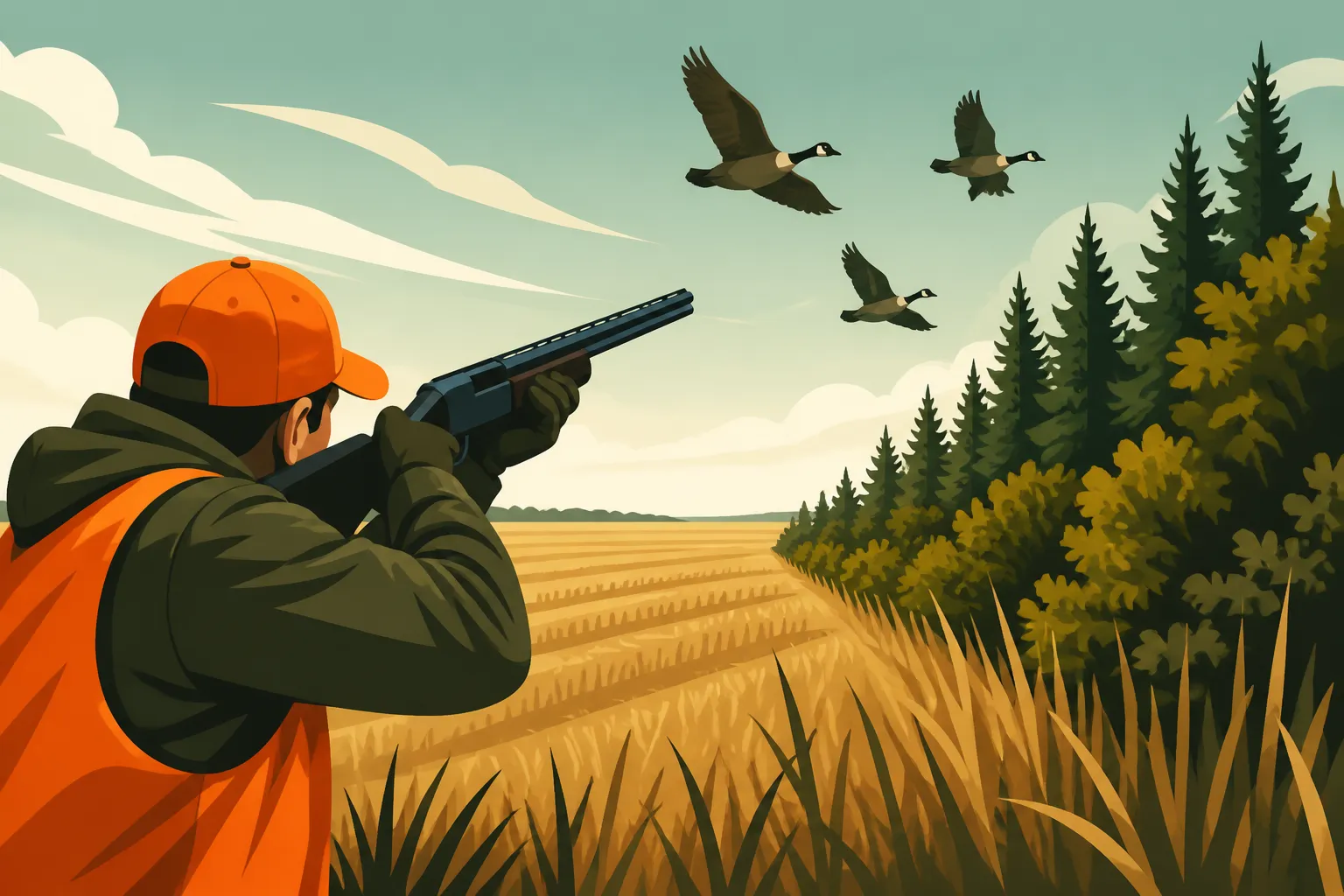
Hunting shelterbelts often means hunting on private land, which makes landowner relations paramount. Always obtain explicit permission before entering any private property. Knocking on Doors in Saskatchewan Farm Country is an essential skill to develop. Respect their land, close gates, and drive only on designated trails or main roads. Also, be acutely aware of surroundings – livestock, farm buildings, and other hunters. The general rule of thumb for safe shooting is to know your target and what's beyond it. Shelterbelts can be close to farmyards or roads, so choose your shots carefully. Remember, Saskatchewan has strict Saskatchewan Posted Land Sign Rules, so always double-check for signs and adhere to any specific requests from the landowner, such as "Hunt on Foot Only." Carrying a blaze orange vest is mandatory for good reason and helps ensure you're visible to others.
Essential Gear and Post-Hunt Considerations
Having the right gear won't guarantee success, but it certainly tips the odds in your favor and makes the experience more enjoyable and safer.
Recommended Firearms and Ammunition
For Hungarian partridge, a fast-swinging shotgun is your best friend. They are small, quick, and can present challenging shots. A 12-gauge or 20-gauge shotgun is typically preferred, with an Improved Cylinder or Modified choke providing a good balance for close flushes and slightly longer shots. As for ammunition, 2 ¾-inch shells loaded with #6 or #7 ½ lead shot are excellent choices. While Non-Toxic Shot for Saskatchewan Waterfowl is a requirement for ducks and geese, it is not mandatory for upland birds like Huns. However, if you're carrying non-toxic for other hunts, it will work just fine for Huns as well. Bring plenty of shells; Huns often flush in bursts, offering multiple quick shooting opportunities if you're ready.
| Item | Recommendation | Notes |
|---|---|---|
| Shotgun | 12-gauge or 20-gauge, semi-auto or over/under | Fast-swinging is key. |
| Choke | Improved Cylinder or Modified | Provides good spread for quick, close shots while retaining pattern density for longer ones. |
| Ammunition | #6 or #7 ½ lead shot, 2 ¾-inch shells | Lead is legal for upland birds. Carry plenty, as coveys offer multiple shots. |
| Footwear | Comfortable, waterproof, ankle-supporting boots | You'll be doing a lot of walking, often on uneven terrain and in damp conditions. |
| Clothing | Layered, blaze orange vest/hat | Adapt to changing weather. Blaze orange is crucial for safety, especially with multiple hunters. |
| Navigation/Scouting | GPS device or smartphone with mapping app (e.g., GoHunt) | Essential for finding your way, marking spots, and checking land ownership. |
| Dog Gear (if applicable) | Whistle, vest, protective booties, water | Keep your dog safe and effective. |
| Miscellaneous | Water, snacks, field dressing knife, game bag, first-aid kit, landowner contact info | Always be prepared for a day in the field. |
Field Care and Regulations
Once you've successfully harvested a Hun, proper field care is important, especially if you're continuing to hunt or the weather is mild. Bleed the bird immediately and cool it down as quickly as possible. Many hunters prefer to breast out upland birds, but keeping them whole and skinning them later is also an option. Ensure you leave evidence of sex attached as required by Saskatchewan Tag Validation Rules if there are specific regulations in place.
Before heading out, make sure you've completed your Saskatchewan Hunter Education Requirements and understand all local regulations. It's not just about what you harvest, but how you conduct yourself in the field, respecting the land, the wildlife, and your fellow hunters. Hunting Huns in shelterbelts is a fantastic way to experience Saskatchewan's upland bird hunting, but it demands respect for these smart, challenging birds and the environment they call home.
Disclaimer
The information provided in this guide is for general informational purposes only and does not constitute legal advice. Hunting regulations, seasons, and licensing requirements can change, and it is the hunter's responsibility to consult the most current Saskatchewan hunting guide and local authorities before participating in any hunting activity.