Hunting a Qu’Appelle Valley Slope
The majestic Qu'Appelle Valley in Saskatchewan offers some truly incredible hunting opportunities, but let's be honest, its dramatic landscape can feel a bit overwhelming if you're not used to its unique challenges. That dizzying mix of steep slopes, dense bush, and open prairie edges can make you wonder where to even begin looking for game. This guide is here to demystify hunting a Qu'Appelle Valley slope, breaking down how to effectively scout, track, and ultimately harvest animals in this breathtaking, yet demanding, terrain.
The Qu'Appelle Valley: A Unique Hunting Landscape
When we talk about the Qu'Appelle Valley, we're not just discussing another patch of prairie. This is a geological marvel, a deep cut carved by glacial meltwaters, stretching across much of southern Saskatchewan. It's a lifeline of habitat, providing shelter, water, and food sources that are often scarce in the surrounding, more open agricultural land. Understanding this unique environment is your first step to unlocking its hunting potential.
Geographical Features and Their Impact on Wildlife
The Qu'Appelle Valley is defined by its dramatic elevation changes, featuring steep slopes, sheer cutbanks, and undulating ravines that drop down to the river itself. You'll find a mosaic of habitats here: dense aspen bluffs, willow thickets, thorny buffaloberry patches, and sections of mature treed coulees. These features create natural travel corridors, sheltered bedding areas, and prime feeding grounds, often concentrated in a relatively small area. The north-facing slopes, for instance, tend to hold more snow and retain moisture longer, leading to different vegetation and animal usage compared to the drier, south-facing slopes. Game animals, especially whitetail deer and mule deer, are experts at using these features to their advantage, moving through the thickest cover on the slopes, using draws to escape pressure, and bedding where they have both concealment and a good view.
Primary Game Species Found on the Slopes
While the Qu'Appelle Valley is renowned for its diverse wildlife, hunters primarily focus on deer. White-tailed deer thrive in the dense cover and abundant forage found along the valley's edges and within its numerous bluffs. These are often the same areas where you might be Hunting a Bluff Between Two Fields. Mule deer, though more typically associated with the open prairie and badlands, are increasingly found in the valley, especially in the more open, broken coulee country, often using the steep slopes and scattered timber for cover. Don't be surprised to encounter moose, especially in the eastern parts of the valley where habitat is wetter and more contiguous. There are also opportunities for predators like coyotes and even the occasional wolf, especially where the valley connects to larger tracts of bush. Waterfowl will use the Qu'Appelle River itself and any associated sloughs or oxbows.
Accessing the Valley: Challenges and Opportunities
Gaining access to hunt the Qu'Appelle Valley can be a mixed bag. Much of the valley bottom and slopes are privately owned farmland, so securing permission is paramount. This often means Knocking on Doors in Saskatchewan Farm Country, a skill that pays dividends across the province. However, there are also parcels of Crown land, often steeper and less arable, that offer public hunting opportunities. These might include provincial parks with specific hunting zones or various other provincial lands. Before you head out, I always recommend a thorough scouting session, both with boots on the ground and using satellite imagery. Apps like GoHunt are invaluable for identifying property boundaries, potential access points, and terrain features. Remember, some sections of the valley are incredibly steep, making vehicular access difficult or impossible, often requiring a good hike in.
Reading the Slopes: Understanding Game Movement
Once you're in the valley, simply walking around hoping to stumble upon game isn't the most effective strategy. The real key to success lies in understanding how animals use the varied terrain of the slopes. This involves careful observation and interpretation of their signs and habits.
Identifying Key Travel Corridors and Bedding Areas
Game animals, just like us, prefer the path of least resistance, but they also prioritize cover and safety. On a valley slope, this means identifying subtle benches, old farm trails, cattle paths, or even game trails that zigzag across the contours. These are often the key travel corridors. Look for fresh tracks, droppings, rubs, and scrapes along these paths. Bedding areas are typically found on secluded benches or thickets halfway up a slope, offering a commanding view down into the valley, but with thick cover to their backs. Often, a buck will bed on a point or knob where he can see danger approaching from multiple directions. When Reading Whitetail Sign in Saskatchewan Bluffs, these bedding sites become obvious once you know what to look for—matted down grass, fresh droppings, and perhaps even some shed hair. GoHunt's mapping layers can help you pinpoint these potential spots from home.
How Wind and Weather Influence Animal Behavior
The Qu'Appelle Valley's unique topography significantly impacts how wind moves through it, and consequently, how animals navigate. Wind can swirl unpredictably in draws and ravines, making scent control an even greater challenge. Animals will often bed on lee sides of hills or in thick pockets that offer protection from harsh winds, especially during cold snaps. A strong northwest wind, common in the fall, might push deer into dense bush on a southeast-facing slope. Conversely, during hot weather, they might seek out cooler, shadier north-facing slopes or bed down near water sources. Understanding these micro-climates and how they affect game movement is crucial. For instance, after a fresh snowfall, deer might move into areas with less snow accumulation or where specific food sources are more accessible.
Water Sources and Food Forage on the Slopes
The Qu'Appelle River itself is a constant water source, but many smaller springs, creeks, and sloughs are scattered throughout the valley and its side draws. These are magnets for game, especially in drier years. Identifying these water sources on your map or through scouting is critical. Food forage varies wildly by season and location. In early fall, standing crops on adjacent farmland or abandoned orchards within the valley are huge draws. Later in the season, browse like aspen, willow, and various berry bushes become primary food sources. Look for areas with a mix of these elements – water, food, and cover – as these will be your high-percentage hunting spots. Remember that agricultural fields adjacent to the valley, such as Hunting a Standing Canola Field Edge or Hunting a Swathed Grain Field at Dusk, will also draw deer from the valley to feed, especially at dawn and dusk.
Tactics for Hunting Qu'Appelle Valley Slopes
Now that you understand the lay of the land and how game uses it, let's talk about the specific tactics that will give you an edge when hunting the Qu'Appelle Valley slopes. This isn't flatland hunting, and your approach needs to be adapted to the vertical challenge.
Still-Hunting and Spot-and-Stalk Approaches
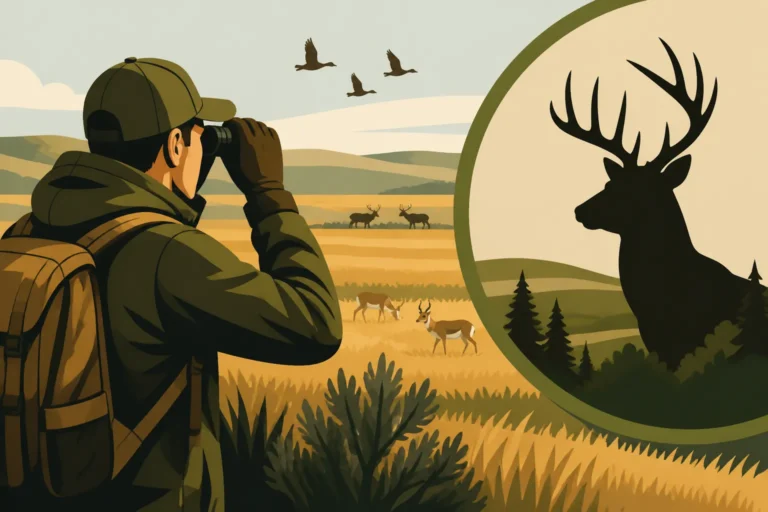
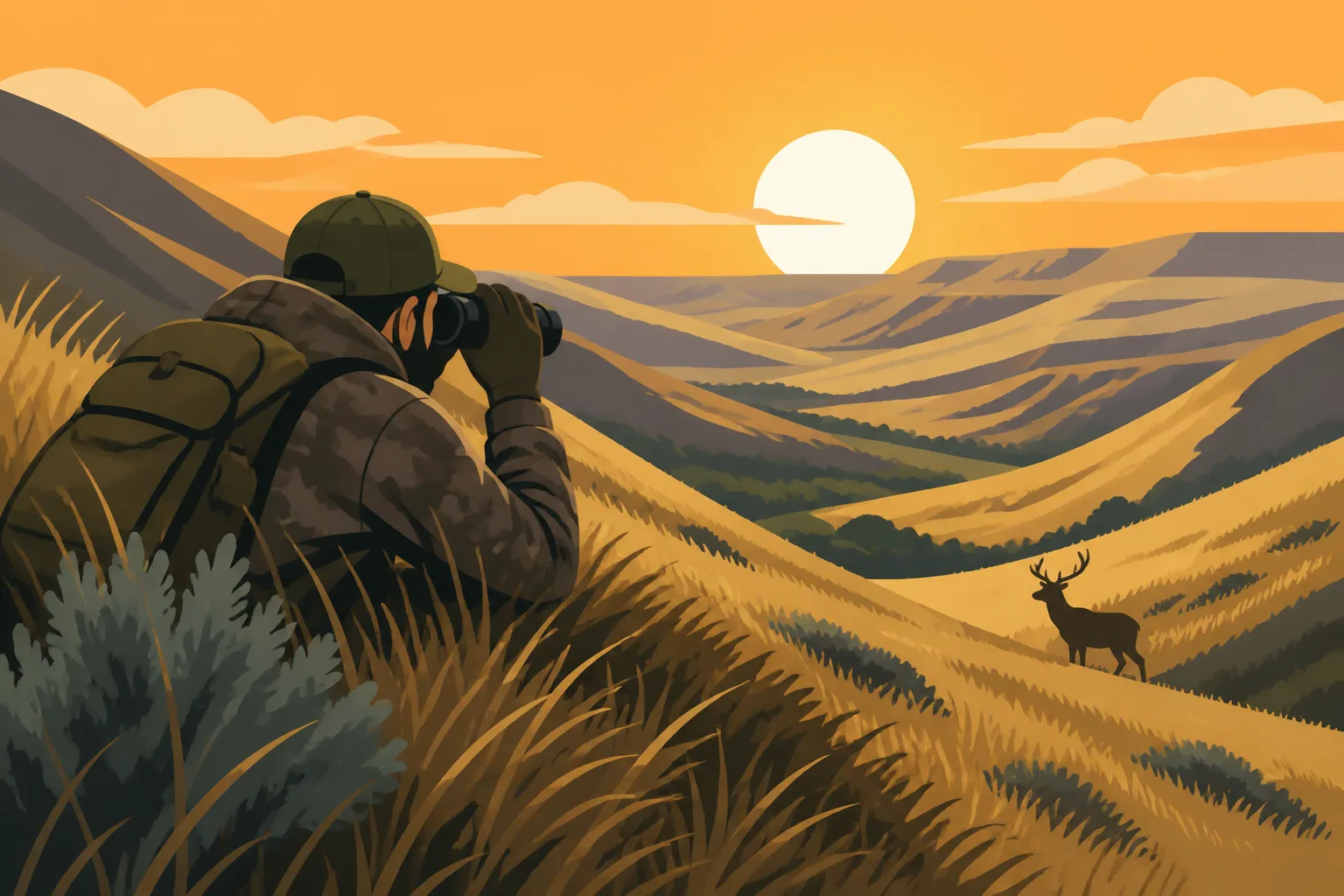
Still-hunting is incredibly effective in the Qu'Appelle Valley. Moving slowly, stopping frequently to glass and listen, and using the terrain to your advantage allows you to cover ground stealthily. Focus on the transition zones between dense cover and more open areas. When you encounter fresh sign, slow down even more. The "stop and go" rhythm of still-hunting mimics how animals move and feed. For mule deer, or even whitetails in more open sections, a spot-and-stalk approach can be exhilarating. Find a high vantage point, like the opposite valley slope or a prominent ridge, and glass extensively with good optics. When you spot an animal, plan your stalk using the terrain—draws, bluffs, and changes in elevation—to stay out of sight. Remember that Stalking Mule Deer in Open Prairie can be extremely challenging, but the valley's broken terrain offers more opportunities for concealment. GoHunt's topographic maps are excellent for planning these intricate stalks.
Stand Placement and Blind Considerations
Strategically placed tree stands or ground blinds can be deadly in the Qu'Appelle Valley. Look for pinch points, natural funnels where game movement is restricted, or areas overlooking primary travel corridors. Placing a stand along a game trail that runs parallel to the river or up a specific draw can be highly effective. Often, you'll want to place your stand higher on a slope, allowing you to shoot down into draws or across to the opposite hillside. When Hanging a Stand on a Saskatchewan Bush Edge, consider not just wind direction but also the angle of the sun and how it might impact visibility. Ground blinds are excellent in areas with thick shrubbery or dense tree cover, especially if you can tuck them into a natural depression or behind a large willow clump. Just ensure your scent is managed, as swirling winds can betray you quickly.
Rattling and Calling in the Valley Terrain
The acoustics of the Qu'Appelle Valley can make rattling and calling a highly effective, albeit tricky, tactic. Sound travels differently in valleys, often carrying further but also echoing or being muffled by dense vegetation. For whitetails, especially during the rut, aggressive rattling can draw bucks in, particularly if they're cruising the slopes looking for does. Consider using grunt calls to simulate a tending buck or doe bleats to pique curiosity. When Rattling Volume in Open Parkland you might use a different approach than within a dense valley bluff. Moose, too, will respond to calling, particularly if you're trying to locate a bull during the early fall rut. Position yourself strategically, ideally with good cover, and be prepared for an animal to come in from an unexpected direction, using the contours of the valley to stay hidden until the last moment.
Essential Gear and Safety for Valley Hunting
Hunting the Qu'Appelle Valley isn't like walking a flat field; it demands specific gear and a heightened awareness of safety due to the challenging terrain and often remote locations. Being prepared is key to a successful and safe hunt.
Recommended Optics and Footwear
Good optics are non-negotiable for hunting the valley slopes. A quality pair of binoculars (10×42 or 12×50) will be your best friend for spotting game on distant slopes or picking apart dense cover during a still-hunt. A spotting scope can also be incredibly useful if you plan on extended glassing from high vantage points, especially for judging mule deer or larger whitetails. As for footwear, invest in high-quality, ankle-supporting boots with excellent traction. You'll be traversing steep, often uneven terrain that can be muddy, rocky, or covered in slippery leaves. Waterproofing is a huge plus, as you'll encounter dew, wet grass, and potentially slush or snow depending on the season. Remember that Hunting Saskatchewan Winter Weather Safely means having appropriate insulated, waterproof boots that can keep your feet warm and dry through hours of activity and stillness.
Navigation and Communication in Challenging Terrain
Cell service can be spotty or non-existent in the depths of the Qu'Appelle Valley. Always carry a reliable GPS device, either a dedicated unit or a smartphone app like GoHunt with downloaded offline maps. Mark your vehicle, stand locations, and any significant game sightings. A physical compass and paper map are also smart backups. Inform someone of your hunting plans, including your general location and expected return time. A satellite communication device, such as a Garmin inReach or Zoleo, provides crucial peace of mind, allowing you to send messages and trigger an SOS if needed, even without cell service. This is particularly important when Hunting Saskatchewan Winter Weather Safely where exposure can be a serious risk.
Retrieving Game from Steep Slopes
So, you've made a successful shot—congratulations! Now comes the real work: getting your animal out of the valley. This is where the slopes can truly test your resolve. Always assess your recovery route before moving the animal. Consider quartering the animal to make it lighter and easier to manage, especially larger game like a moose or a big whitetail. A good quality game cart or a sled (in snowy conditions) can be invaluable, but even with these, steep sections might require ropes or multiple people to assist. A robust hunting pack with a frame that can handle heavy loads is also essential. Never attempt to drag an animal down a slope that is too steep or unstable. Plan your extraction carefully, and if possible, always hunt with a buddy, especially when tackling challenging terrain like the Qu'Appelle Valley slopes. Getting a Deer Out on a Frozen Trail can be a difficult task, even more so if it's a steep, icy incline.
| Slope Feature | Game Species Most Likely Found | Typical Use | Hunting Tactic Recommendation |
|---|---|---|---|
| Steep, Thick Bush | Whitetail Deer, Moose | Bedding, escape cover, travel corridors | Still-hunt, stand on edge, calling |
| Open Grassland Draws | Mule Deer, Whitetail Deer | Travel routes, feeding, bedding (less cover) | Spot-and-stalk, ground blind |
| River Bottom/Flat | Whitetail, Moose, Waterfowl | Feeding, watering, travel | Stand near crossings, jump-shooting |
| North-Facing Slopes | Whitetail, Moose (summer/fall) | Cooler bedding, later forage, dense cover | Still-hunt, approach from above |
| South-Facing Slopes | Mule Deer, Whitetail (winter) | Warmer bedding, earlier green-up | Glass from opposite side, spot-and-stalk |
| Rocky Cutbanks | Mule Deer | Escape cover, sunning, vantage points | Glassing, careful stalking |
Disclaimer
Hunting is an activity that carries inherent risks. Always prioritize safety, adhere to all Saskatchewan hunting regulations, and respect private property. This guide is for informational purposes only and should not replace proper hunter education or professional guidance. Be sure to check the latest Saskatchewan hunting guide for current rules and season dates before planning any trip.