Transporting Game Meat in Saskatchewan
You’ve just tagged out on a magnificent animal in Saskatchewan, whether it’s a heavy-antlered whitetail from the parkland, a big bull moose from the boreal forest, or a mule deer from the coulees. That feeling of accomplishment is incredible, but then the reality hits: how do you actually get all that precious game meat home safely and legally? It’s a huge undertaking, often overlooked in the excitement of the hunt, and improper handling can quickly spoil your hard-earned harvest or land you in trouble with regulations. This comprehensive guide will walk you through every step of transporting game meat in Saskatchewan, from the moment you make the shot to when it’s safely in your freezer or across a border, ensuring your success in the field translates to delicious meals at home.
The Critical First Steps: Field Dressing and Initial Handling
The journey of your game meat begins the very second your animal is down. How you handle it in those crucial first hours determines the quality of the meat you’ll eventually enjoy. This isn't just about hygiene; it's about preserving a perishable product in often challenging conditions.
Proper Field Dressing for Preservation
Field dressing, or gutting, is paramount and should be done as quickly as possible. This process removes the internal organs, which are the primary source of heat and bacteria that can spoil meat rapidly. Don't skip this step, even if you’re tired or the weather seems cool. The internal body heat of a large animal is surprisingly persistent and can lead to sour meat if not dissipated quickly. Make clean cuts, be careful not to puncture the intestines or stomach, and remove everything from the body cavity. A clean cavity will cool much faster. If you’re hunting in November or December, you might be facing freezing temperatures, and while that helps cool the meat, you still need to get that initial heat out. For more detailed tips on handling meat in the elements, check out our guide on Field Dressing in Saskatchewan's Deep Cold.
Once the organs are out, it's a good practice to wipe down the cavity with clean cloths or paper towels to remove any excess blood or debris. Avoid using water inside the cavity unless you can thoroughly dry it afterward, as moisture can promote bacterial growth. Some hunters even bring a small spray bottle of a mild vinegar-water solution to clean the cavity, which helps sanitize and inhibit bacteria. The goal is to get the meat cooled down to below 40°F (4°C) as quickly as possible. If you're using a scouting app like GoHunt, you can often check local temperatures and plan your field dressing strategy accordingly.
Getting Your Harvest Out of the Bush
After field dressing, the next challenge is extracting your animal from the kill site. Depending on where you harvested your game, this can be an arduous task. For larger animals like moose or elk in dense bush, quartering the animal in the field is often the most practical solution. This not only makes the meat easier to pack out but also allows it to cool even more rapidly, as more surface area is exposed to the air. Even for deer, if you’re a considerable distance from your vehicle, quartering might be the best option. Remember to keep the meat clean, off the ground, and protected from dirt, leaves, and insects. Game bags are an absolute must for this purpose.
If you’re fortunate enough to hunt close to a trail or road, dragging or using an ATV or side-by-side might be an option. However, be mindful of regulations regarding vehicle use on Crown land, especially if you're venturing off established trails. Our article on Quad and Side-by-Side Rules on Crown Land can provide important guidance here. Getting your deer out on a frozen trail, for instance, might be easier than dragging through mud, but still requires careful planning and perhaps some specialized gear like a deer sled. The less time the meat spends warm and exposed to contaminants, the better the final product.
Immediate Cooling and Storage
Once you’ve successfully moved your field-dressed animal from the kill site to your vehicle, the cooling process needs to continue without interruption. If temperatures are mild, a truck bed under a tarp won't cut it for long. You need active cooling. This might mean using coolers packed with ice, or if you're lucky enough to have access to a walk-in cooler, that's ideal. Many outfitters and small-town butchers offer cooler space for a fee, which can be a lifesaver, especially if you're hunting during Saskatchewan's warmer early seasons.
For those late-season hunts when temperatures consistently hover below freezing, nature often provides the perfect refrigeration. However, even then, consider protecting the carcass from freezing solid too quickly, as rapid freezing can make processing more difficult later on. A gradual cool-down is best for meat quality. Proper air circulation around the carcass is key; avoid piling other gear on top of it. For strategies to keep meat pristine in varying temperatures, refer to our detailed advice on Meat Care in Saskatchewan's Cold Snaps.
Navigating Saskatchewan's Regulations for Game Transport
Saskatchewan has specific rules about how you can transport game meat, designed to ensure ethical hunting practices, aid in disease management, and prevent illegal activity. Ignoring these rules can lead to significant penalties, so it's vital to be informed.
Understanding Evidence of Sex Requirements
One of the most crucial regulations for transporting big game is the "evidence of sex" requirement. For most antlered species, a portion of the head bearing the antlers must remain attached to the carcass, or at least one antler with a portion of the skull plate attached, until the meat is processed and stored at your primary residence or a meat processor. This rule ensures that conservation officers can verify that the animal harvested matches the tag issued (e.g., an antlered deer was indeed antlered). For antlerless animals, there are often specific requirements as well, such as keeping a portion of the head or certain external features attached.
It's tempting to remove the head for easier transport or to get it to a taxidermist, but you must ensure you meet these requirements first. Always double-check the current Saskatchewan Hunting and Trapping Guide for the precise rules for the species you’ve harvested. Failure to maintain evidence of sex is a common mistake and one that can easily be avoided with a little planning. The guide on Evidence of Sex Requirements delves deeper into these specific regulations for various species.
Rules for Moving Carcasses Between Zones
Saskatchewan is divided into numerous Wildlife Management Zones (WMZs), and while most of the province allows for relatively free movement of fully processed meat, transporting whole carcasses or certain parts between zones has specific restrictions, particularly concerning Chronic Wasting Disease (CWD). The general rule of thumb is that once an animal is fully butchered into cuts of meat and deboned, it can be moved freely. However, if you're moving a whole carcass, or even a head for CWD testing, you need to be aware of the rules.
The primary concern here is the spread of CWD. If you harvest an animal in a CWD mandatory testing zone, or even a voluntary one, you must comply with specific rules regarding carcass movement. This often means only deboned meat, skull plates with antlers (cleaned of all brain and spinal cord tissue), and hides can leave the zone before CWD test results are known. Lymph nodes and a portion of the brainstem are required for testing, which typically means bringing the head to a designated drop-off location. Our comprehensive article on Moving a Carcass Between Zones covers these nuances in detail, zone by zone.
CWD Testing and Carcass Movement Restrictions
Chronic Wasting Disease (CWD) is a serious neurological disease affecting deer, elk, and moose, and Saskatchewan is proactive in monitoring and managing its spread. As such, specific WMZs are designated as mandatory CWD testing zones. If you hunt in one of these areas, you are legally required to submit the head of your harvested animal for testing. This is not optional. The brain and spinal column are considered high-risk materials for CWD transmission, so their movement is heavily restricted.
When hunting in a mandatory CWD testing zone, you typically cannot move a whole carcass out of that zone. The animal must be deboned at the kill site or at a processing facility within the zone. Only the deboned meat, cleaned skull plate, and hide can be transported. You then submit the head (specifically, the retropharyngeal lymph nodes and brainstem) to one of the province's CWD drop-off locations. For a comprehensive overview of the province's efforts and your obligations, make sure to read Saskatchewan's CWD Testing Rules and to identify which areas are Mandatory CWD Testing Zones. If you receive a positive test result, there are specific protocols to follow, which are outlined in our guide, What to Do With a Positive Result.
Preparing Game Meat for Travel Beyond Saskatchewan
For many hunters, especially non-residents, the goal isn't just to get the meat home within Saskatchewan, but to transport it across provincial or international borders. This adds several layers of complexity and requires diligent preparation and adherence to specific regulations.
Processing Meat for Out-of-Province Journeys
If you plan to take your game meat out of Saskatchewan, whether to another Canadian province or, especially, across the US border, it must be fully processed. This means deboned, cut into consumer-ready portions, and often vacuum-sealed or wrapped for freezing. Transporting a whole carcass, or even bone-in cuts, across an international border is generally prohibited due to disease transmission concerns, including CWD and other animal health risks. Canadian regulations for inter-provincial transport might be slightly less stringent for bone-in meat, but for simplicity and maximum safety, deboning is always the best approach.
Consider using a professional butcher in Saskatchewan. They are familiar with these regulations and can ensure your meat is processed to meet all requirements for interstate or international travel. They can also ensure proper packaging and freezing, which are crucial for maintaining quality during long journeys. Many outfitters, particularly those catering to non-residents, will have established relationships with local processors. Companies like GoHunt often recommend certified local butchers for their clients, streamlining this important step.
Border Crossing with Game Meat and Trophies
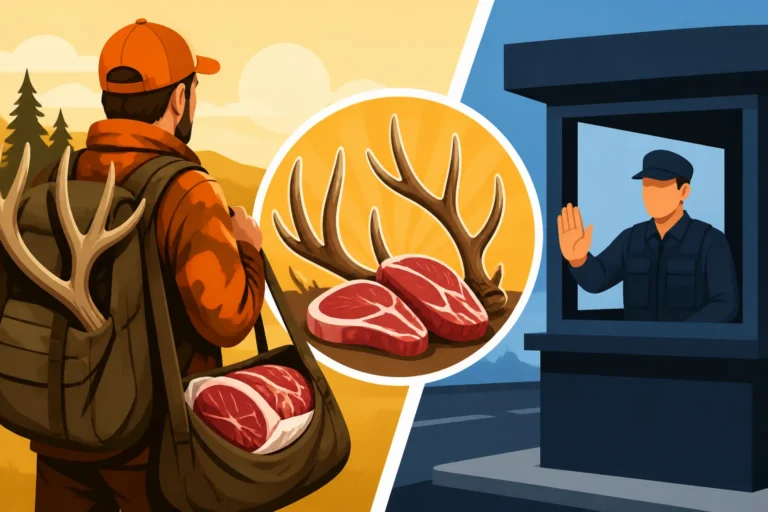
Crossing the Canada-U.S. border with game meat and trophies (antlers, hides, capes) is perhaps the most regulated aspect of game transport. U.S. Customs and Border Protection (CBP) and the U.S. Fish and Wildlife Service (USFWS) have strict rules. For meat, it absolutely must be deboned. No brain or spinal cord material can be present. Meat should be clearly labeled and declared. For trophies, antlers must be cleaned of all tissue, and capes/hides must be thoroughly tanned or taxidermy-ready (meaning professionally cleaned, salted, and dried). You might need a declaration form (e.g., USFWS Form 3-177) depending on the species and state of entry.
It is absolutely critical to check the latest regulations with both Canadian Border Services Agency (CBSA) and U.S. CBP/USFWS before your hunt. Rules can change, and ignorance is not an excuse. You don't want to lose your hard-earned meat or trophy at the border. Also, be aware of any state-specific regulations in the state you are entering or transiting through. Our guide, Taking Meat and Antlers Across the Border, provides a detailed walkthrough of these complex requirements, including necessary paperwork and processes.
Non-Resident Considerations and Documentation
For non-resident hunters, the complexity of transporting game meat is amplified. Beyond the standard processing and border rules, you’ll also need your valid Saskatchewan hunting license and tag, proof of where the animal was harvested (often required by your outfitter or the province to validate the tag), and any required federal permits (e.g., CITES permits for certain species, though less common for standard big game). It's also wise to have a copy of the official provincial hunting guide with you, highlighting the relevant regulations.
If you hunted with a registered outfitter, they will usually assist with the paperwork and advise on the best way to handle your meat and trophies for travel. This is one of the key benefits of booking through a reputable service, especially for non-residents, who must hunt with an outfitter for most big game species anyway. To understand the broader scope of requirements for non-residents, our resource on Rules for Non-Residents Hunting Saskatchewan is an excellent starting point. Ensuring all documentation is in order is just as important as the quality of the meat itself.
Practical Considerations for Transporting Your Harvest
Beyond the rules and regulations, there are a number of practical considerations that will make your game meat transport smoother, safer, and more successful.
Essential Gear for Safe Meat Transport
Having the right gear makes all the difference when it comes to transporting game meat. First and foremost, sturdy coolers are essential. For longer trips, consider investing in high-quality, insulated coolers that can hold ice for several days. These are a non-negotiable item. You'll also need plenty of ice, or if you prefer, frozen water bottles or dry ice. Dry ice can be incredibly effective, but it requires careful handling and good ventilation.
Beyond coolers, game bags are critical for keeping quartered meat clean in the field and for hanging it to cool. Heavy-duty tarps can protect your vehicle's interior from blood and debris. If you're quartering in the field, a sharp knife, a small bone saw, and some clean gloves are necessary. For non-residents, an accurate thermometer to monitor meat temperature in coolers can be a great asset. Even a basic Winter Truck Kit for a Saskatchewan Hunt should include items like a flashlight, extra rope, and maybe even a small shovel, which can unexpectedly come in handy for meat handling logistics.
Maintaining Meat Quality During Transit
The goal during transport is to keep your meat cold, clean, and dry. Fluctuations in temperature are the enemy of meat quality. If traveling long distances, especially across warmer climates, monitor your cooler temperatures diligently. Packing meat tightly in coolers with ice, but allowing for some drainage if using wet ice, is a good strategy. If using dry ice, ensure it's not in direct contact with the meat, as it can cause freezer burn.
Preventing contamination is also key. Ensure your coolers are clean before packing meat. If you have to stop overnight, always move meat from a vehicle into a secure, refrigerated space if possible, or replenish ice liberally. Avoid opening coolers unnecessarily. Remember, any time the temperature rises above 40°F (4°C) for an extended period, you risk bacterial growth and spoilage.
Planning for Unexpected Delays
Hunting trips, especially in the vastness of Saskatchewan, can be unpredictable. Vehicle breakdowns, unexpected road closures, or even just getting a deer out on a challenging trail can cause significant delays. Always build in buffer time into your travel plans, particularly if you have a tight schedule for getting meat to a processor or home freezer. Carry extra water, snacks, and emergency supplies, not just for yourself, but with the understanding that you might be spending more time than anticipated tending to your harvest.
Having a contingency plan for your meat is crucial. This might involve identifying potential butchers or cold storage facilities along your route, just in case. If you're working with an outfitter, discuss their protocols for unexpected delays in meat transport. Thinking ahead about what could go wrong, and having a plan B (or even a plan C), will reduce stress and help ensure that your hard-earned game meat makes it home in perfect condition.
| Transport Method | Processing Level Required | Within Saskatchewan Rules | Border Crossing Rules (US) | CWD Considerations |
|---|---|---|---|---|
| Whole Carcass | Field Dressed Only | Evidence of sex req. Generally allowed between zones (excl. CWD) | Not Permitted | Cannot cross zones from mandatory CWD areas. Cannot cross international border. |
| Quartered Carcass (bone-in) | Field Dressed, Quartered | Evidence of sex req. Allowed between zones (excl. CWD) | Not Permitted | Cannot cross zones from mandatory CWD areas. Cannot cross international border. |
| Deboned Meat | Fully Deboned | Generally unrestricted | Generally permitted if properly packaged and declared | Permitted from CWD zones if deboned. Permitted across international border. |
| Skull Plate/Antlers | Cleaned (no brain/spinal tissue) | Generally unrestricted once cleaned | Permitted if cleaned & declared | Must be completely free of brain/spinal tissue from CWD zones. |
| Hide/Cape | Raw, salted, or tanned | Generally unrestricted | Permitted if properly prepared (salted/tanned) & declared | Generally unrestricted. |
Disclaimer
The information provided in this guide is for general informational purposes only and does not constitute legal advice. Hunting regulations, including those pertaining to game meat transport, can change frequently. It is the responsibility of every hunter to consult the most current Saskatchewan Hunting and Trapping Guide and any relevant federal or international regulations before engaging in hunting activities or transporting game. Always prioritize safety and ethical practices.