Snowshoe Hare and Its Ten Year Cycle
It's a phenomenon that puzzles even seasoned outdoorsmen: one year, the bush seems to be absolutely crawling with snowshoe hares, literally bounding across every path and through every thicket. The next, they've seemingly vanished into thin air, leaving you wondering if you've stumbled into some kind of ecological black hole. This dramatic boom-and-bust cycle is a defining characteristic of the snowshoe hare population in Saskatchewan, and understanding it is key to both hunting success and appreciating our northern ecosystems. This guide dives deep into the fascinating ten-year cycle of these iconic northern residents, exploring the "why" behind their disappearing acts and explosive returns.
The Enigmatic Cycle of the Snowshoe Hare
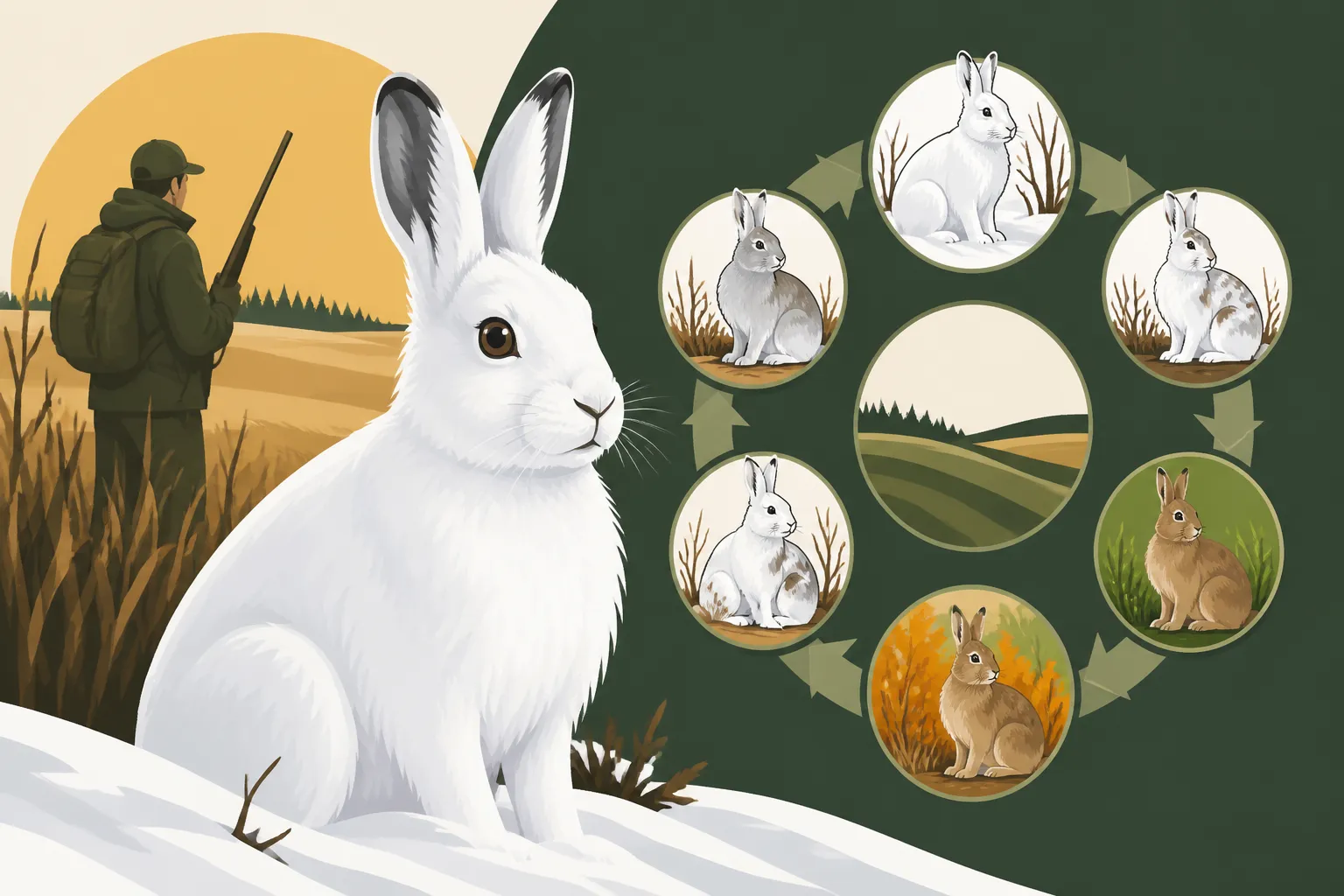
The snowshoe hare ( Lepus americanus) is much more than just a cute, fluffy bunny that changes its coat with the seasons. It's a cornerstone species in the northern forest ecosystem, a primary food source for many predators, and its population dynamics are legendary for their dramatic fluctuations. If you spend any time in Saskatchewan's boreal forest or even the thicker parts of the aspen parkland, you've likely witnessed these swings firsthand.
Understanding the Ten-Year Boom and Bust
The "ten-year cycle" is almost a misnomer, as it's rarely a precise decade, but rather a long-term pattern of roughly 7 to 11 years. During a population boom, hares are everywhere. You'll see them darting across trails, hear them rustling in the underbrush, and their tracks will crisscross the snow. This peak can last for a couple of years, with densities reaching incredible numbers, sometimes thousands per square kilometre in prime habitat. Hunters, trappers, and wildlife observers alike revel in these times, as finding a hare is rarely a challenge.
However, just as suddenly as they appear, their numbers crash. The decline can be incredibly steep, dropping from abundance to scarcity in just one or two seasons. During the "bust" years, you might walk for hours through prime hare country and see nary a track, let alone an actual hare. It's a truly bewildering experience if you're not prepared for it, and it can leave you scratching your head, wondering what on earth happened. This cyclical nature is one of the most studied phenomena in wildlife ecology, and it's a testament to the intricate balance of nature here in Saskatchewan.
The Role of Population Density
While predators play a massive role, as we'll discuss, the sheer density of the hare population itself contributes to the cycle. When hare numbers soar, life gets tougher even without increased predator pressure. Imagine hundreds, if not thousands, of hares competing for limited food resources, especially during the harsh Saskatchewan winters. This intense competition means individuals are often undernourished, weaker, and more susceptible to disease. A slight dip in food availability can have a catastrophic impact on a population that is already at its carrying capacity.
Furthermore, high densities mean hares are constantly interacting, increasing the spread of parasites and illnesses throughout the population. Stress from overcrowding also impacts reproductive success, with females potentially having smaller litters or fewer successful breeding cycles. So, while external factors are crucial, the internal pressure cooker created by a dense population sets the stage for the inevitable decline, making them more vulnerable to the inevitable increase in predator numbers that follows.
Ecological Factors Driving the Cycle
The snowshoe hare cycle isn't some random biological lottery; it's a complex interplay of environmental factors, most notably the relationship between predator and prey. It's a classic example of ecological dynamics playing out on a grand scale, right here in our northern forests.
Predation Pressure: Lynx and Coyotes
If you're talking about snowshoe hares, you have to talk about lynx. These two species are so intimately linked that their population graphs often look like mirror images, with the lynx cycle lagging just slightly behind the hare cycle. As hare numbers increase, it provides an abundance of food for lynx, leading to higher survival rates for lynx kittens and more successful breeding. This, in turn, causes the lynx population to boom a year or two after the hares.
Once the lynx population is at its peak, the intense predation pressure becomes a major driver in crashing the hare numbers. Imagine dozens of hungry lynx in an area where hares are becoming slightly less abundant due to overcrowding and diminishing food. It's a recipe for a rapid decline. Other predators also feast on hares, including coyotes, foxes, wolves, martens, fishers, and birds of prey like great horned owls and goshawks. When hare numbers are high, all these predators benefit, putting immense pressure on the hare population from multiple angles. For an even deeper dive into this fascinating relationship, you can check out our article on Lynx and the Snowshoe Hare Cycle. During a bust cycle, these predators are then forced to seek alternative food sources, which can impact other small game animals. We've also explored how changes in prey availability can influence the behaviour of larger predators, such as What Coyotes Do to Saskatchewan Fawns when their primary food sources fluctuate.
Food Availability and Habitat Changes
While being eaten is a major concern for a hare, so is simply finding enough to eat, especially in winter. Snowshoe hares are primarily herbivores, their diet shifting with the seasons. In summer, they graze on tender green plants, grasses, and clover. But come winter, with snow blanketing the ground, their menu drastically changes to twigs, buds, bark, and evergreen needles. They are particularly fond of willow, aspen, birch, and young conifers.
During peak hare populations, the sheer number of animals can lead to what's called "over-browsing." Essentially, they eat so much of their preferred winter forage that they deplete the food supply, making it harder for the remaining hares to survive. This scarcity of food, coupled with the energetic demands of surviving a Saskatchewan winter, weakens the hares and makes them even more vulnerable to predation and disease. A weakened hare is a slow hare, and a slow hare is an easy meal. Furthermore, changes in habitat due to logging, wildfire, or even natural succession can impact the density and quality of this essential winter forage, affecting how high a hare population can climb before crashing.
Impact on Saskatchewan's Wildlife Ecosystem
The snowshoe hare's cycle isn't just about hares and lynx; it's a linchpin in the entire boreal and aspen parkland ecosystem. Its dramatic fluctuations send ripple effects throughout the food web, influencing everything from the behaviour of large predators to the survival rates of other small game species.
Predator-Prey Dynamics in the Boreal
When the hare population is booming, it’s a time of plenty for many of Saskatchewan's predators. Lynx, as mentioned, are intrinsically tied to this cycle. But so are fishers, martens, and even red foxes, all of which will readily hunt hares. Raptors like great horned owls and northern goshawks also rely heavily on hares for sustenance, especially when raising young. A high hare population means healthier, more numerous predators. This is a time when the bush feels vibrant and alive, full of life.
However, the inevitable crash in hare numbers presents a significant challenge for these predators. With their primary food source dwindling, they must either starve, move to new areas, or switch to alternative prey. This prey switching can have noticeable impacts on other wildlife populations. For instance, when hares are scarce, coyotes and foxes might increase their predation on ground-nesting birds, mice, voles, or even young deer fawns. This is why understanding the Marten and Fisher in the Boreal article, or even the broad topic of Saskatchewan's Predators and Furbearers, gives you a more complete picture of what's happening in the bush. This dynamic shift is a brutal but natural part of the cycle, weeding out weaker predators and ensuring that only the fittest survive until the hare population inevitably begins its slow climb back.
Ripple Effects on Other Species
The hare cycle's influence extends beyond direct predator-prey relationships. Consider the impact on plants: during peak years, hares can severely browse young trees and shrubs, altering the forest understory. This heavy browsing can affect the growth patterns of certain plant species, which in turn can impact other herbivores that rely on those plants. For example, if preferred browse for hares is over-eaten, it might also reduce food availability for deer or moose in shared habitats, particularly if those larger animals are already stressed by a harsh winter. Our article on What a Hard Saskatchewan Winter Culls touches on some of these broader environmental pressures.
Moreover, the availability of hares can influence the hunting pressure on other species. When hares are abundant, some smaller predators might focus almost exclusively on them, giving other small mammals or birds a temporary reprieve. Conversely, during a hare bust, the increased predation pressure on alternative prey can be felt across the ecosystem. It's a delicate balance, and the snowshoe hare is an undeniable pivot point in our northern forests, dictating the ebb and flow of life for many other inhabitants.
Hunting Snowshoe Hare in Saskatchewan
Hunting snowshoe hares in Saskatchewan is an accessible and enjoyable pursuit for many, offering a chance to hone your tracking skills and experience the quiet solitude of the bush, particularly in winter. Whether the population is booming or busting, the thrill of the hunt remains.
Seasons, Limits, and Where to Find Them
Generally, snowshoe hares are considered small game in Saskatchewan, and they are open to hunt year-round with a valid Saskatchewan Game Bird and Small Game Licence (or a provincial Big Game Licence). There are typically no possession limits, making them an excellent target for consistent hunting and for filling the freezer.
The key to finding hares is locating their preferred habitat: dense, young coniferous forests, thick willow thickets, and the edges of the boreal forest. These areas provide the crucial cover hares need to evade predators. Look for regenerating clear-cuts, creek bottoms with dense willow, or the thick, brushy undergrowth found in our northern forests. These dense areas are where hares feel safest and where their food sources, like young aspen, birch, and willow, are most plentiful. When scouting, using an app like GoHunt can help you identify these dense canopy areas and forest fringes on satellite imagery, even before you step foot in the woods. You might find them in areas like the Hunting Saskatchewan's Boreal Forest Fringe or even thick stands of poplars where the undergrowth is dense, such as when Hunting a Poplar Bluff at First Light.
Best Practices for a Successful Hare Hunt
Hunting snowshoe hares often involves a combination of still-hunting and tracking, especially in winter. Snowshoes are often a must, allowing you to quietly navigate deep snow and access dense cover where hares hide. A small-calibre rimfire rifle (.22 LR is popular) or a shotgun (with small shot sizes like 6 or 7.5) are ideal choices, depending on the terrain and your preferred hunting style. The aim is often to spot them sitting still, camouflaged against the snow or brown undergrowth, or to flush them from cover.
When numbers are high, hares are relatively easy to find, often presenting themselves as you walk. During the low points of the cycle, however, you'll need to be more strategic. Focus on the densest cover available, areas where they have maximum protection. Still-hunt slowly, pausing frequently to scan for movement or the tell-tale black eye against white fur. Using a good set of binoculars, even at close range, can help you pick them out. Many hunters find success by walking old logging roads or traplines, as hares often use these slightly more open pathways for travel between denser patches of cover. This is particularly true when you're Hunting a Winter Trapline Trail, where fresh tracks can indicate recent activity. Remember, respect for the land and ethical hunting practices are paramount, even when pursuing small game.
Identifying and Locating Snowshoe Hare
To consistently find snowshoe hares, whether the population is booming or busting, you need to become adept at reading the subtle signs they leave behind and understanding their preferred hideouts. It's like being a detective in the woods, piecing together clues.
Recognizing Tracks and Sign
In winter, the most obvious sign of a snowshoe hare is its distinctive track in the snow. Their large, heavily furred hind feet are much larger than their front feet and typically land ahead of their front feet when they're moving, creating a unique pattern. The track will show four prints, with the two larger hind foot prints usually landing abreast and slightly forward of the two smaller front foot prints. The pads of their feet are well-furred, giving them their "snowshoe" name and helping them move silently and efficiently over deep snow. You can learn more about how to interpret these clues in our guide on Reading Sign After Fresh Saskatchewan Snow.
Beyond tracks, look for other signs:
- Droppings: Small, round, fibrous pellets, often found in concentrated areas where hares rest or feed.
- Browsing: Hares will clip off twigs and branches with sharp, diagonal cuts. Look for these signs on young saplings and shrubs, especially willow and aspen.
- Runs: In dense cover, hares will create small, tunnel-like pathways through the vegetation, especially under low-hanging branches of spruce or pine.
- Scrapes: Sometimes, you'll find areas where they've dug through shallow snow to get to ground vegetation or bark.
Preferred Habitats and Cover Types
Snowshoe hares are creatures of dense cover. They thrive in areas that offer both food and protection from predators. Think about young, regenerating forest stands, particularly those dominated by spruce, pine, or fir, which provide year-round overhead cover. These evergreen thickets are crucial for thermal protection in winter and concealment from aerial predators. Willows and alders along creek beds or marshy edges are also prime spots, as they offer both food and tangled cover.
Many hunters find success in the transition zones between different habitat types, such as where a dense coniferous forest meets an aspen stand, or along the edges of clear-cuts where young regeneration is taking hold. Areas with downed timber or thick brush piles also act as hare magnets, providing immediate escape cover. When you're scouting, especially in the off-season, pay attention to these features. Many hunters use digital mapping tools like GoHunt to scout these specific cover types from home. You can zoom in on satellite imagery to identify areas of dense, young growth, clear-cut edges, and riparian zones. Remember, areas that offer excellent security cover for other species, such as whitetails, often hold hares too, especially if you're looking at Hunting the Forest Fringe for Big Bucks. These dense spots are critical for hares to weather the relentless pressure from their many predators.
Hunting Strategies for Different Cycle Phases
Understanding the hare cycle isn't just academic; it profoundly impacts how you approach a hunt. What works during a population explosion will likely leave you frustrated during a bust. Adapting your strategy to the current phase of the cycle is crucial for success and for truly appreciating these resilient creatures.
Adapting to Hare Population Booms
When the hares are booming, you'll feel like you can't take two steps without a hare flushing or crossing your path. This is a fantastic time for new hunters or those looking for abundant action. During these periods, hares are less shy and more widely distributed across their habitat. You might even find them in slightly less dense cover than usual, venturing out into more open aspen stands or even along the edges of fields adjacent to bush.
- Hunting Methods: Still-hunting is highly effective. Walk slowly, scanning the undergrowth ahead and to the sides. They often hold tight, relying on their camouflage, so look for the tell-tale dark eye or subtle outline against the snow. Snowshoeing through brushy areas can be very productive, as the noise might cause them to flush, offering a running shot with a shotgun.
- Location: While dense cover is still their preferred spot, you can expand your search to slightly more open areas within the bush. Focus on areas with a mix of young conifers and deciduous browse.
- Gear: A .22 LR rifle provides a quiet, economical way to harvest them, especially if you're targeting sitting hares. A shotgun with small game loads is excellent for flushing hares in dense cover.
- Enjoy the Abundance: These are the years to truly enjoy the sheer numbers. It's a great opportunity to introduce new hunters to small game hunting or simply to enjoy a day of consistent action. The abundance also means you'll see a lot of predator sign, as coyotes, lynx, and owls are also having a feast.
Strategies for the Bust Years
The bust years can be incredibly frustrating. The hares seem to have vanished, and you might begin to question if you're even in the right spot. This is where your hunting skills and patience are truly tested. During these low periods, hares are incredibly wary, highly concentrated in the very densest cover, and their survival instincts are on overdrive.
- Hunting Methods: Forget casual strolling. This is the time for meticulous still-hunting, slow tracking, and focusing on the absolute thickest, most impenetrable cover you can find. Every step must be deliberate. Consider using a small beagle or rabbit dog if allowed and you enjoy that style of hunting; a good dog can often root out a hare from cover you might otherwise walk past.
- Location: Narrow your focus to the smallest, densest pockets of prime habitat. Think impenetrable spruce or pine thickets, incredibly dense willow swamps, or blow-downs that offer maximal overhead and lateral concealment. Areas around a Hunting a Beaver Dam Crossing or a Hunting a Slough Edge for Whitetails that also have thick brush can be good bets. Hares will prioritize security over everything else.
- Gear: A .22 LR or even a .17 HMR can be very effective for the wary hares you might spot sitting. Accuracy is key. If hunting with a shotgun, be prepared for quick, fleeting shots in heavy brush.
- Patience and Persistence: Don't get discouraged. Finding a hare during a bust year is a genuine accomplishment. It teaches you to truly read the landscape and appreciate the resilience of these animals. During these lean years, hunters often rely heavily on mapping tools like GoHunt to pinpoint those specific, isolated pockets of ideal habitat that might still hold a few hares, rather than wasting time in less productive areas. You'll likely see less fresh sign overall, so when you do find tracks, follow them diligently.
Understanding the Future of the Hare Cycle
The snowshoe hare cycle is a natural phenomenon that has played out in Saskatchewan's northern landscapes for millennia. While its core dynamics remain constant, the modern world and changing environmental conditions introduce new layers of complexity.
Environmental Changes and the Cycle
Climate change and habitat alteration are two significant factors that could influence the snowshoe hare cycle in the long term. Milder winters, for example, could reduce the snow cover that gives the snowshoe hare its incredible camouflage and its namesake advantage. If snow comes later or melts earlier, hares might be left vulnerable in their white coats against a brown background for longer periods, increasing their susceptibility to predation. This could potentially shorten the "boom" phase or make the "bust" more severe.
Habitat changes, such as extensive logging or wildfires (though burns can also create new, young hare habitat over time), can fragment or reduce suitable dense cover. A reduction in prime habitat might lead to lower peak populations or make it harder for populations to rebound during the recovery phase of the cycle. Understanding these broader environmental shifts is crucial for appreciating the challenges and adaptations of all our game species, not just the snowshoe hare.
Long-Term Monitoring and Research
Scientists and wildlife managers in Saskatchewan and across the boreal region continue to study the snowshoe hare cycle. Long-term monitoring projects track hare populations, predator numbers, and environmental variables to better understand the nuances of the cycle and how it might be changing. This research helps us grasp the incredible resilience of these ecosystems and the intricate dance between predator and prey.
For hunters, simply being aware of the cycle is a huge advantage. It manages expectations, informs hunting strategies, and fosters a deeper appreciation for the complex natural world we get to be a part of. Whether you're seeing hares around every corner or searching diligently for a single track, the snowshoe hare reminds us that nature is always in flux, full of wonder, and that patience and observation are invaluable tools for any outdoors enthusiast. It's a remarkable example of nature's relentless rhythm, playing out year after year in the wild heart of Saskatchewan.
Disclaimer
This article is for general informational purposes only and does not constitute professional advice. Laws, prices and regulations vary by location and change over time. Consult a qualified professional for guidance on your specific situation.