Why Forest Fringe Bucks Live Longer
Anyone who's spent time hunting Saskatchewan deer knows the deep frustration of consistently seeing young bucks, maybe a few decent ones, but rarely those truly mature, heavy-racked giants. It's a common lament, but there's a good reason for it, and it often comes down to where these older deer choose to live and how they use that habitat. This guide will dive into why the forest fringe – that magical transition zone between agricultural land and dense boreal forest – offers these elusive bucks a distinct advantage, allowing them to dodge hunters and predators for years longer than their prairie or deep bush counterparts.
The Unique Environment of the Forest Fringe
The forest fringe in Saskatchewan isn't just a place; it's a dynamic ecosystem that offers a unique combination of resources perfectly suited for a whitetail buck looking to reach old age. It's not quite the open prairie where every move is visible, nor is it the impenetrable deep bush where food can be scarcer. It's that sweet spot, and mature bucks know exactly how to exploit it.
A Blend of Cover and Food
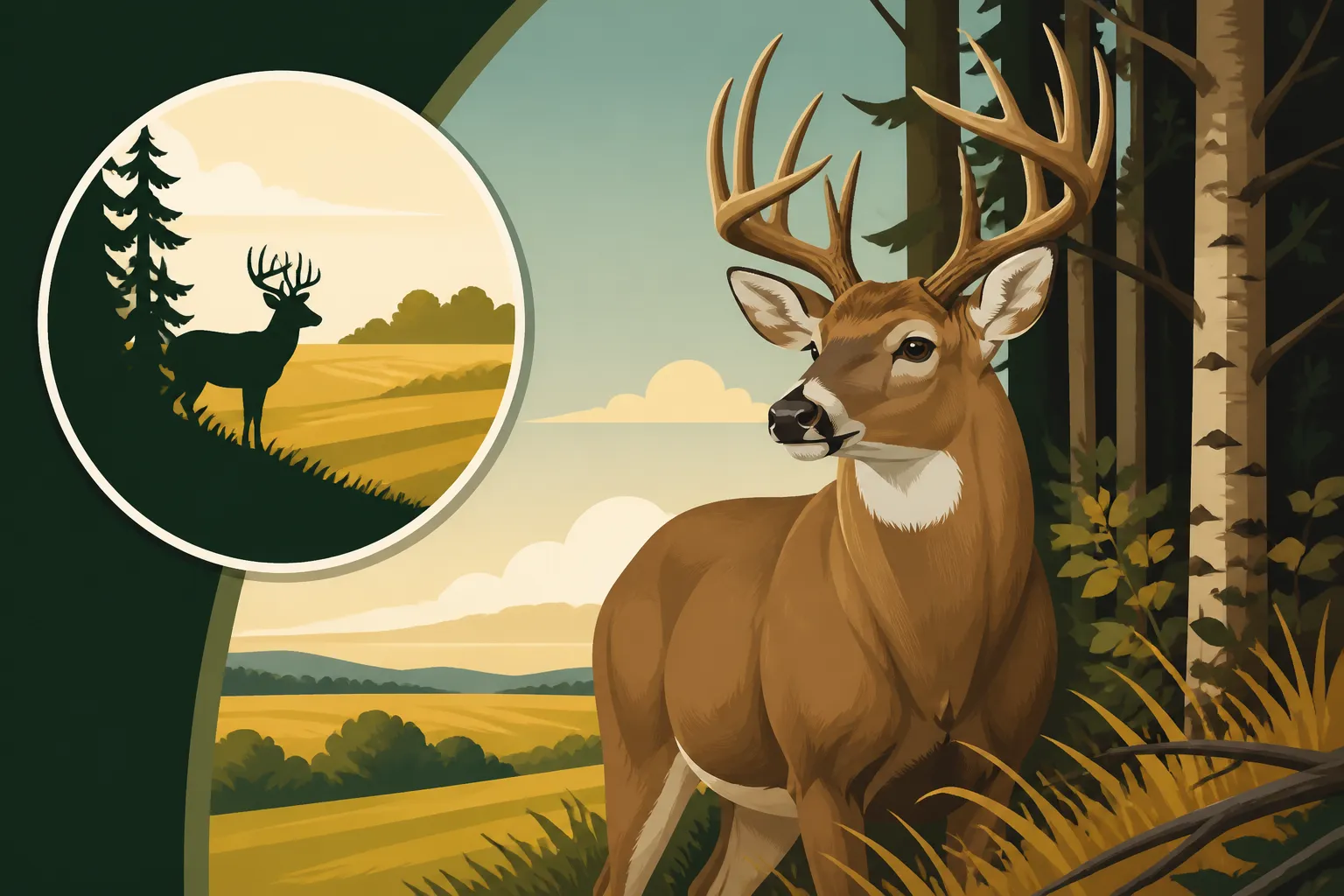
Imagine a landscape where golden stubble fields meet dense stands of aspen, willow thickets, and scattered spruce bluffs. This is the essence of the forest fringe. It provides an almost limitless pantry of high-energy agricultural crops like peas, lentils, and oats, right alongside natural forage from the bush. Bucks can gorge themselves on these nutrient-rich foods, fueling incredible antler growth and body mass, then melt back into the thick cover just yards away. This abundance and diversity of food, combined with immediate, impenetrable escape routes, means a buck spends less time exposed and less energy searching for its next meal. This blend is crucial, offering both sustenance and security, a combination that's hard to beat anywhere else in the province.
The dense pockets of timber and heavy brush within the fringe are like fortresses. They offer thermal cover from the biting Saskatchewan winters and provide ideal bedding areas where a mature buck can feel safe. These areas are often difficult for hunters to penetrate silently or efficiently, allowing smart old bucks to easily evade pressure. Think of these areas as strategic hideouts, often just inside the tree line, overlooking the very fields they feed in. This strategic positioning means they can quickly assess danger before committing to an exposed feeding pattern.
Reduced Human Pressure
While the forest fringe does see hunting pressure, the nature of the terrain itself often deters casual hunters. It’s not as easy to glass as open prairie, nor as straightforward to navigate as a well-used bush trail. Many hunters prefer one extreme or the other, often overlooking the complexity and challenge of the fringe. This creates pockets of sanctuary where mature bucks can live relatively unmolested.
Additionally, the mosaic of small land parcels, often a mix of private farmland and smaller blocks of Crown land, can make consistent hunting pressure difficult to maintain. A buck can simply cross a fence line or duck into a different type of cover to escape persistent hunters. This broken land ownership and varied terrain make it a strategic haven for deer that have learned to avoid humans. Hunting the forest fringe for big bucks requires a different approach than just sitting on a field edge.
How Forest Fringe Bucks Adapt and Survive
It’s not just the environment; it’s how the bucks themselves have adapted to this environment. Their behavior, honed over years of survival, is what truly sets them apart and allows them to live longer than deer in more exposed or consistently pressured habitats.
Mastering the Art of Evasion
Forest fringe bucks become masters of evasion. They learn exactly which bluffs provide the best escape routes, which willow runs offer the most secure travel corridors, and precisely when it’s safe to step out into a field. Their internal clock and sense of danger are incredibly refined. They often move during low light conditions, staying deep in cover during daylight hours, especially when hunting pressure is high. This cat-and-mouse game is played out daily, and the older a buck gets, the better it becomes at winning.
These bucks utilize the varied topography of the fringe to their advantage. They’ll often bed on the downwind side of a knoll or in a small thicket that offers multiple escape routes, making it incredibly difficult for a hunter to approach undetected. They might even use the noise of the wind in the trees to mask their movements or the sound of approaching danger. For a deer in its prime, this intimate knowledge of its home range is its greatest defense, allowing it to seemingly vanish into thin air. For those interested in Hunting Saskatchewan's Aspen Parkland Bluffs, understanding these evasive tactics is paramount.
Dietary Diversity and Nutritional Advantage
The constant access to a diverse diet is a significant factor in why forest fringe bucks grow so large and remain healthy, contributing to their longevity. They can switch between high-protein agricultural crops and natural browse like aspen buds, willow, and various forbs, ensuring a balanced intake throughout the year. This isn't just about size; it's about robust health, strong immune systems, and the ability to recover quickly from injuries or the rigors of the rut.
Consider a buck that spends its summer putting on weight from alfalfa and peas, then transitions to browse and residual grains as winter approaches. This consistent, high-quality nutrition supports not only impressive antler development but also overall physical condition. Deer on the open prairie might have access to crops but lack the immediate, dense cover. Deep bush deer have cover but often face scarcer, less diverse food sources. The fringe provides the best of both worlds, leading to healthier, hardier bucks that are better equipped to survive. If you want to know What Whitetails Eat Through a Prairie Winter, the fringe offers a bounty.
Avoiding Predation
While predators like coyotes and wolves are certainly present in Saskatchewan, the forest fringe offers bucks an advantage in avoiding them compared to open prairie. The dense cover provides numerous hiding spots and escape routes that can quickly break a predator's pursuit. A mature buck can utilize the terrain and thick vegetation to outmaneuver a wolf pack or simply vanish before a coyote even gets close.
The sheer density of the vegetation means that predators have to work harder to locate and pursue deer, increasing the chances of escape for the deer. Furthermore, the constant human activity in agricultural areas, while a threat to deer, can also inadvertently keep some predators at bay, creating a somewhat safer zone compared to remote wilderness. Understanding Saskatchewan's Black Bear Numbers and Wolves in Saskatchewan's North gives a broader picture of the predatory landscape.
The Challenges and Rewards of Hunting the Fringe
Hunting the forest fringe is not for the faint of heart, but it offers unparalleled rewards for those patient and skilled enough to adapt to its unique challenges. This is where the truly giant bucks are often found, but they don't come easy.
Navigating the Complex Terrain
Unlike the relatively flat expanse of open fields or the sometimes predictable patterns of deep timber, the forest fringe is a jigsaw puzzle of diverse habitats. You'll encounter everything from dense willow bottoms to aspen bluffs, cattail sloughs, and thick spruce patches, all interspersed with open fields. This makes navigation and strategic hunting incredibly difficult. Hunters often find themselves constantly adjusting their approach, dealing with swirling winds, and battling dense undergrowth.
Using tools like GoHunt or other mapping applications with detailed satellite imagery can be a game-changer for understanding this complex terrain. It allows hunters to identify key travel corridors, hidden bedding areas, and potential pinch points that might otherwise be missed. Without this kind of preparation, it’s easy to get turned around or miss the subtle nuances that a mature buck relies on for survival. Learning Reading a Saskatchewan WMZ Map Before You Go can be incredibly helpful here.
Reading Subtle Sign
Because forest fringe bucks are so adept at evading detection, reading their sign becomes an art form. You won't always find obvious rub lines or heavily used trails out in the open. Instead, you'll be looking for subtle clues: a fresh rub deep in a thicket, an overlooked scrape tucked away behind a clump of willows, or faint tracks crossing a seldom-used deer trail. These bucks often leave sign in places where they feel most secure, which are often the hardest for hunters to access or even spot.
Understanding how a mature buck uses its environment requires hours of scouting, often outside of hunting season. It means looking for bedding areas on small rises within heavy cover, noting distinct travel routes through seemingly impenetrable brush, and understanding how deer move with changing wind patterns. Learning Reading Whitetail Sign in Saskatchewan Bluffs can help you hone these skills.
Strategies for Success
Successfully hunting these older bucks in the fringe demands a combination of patience, stealth, and intelligent strategy. Sitting all day in a stand overlooking a suspected travel corridor or bedding area is often more effective than still-hunting through dense brush, which can easily alert a wary buck. Strategic stand placement is paramount, often on a bush edge or along a natural funnel that connects different cover types to a food source.
Using rattling and calling can also be highly effective, especially during the rut. A buck that lives in the fringe is often less exposed to these tactics than one in wide-open country, making them potentially more effective. However, the key is knowing when and where to employ them without alerting the buck to your presence. Remember, the goal is to draw the buck to you, not to spook it. This is particularly true when considering Rattling and Calling Farmland Whitetails.
What This Means for Hunters
For those dedicated to pursuing truly mature whitetails, understanding the dynamics of the forest fringe is crucial. It’s a challenge, but the rewards are often the biggest deer Saskatchewan has to offer.
Patience and Persistence
The number one rule for hunting forest fringe bucks is patience. These deer didn't get old by being careless, and they certainly didn't get big by being easy to find. You might spend days, even weeks, hunting a specific area, only catching glimpses of what you’re after. It's about being in the right place at the right time, and that usually means putting in the hours. Sitting all day, sometimes for multiple days in a row, often pays off when targeting these elusive animals, especially during the peak of the rut.
Persistence also means adapting. If a spot isn't producing, don't be afraid to change your approach, move your stand, or scout a new section of the fringe. These bucks will adapt to pressure, so you need to be even more adaptable. Every sit is a learning experience, providing more clues about how these specific bucks use their environment. This is why many hunters find themselves coming back to Saskatchewan, year after year, to try their hand at Whitetail Hunting in Saskatchewan.
Gear and Preparation
Given the challenging nature of the terrain and the often harsh Saskatchewan weather, proper gear and preparation are non-negotiable. Quality optics are essential for picking apart thick cover, and scent control is paramount when trying to get close to a wary buck. Good quality, warm, and waterproof clothing is also a must, especially if you're planning on Sitting All Day in a Saskatchewan Blind in late fall or early winter.
Beyond the immediate hunting gear, having a solid plan for access and extraction is also vital. Whether it’s knowing how to navigate back roads, having a reliable quad for deeper access, or simply being prepared for unexpected weather, being ready for anything is key. A GPS device or a robust mapping app on your phone, possibly supplemented by a satellite messenger, can be a lifesaver when you're deep in the fringe and cell service is spotty. Always ensure your Winter Truck Kit for a Saskatchewan Hunt is stocked, as conditions can change rapidly.
Hunting the forest fringe for these elusive, long-lived bucks truly is a test of skill, patience, and dedication. But for those willing to put in the effort, it offers the chance at a truly memorable hunt and the satisfaction of outsmarting one of Saskatchewan's most cunning creatures.
Disclaimer
This article is for general informational purposes only and does not constitute professional advice. Laws, prices and regulations vary by location and change over time. Consult a qualified professional for guidance on your specific situation.