Which Ducks Nest in Saskatchewan’s Potholes
One of the most thrilling parts of living in or visiting Saskatchewan, especially as a hunter or naturalist, is witnessing the sheer abundance of waterfowl. But if you've ever stood on the edge of a prairie pothole, marveling at the vibrant life, you might wonder, "Which ducks actually make this their home, choosing these specific wetlands to nest and raise their young?" It's a question that gets at the heart of what makes our province a legendary 'duck factory,' and it’s crucial for anyone who wants to truly understand the dynamics of our incredible waterfowl populations. This guide will walk you through the fascinating world of Saskatchewan's nesting ducks, delving into the specific species that call our potholes home and what makes these wetlands so vital.
The Prairie Pothole Region: A Duck Factory Explained
Saskatchewan is famous worldwide for its waterfowl, and a huge part of that reputation comes down to a unique ecological phenomenon: the Prairie Pothole Region. This vast expanse, characterized by millions of small, glacially formed wetlands, acts as a nursery for an incredible diversity of duck species. It's not just a nice place for them to stop; for many, it's the place where the next generation is born and raised.
What Makes Potholes So Irresistible to Ducks?
Imagine being a duck. What do you need to successfully raise a brood? Food, shelter, and security. Saskatchewan's potholes, particularly in the spring and early summer, offer all three in spades. Geologically speaking, these wetlands are depressions left behind by retreating glaciers, creating a mosaic of varying depths and sizes across the landscape. This unique hydrology means you can find everything from ephemeral puddles that last only a few weeks to semi-permanent marshes that hold water year-round.
This diversity is key. The shallower, temporary potholes explode with invertebrate life – insect larvae, snails, crustaceans – providing an immediate, high-protein food source for egg-laying hens and rapidly growing ducklings. As the water warms, these small organisms reproduce quickly, offering a veritable buffet. The deeper, more permanent potholes offer refuge, stable water, and often more robust emergent vegetation like cattails and bulrushes, which serve as excellent escape cover from predators. Furthermore, the surrounding upland grasses, often bordering these wetlands, provide critical nesting cover. Hens can lay their eggs just a short walk from the safety of the water, a perfect balance of access to food and security for their nests. The agricultural landscape itself plays a role, too, as ducks forage in nearby stubble fields for leftover grain, supplementing their wetland diet. It's a complex, dynamic system, but in essence, it’s a perfect storm of resources that makes these seemingly humble depressions irresistible to ducks. This is a huge reason why we are known as Why Saskatchewan Is Called a Duck Factory.
The Importance of Wetland Health for Duck Populations
While the abundance of potholes might seem endless when you're driving through rural Saskatchewan, the health of these wetlands is constantly under threat. Drainage for agricultural expansion, periods of drought, and changes in land use can dramatically impact their ability to support duck populations. When a pothole is drained, it's not just a puddle gone; it's a vital piece of the duck breeding puzzle lost. It means fewer places for hens to nest, fewer food sources for ducklings, and ultimately, fewer ducks returning south in the fall.
Healthy wetlands are not just for ducks; they are ecosystems that support countless other species, from muskrats and frogs to shorebirds and raptors. They filter water, recharge groundwater, and help mitigate floods. Conservation efforts, often supported by hunters and organizations like Ducks Unlimited Canada, are absolutely crucial in protecting these invaluable habitats. These efforts might involve maintaining water levels, restoring drained wetlands, or working with landowners to implement beneficial land management practices. Without continued dedication to preserving and enhancing our wetland health, the incredible duck numbers Saskatchewan is known for could dwindle. Understanding this interconnectedness helps us appreciate just how vital each and every pothole is, and why it’s so important that we consider our impact, especially when we are Pothole Hunting Prairie Ducks.
Common Nesting Ducks of Saskatchewan's Potholes
Saskatchewan’s potholes are a haven for a variety of duck species, broadly categorized into dabblers and divers. While both groups utilize these wetlands, their specific preferences for food and nesting habitat often differ, leading to a rich tapestry of duck life.
Dabbling Ducks: The Surface Feeders
Dabbling ducks are easily identified by their feeding style: they "dabble" or tip headfirst into shallow water, keeping their tails up, to feed on aquatic vegetation, seeds, and invertebrates near the surface. They also tend to spring directly into the air when taking flight.
-
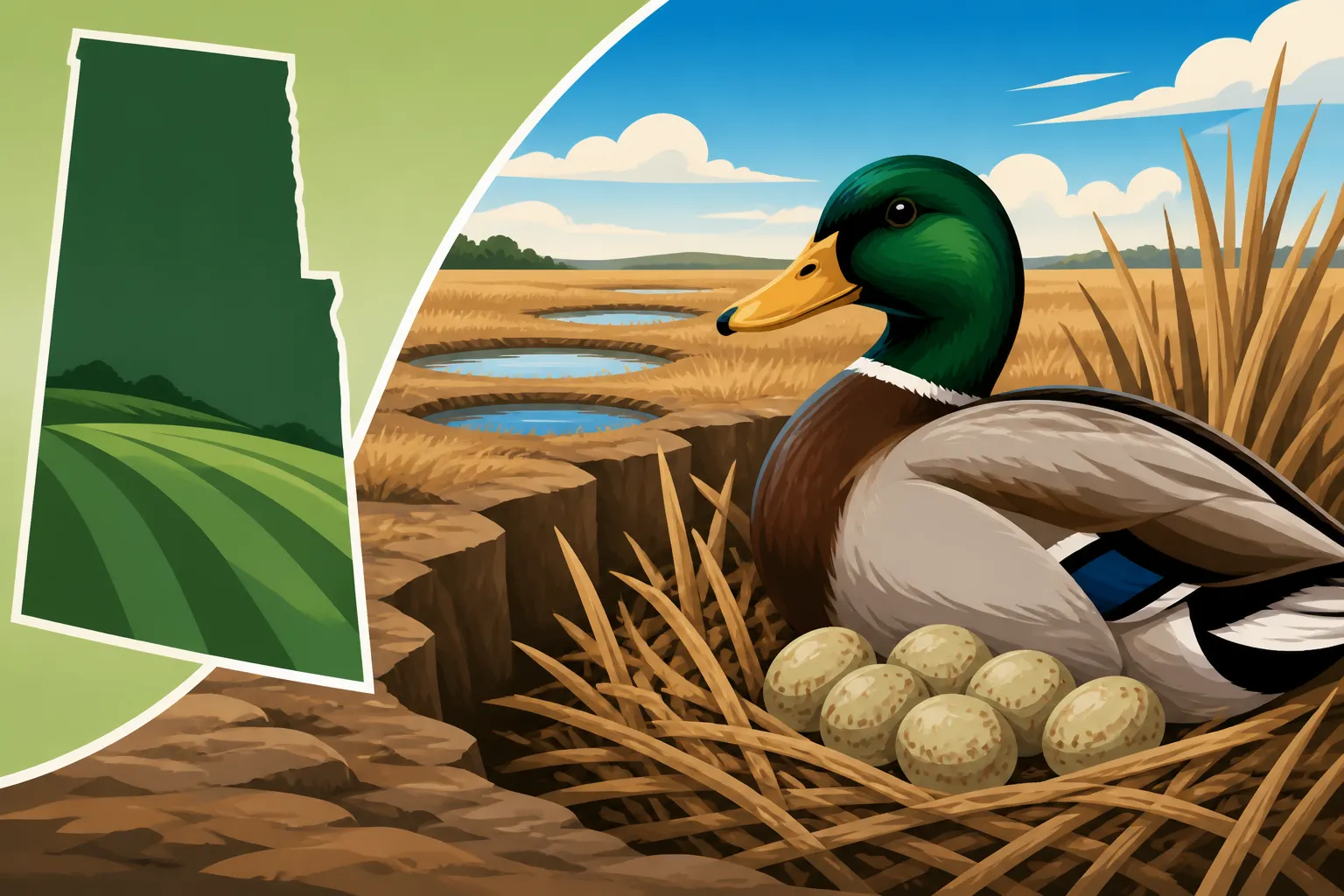
Mallards: Ah, the iconic mallard! When most people picture a duck, they picture a mallard. These highly adaptable ducks are arguably the most common nesters in Saskatchewan's potholes. They are incredibly versatile, nesting in a wide variety of locations, from dense upland grasses right next to a pothole, to hayfields, shelterbelts, and even urban parks. A hen will meticulously choose a spot that offers good concealment, often constructing her nest from grass and leaves, eventually lining it with soft down plucked from her own breast. She'll lay a clutch of around 7-10 eggs, incubating them diligently for about 28 days. Once hatched, the ducklings follow her immediately to the water, where they'll find abundant food and escape cover. Their adaptability is a huge reason why you see them everywhere.
-
Northern Pintails: With their elegant, slender build and distinctive long tail feathers (on the drakes), pintails are another common sight. They are often among the earliest nesters in the spring, sometimes even before the last snow has completely melted. Pintails prefer to nest in relatively sparse upland vegetation, often further from water than mallards, making their nests a bit harder to stumble upon. They are ground nesters, creating a shallow scrape lined with grass and down. Their diet consists heavily of seeds from aquatic plants and waste grain, so they're often found in potholes surrounded by agricultural fields. Their preference for shallow, open water can make them a challenge to approach if you're trying Jump-Shooting a Saskatchewan Prairie Pothole.
-
Gadwalls: Often underestimated and sometimes overlooked, gadwalls are incredibly abundant nesters here. They are known for their preference for nesting on islands or peninsulas within wetlands, or in very dense emergent vegetation. This strategic nesting choice provides excellent protection from land-based predators. Their nests are usually well-concealed, built from marsh vegetation and lined with down. Gadwalls primarily feed on aquatic plants, including the leaves and stems of submerged vegetation. Their subtle beauty and prevalence make them a favourite for many.
-
Blue-winged Teal: These smaller, agile ducks are early migrants and famous for their rapid, erratic flight. Blue-winged teal are prolific nesters in Saskatchewan, especially in the smaller, shallower potholes that dot the prairie. They require dense nesting cover, often choosing areas with tall grasses or thick sedges close to the water's edge. Their nests are well-hidden, usually a cup-shaped depression lined with grass and down. Their ducklings grow very quickly, which is essential for these birds as they are some of the earliest to migrate south in late summer.
-
Northern Shovelers: Recognizable by their disproportionately large, spatulate bills, Northern Shovelers are true filter feeders. Their unique bill is fringed with lamellae, which they use to strain small invertebrates, seeds, and zooplankton from the water. They thrive in shallow, nutrient-rich potholes that are teeming with these microscopic food sources. Shovelers typically nest in dense cover near water, similar to blue-winged teal, creating well-hidden nests of grass and down.
-
American Wigeon: These attractive ducks are grazers, often feeding on submerged vegetation or even green shoots on land, similar to geese. They are also known for sometimes stealing food from diving ducks! Wigeons typically nest in drier upland areas, often in grasslands or hayfields, sometimes a considerable distance from the water. Their nests are simple depressions lined with grass and down. You’ll often find them associating with other duck species, making them part of the general tapestry of Saskatchewan's Ducks and Geese.
Diving Ducks: The Deeper Water Specialists
While dabblers dominate the shallower potholes, some diving ducks also make these wetlands their breeding grounds, especially those potholes that are larger and hold deeper, more stable water. Diving ducks, as their name suggests, dive underwater to find their food, which typically includes aquatic invertebrates, mollusks, and submerged vegetation.
-
Redheads: These striking ducks are true wetland specialists, and Saskatchewan’s larger, semi-permanent potholes and marshes are prime redhead country. Unlike dabblers, redheads often build elaborate floating nests, anchored to emergent vegetation like cattails or bulrushes, directly over the water. This provides excellent protection from land predators. Their diet consists primarily of aquatic plants, with some insects and small fish. Finding a redhead nest is often a sign of a very healthy, diverse wetland.
-
Canvasbacks: Often referred to as the "king of ducks," canvasbacks are highly sought after by hunters and birdwatchers alike. They share many nesting similarities with redheads, preferring large, deep-water marshes and potholes with extensive stands of emergent vegetation. Canvasbacks also build floating nests, using reeds and cattails, often in dense colonies. They are primarily herbivorous, feeding on tubers and rhizomes of aquatic plants. Their presence is an indicator of robust wetland ecosystems.
-
Lesser Scaup: Also known as "bluebills," lesser scaup are more typically associated with larger lakes and rivers during migration. However, they will utilize larger, deeper potholes for nesting, particularly those with abundant aquatic invertebrates. They generally nest in dense cover close to the water, often in colonies. Their diet is diverse, including aquatic insects, mollusks, and some plant material. While perhaps not as ubiquitous in all potholes as mallards, their presence in suitable wetlands is significant.
The diversity of nesting strategies and habitat preferences among these species highlights just how critical the mosaic of Saskatchewan’s potholes is. Each type of wetland, from the smallest ephemeral puddle to the largest cattail-choked marsh, plays a crucial role in supporting the rich duck populations we cherish.
Recognizing Duck Nests and What to Expect
Understanding where and how ducks nest in Saskatchewan's potholes isn't just for ornithologists; it's invaluable knowledge for anyone who spends time outdoors, especially hunters. Knowing the signs of nesting activity helps ensure you don't inadvertently disturb sensitive areas and gives you a deeper appreciation for the life cycle of these incredible birds.
Nesting Locations and Materials
Duck nests are notoriously difficult to spot, designed by nature for ultimate camouflage. Hens are masters of concealment. You won't find a flashy, obvious nest sitting out in the open. Instead, look for subtle signs and know the typical hideaways:
- Dense Upland Grasses: This is prime real estate for many dabblers, especially mallards and pintails. Fields of native prairie grass, tame hay, or even thick roadside ditches adjacent to a pothole offer ideal cover. The hens create a shallow depression, lining it with dried grasses, leaves, and eventually, the crucial layer of down feathers from their own breast. This down not only insulates the eggs but also serves as a blanket to cover them when the hen leaves to feed, camouflaging them almost perfectly from aerial predators.
- Emergent Vegetation: For diving ducks like redheads and canvasbacks, as well as some gadwalls, the dense stands of cattails, bulrushes, and sedges growing in the water are their preferred nesting spots. They'll build floating nests, anchored to the surrounding stalks, often a complex structure of woven plant material. These nests provide exceptional protection from land predators and can withstand fluctuating water levels better than ground nests.
- Old Muskrat Houses: These natural platforms, built by muskrats from marsh vegetation, offer elevated, dry nesting sites that are highly sought after by ducks, particularly in deeper wetlands. They provide a sturdy foundation and excellent insulation.
- Shelterbelts and Field Edges: Sometimes, nests can be found further afield, in the protective cover of tree lines (shelterbelts) or the uncultivated edges of grain fields. These spots offer overhead cover and a degree of seclusion.
The key material, beyond the local vegetation, is always the down. If you ever find a nest with small, soft feathers lining it, you've likely found a duck nest. But remember, the best practice is to observe from a distance and avoid disturbing the area.
The Incubation Period and Brood Rearing
Once a hen has laid her full clutch of eggs (which can take several days as she lays one egg per day), she will begin the incubation process. This is a period of intense dedication, typically lasting between 20 to 28 days, depending on the species. During this time, the hen rarely leaves the nest, relying on stored energy reserves and quick feeding forays. Her camouflage is her primary defence, and she'll sit tight, often blending seamlessly into her surroundings even if you walk quite close.
When the eggs hatch, it's a remarkably quick transition. Ducklings are precocial, meaning they are relatively mature and mobile from birth. Within hours of hatching, the hen will lead her brood from the nest to the nearest water body. This journey can be fraught with danger, as predators are always on the lookout for vulnerable ducklings. Once on the water, the potholes become their nursery, providing a safe haven from many terrestrial predators and an abundance of food. The ducklings will spend the next several weeks growing rapidly, feeding on insects and small aquatic organisms, constantly watched over by their mother. This is where tools like GoHunt, with its detailed mapping layers, can become invaluable for understanding habitat composition. By studying satellite imagery, you can identify dense upland grasses for potential nesting cover, assess water levels within potholes, and even pinpoint the emergent vegetation that provides critical shelter for broods. It helps you recognize key nesting areas even before you step foot in the field, making you a more informed observer and potentially a better scout for Scouting Fields for Saskatchewan Waterfowl come fall.
Factors Affecting Nesting Success
Nesting for ducks is a perilous endeavour, and many factors can influence a hen's success in raising a brood. It's a tough world out there.
- Predation: This is often the biggest challenge. Foxes, coyotes, skunks, raccoons, badgers, and even avian predators like crows and magpies are constantly on the hunt for eggs and ducklings. A well-camouflaged nest is the first line of defence, but it's not foolproof.
- Water Levels: The unpredictable nature of prairie weather means water levels can fluctuate dramatically. Too much rain can lead to flooded nests, especially those built on the ground near the water's edge. Conversely, prolonged drought can cause potholes to dry up completely, stranding ducklings or forcing hens to move their broods across dangerous open ground in search of new water.
- Agricultural Practices: Modern farming techniques, such as early haying or widespread cultivation right up to the pothole edge, can destroy nests. Hens often nest in hayfields, which, if cut too early, can lead to significant nest and hen mortality.
- Weather Events: Sudden hail storms, late spring snowfalls, or severe cold snaps can devastate a clutch of eggs or even kill incubating hens.
- Disease Outbreaks: Though less frequent, diseases like Avian Botulism or Avian Influenza can sweep through waterfowl populations, impacting nesting success and survival.
Given these challenges, the fact that so many ducks successfully hatch and fledge each year is a testament to their resilience and the incredible productivity of Saskatchewan’s Prairie Pothole Region.
The Hunter's Role in Understanding Nesting Ecology
As hunters and outdoor enthusiasts, our connection to the landscape and its wildlife goes beyond the harvest. Understanding the nesting ecology of ducks in Saskatchewan's potholes is not just about curiosity; it’s fundamental to being an ethical conservationist and a more successful hunter.
Ethical Considerations and Conservation
For any hunter, respecting the wildlife we pursue is paramount. This respect extends to the breeding season, long before hunting season opens. Knowing that ducks are nesting in dense cover near potholes, for example, encourages us to be mindful during spring and early summer activities in these areas. It means not needlessly disturbing areas where hens might be incubating or broods are being reared.
Furthermore, hunters play an undeniable and crucial role in conservation. Through the purchase of hunting licenses and stamps, like The Federal Migratory Game Bird Permit and Saskatchewan's Wildlife Habitat Certificate, hunters provide significant funding that goes directly to wetland restoration, habitat protection, and wildlife research. This financial contribution, coupled with advocacy for sustainable land use, ensures that the "duck factory" continues to operate for future generations. Our understanding of nesting habits directly informs ethical hunting practices; by knowing the critical breeding grounds, we can support measures that protect them, ensuring a sustainable harvest that doesn't jeopardize the overall population. It's about being good stewards of the land and the wildlife that calls it home.
Scouting for Pothole Hunting Success
Understanding where and how ducks nest might seem unrelated to your fall hunting strategy, but it's actually a fantastic scouting tool. Ducks have a strong homing instinct, often returning to the general area where they were born to nest and breed. This means that areas with consistently good nesting habitat tend to produce ducks year after year.
Here’s how this knowledge translates to scouting success:
- Identify Core Breeding Areas: By paying attention to the types of wetlands and adjacent upland cover that ducks prefer for nesting, you can identify prime breeding grounds in the spring and summer. These areas, rich in brood cover and food, are likely to be strong producers of young birds.
- Observe Summer Activity: Even if you're not hunting in July, spending time observing duck activity around potholes during the summer can provide invaluable insights. You’ll see broods growing, ducks feeding, and general patterns of movement. These observations can clue you into areas that hold ducks even before the fall migration truly begins.
- Diverse Habitats are Key: Look for areas that offer a combination of ideal nesting habitat (dense upland cover), healthy potholes for brood rearing (with abundant invertebrates and escape cover), and nearby feeding fields (stubble, pea, or lentil fields). This diversity provides everything ducks need throughout their life cycle.
- Utilize Digital Tools: Modern technology is your friend here. Platforms like GoHunt, for instance, offer invaluable mapping resources that can help you decipher satellite imagery to pinpoint potential nesting cover, assess water levels, and even identify different types of vegetation crucial for various duck species. You can mark potential hotspots for Hunting a Willow Ring Around a Pothole or Hunting a Saskatchewan Dugout at Dusk long before the season arrives. Analyzing land features on a map can highlight areas that might otherwise be overlooked, giving you a competitive edge when Scouting Fields for Saskatchewan Waterfowl.
- Long-Term Planning: Knowing where ducks breed helps you understand population trends in specific zones. If a particular area has excellent nesting habitat but a string of dry years, you might anticipate lower local production. Conversely, a wet spring in a known productive area could signal an excellent fall flight.
By becoming a student of duck nesting ecology, you're not just learning about nature; you're becoming a more informed, ethical, and ultimately, more successful hunter. It deepens your connection to the land and reinforces the vital cycle of life that unfolds each spring in Saskatchewan’s remarkable potholes. Remember to always use Non-Toxic Shot Requirements for Waterfowl when hunting to protect these precious wetland environments.
Saskatchewan's Pothole Ducks at a Glance
Here’s a quick overview of some of the key duck species you'll find nesting in Saskatchewan's potholes and what makes them stand out:
| Species | Primary Nesting Habitat | Key Characteristics |
|---|---|---|
| Mallard | Dense upland grasses, hayfields, shelterbelts | Most common & adaptable; ground nest, lined with down; leads ducklings to water shortly after hatch. |
| Northern Pintail | Sparse upland vegetation, often further from water | Early nester; elegant, slender build; long tail feathers on drakes; ground nest, lined with down. |
| Gadwall | Dense emergent vegetation, islands, peninsulas | Often overlooked but abundant; builds well-concealed nest from marsh vegetation & down; primarily feeds on aquatic plants. |
| Blue-winged Teal | Dense cover near smaller, shallower potholes | Small, fast-flying; early nester & migrant; ground nest, well-hidden; ducklings grow quickly. |
| Northern Shoveler | Dense cover near nutrient-rich, shallow potholes | Distinctive large, spatulate bill; filter feeder; ground nest, lined with down. |
| American Wigeon | Drier upland grasslands, hayfields | Grazer, feeds on vegetation on land & water; ground nest, simple depression; sometimes associated with other ducks. |
| Redhead | Dense emergent vegetation in larger, deeper potholes | Build floating nests over water; primarily feeds on aquatic plants; striking red head on drakes. |
| Canvasback | Large, deep-water marshes with emergent vegetation | "King of ducks"; builds floating nests; primarily feeds on tubers & rhizomes of aquatic plants; distinctive sloped profile. |
| Lesser Scaup | Dense cover near larger, deeper potholes and lakes | "Bluebill"; utilizes larger potholes for nesting; eats aquatic insects, mollusks; often nests in colonies. |
Disclaimer
This article is for general informational purposes only and does not constitute professional advice. Laws, prices and regulations vary by location and change over time. Consult a qualified professional for guidance on your specific situation.