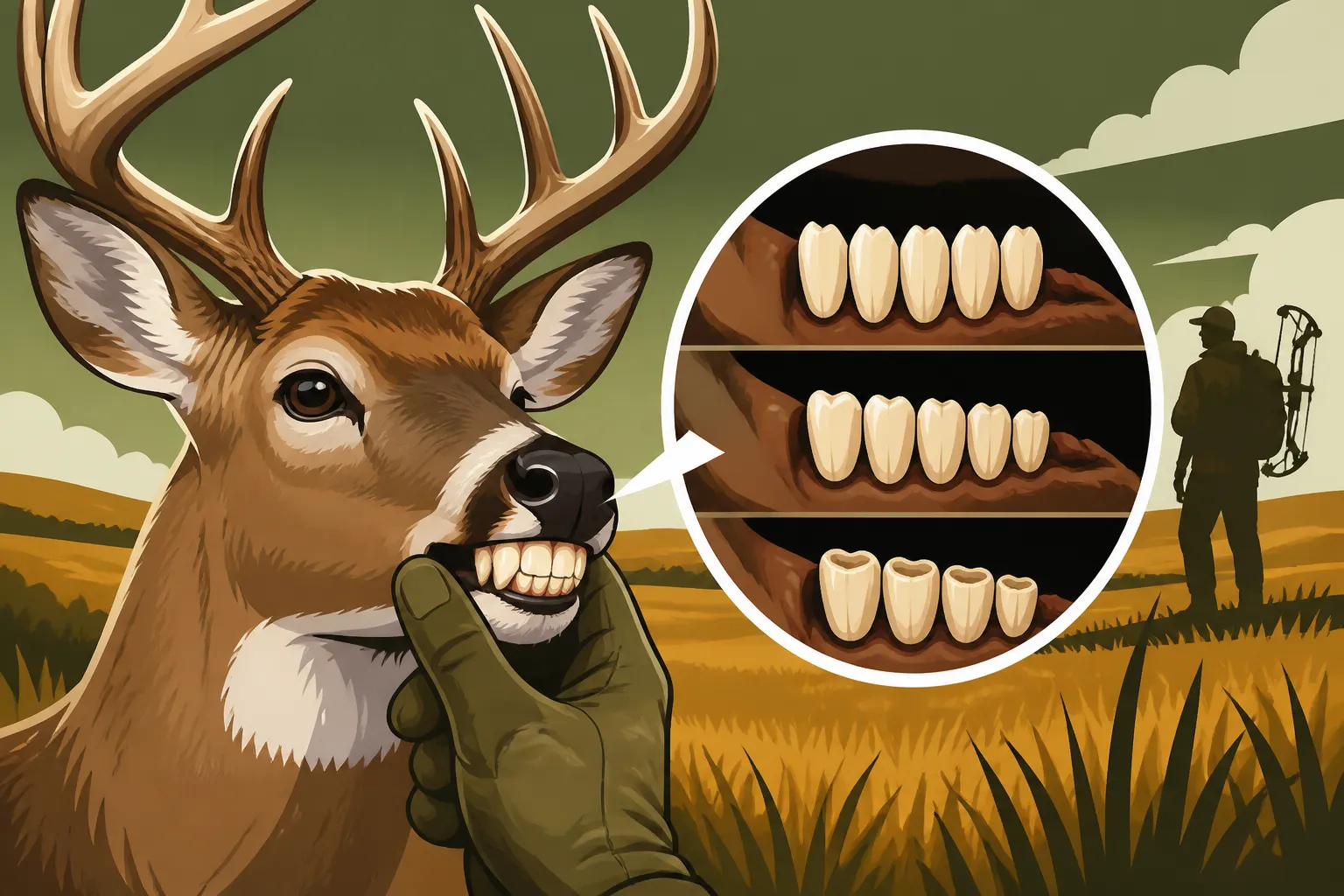
Aging a Deer by Its Teeth
There’s nothing quite like standing over a buck you’ve just harvested in the Saskatchewan bush or prairie, admiring its antlers, and then the inevitable question pops into your head: How old was this deer? It's a common moment for many hunters, and while the rack might tell part of the story, understanding the actual age of a deer by its teeth is a skill that can truly deepen your connection to the animal and the health of the local herd. This guide will walk you through the practical steps of aging a deer using its dental structure, helping you move beyond guesswork to genuine understanding.
Why Accurately Aging a Deer Matters for Saskatchewan Hunters
Knowing a deer's age isn't just about satisfying curiosity; it's a powerful tool that offers insights into herd dynamics, helps you make more informed hunting decisions, and ultimately contributes to more responsible wildlife management. For those of us hunting the vast landscapes of Saskatchewan, from the southern prairies to the northern forest fringe, understanding the age structure of the deer population is incredibly valuable.
Understanding Herd Health and Management
When you take the time to age a deer, you're not just looking at one animal; you're gaining a small piece of data that contributes to a larger picture of the deer herd's health and composition in your specific hunting area. If you consistently see only young deer, it might indicate heavy pressure on older age classes or perhaps a lack of mature bucks in the gene pool. Conversely, if you're regularly encountering older, healthier deer, it suggests a well-balanced herd with good survival rates and sufficient resources. This kind of anecdotal data, gathered by individual hunters over time, complements the broader studies done by wildlife biologists and conservation officers, helping everyone understand the population trends. It’s about being an active participant in conservation, not just a harvester. Understanding the overall picture helps ensure that the strong deer populations we enjoy here in Saskatchewan continue for generations.
Furthermore, being able to accurately age deer means you can better assess management strategies. Are enough bucks making it to maturity? Is the antlerless harvest helping to balance the buck-to-doe ratio? These are questions that aging a deer by its jaw can help answer at a local level. For instance, if a particular Wildlife Management Zone (WMZ) shows a high proportion of young bucks being harvested, it could suggest that hunters are not passing on younger animals, or perhaps older bucks are simply not present in good numbers. Conversely, seeing mature bucks consistently taken from an area might signal a healthy, thriving population with plenty of potential for growth and trophy quality. This local knowledge helps you tailor your personal hunting approach to contribute positively to the herd's future.
Elevating Your Hunting Strategy and Experience
Beyond the biological implications, the ability to age a deer on the ground can significantly elevate your personal hunting strategy. Imagine you’ve been Hunting a Saskatchewan Bush Bluff for a few days, and you've had encounters with several deer. Being able to quickly assess the age of a buck you're considering harvesting allows you to make an immediate, ethical decision. Are you looking for a younger buck for meat, or are you holding out for a truly mature animal that has proven its ability to survive multiple hunting seasons? This skill empowers you to be more selective, allowing younger bucks to continue growing and contributing to future breeding cycles.
This discernment also applies to understanding habitat use. Older deer often exhibit different patterns of movement and cover preferences compared to younger ones. By aging the deer you encounter or harvest, you can start to piece together patterns. Perhaps older bucks in your area favour a particular type of cover, like a dense spruce island within an aspen bluff, or they might be more nocturnal. This learned experience, coupled with scouting information you might gather using tools like GoHunt for aerial imagery analysis, makes you a more effective and knowledgeable hunter. Instead of just guessing, you’re making data-driven decisions based on tangible evidence. It’s about transitioning from simply hunting deer to truly hunting mature deer, if that's your goal, and appreciating the life story of each animal you pursue.
The Foundational Science: Deer Dental Anatomy 101
Before you can effectively age a deer, it helps to understand the basic dental toolkit they possess. Deer teeth aren't just for chewing; they're a meticulous record keeper of the animal's life, and knowing which teeth to look at and what they're called is the first step in unlocking that information.
A Hunter's Guide to Incisors, Premolars, and Molars
Deer, like many herbivores, have a specialized set of teeth designed for processing vegetation. While you won't find upper incisors (they have a dental pad instead), the lower jaw holds all the clues you need. At the front of the lower jaw, you’ll find eight incisors – these are the smaller, chisel-like teeth used for nipping off grasses and browse. While important for feeding, they don’t play a major role in age determination because their wear patterns can be highly variable and less distinct.
Further back in the jaw are the cheek teeth, which are split into two groups: premolars and molars. There are six premolars (three on each side of the jaw) and six molars (again, three on each side). The premolars are generally smaller and have fewer cusps (the raised points on the chewing surface) than the molars. They are replaced over time. The molars, particularly the third molar, are the real workhorses and the most critical teeth for aging older deer. These teeth are much larger, have more distinct cusps, and their wear patterns are the primary indicator of age in mature animals. Getting familiar with counting these teeth and identifying the unique shape of the third molar is paramount for accurate aging. Knowing where to focus your attention within the jaw will save you a lot of time and provide more reliable results.
Decoding Deciduous and Permanent Teeth
One of the most crucial concepts for aging younger deer is understanding the difference between deciduous (milk) teeth and permanent teeth. Just like human children, fawns are born with a set of temporary teeth that eventually fall out and are replaced by adult teeth. This tooth replacement process is highly predictable and provides very accurate age estimates for deer up to about 2.5 years old.
A fawn, typically 0.5 years old by hunting season, will have all deciduous premolars and usually an erupting first molar. As the deer enters its second year (1.5 years old), the deciduous premolars will begin to be replaced by permanent ones. By 2.5 years of age, all the deciduous premolars should be fully replaced by permanent teeth, and the third molar will be fully erupted. Understanding this transition is key. You're looking for the presence or absence of these temporary teeth and the emergence of their permanent replacements. It's a clear-cut method for the younger age classes, offering much less room for interpretation than the wear patterns seen in older animals. For instance, if you find a deer with a prominent, three-cusped third premolar that's still relatively sharp, it's a strong indicator of a younger animal, likely 1.5 years old, as this is one of the last deciduous teeth to be replaced.
The Two Key Methods: Replacement and Wear Patterns
When it comes to putting a number on a deer's age, hunters primarily rely on two methods: observing tooth replacement for younger animals and assessing tooth wear for older ones. Combining these two approaches gives you the most accurate picture.
The Replacement Method: Pinpointing Ages 0.5 to 2.5 Years
This method is your most reliable tool for accurately aging deer in their first few years of life. It’s based on the predictable schedule of deciduous (milk) tooth eruption and replacement by permanent teeth. Let’s break it down:
-
Fawn (0.5 years old): When you check the jaw of a fawn, usually harvested in its first fall, you'll typically find three deciduous premolars and the first permanent molar just erupting or partially erupted. A key identifier for a fawn is that its third premolar (the one closest to the front of the cheek teeth) will have three distinct cusps. This unique, three-part structure is a dead giveaway that it's a milk tooth and the deer is less than a year old. The teeth will generally look quite fresh, with minimal wear. You can almost feel the sharp edges of the cusps with your finger. Sometimes the first molar might not even be fully pushed through the gum line, giving it a bumpy or uneven appearance.
-
Yearling (1.5 years old): This is where the action starts. A 1.5-year-old deer will be in the process of replacing its deciduous premolars with permanent ones. You’ll often find that the first and second premolars have been replaced, or are in the process of being replaced, by permanent teeth. Critically, the original three-cusped third premolar will be shed, and a two-cusped permanent third premolar will be erupting in its place. This transition can look a bit messy, with gaps where teeth have fallen out, or new teeth just pushing through. You will also notice that the second permanent molar is fully erupted and might show slight wear, while the third permanent molar will still be unerupted or only partially erupted. The permanent premolars will appear larger and more robust than the milk teeth they replaced.
-
2.5 Years Old: By the time a deer reaches 2.5 years of age, all of its deciduous premolars should be replaced by permanent, two-cusped premolars. Crucially, the third permanent molar will be fully erupted and in full chewing function. At this stage, all permanent teeth are in place. The wear on the first molar might be noticeable, but the cusps on the premolars and the second and third molars will still be quite sharp and distinct. This age class marks the end of the tooth replacement method's accuracy, as all adult teeth are now present. The jaw will feel solid and complete, without any lingering gaps or signs of new teeth pushing through. It's a complete set, ready for serious foraging in the Saskatchewan landscape, whether that's munching on aspen shoots in the Hunting Saskatchewan's Aspen Parkland Bluffs or browsing on agricultural stubble.
The Wear Method: Estimating Age 3.5 Years and Beyond
Once a deer has all its permanent teeth (from 2.5 years onwards), you shift from looking at what teeth are present to how worn those teeth are. This method becomes progressively less precise the older the deer gets, as individual diet and habitat factors in Saskatchewan can greatly influence wear rates. However, it still provides valuable estimates. The key is to focus on the molars, particularly the third molar, and observe the depth of the cusps and the dentin (the dark, inner core of the tooth) exposed.
-
3.5 Years Old: At this age, the deer has had its full set of permanent teeth for a year. The first molar will show distinct wear, with the enamel (outer white layer) still prominent but the dentin starting to show as distinct dark islands within the cusps. The second molar will have moderate wear, and even the third molar will show some, albeit light, wear on its cusps. The overall chewing surface will still look relatively sharp compared to older deer. You'll see more enamel than dentin on the chewing surfaces.
-
4.5 Years Old: As the deer ages, the wear becomes more pronounced. The first molar will show significant wear, with the dentin islands often wider than the surrounding enamel on the chewing surface. The second molar will have clear wear, and the third molar will be notably worn, with its cusps rounded off. The valley between the cusps (the infundibulum) on the first molar might be starting to disappear or become very shallow. At this point, you're observing a gradual flattening of the tooth's surface.
-
5.5 Years Old and Up: Aging deer beyond 5.5 years becomes increasingly difficult and is often done in broader categories (e.g., "mature" or "old"). The first molar will be severely worn, often appearing nearly flat, with the enamel ring very thin or entirely worn away in places. The second and third molars will show heavy wear, with broad dentin exposure. The infundibulum on the molars may be completely worn away, leaving a smooth, flat surface. An old deer, perhaps 7.5 or 8.5 years old, will have teeth that resemble nubs, severely eroded from years of grinding fibrous vegetation. In Saskatchewan, where deer might be feeding on tough prairie grasses or gritty browse in the bush, this wear can be even more pronounced. This is where experience really comes into play, as you learn to distinguish subtle differences in wear across different age classes. GoHunt sometimes features articles or resources from wildlife biologists discussing regional factors that influence tooth wear, which can be helpful.
A Step-by-Step Field Guide to Jawbone Examination
Actually examining a deer's jaw in the field might seem a bit daunting at first, but with a clear process, it becomes straightforward and quick. This skill allows you to age your deer right there, giving you immediate satisfaction and understanding.
-
Preparation is Key: After harvesting your deer, and while field dressing it, it's a good time to consider removing the jawbone. You'll need a sturdy knife and, ideally, a pair of small pruning shears or even a hacksaw if you're set up for it. Many hunters simply use their hunting knife. A clean cloth or paper towel can also be helpful. Always prioritize safety; keep your hands clear of the blade.
-
Accessing the Jaw: The easiest way to get at the jaw is to first remove the tongue, if you intend to keep it (which many Saskatchewan hunters do!). Then, with the deer on its back or side, locate the hinge of the jaw, just below the ear. Using your knife, cut through the muscle and tissue on both sides, working your way towards the back of the mouth. You'll need to apply some force to separate the jaw from the skull. It's often easier to cut from the inside of the mouth outwards. For some, a quick cut through the soft tissue and then a snap of the jaw can free it, but be careful not to damage the teeth in the process.
-
Cleaning the Jaw: Once you have the lower jawbone free, it’s helpful to clean off any remaining meat, tissue, or blood. A quick rinse with water (if available) or a thorough wipe with a cloth will give you a much clearer view of the teeth. You want to see the chewing surfaces distinctly without obstruction. This is important for accurately assessing wear patterns and identifying cusp features.
-
Beginning the Examination: With a clean jaw, lay it on a flat surface. Start by counting the premolars and molars to confirm you have all twelve cheek teeth (six on each side). Next, focus on the premolars, specifically the third premolar, to determine if it’s deciduous (three cusps) or permanent (two cusps). This will immediately tell you if the deer is 2.5 years or younger.
-
Assessing Wear (for older deer): If all premolars are permanent, shift your attention to the molars, moving from front to back. Look closely at the chewing surfaces of the first, second, and third molars. Pay attention to the ratio of dentin (the dark, often yellowish-brown core) to enamel (the white outer layer) on each cusp. As a rule of thumb, the wider the dentin strip compared to the surrounding enamel, the older the deer. Compare the amount of wear on the cusps, noting if the valleys between them (the infundibulum) are still deep or if they’re becoming shallow or even worn away. This comparison against a known age chart, or even a mental image from previous examinations, will help you estimate the age. This process becomes more intuitive with practice.
Navigating the Nuances: Factors Affecting Deer Ageing in Saskatchewan
While tooth replacement and wear provide excellent guidelines, it's important to remember that deer aging isn't an exact science, especially for older animals. Several factors, particularly relevant to Saskatchewan's diverse environment, can influence tooth wear and make precise aging a bit more challenging.
The Saskatchewan Diet: How Habitat Influences Tooth Wear
The old adage "you are what you eat" holds particularly true for deer teeth. The type of forage a deer consumes throughout its life has a significant impact on the rate at which its teeth wear down. In Saskatchewan, this means a deer living on the open prairie and feeding extensively on abrasive grasses and forbs will likely show more accelerated tooth wear than a deer living in the lush, softer browse of the northern boreal forest. Think about the difference between grinding down tough, silica-rich prairie grasses or chewing on gritty root fragments from agriculture fields versus munching on tender aspen leaves or nutrient-rich berries in the bush.
For instance, a whitetail that spends its life on farmland, regularly feeding on harvested grain fields in the fall and winter, might incorporate more grit and sand into its diet than a deer foraging in a remote Hunting a Boreal Muskeg Edge. This constant, fine abrasion acts like sandpaper on their molars. Similarly, deer in the southern prairie, where the soil is often sandy and dry, might ingest more soil particles with their forage, leading to faster wear. Conversely, a deer in an area with abundant, soft, and leafy browse might show less wear for its chronological age. This variability means that while a 4.5-year-old buck in one part of Saskatchewan might have moderately worn teeth, a 4.5-year-old buck from a different region with a harsher diet might appear to have the tooth wear of a 5.5-year-old. This regional variation is why local knowledge and comparing jaws from your specific hunting area can be invaluable. It really highlights why understanding What Whitetails Eat Through a Prairie Winter or other seasonal forage is so important.
Overcoming Challenges and Seeking Better Accuracy
Even with the best techniques, aging older deer by tooth wear alone can be subjective. There's natural variability among individual deer; some deer might simply have harder tooth enamel, or their genetic makeup might predispose them to different wear rates. Plus, once a deer hits about 5.5 years old, the differences in wear from year to year become incredibly subtle. It's often difficult to confidently distinguish a 6.5-year-old from a 7.5-year-old based solely on tooth wear. At this point, you're looking at patterns of severe overall wear, rather than distinct yearly changes.
To overcome these challenges and improve accuracy, especially if you're deeply invested in herd management or simply want to become truly proficient, consider a few strategies. Many wildlife agencies and conservation organizations offer jaw aging kits or reference guides that include photographs of known-age jaws. These visual aids are fantastic for comparison. If you're really serious, you can collect and label jawbones from your own harvests over the years, building a personal reference library specific to your hunting area. Another excellent resource is to connect with experienced wildlife biologists or conservation officers. They often have extensive collections of known-age jaws and can offer training or help you verify your findings. Tools like the GoHunt app can also provide invaluable satellite imagery for scouting, helping you understand the terrain and potential food sources that influence tooth wear, even if the app doesn't directly age a deer. Engaging with organizations like the Saskatchewan Wildlife Federation can also put you in touch with other hunters who have considerable experience in this unique skill, helping you learn from their firsthand observations and contributing to a collective understanding of our magnificent deer herds.
Summary of Deer Aging by Teeth
For a quick reference, here's a table summarizing the key indicators for aging deer by tooth replacement and wear:
| Age Class | Premolars (Front Cheek Teeth) | Molars (Back Cheek Teeth) | Key Visual/Tactile Indicators |
|---|---|---|---|
| Fawn (0.5) | 3 deciduous (milk) premolars (3rd is 3-cusped) | 1st molar erupting or partially erupted | Sharp cusps, little to no wear, 3-cusped 3rd premolar. |
| Yearling (1.5) | Deciduous premolars being replaced; new permanent 3rd premolar (2-cusped) erupting | 1st molar fully erupted, 2nd molar erupting, 3rd molar unerupted/partially | Messy jaw line, new permanent teeth replacing milk teeth. |
| 2.5 Years | All 3 permanent premolars (all 2-cusped) | All 3 permanent molars fully erupted and in wear | Complete set of permanent teeth, sharp cusps, light wear on 1st molar. |
| 3.5 Years | All permanent | Moderate wear on 1st molar (dentin wider than enamel on some cusps), light wear on 2nd and 3rd molars | Cusps still well-defined, infundibulum present and relatively deep. |
| 4.5 Years | All permanent | Significant wear on 1st molar (dentin wider than enamel), moderate wear on 2nd and 3rd molars | 1st molar infundibulum may be shallowing/disappearing. |
| 5.5 Years+ | All permanent | Heavy to severe wear on all molars; cusps rounded, dentin very wide | Molars appear flat, infundibulum often gone on 1st molar. |
Learning to age a deer by its teeth is a rewarding skill that enhances your hunting experience and connects you more deeply to the wildlife of Saskatchewan. It’s a hands-on way to understand the animals we pursue, allowing us to be more responsible stewards of the land and its resources. So next time you're out in the field, take a moment to examine the jaw of your harvest – you might be surprised at what story it tells.
Disclaimer
This article is for general informational purposes only and does not constitute professional advice. Laws, prices and regulations vary by location and change over time. Consult a qualified professional for guidance on your specific situation.