What a Semi-Guided Hunt Means Here
For many hunters dreaming of a Saskatchewan adventure, the various options—fully guided, unguided, or something in between—can feel like navigating a dense northern forest without a compass. It's a common frustration trying to decipher what you're actually getting for your investment and effort. This guide aims to meticulously break down what a "semi-guided" hunt truly means in the heart of Saskatchewan, helping you understand if it's the perfect fit for your next pursuit of big game or birds.
Understanding the Spectrum: Fully Guided, Unguided, and Semi-Guided Defined
Hunting in Saskatchewan offers a broad spectrum of experiences, from the all-inclusive luxury of a fully guided trip to the rugged self-reliance of a completely unguided adventure. Each option caters to different skill levels, budgets, and desires for involvement in the hunt's logistics. Knowing where a semi-guided hunt fits into this picture is crucial for setting proper expectations and ensuring a fulfilling experience.
The All-Inclusive Fully Guided Hunt
Imagine arriving in Saskatchewan, getting picked up at the airport, and having every detail of your hunt orchestrated by seasoned professionals. That's the essence of a fully guided hunt. Your outfitter typically provides everything from accommodation, meals, and transportation to and from hunting areas, to blinds, stands, and expert guides who scout for you, track game, and assist with field dressing and retrieval. For non-resident hunters, a fully guided trip with a licensed outfitter is often a regulatory requirement for certain big game species, making it the default choice for many coming from outside the province. It's an immersive experience designed for minimal stress and maximum focus on the hunt itself, perfect for those seeking convenience and high success rates without the hassle of planning every detail. Why Non-Residents Must Book an Outfitter details why this is often the only option for those from out of province.
For example, on a fully guided whitetail hunt, your guide might have spent weeks before your arrival scouting specific stands overlooking prime feeding areas or pinch points. They'll drive you to the stand, drop you off, and pick you up at the end of the sit. If you harvest an animal, they'll be there to help you track it, field dress it, and get it back to camp. All the heavy lifting, literally and figuratively, is taken care of, allowing you to focus solely on making the shot.
The True DIY Unguided Hunt
On the opposite end of the spectrum is the unguided hunt, a path predominantly taken by Saskatchewan residents or those who are able to meet specific regulatory criteria. This is the ultimate do-it-yourself adventure. You're responsible for absolutely everything: securing your own tags and licenses, finding your hunting grounds (whether it's Hunting Saskatchewan's Crown Land Access or Getting Private Land Permission in Saskatchewan), providing your own accommodation and meals, scouting, tracking, field dressing, and transportation of game. There's no outfitter involved in the active hunting process, though you might use local services for meat processing or taxidermy after the fact.
An unguided hunt offers unparalleled freedom and the deep satisfaction of earning your harvest entirely through your own efforts. It demands extensive knowledge of the area, game behaviour, and self-sufficiency. This option is often chosen by experienced hunters who know the province well, or those keen to explore on their own terms. It's typically the most budget-friendly option, but requires the most pre-trip planning and on-the-ground effort. For instance, if you're hunting ducks unguided, you'd be knocking on doors for permission, setting your own decoys, and calling birds into your spread entirely on your own.
The Hybrid: What a Semi-Guided Hunt Means
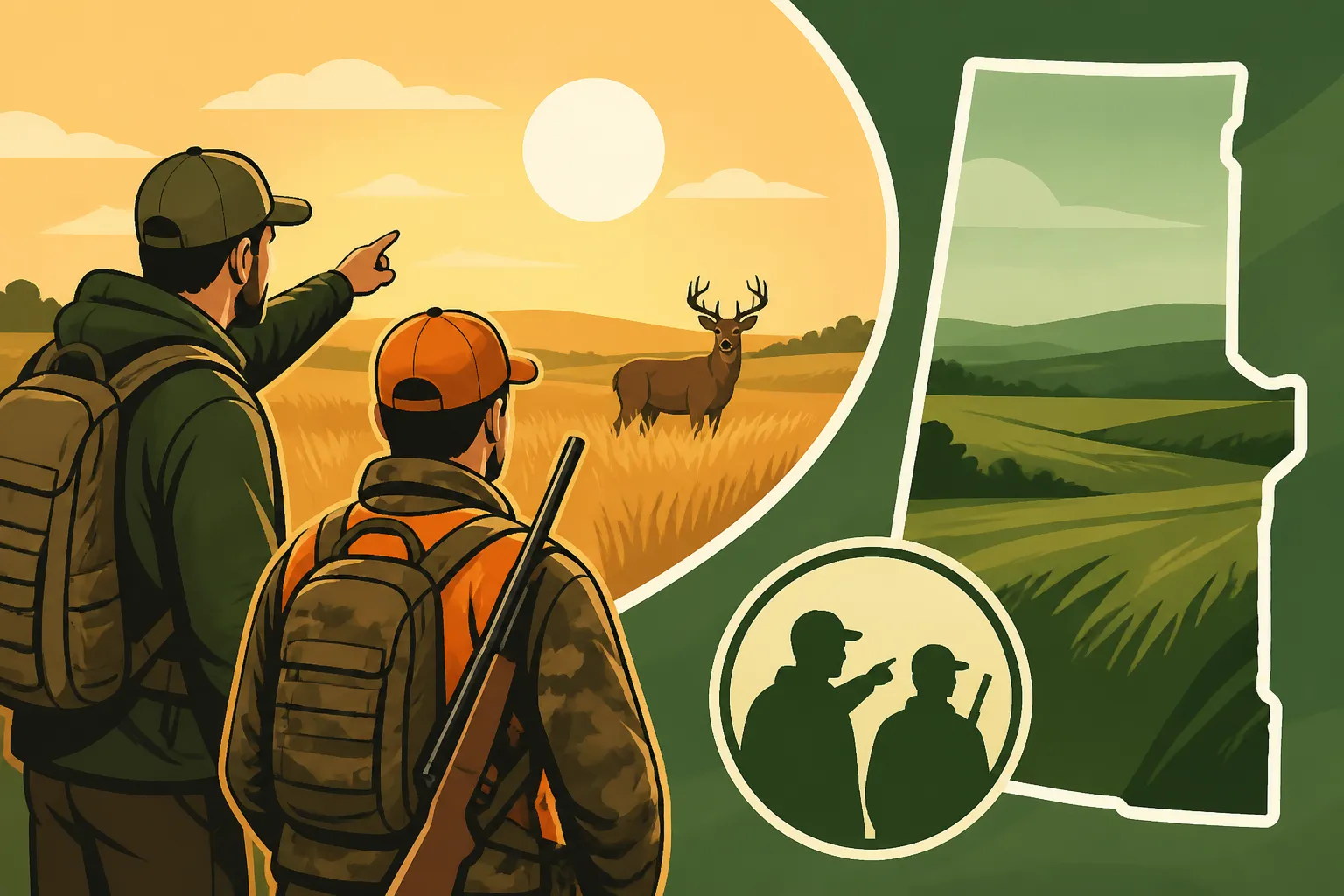
A semi-guided hunt strikes a balance between the full service of a guided trip and the complete independence of an unguided one. It's a nuanced offering that can vary significantly from one outfitter to another, but the general principle is that the outfitter provides some key logistical support and access, while the hunter retains a substantial degree of autonomy in the actual hunting process. Think of it as having a solid foundation and a helpful local expert on standby, but you're still building the house yourself.
For many, this is the sweet spot. It offers local expertise and essential services without the higher price tag and constant presence of a guide. You might get access to private land, basic lodging, or even pre-scouted areas, but the responsibility for stalking, calling, or sitting in a blind, as well as tracking and sometimes even field dressing, falls squarely on your shoulders. It's ideal for hunters who value independence but could benefit from local knowledge and certain amenities.
What a Semi-Guided Hunt Typically Offers in Saskatchewan
The term "semi-guided" is broad, and what's included can vary wildly. It's absolutely critical to clarify every detail with an outfitter offering a semi-guided package before you commit. However, there are some common elements you can generally expect.
Pre-Scouted Areas and Access to Land
One of the biggest advantages of a semi-guided hunt is often access to prime hunting ground, sometimes private land, that would be difficult or impossible to secure on your own. The outfitter usually has established relationships with landowners or holds leases on productive areas. They will often point you to specific zones, fields, or bush pockets that have shown recent game activity. This isn't about the guide walking you to a stand and leaving you; it's more about them saying, "Here's a map, these are the five best spots this week, based on my scouting. Spot number three had fresh buck sign this morning."
For example, for a semi-guided whitetail hunt, the outfitter might provide you with detailed maps of a couple of quarter sections of private land where they've seen good deer movement. They might show you trail camera photos from a particular bluff or tell you which bush lines are seeing traffic. They're giving you the intel and the access; you're doing the legwork of deciding where to set up a portable stand, how to approach the area, and when to be there. This can be invaluable, as Reading Whitetail Sign in Saskatchewan Bluffs often requires local knowledge and extensive time in the field.
Basic Lodging and Facilities
While not always a given, many semi-guided packages include some form of basic lodging. This could range from a bunkhouse with shared facilities to a rustic cabin on the property, or even a basic motel room booked by the outfitter. The key is that it's generally not the full-service lodge experience you'd expect from a high-end guided hunt. Meals are often not included, leaving you responsible for your own cooking or dining out.
This means you'll typically be preparing your own breakfast before heading out in the dark, packing your own lunch, and cooking dinner or finding a local restaurant in the evening. It saves you money, but it adds to your daily responsibilities. You might have access to a clean bed and a shower, but don't expect daily maid service or a gourmet chef. For instance, a semi-guided waterfowl hunt might put you up in a local hotel, but you're still getting up at 3 AM to make coffee and breakfast before heading out to the field.
Initial Orientation and Local Intelligence
A semi-guided outfitter will provide an initial orientation to the hunting area, outlining boundaries, explaining local regulations (which you're still responsible for knowing and following), and offering insights into recent game movement or patterns. They might drive you around the property once to show you key access points, water sources, or bedding areas. This is where their local expertise truly shines, helping you avoid common mistakes or wasted time in unproductive areas.
Think of it as getting a powerful head start from someone who lives and breathes hunting in that specific Saskatchewan Scouting a Saskatchewan Wildlife Management Zone. They won't hold your hand, but they'll point you in the right direction. They might share information about preferred game trails, common crossings, or where bucks are known to cruise during the Hunting the Rut in Early to Mid November. They can be a fantastic sounding board for your hunting strategy, offering advice based on their years of experience in that specific region.
Game Retrieval Assistance (Often Limited)
Game retrieval is a huge consideration, especially when hunting larger animals like moose or a big Saskatchewan whitetail. In many semi-guided scenarios, the outfitter will offer some form of assistance with getting your animal out of the bush or field once it's down. This could mean they have a quad, a small tractor, or even a specific pick-up location agreed upon beforehand. However, it's typically your responsibility to get the animal field dressed and to that accessible point. They might not come to the exact spot where the animal fell if it's deep in thick cover.
It's a huge benefit to have this support, especially if you're hunting solo or with a small group. Getting a mature whitetail buck out of a slough bottom or a dense poplar bluff can be back-breaking work. Just remember that their assistance often has limits, and you should always clarify these details upfront. Are they helping you gut it? Quarter it? Or just haul it once you've done the initial processing? This is a crucial question to ask before booking. Getting a Deer Out on a Frozen Trail or Quartering a Moose Alone in the Bush are tasks that highlight the value of such assistance.
| Feature | Fully Guided Hunt | Semi-Guided Hunt | Unguided Hunt |
|---|---|---|---|
| Outfitter Presence | Constant, active guidance throughout the hunt | Occasional check-ins, initial orientation, advice | None (DIY) |
| Scouting | Outfitter performs extensive pre-scouting | Outfitter provides pre-scouted areas/intel | Hunter's responsibility |
| Land Access | Exclusive access to prime private/leased land | Access to private/leased land, pre-identified spots | Hunter secures own public/private land access |
| Accommodation | Full-service lodge, cabins, or comfortable housing | Basic lodging (bunkhouse, cabin, motel); often shared | Hunter provides (tent, RV, hotel) |
| Meals | All meals typically provided and prepared | Not usually included; hunter provides own | Hunter provides own |
| Transportation | To/from airport, hunting areas, game retrieval | To/from hunting areas often not included; retrieval assistance limited | Hunter provides all own transportation |
| Stand/Blind Setup | Outfitter provides and maintains stands/blinds | Hunter often brings own portable stands/blinds | Hunter brings own portable stands/blinds |
| Field Dressing | Guide assists or performs | Hunter's primary responsibility, some retrieval help | Hunter's full responsibility |
| Game Retrieval | Full assistance, usually to camp/processor | Limited assistance to accessible points | Hunter's full responsibility |
| Local Expertise | High level, constant advice | High level, provided as intel/orientation | None from outfitter; hunter relies on own research |
| Cost | Highest | Moderate | Lowest |
| Hunter Autonomy | Lowest | Moderate to high | Highest |
What's Usually NOT Included
It's equally important to understand what a semi-guided hunt doesn't typically cover. These are the aspects where you, the hunter, are expected to be self-sufficient:
- Daily Guiding: A guide will not be with you in the blind or walking with you all day. You're hunting independently.
- Meals and Cooking: Plan to bring your own food and cooking gear, or budget for local restaurants.
- Transportation During Hunt: You'll likely need your own vehicle (preferably a 4×4 truck or SUV) to get to and from hunting areas, which might be many miles from your lodging.
- Hunting Gear: All your personal hunting gear, including firearms or bows (ensure they meet Legal Firearms and Bows for Big Game requirements), optics, clothing for Saskatchewan's weather, and any personal stands or blinds, are your responsibility. Dressing for Saskatchewan's November Cold is no joke, so be prepared.
- Licences and Tags: You are responsible for purchasing your own Saskatchewan Hunting Licences and What They Cost and understanding all associated regulations.
- Field Dressing: While retrieval help might be offered, the actual field dressing is almost always on you. Knowing how to efficiently and cleanly process your animal is paramount.
- Meat Processing & Taxidermy: Once the animal is back at camp, further processing is your responsibility, though the outfitter might recommend local services. Consider Meat Care in Saskatchewan's Cold Snaps if hunting late in the season.
- Gratuities: If you receive excellent service or retrieval help, tipping is still customary and appreciated, but it's not a required part of the package price. Tipping a Saskatchewan Guide is a good practice to research.
Is a Semi-Guided Hunt Right for You? Weighing the Advantages and Disadvantages
Deciding on a semi-guided hunt means carefully evaluating your own hunting style, experience level, budget, and desire for independence. It's not for everyone, but for a specific type of hunter, it can be the perfect balance.
Advantages of a Semi-Guided Hunt
- Cost-Effectiveness: This is often the biggest draw. Semi-guided hunts are significantly more affordable than fully guided options, as you're not paying for the constant presence of a guide or all-inclusive amenities. This allows you to experience prime Saskatchewan hunting without breaking the bank.
- Increased Independence and Satisfaction: For hunters who enjoy the challenge of scouting, strategizing, and making their own decisions in the field, a semi-guided hunt offers a high degree of autonomy. There's immense satisfaction in successfully harvesting an animal when you've done much of the work yourself.
- Access to Quality Ground: You gain access to private land or well-managed areas that would otherwise be inaccessible. This can dramatically increase your chances of success compared to strictly hunting public lands with heavy pressure. The outfitter's investment in leases or landowner relationships opens doors.
- Local Knowledge and Insights: While not constantly by your side, the outfitter's initial orientation and ongoing advice provide invaluable local intelligence. They know the terrain, the game patterns, and what has been working (or not working) recently. This localized expertise can shave years off your learning curve in a new area.
- Flexibility: Often, semi-guided hunts allow for more flexibility in how and when you hunt during the day. You're not tied to a guide's schedule and can adapt your tactics as conditions change, whether that means sitting longer, moving spots, or changing strategies based on what you're seeing.
Disadvantages and Considerations
- Requires Self-Reliance: You need to be a capable hunter, confident in your navigation skills, field dressing abilities, and decision-making under pressure. If you're new to hunting or need constant assistance, this might not be the best fit. Saskatchewan Hunter Education Requirements are a must for all hunters, but practical self-reliance is key here.
- Less Assistance with Tracking and Retrieval: While some help might be offered, don't expect a guide to track your wounded animal for hours through dense cover. You'll likely be doing the bulk of that yourself, and only once the animal is down and processed to a certain point will retrieval assistance kick in.
- Variability in Offerings: The term "semi-guided" is not standardized. One outfitter's offering might be vastly different from another's. It's crucial to get a detailed breakdown of services in writing to avoid misunderstandings.
- No "Guaranteed" Success: Like any hunt, there are no guarantees, but with less direct guidance, your personal hunting skills play an even larger role in success. The outfitter is providing the opportunity and the insights, but you're still the one responsible for closing the deal.
- Logistical Responsibilities: You'll be handling your own meals, transportation to and from hunting spots, and potentially setting up your own stands or blinds. This means more planning and work on your end, even during the hunt itself. For instance, if you're Hanging a Stand on a Saskatchewan Bush Edge, you'll be doing that yourself, not the outfitter.
Making the Most of Your Semi-Guided Saskatchewan Adventure
A semi-guided hunt can be an incredibly rewarding experience, offering a blend of challenge and support. To ensure you have the best possible adventure, a little extra preparation and communication go a long way.
Do Your Homework and Vet Outfitters Thoroughly
Because "semi-guided" is so flexible, thoroughly researching your outfitter is paramount. Don't just look at the price; dig into what's included and, more importantly, what isn't.
- Ask for a Detailed Itinerary and Inclusions List: Get it in writing. What kind of lodging? Is there a kitchen? What land access is provided? What level of retrieval assistance? How often do they "check in" or offer advice?
- Check References: A reputable outfitter will be happy to provide references from past semi-guided clients. Call them and ask specific questions about their experience. Were the expectations met? Was the outfitter communicative? Did they feel supported but independent?
- Read Reviews: Look for reviews on independent platforms. While every hunt has variables, consistent themes can emerge. For example, platforms like BookYourHunt can be good places to start looking for outfitters and seeing what others have said. Always take reviews with a grain of salt, but trends can be telling.
- Verify Licensing: Ensure the outfitter is properly licensed in Saskatchewan. You can generally check with the provincial wildlife agency to confirm their credentials. Checking a Saskatchewan Outfitter Licence is a vital step.
Prepare for Self-Sufficiency
You're meant to be largely independent on a semi-guided hunt, so prepare like it.
- Sharpen Your Skills: Practice shooting, become proficient with field dressing, and refresh your navigation skills. If you're going after whitetails, practice with your rifle or bow at realistic Shooting Distances on a Saskatchewan Hunt.
- Bring the Right Gear: This includes appropriate clothing, reliable optics, your own portable stands or blinds, and a first-aid kit. Consider bringing a GPS device or a mapping app like GoHunt to complement any maps the outfitter provides. This technology can be incredibly useful for navigating unfamiliar territory.
- Plan Your Logistics: Budget for food, fuel, and any incidental expenses. Ensure your vehicle is capable of handling Saskatchewan's rural roads, especially if you're Hunting Saskatchewan Winter Weather Safely or exploring back roads. Know where the nearest towns are for supplies or emergencies.
- Communicate Clearly: Don't be afraid to ask the outfitter questions before and during your trip. Establish expectations for communication. How do you reach them if you have a question? What if you harvest an animal? Clear communication prevents misunderstandings.
Embrace the Learning Opportunity
A semi-guided hunt is a fantastic opportunity to grow as a hunter. You're getting the benefit of local knowledge and access while still being challenged to hone your own skills.
- Be Adaptable: Weather, game movement, and other factors can change quickly. Be prepared to adjust your plans and strategies.
- Observe and Learn: Pay attention to the terrain, vegetation, and game sign. The outfitter's initial insights are a starting point; your own observations will complete the picture. Reading Sign After Fresh Saskatchewan Snow can be especially informative.
- Respect the Land and the Outfitter: Treat the leased or private land with utmost respect, follow all rules, and appreciate the opportunity the outfitter has provided. A good relationship can lead to future hunting opportunities.
By understanding what a semi-guided hunt truly entails and preparing accordingly, you can unlock a memorable and successful hunting experience in the vast and game-rich landscapes of Saskatchewan.
Disclaimer
This article is for general informational purposes only and does not constitute professional advice. Laws, prices and regulations vary by location and change over time. Consult a qualified professional for guidance on your specific situation.