How Many Whitetails Saskatchewan Holds
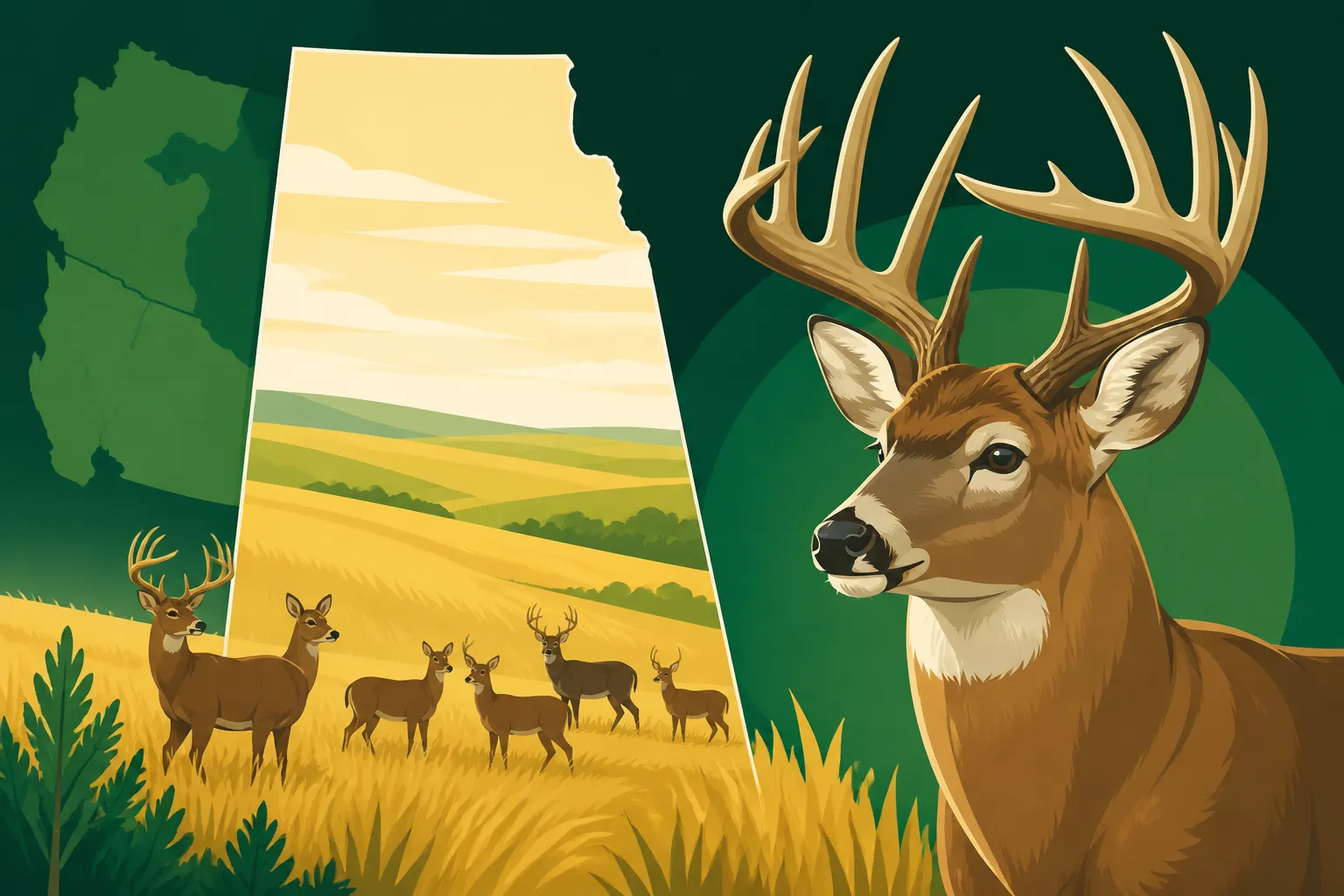
It’s a question every hunter in Saskatchewan has pondered, often staring out across a vast field or into a dense bush line: just how many whitetail deer are actually out there? Getting a definitive, real-time census of these adaptable animals feels like trying to count individual snowflakes in a blizzard – immensely frustrating and seemingly impossible. This guide aims to pull back the curtain on how whitetail populations are estimated, the ever-changing factors that influence their numbers across our diverse landscape, and what that truly means for hunters hoping to fill a tag.
The Challenge of Counting Whitetails
Let's be honest, pinning down an exact number for any wild animal population is incredibly difficult, and whitetail deer are no exception. They're constantly on the move, masters of camouflage, and their numbers ebb and flow with a myriad of environmental factors. For us hunters, it often feels like one year the deer are everywhere, and the next, they've vanished into thin air, leaving us scratching our heads.
Why Exact Numbers Are Elusive
The dynamic nature of wildlife populations is a biologist's biggest headache and a hunter's greatest mystery. Whitetail deer don't stay in neat, easily countable pens; they roam vast territories, sometimes migrating subtly between wintering grounds and summer forage areas. Their incredible ability to adapt to diverse habitats, from the open prairie to dense boreal forests, means that what might seem like an accurate count in one area could be completely off a few miles down the road. Furthermore, human activity – farming practices, logging, urban expansion – constantly shifts their preferred ranges, making a static count impossible. It's a living, breathing, ever-changing picture, not a still photograph.
The sheer variety of terrain across Saskatchewan also plays a huge role in the difficulty of getting precise figures. In the wide-open agricultural fields, you might spot deer quite readily. But venture into the thick aspen parkland bluffs or the dense forest fringe, and those same deer become ghosts. They're masters of using cover, lying low, and simply disappearing when they don't want to be seen. Even the most advanced survey techniques struggle with these natural hiding abilities, leading to estimates rather than hard counts. We’re dealing with creatures that thrive on elusiveness, making our attempts at precise enumeration a perpetual challenge.
How Wildlife Agencies Estimate Populations
While a precise head-count is a dream, wildlife agencies employ sophisticated methods to provide reliable population estimates, which are crucial for setting seasons and tag allocations. One of the primary tools is aerial surveys, particularly effective when there's good snow cover that contrasts with the deer. Biologists fly fixed transects, counting deer they see, and then extrapolate those numbers across the entire Wildlife Management Zone (WMZ). However, even these have limitations. Dense tree cover can obscure deer, and a lack of consistent snow depth can render a survey less effective. So, they’re not perfect, but they give us a critical snapshot.
Beyond aerial surveys, ground-based methods contribute significantly. Track counts after fresh snow, trail camera deployments in strategic areas, and even road-kill data provide valuable insights into deer distribution and relative abundance. All this raw data is then fed into complex population models. These models consider factors like fawn recruitment rates, adult survival, harvest data from previous seasons, and even environmental variables like winter severity. It’s a painstaking process, combining field observations with statistical analysis to give us the best possible picture of the herd's health and size. This ongoing scientific effort, though imperfect, is what guides the decisions that impact our hunting opportunities each year.
Saskatchewan's Whitetail Population Trends
Saskatchewan is often heralded as a whitetail hunter's paradise, and for good reason. Our diverse landscape and rich agricultural areas create ideal conditions for deer to thrive. However, like any wild population, whitetail numbers here are far from static, experiencing fascinating booms and busts that keep biologists and hunters alike on their toes.
Historical Fluctuations and Key Drivers
The history of whitetail populations in Saskatchewan is one of remarkable resilience and adaptation. Decades ago, deer were primarily creatures of the forest fringe and river valleys. But as agriculture expanded, converting vast tracts of prairie into grain fields, whitetails found a new buffet. Their numbers surged, adapting to the mosaic of crops, shelterbelts, and bluffs. This expansion into prime agricultural zones provided consistent, high-energy food sources, leading to healthier deer and higher fawn survival rates, which is a big reason Why Saskatchewan Bucks Grow So Large. This period saw many of us experience incredible hunting, with deer often seen in every field.
However, it hasn't been a steady climb. Severe winters can dramatically impact populations, especially fawns and older does, as prolonged periods of deep snow make foraging difficult and increase energy expenditure. Disease, particularly Chronic Wasting Disease (CWD), has become a growing concern, impacting herd health and long-term sustainability in certain areas. Habitat changes, whether from intensive farming reducing cover or natural events like wildfires, also play a significant role. Even hunting pressure itself, carefully managed, is a driver. It's a delicate balance, and understanding these historical ebbs and flows helps us appreciate the complexity of managing this incredible resource. For instance, Hunting the Rut in Early to Mid November can see a spike in hunter activity, which needs to be accounted for in harvest quotas.
Current Population Status by Region
Today, Saskatchewan's whitetail population remains robust in many areas, though densities vary considerably by region. The Aspen Parkland and Forest Fringe zones continue to be strongholds, offering a mix of cover and abundant food. These areas, particularly the ones where the bush meets the fields, often support high deer numbers, leading to excellent hunting opportunities. Many hunters focus on Hunting Whitetails on Saskatchewan Farmland for this very reason, as the deer thrive on agricultural outputs.
In the more intensely cultivated agricultural zones, populations can be incredibly localized, concentrating around sloughs, river breaks, and small bluffs that offer crucial cover in an otherwise open landscape. Numbers here are often tied directly to the availability of unharvested crops, winter habitat, and the presence of scattered pockets of bush. In contrast, the deeper boreal forest areas generally support lower whitetail densities due to less diverse forage and harsher winter conditions, though deer are still present. Tools like GoHunt can provide invaluable insights into specific WMZ populations, offering a clearer picture of deer activity and historical harvest data for your chosen area. While general numbers are encouraging, always remember that local conditions dictate what you’ll find on any given quarter section.
Factors Influencing Whitetail Numbers Annually
Understanding the general trends is one thing, but as hunters, we're keenly aware that conditions change from year to year. A banner year can be followed by a challenging one, and often, it comes down to a few critical environmental and biological factors. These annual shifts are what make wildlife management so complex and why hunters need to be adaptable.
Winter Severity and its Impact
For whitetails in Saskatchewan, winter is the ultimate test. A mild winter, with less snow and sustained moderate temperatures, means deer can access forage more easily, expend less energy, and generally emerge in better condition, leading to higher fawn survival rates in the spring. This translates to a healthier, larger population. We all hope for those "easy" winters for the deer, knowing it bodes well for the next hunting season.
Conversely, a severe winter can be devastating. Deep snow accumulation, especially for prolonged periods, makes it nearly impossible for deer to move and access food. They burn through their fat reserves rapidly, leading to increased overwinter mortality, particularly among fawns and older or weaker does. Even deer that survive often emerge in poor physical condition, which can impact fawn production in the spring. Hunters often talk about the impact of a harsh winter years down the line, as it can take time for a herd to rebound. It's a stark reminder that while we're out there bundled up, Hunting Saskatchewan Winter Weather Safely, the deer are facing a far more existential struggle.
Habitat Changes and Food Availability
Whitetail deer are masters of adapting to their environment, and in Saskatchewan, much of that environment is shaped by agriculture. The type of crops planted, the timing of harvest, and even tillage practices all influence food availability. A year with abundant unharvested grain, for example, can provide a significant winter food source, boosting herd health. However, as agricultural practices become more efficient, with earlier harvests and less waste grain, deer have to work harder to find sustenance. This can concentrate them in remaining pockets of cover or force them to seek out alternative food sources.
Beyond agriculture, natural habitat changes are also at play. Clearing of shelterbelts, draining of potholes that provide edge cover, or extensive logging can reduce critical bedding and escape cover, especially in the aspen parkland and forest fringe. On the flip side, some forestry practices can create new browse opportunities, temporarily benefiting deer. Understanding these habitat dynamics is crucial, and hunters often adapt their strategies based on them, perhaps focusing on Hunting a Standing Canola Field Edge if it's left standing late, knowing it offers both food and sanctuary. The ongoing dance between human land use and natural processes constantly reshapes where and how many whitetails will thrive.
Disease and Predation Pressures
While environmental factors are significant, disease and predation also exert considerable pressure on whitetail populations. Chronic Wasting Disease (CWD) is arguably the most concerning disease affecting deer in Saskatchewan today. It's a fatal neurological disease that has been steadily spreading across the province. While its overall impact on the provincial population is still being studied, it can lead to localized declines in herd health and density, and it's something every hunter needs to be aware of. Mandatory testing in certain zones and the recommendations from the Ministry of Environment underscore its seriousness, and it's vital to know Saskatchewan's CWD Testing Rules if you harvest a deer.
Predation also plays a natural, yet impactful, role. Coyotes are ubiquitous across much of Saskatchewan and are known to prey on fawns, especially during the spring. While a healthy deer population can typically sustain some level of coyote predation, particularly vulnerable herds or those already stressed by winter or disease can be more significantly affected. Wolves, in the northern forest fringe and boreal regions, also take deer, though their primary focus might be on moose. Even black bears can occasionally prey on fawns. While Why Saskatchewan Has So Many Coyotes is a question many hunters ask, their presence is a natural part of the ecosystem, contributing to the overall health and resilience of the whitetail herd by targeting weaker individuals.
Hunter Tags, Draw Success, and Management Strategies
The annual hunting seasons and the associated tag allocations aren't just arbitrary numbers; they are direct reflections of ongoing monitoring efforts and strategic management goals. For hunters, understanding this process helps demystify why certain zones have antlerless tags available over the counter, while others require years of priority in a draw.
How Harvest Data Informs Management
Every time a hunter fills a tag and reports their harvest, they contribute to a massive dataset that wildlife managers use to gauge the health and size of the whitetail population. This data, combined with information gathered from CWD submissions and various surveys, helps paint a picture of recruitment (how many fawns are born and survive), mortality rates, and overall herd demographics. Without hunter participation in reporting, this vital information would be much harder to collect. It's a crucial partnership between hunters and management.
Based on this comprehensive data, agencies make informed decisions about tag allocations and season structures. If populations appear robust and healthy in a particular WMZ, there might be an increase in general antlerless tags or more opportunities through the draw. Conversely, if numbers show signs of decline, management might reduce tag availability to allow the herd to rebound. This is directly reflected in the odds for Saskatchewan's Big Game Draw, which are adjusted year by year. It’s a dynamic process, and our collective efforts as hunters through responsible harvest and reporting are integral to its success.
Understanding Zone-Specific Management
Saskatchewan is a vast province, and it's simply impossible to manage whitetail deer as one homogenous population. Instead, the province is divided into numerous Wildlife Management Zones (WMZs), each with its own specific management objectives and regulations. This localized approach recognizes the significant differences in habitat, population densities, and hunter access across the province. A zone in the heavily farmed south will have different deer dynamics than one in the remote northern forest fringe.
This zone-specific approach means that while one WMZ might be experiencing high whitetail numbers and offering plentiful antlerless tags, a neighboring zone might have lower densities and stricter regulations, perhaps requiring a special draw for antlerless deer. These regulations are designed to maintain healthy, sustainable populations in each unique area. So, when planning your hunt, don't just think "Saskatchewan whitetails"; think about the specific WMZ you intend to hunt. Consult the annual hunting guide and familiarize yourself with Saskatchewan Whitetail Season Dates by Zone and tag rules. Resources like GoHunt can be invaluable here, offering zone-specific data and insights that can help you make informed decisions about where and how to hunt.
| Region | General Whitetail Density | Key Influencing Factors | Common Management Approach |
|---|---|---|---|
| Agricultural South | Moderate to High, localized | Crop availability, cover pockets, winter severity, CWD | Often OTC antlerless tags, focus on managing crop damage |
| Aspen Parkland | High | Mix of crops and bush, excellent forage, CWD, winter severity | General tags, draw for specific antlerless in some areas |
| Forest Fringe | High | Abundant cover, diverse forage, CWD, predation, winter severity | General tags, draw for specific antlerless in some areas |
| Boreal North | Low to Moderate | Harsh winters, limited forage, deep cover, predation (wolves), CWD | General tags, often lower hunter pressure |
| River Valleys | High, concentrated | Shelter, food sources, natural travel corridors, CWD | Often higher deer numbers, subject to surrounding zone rules |
What This Means for Hunters
So, with all this talk of estimates, fluctuations, and management zones, what's the takeaway for the average hunter? It boils down to understanding that while Saskatchewan holds a remarkable number of whitetails, successful hunting still requires thoughtful preparation and realistic expectations.
Realistic Expectations for Your Hunt
It’s easy to get caught up in the big numbers or the "trophy province" hype, but a high provincial whitetail population doesn't guarantee a deer behind every bush on opening day. Deer are concentrated where food, water, and cover are optimal. Just because there are a million deer in the province doesn't mean there are a hundred on the quarter section you plan to hunt. Hunters need to understand that local deer densities can vary wildly. A quarter section that held deer last year might be empty this year due to changes in crop rotation, hunting pressure, or even a shifting deer travel pattern.
This variability means that scouting, patience, and adaptability are paramount. Don't expect to just show up and find deer everywhere, even in a province renowned for its whitetails. Focus on understanding the specific parcel of land you're hunting – where the deer are bedding, feeding, and traveling. Reading sign, like rubs, scrapes, and tracks, is far more important than a provincial population estimate. For instance, knowing how to interpret Reading Whitetail Sign in Saskatchewan Bluffs can tell you more about local deer activity than any broad statistic. Set realistic goals, enjoy the process, and appreciate the challenge.
Tools and Resources for Better Understanding
Fortunately, hunters today have an incredible array of tools and resources at their fingertips to help them navigate the complexities of whitetail populations and find success. Digital mapping applications, for instance, have revolutionized scouting. Platforms like GoHunt allow you to research specific WMZs, visualize habitat features, and even check historical land use, giving you a comprehensive overview before you even set foot in the field. This kind of detailed information is invaluable for strategic planning. You can also use Scouting With Satellite Imagery in Saskatchewan to identify potential deer habitat from home.
Beyond technology, good old-fashioned legwork and networking remain crucial. Connecting with local landowners is not just about gaining access; it’s about tapping into a wealth of local knowledge. Farmers and ranchers spend countless hours observing deer on their land and can offer invaluable insights into current patterns and numbers. Never underestimate the power of a respectful conversation; learn more about Knocking on Doors in Saskatchewan Farm Country. Additionally, stay informed by reviewing the annual Saskatchewan Hunters' and Trappers' Guide, which provides the most up-to-date regulations, season dates, and sometimes even general population outlooks. By combining these resources, you can transform vague provincial numbers into actionable local intelligence for a more successful and informed hunt.
Disclaimer
The information provided in this article is for general guidance and informational purposes only. Hunting regulations, season dates, and wildlife populations are subject to change. Always consult the official Saskatchewan Hunters' and Trappers' Guide and the Ministry of Environment website for the most current and accurate information before planning any hunting activity. Adherence to all provincial and federal laws is the hunter's responsibility.