Hunting Along an Old Trapline Cut
For those of us who spend our autumns navigating the thick bush and sprawling landscapes of Saskatchewan, the pursuit of game often leads us to seek out those elusive, less-pressured pockets. One such hidden gem that many hunters overlook, or simply don't recognize, is the old trapline cut. These forgotten pathways, often overgrown and faint, can be incredibly frustrating to locate and even tougher to traverse, but they frequently hold the key to finding mature animals seeking refuge and easy travel. This guide is dedicated to helping you unlock the secrets of hunting along an old trapline cut, turning these challenging features into productive hunting grounds.
Understanding the Trapline Cut Landscape
Before you can effectively hunt an old trapline cut, you need to understand what it is, why it's there, and what it looks like on the ground today. These aren't your freshly cut oilfield lines or seismic survey grids; these are relics of a bygone era, often swallowed by time and forest regeneration.
What Exactly is an Old Trapline Cut?
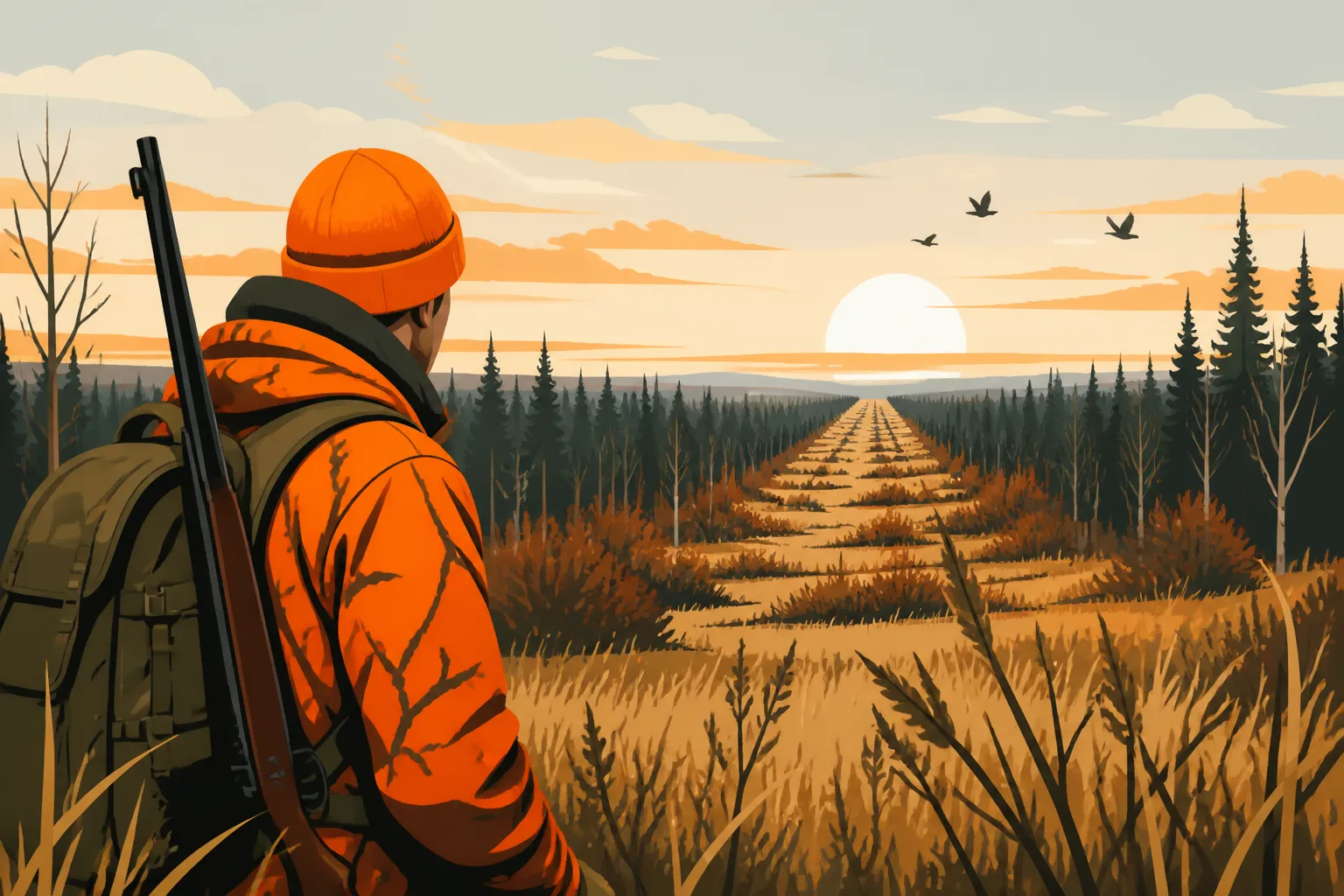
Imagine a time when the northern reaches of Saskatchewan were crisscrossed by trappers on snowshoes, checking their sets for beaver, marten, and lynx. To facilitate movement and access their traps, these hardy individuals would often clear narrow paths through the dense bush. These clearings, sometimes just wide enough for a person and a sled, are what we refer to as old trapline cuts. Over decades, nature has begun to reclaim these lines. They might appear as a slight depression in the forest floor, a subtle change in vegetation, or a narrow, winding corridor where trees are slightly smaller or different species than the surrounding forest.
The historical context is important here. Trappers knew the land intimately, and their lines often followed natural game trails, wound through prime furbearer habitat, or connected water bodies and distinct land features. This legacy means that even though the original purpose is gone, the fundamental path-of-least-resistance and habitat connectivity remains. For a hunter today, this means you’re often walking a path that animals have used for generations, making them natural travel corridors.
Where to Find These Hidden Gems
Finding an old trapline cut requires a bit of detective work and a keen eye, especially if you're not familiar with a particular area. Your best bet for locating these features is in Saskatchewan’s Boreal Forest Fringe and deeper into the northern boreal forest zones. They are less common in wide-open prairie but can sometimes be found winding through isolated bluffs or river valleys in the parkland region.
Satellite imagery is your absolute best friend here. Services like GoHunt or even Google Earth allow you to pour over vast tracts of land from the comfort of your home. Look for faint linear disturbances in the tree canopy, areas where the trees appear slightly shorter, or a subtle change in the texture of the forest. These lines often connect sloughs, lakes, or follow the contour of ridges. Old topographical maps, if you can find them, might also indicate traplines, although many of the older, less formal ones won't be explicitly marked. Once you've identified potential cuts on a map, a physical scouting trip becomes essential to confirm their existence and current condition. Without a good mapping application like GoHunt on your phone or GPS, navigating these faint lines can be incredibly disorienting, especially deep in the bush where familiar landmarks are scarce.
Why Trapline Cuts Are Prime Hunting Grounds
So, you’ve found an old trapline cut. Why should you put in the extra effort to hunt it when there might be more obvious clearings or trails nearby? The answer lies in their unique characteristics, which funnel game and create diverse habitat.
Natural Funnels and Travel Corridors
The most significant advantage of hunting old trapline cuts is their role as natural funnels and travel corridors for a variety of game animals. Just like the trappers of old, animals seek the easiest path through thick cover. A slightly less dense, somewhat cleared path, even if overgrown, offers easier travel than pushing through impenetrable bush. This makes them ideal for species like White-Tailed Deer, Saskatchewan's Signature Animal and Moose in Saskatchewan's Farmland and Forest. A bull moose trying to conserve energy will often stick to these lines, especially during the rut when they're covering a lot of ground. Whitetails use them to move between bedding areas and feeding grounds, or to escape pressure.
These cuts often connect different types of habitat – a dense spruce stand to a poplar bluff, a high ridge to a low-lying muskeg. When scouting, pay close attention to where a trapline cut intersects with these habitat transitions, as these are often pinch points where animals are forced through a narrow corridor. This creates predictable travel patterns, making it easier to intercept game. You might also find signs of Black Bear Hunting in Saskatchewan along these lines, as bears often use them when moving between feeding areas or looking for den sites in the fall.
Edge Habitat and Food Sources
Another powerful draw of trapline cuts is the creation of edge habitat. Any opening in a dense forest, no matter how narrow or old, allows more sunlight to penetrate the forest floor. This increased light encourages the growth of a wider variety of plants, including valuable browse and berry bushes. These regenerating plants provide critical food sources for deer and moose. You might find patches of aspen or willow regenerating along the edges, young conifers providing thermal cover, and a proliferation of berry bushes like Saskatoons, cranberries, or highbush cranberries, all of which are staples for local wildlife.
The "edge effect" is a well-known ecological principle where the boundary between two distinct habitats hosts a greater diversity and abundance of species than either habitat alone. A trapline cut, even a very old one, essentially creates a linear edge right through the middle of the forest. This means you're not only finding game traveling along the line itself, but also feeding and bedding in the immediate vicinity due to the diverse vegetation that thrives there. This habitat diversity is what makes these old lines so productive, even if they seem insignificant at first glance.
Strategic Hunting Techniques for Trapline Cuts
Hunting these unique features requires a blend of traditional bush skills and modern tools. It’s about being patient, observant, and understanding how game utilizes these subtle pathways.
Scouting and Planning Your Approach
Pre-season scouting is non-negotiable when hunting trapline cuts. You need to physically walk these lines to understand their current condition, identify pinch points, and look for fresh sign. Don't just rely on satellite maps; the ground truth can be very different. Look for tracks, scat, rubs, and scrapes, particularly where the cut widens slightly, crosses a small creek, or meets a denser patch of cover. Pay attention to how deer and moose tracks follow the path versus crossing it. The presence of a well-worn trail within the cut is a huge indicator of consistent game movement.
Wind direction is absolutely paramount when hunting these linear features. Because the cut acts as a corridor, your scent can travel a long way downwind. Always plan your approach and hunting position to keep the wind in your favor. This might mean making a long, circuitous route to get to your stand or still-hunting into the wind. Entry and exit points are also critical; try to access the cut from areas that minimize disturbance to the surrounding woods, such as existing trails, sparse timber, or by crossing fields if applicable. Before you even step foot in the woods, use an app like GoHunt to mark your planned route, potential stand locations, and emergency exit points. This detailed planning can make all the difference when you're deep in the remote country.
Still-Hunting and Stand Placement
Still-hunting is one of the most effective methods for hunting old trapline cuts. This involves moving incredibly slowly, taking only a few steps at a time, and then pausing for several minutes to glass and listen. The key is to blend in and observe, rather than simply walking through. Animals often feel secure in these cuts because of the surrounding dense cover, but they are also alert. Constantly scan the edges of the cut, looking for horizontal lines in a vertical forest (the back of a deer or moose), or subtle movements. You might even find success in Hunting a Saskatchewan Bush Bluff that the trapline cut runs through.
For stand placement, look for key pinch points. These could be where two cuts converge, where the cut narrows significantly, or where it passes close to a natural barrier like a deep slough or a rock outcrop. A well-placed tree stand offers an elevated vantage point, allowing you to see further down the cut and into the surrounding cover. If the trees along the cut are too sparse or short for a tree stand, a ground blind made from natural materials can also be very effective, especially if you set it up well in advance to allow animals to get used to its presence. Remember to consider the sun's position throughout the day to avoid being backlit.
Calling and Driving the Cuts
Calling can be highly effective in the contained environment of a trapline cut. During the rut, using a grunt tube for whitetails or a cow call for moose can bring an animal right down the line to investigate. The dense cover on either side often makes animals commit to coming directly down the cut, as they are less likely to circle widely through heavy brush. A rattling sequence could also bring in a curious buck, especially in Rattling Volume in Open Parkland where these cuts might provide one of the only cover options. For moose, calling in the right timeframe, perhaps during Calling a Bull Moose in the Rut, can lead to an exciting encounter.
Small drives can also be successful, particularly with one or two partners. One or two hunters can slowly still-hunt through a section of the cut, while another positions themselves at a downwind pinch point or intersection. Communication is crucial here – walkie-talkies or even air horns (used judiciously) can help coordinate. Before attempting any drive, ensure everyone involved is clear on the plan, designated shooting lanes, and safety protocols. You don't want to create a dangerous situation in the close quarters of an old trapline.
| Species | How They Use Trapline Cuts | Ideal Season | Hunting Method |
|---|---|---|---|
| White-tailed Deer | Travel lanes between bedding/feeding, escape routes, rut cruising | Archery, Rifle Rut | Still-hunting, Stands, Calling |
| Moose | Easier travel, browse along edges, rut cruising | Archery, Rifle Rut | Still-hunting, Calling |
| Black Bear | Travel between feeding/denning, looking for berries | Spring/Fall | Still-hunting, Spot & Stalk |
| Wolf/Coyote | Travel, hunting corridors for prey | Winter | Opportunistic |
| Ruffed Grouse | Foraging for buds/berries along edges, easy access for hunters | Fall | Walking with dog, Still-hunting |
Essential Gear and Safety for Trapline Cut Hunts
Hunting these older, often more remote cuts means you need to be prepared for the conditions and potential challenges. The environment might be rugged, and assistance could be a long way off.
Navigating the Overgrown Terrain
The "old" in old trapline cuts often means overgrown. Expect uneven ground, tangled brush, fallen trees, and potentially wet sections. Durable, quiet clothing is a must – think tough canvas or ripstop nylon that can withstand snags and thorns. Layers are always advisable for Saskatchewan's variable weather, especially if you'll be alternating between periods of intense walking and sitting still. For footwear, waterproof boots with excellent ankle support are non-negotiable. You'll likely be stepping over logs, through wet spots, and navigating uneven terrain, so a good grip and protection from the elements are crucial.
Perhaps the most critical piece of gear is a reliable GPS or mapping device. As mentioned, GoHunt is an excellent choice. Even if you think you know the area, these faint lines can be confusing, especially if you wander off them for a moment or if snow covers the ground. Download offline maps before you head out, and always carry a compass and a physical map as a backup. Scouting With Satellite Imagery in Saskatchewan is a great start, but real-world navigation is different. Keeping track of your exact location and orientation can mean the difference between an enjoyable hunt and a stressful situation.
Wildlife Awareness and Emergency Preparedness
When hunting in Saskatchewan's bush, especially where trapline cuts lead to more remote areas, you're in wild animal territory. Be prepared for encounters with Black Bears in Saskatchewan's Boreal Forest and even wolves. Always carry bear spray and know how to use it. Bear bangers or air horns can also be useful for deterring curious or aggressive animals. It's not just about predators; you should also know what to do if you encounter a wounded animal or get injured yourself.
Beyond wildlife, personal safety is paramount. Always carry a comprehensive first-aid kit, a headlamp with extra batteries, fire-starting materials, and enough water and high-energy snacks for longer than you anticipate being out. A satellite communication device, like a Garmin InReach or Zoleo, is highly recommended for areas with no cell service, allowing you to call for help in an emergency. Crucially, always inform someone of your hunting plan – where you're going, when you expect to return, and who to contact if you don't check in. This simple step can be a lifesaver if something goes wrong. Understanding how to stay safe during Hunting Saskatchewan Winter Weather Safely is also vital, as cold conditions can quickly turn dangerous.
Disclaimer
Hunting is an inherently dangerous activity. This guide is for informational purposes only and does not substitute for proper hunter education, local regulations, or professional guidance. Always prioritize safety, respect wildlife, and adhere to all Saskatchewan hunting laws and regulations. Always obtain proper landowner permission or confirm public land access before hunting.