Hunting an Abandoned Farmyard
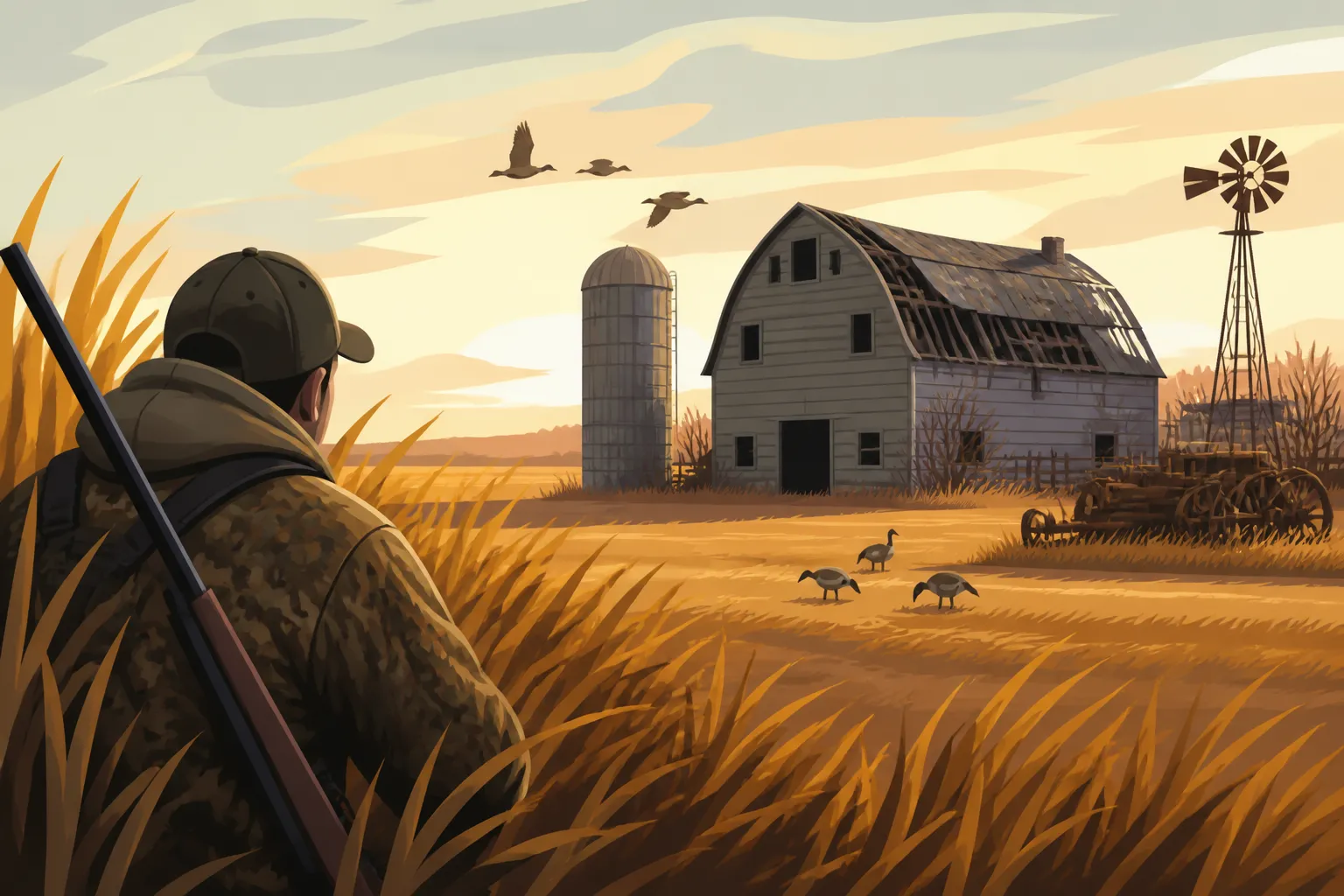
It's a common story in Saskatchewan: you're driving down a grid road, eyes scanning the vast fields and forest fringes for any sign of game, often overlooking the seemingly insignificant patches of trees and crumbling structures that dot the landscape. But let me tell you, that old, forgotten farmyard – the one with the sagging barn and the rusty swing set swallowed by overgrown bushes – it's often a wildlife magnet, a hidden gem for hunters. This guide will walk you through how to unlock the secrets of hunting an abandoned farmyard, transforming these overlooked spots into prime hunting territory.
Why Abandoned Farmyards Are Hunter's Goldmines
Many hunters spend countless hours in sprawling forests or open prairies, and while those areas certainly hold game, they sometimes miss the concentrated activity that abandoned farmyards offer. These locations, left to reclaim themselves, become miniature ecosystems, drawing in various species for reasons you might not immediately consider. They're not just derelict buildings; they're bustling hubs for wildlife.
Sanctuary and Cover from the Elements and Predators
Think about it: an old farmyard, even if the buildings are long gone, often features a cluster of mature trees, dense shrubs, and thick brush that has been growing undisturbed for decades. This overgrown vegetation provides unparalleled thermal cover during harsh Saskatchewan winters and much-needed shade during warmer months. Deer, especially, love these pockets of dense cover. They offer protection from the elements and a sense of security from predators like coyotes and even human activity. A collapsed granary or a crumbling stone foundation might not look like much to us, but to a whitetail buck, it's a solid windbreak and a place to bed down unseen. These spots are often far thicker than the surrounding field edges, creating a safe haven right in the middle of a feeding ground. You can often find excellent deer sign, like rubs and scrapes, right along the edges of these old homesteads, indicating regular travel through these secure areas.
Abundant Food and Water Sources
Long after the farmers have moved on, remnants of their livelihood continue to nourish wildlife. Consider the old apple trees that still bear fruit, the caragana hedges that produce edible seeds, or forgotten gardens that have gone wild with berry bushes and other forage. Any old shelterbelt planted around the yard provides a diverse range of plant life that simply isn't found in a monoculture grain field. Beyond plant life, old dugouts, even if partially filled in, can hold residual water, creating a critical water source in drier regions or during prolonged dry spells. Spilled grain from decades past, slowly decomposing or even growing wild, can also attract animals, particularly upland birds, deer, and even moose that venture into farmland. Sometimes, the mere presence of disturbed soil from old foundations or crumbling infrastructure promotes new growth that is particularly palatable to certain species. It’s a buffet and a watering hole, all rolled into one compact package.
Natural Funnel Points and Travel Corridors
The layout of an old farmyard itself can act as a natural funnel, guiding wildlife movements. Imagine a cluster of buildings, overgrown fences, or dense shelterbelts. Animals moving from one field to another, or from bedding areas to feeding grounds, will often use the path of least resistance. The edges of these farmyards, especially where they meet open fields, become distinct travel corridors. A deer might skirt the edge of an old house foundation before ducking into a dense willow run, or follow a long-abandoned fence line. These funnels concentrate animal movement, making it easier to predict where game will appear. You might find several trails converging on an old gate or a gap in a shelterbelt, indicating a well-used game path. Recognizing these patterns is key to successful hunting, as it allows you to position yourself for higher-percentage shots.
Scouting and Accessing an Abandoned Farmyard
Finding these forgotten gems is one thing; getting permission and understanding the terrain is another. Don't let the word "abandoned" lull you into a false sense of security regarding access. Every piece of land in Saskatchewan has an owner, and respecting that ownership is the cornerstone of ethical hunting.
Permission is Paramount, Even for Abandoned Properties
Just because a property looks derelict doesn't mean it's public land or open for hunting. This is the single most important rule: always get permission. An abandoned farmyard, like any other parcel of land, belongs to someone. Ignoring this can lead to serious legal consequences and gives all hunters a bad name. The first step is to identify the landowner. This might involve checking land titles, asking locals, or using online land ownership tools. Once you identify them, approach them respectfully, explain your intentions, and ask for permission to hunt. Be prepared for a "no," but also be ready to explain how you'll be safe, clean, and respectful of their property. Knowing your legal obligations under the Saskatchewan Landowner Permission Law is crucial. Sometimes, landowners are happy for hunters to access these spots, especially if wildlife is causing issues with crops or fences nearby.
Digital Scouting with Tools like GoHunt
Before you even knock on a door, modern technology can be your best friend. Tools like GoHunt are invaluable for pre-scouting abandoned farmyards. Using satellite imagery, you can zoom in and identify these spots from the comfort of your home. Look for patterns of old tree lines, faint building outlines, or the tell-tale green blotches of dense, overgrown vegetation in the middle of cultivated fields. With GoHunt, you can mark potential access points, pinpoint old dugouts, identify dense cover areas, and trace possible game trails that appear as lighter lines through darker vegetation. This digital reconnaissance saves you time and allows you to approach landowners with a well-informed plan, showing them you've done your homework. It’s also excellent for identifying nearby public land or other areas you might consider, such as a Hunting a Saskatchewan Quarter Section, to combine your efforts.
Boots-on-the-Ground Reconnaissance
Once you have permission, it’s time to get your boots dirty. Nothing beats physically walking the property. This is where you confirm what you saw on GoHunt and discover what satellite imagery can't show. Look for fresh tracks, droppings, rubs, and scrapes. Pay close attention to trails leading in and out of the yard, especially where they intersect with nearby fields or shelterbelts. Examine the cover itself: how dense is it? Are there natural shooting lanes? Where would game feel most secure bedding down? Check for water sources and any lingering food sources like old fruit trees. This physical scouting helps you understand how animals are actually using the space and allows you to plan your hunt effectively. Don't just focus on the visible trails; look for subtle signs like deer feeding on specific plants or bedding down in tall grass near a collapsed shed. This is also a good time to get a feel for potential hazards you might encounter.
Hunting Strategies for Abandoned Farmyards
Hunting an abandoned farmyard requires a slightly different approach than hunting a sprawling forest or open prairie. These areas are often smaller, more confined, and full of unique features that can be either advantageous or hazardous.
Stand Placement and Blind Selection
Given the often dense and visually cluttered nature of abandoned farmyards, careful stand placement is critical. Your goal is to maximize visibility while minimizing your footprint. Look for mature trees along the edges of the yard that offer good concealment and a clear view of likely travel corridors or feeding areas. A treestand can be effective if you find a suitable tree, providing an elevated perspective over the thick brush. If treestands aren't an option, a ground blind can work wonders. Utilize existing structures like a fallen barn wall, a large bush, or even a pile of old machinery to break up your outline. Remember that game animals are often accustomed to the visual clutter of a farmyard, so a well-camouflaged ground blind might blend in better than it would in pristine wilderness. The key is to position yourself where you can cover multiple entry and exit points, especially if you're hunting during the rut when bucks are constantly on the move, checking for does. During Hunting Saskatchewan's November Rut, these small, sheltered pockets can be hotspots.
Utilizing Natural Cover and Obstacles
The charm and challenge of hunting abandoned farmyards lie in their unique characteristics. Instead of trying to find perfectly clear shooting lanes, learn to work with the existing cover and obstacles. An old fence line might restrict deer movement to a specific gap, offering a prime shot opportunity. A dense thicket of caragana could be a bedding area, with trails radiating out from its core. Position yourself downwind, using the natural wind currents to your advantage, especially near suspected bedding areas or feeding zones. Consider using rattling or grunt calls if the cover is dense enough to force an animal to investigate closely. When Rattling Volume in Open Parkland, you might need to adjust your strategy for the tighter confines of a farmyard, using softer calls. Don't be afraid to set up on the opposite side of a particularly dense cluster of brush, knowing that animals might emerge on a specific trail. Also, consider the specific features; Hunting a Shelterbelt Between Two Fields or Hunting a Slough Edge for Whitetails are similar concepts that can be applied within an old farmyard.
Still-Hunting and Tracking Opportunities
Sometimes, sitting still in a blind or stand isn't the only option, especially if you're exploring a larger abandoned farm property. Still-hunting, moving slowly and deliberately through the area, can be incredibly effective. Take one slow step at a time, pausing to scan your surroundings, listen for subtle sounds, and look for movement. The fragmented cover of a farmyard lends itself well to this tactic, allowing you to advance from one piece of cover to the next. Focus on areas where you've seen sign, or where you anticipate game might be bedding. If there’s fresh snow, tracking becomes an excellent strategy. The varied terrain and obstacles within a farmyard can help funnel animals, making their tracks easier to follow and predict where they might emerge. Just be mindful of the noise you make around old structures or through dense brush. For a more detailed understanding of animal sign, you might want to review Reading Whitetail Sign in Saskatchewan Bluffs, as many of those principles apply here too.
Safety and Ethical Considerations
Hunting abandoned farmyards offers unique rewards, but it also comes with a distinct set of responsibilities and potential dangers that hunters must be aware of. Your safety and the preservation of the land are paramount.
Navigating Hazards: Old Wells, Unstable Structures, Hidden Debris
Let's be blunt: abandoned farmyards can be dangerous. Overgrown grass can hide old barbed wire, rusty machinery, broken glass, or even open wells. Collapsing buildings pose a significant risk, with rotten floorboards, falling debris, and unstable walls. Always proceed with extreme caution. Wear sturdy boots, watch your footing, and consider carrying a walking stick to probe ahead in tall grass. Never enter a decaying building, no matter how tempting it might be to investigate. These structures are often decades past their prime and can collapse without warning. Be particularly wary of old dugouts or cisterns that might be partially covered but still deep enough to pose a drowning hazard. Before you hunt, do a thorough scout specifically looking for these dangers, and mark them if possible on your GoHunt map so you can avoid them during low light conditions. The priority is always to ensure your safety and that of anyone hunting with you.
Respecting Property and History
Beyond the safety hazards, there's an ethical dimension to hunting abandoned farmyards. These places were once someone's home, their livelihood, and their history. Even if neglected, they hold memories and often historical artifacts. Treat the property with the utmost respect. Do not litter, vandalize, or remove anything from the site. Leave no trace of your presence other than boot prints (and hopefully, drag marks from your successful harvest!). Avoid damaging old structures or equipment, even if they appear to be falling apart. Remember, you have been granted permission to hunt, not to explore or dismantle the property. Maintaining a good relationship with the landowner, by respecting their property, is essential for future hunting opportunities. This applies whether you're Hunting Whitetails on Saskatchewan Farmland generally or specifically targeting these abandoned spots.
Wildlife Management and CWD Awareness
When hunting any big game in Saskatchewan, especially deer or moose, it's vital to be aware of Chronic Wasting Disease (CWD). Saskatchewan has mandatory CWD testing in certain zones, and it's always a good practice to test your harvested animal, regardless of the zone. You can learn more about Saskatchewan's CWD Testing Rules and where to submit your samples. Abandoned farmyards, with their concentrated animal activity, can sometimes be areas where diseases might spread more readily. Familiarize yourself with the signs of CWD and how to properly handle a harvested animal. Beyond disease, adhere strictly to all hunting regulations, including bag limits, season dates, and legal shooting hours. When you successfully harvest an animal, ensure proper Field Dressing in Saskatchewan's Deep Cold if hunting late season, and always validate your tag immediately. Responsible hunting practices ensure healthy wildlife populations for generations to come.
Key Features and Attracted Game in Abandoned Farmyards
| Farmyard Feature | Primary Game Attracted | Secondary Game Attracted | Hunting Considerations |
|---|---|---|---|
| Dense Tree Lines/Shelterbelts | Whitetail deer, Mule deer, Moose | Ruffed grouse, Hungarian partridge, Cottontail rabbits | Excellent for stand placement, natural funnel points. |
| Old Dugouts/Water Sources | All big game (especially in dry conditions), Waterfowl, Coyotes | Raccoons, Beavers | Prime ambush points, observe wind direction. |
| Collapsed Barns/Sheds | Whitetail deer (bedding), Ruffed grouse, Rabbits, Predators | Badgers, Skunks | Great cover, but avoid entering due to instability. |
| Overgrown Gardens/Orchards | Whitetail deer, Bears (apples/berries), Upland birds | Turkeys (where present), Various small mammals | Key food sources, active at dawn/dusk. |
| Old Machinery Piles | Rabbits, Mice (attracting predators), Weasels | Coyotes, Foxes | Offers unique ground blind opportunities, observe predator activity. |
| Thick Brush/Willow Runs | Whitetail deer (bedding/travel), Moose, Coyotes | Snowshoe hare, Various songbirds | Dense cover requires careful still-hunting or stand placement. |
Disclaimer
Hunting is an inherently dangerous activity. This guide is for informational purposes only and does not substitute for proper hunter education, safety training, or professional advice. Always prioritize safety, adhere to all local, provincial, and federal hunting regulations, and obtain all necessary licenses and permissions before hunting. The author and publisher are not responsible for any accidents, injuries, or legal infractions that may occur. It is your responsibility to know and follow all applicable laws and to hunt ethically and safely.