Red Fox and Swift Fox in Saskatchewan
Finding and identifying the various predators that roam Saskatchewan's diverse landscapes can be a thrilling challenge, and among the most intriguing are the red fox and its much rarer cousin, the swift fox. Many folks struggle to differentiate these cunning canids or even know where to begin looking for them, which can make a successful outing for observation or management feel out of reach. This comprehensive guide will walk you through the distinct characteristics, habitats, and behaviours of both the red fox and the swift fox, helping you understand where they live, what makes them unique, and how to spot them in the wild.
Understanding Saskatchewan's Red Fox
The red fox ( Vulpes vulpes) is a true icon of the Saskatchewan landscape, found in almost every corner of the province. From the deepest northern forests to the open prairie and right into the fringes of our towns and cities, these adaptable canids have carved out a niche for themselves. While primarily known for their striking red coats, the "red" fox can actually sport a surprising array of colour phases, leading to some interesting observations and sometimes confusion for those new to wildlife watching.
Habitat and Distribution of Red Fox
Red foxes are remarkably versatile when it comes to habitat, which is a big part of why they're so widespread. You'll find them thriving in a mix of open farmland, interspersed with bluffs and shelterbelts, which provide excellent cover and denning opportunities. They are equally at home along the edges of the Saskatchewan River Valley or within the aspen parkland, where the patchwork of aspen groves, willow thickets, and grasslands offers a rich buffet of small mammals and birds. They'll even venture into the southern fringes of the boreal forest, though they generally prefer areas with more open ground for hunting.
Imagine driving down a rural grid road at dusk, the last rays of sun painting the stubble fields in gold. It's in these transition zones, where a harvested canola field meets a brushy creek bottom, that you're most likely to catch a glimpse of a red fox on the prowl. Their dens are often dug into sandy banks, under the roots of large trees, or even within abandoned farmsteads, providing safe havens for their pups in the spring. Their preference for these varied landscapes means that if you're out Scouting Fields for Saskatchewan Waterfowl or even just enjoying a drive through the countryside, a red fox sighting is always a possibility.
Behaviour and Diet of Red Fox
Red foxes are opportunistic hunters, and their diet reflects the abundance of prey available in their diverse habitats. Small rodents like voles, mice, and gophers make up a significant portion of their meals, but they won't pass up rabbits, hares, and ground-nesting birds if the opportunity arises. During the late summer and fall, you might see them foraging for berries, insects, and even fallen fruit, showcasing their adaptability. This varied diet is why they can survive in so many different environments, from wild, untamed areas to agricultural lands.
Their hunting technique is a marvel to watch, often involving a distinctive high leap and pounce, especially when targeting prey hidden under snow or dense vegetation. They are most active at dawn and dusk, though it's not uncommon to see them during the day, particularly if they have young kits to feed or during the colder winter months when food is scarcer. Socially, red foxes are often seen alone or in small family groups, especially during the denning season. When you're trying to Calling Coyotes in Saskatchewan Stubble, don't be surprised if a curious red fox shows up instead, drawn by the sound of distress calls.
Identification and Colour Phases of Red Fox
The classic image of a red fox is, of course, a vibrant reddish-orange coat, white belly, and a distinctive white-tipped tail. However, Saskatchewan is home to several striking colour phases that can sometimes confuse even seasoned observers. Beyond the standard red, you might encounter silver foxes, which are primarily black with silvery guard hairs, or cross foxes, which feature a dark stripe down their back and across their shoulders, forming a "cross" pattern, often with a mix of red and black fur elsewhere. All these colour variations, though, will retain that tell-tale white tip on their tail, a crucial identifier.
Their size is another key factor. A mature red fox typically weighs between 10 to 15 pounds, standing about 15-16 inches tall at the shoulder. They have a slender build, pointed ears, and a long, bushy tail that can be nearly as long as their body. Their tracks are also quite distinctive – generally oval-shaped, with four toes and clear claw marks, often in a straight line as they walk. Using a tool like GoHunt to familiarize yourself with their common territories and how to identify them by sight and sign can dramatically increase your chances of a successful sighting or photograph.
The Elusive Swift Fox in Saskatchewan
In stark contrast to the ubiquitous red fox, the swift fox (Vulpes velox) is a conservation success story, a truly remarkable species whose very presence in Saskatchewan speaks volumes about dedicated efforts to restore native prairie ecosystems. These small, agile canids are far less common and confined to very specific habitats, making every sighting a special event for wildlife enthusiasts.
Conservation History and Reintroduction Efforts
The swift fox faced a perilous existence, having been extirpated from Canada by the 1930s due to habitat loss and intensive predator control programs. It was a disheartening situation, with an entire species vanishing from our landscape. However, thanks to incredible reintroduction programs that began in the 1980s, primarily in southern Alberta and southwestern Saskatchewan, these plucky little foxes have made a gradual but steady comeback.
These reintroduction efforts involved carefully managed releases of swift foxes into suitable habitats, followed by intensive monitoring. It's a testament to the dedication of conservationists and organizations that we can now speak of a stable, albeit small, population within Saskatchewan. Their return is a powerful reminder of what concerted conservation can achieve, and every swift fox you see is a living symbol of that success. Their story is intertwined with the broader narrative of managing Saskatchewan's Pronghorn Herd and Winter Kill and ensuring the health of the entire prairie ecosystem.
Preferred Habitat and Range of Swift Fox
Unlike the adaptable red fox, swift foxes are specialists. They are intimately tied to the vast, unbroken native grasslands of the southern prairies, preferring shortgrass and mixed-grass prairie environments. These open landscapes, often characterized by rolling hills and sparse vegetation, are crucial for their survival, allowing them to spot predators from a distance and utilize their namesake "swiftness" to escape. You won't find swift foxes in the parkland or forest fringe; they are creatures of the wide-open prairie.
Their range in Saskatchewan is concentrated in the extreme southwestern corner of the province, primarily in areas near Grasslands National Park and the Cypress Hills Uplands, extending into parts of the Great Sand Hills Dunes. These areas offer the ideal combination of habitat and prey. Their dens are typically smaller than a red fox's, often using abandoned badger holes or burrows dug by other prairie animals, which they then modify to suit their needs. Scouting tools like GoHunt can be particularly useful here, as they often have mapping layers that highlight protected areas and potential habitat for sensitive species.
Identifying a Swift Fox
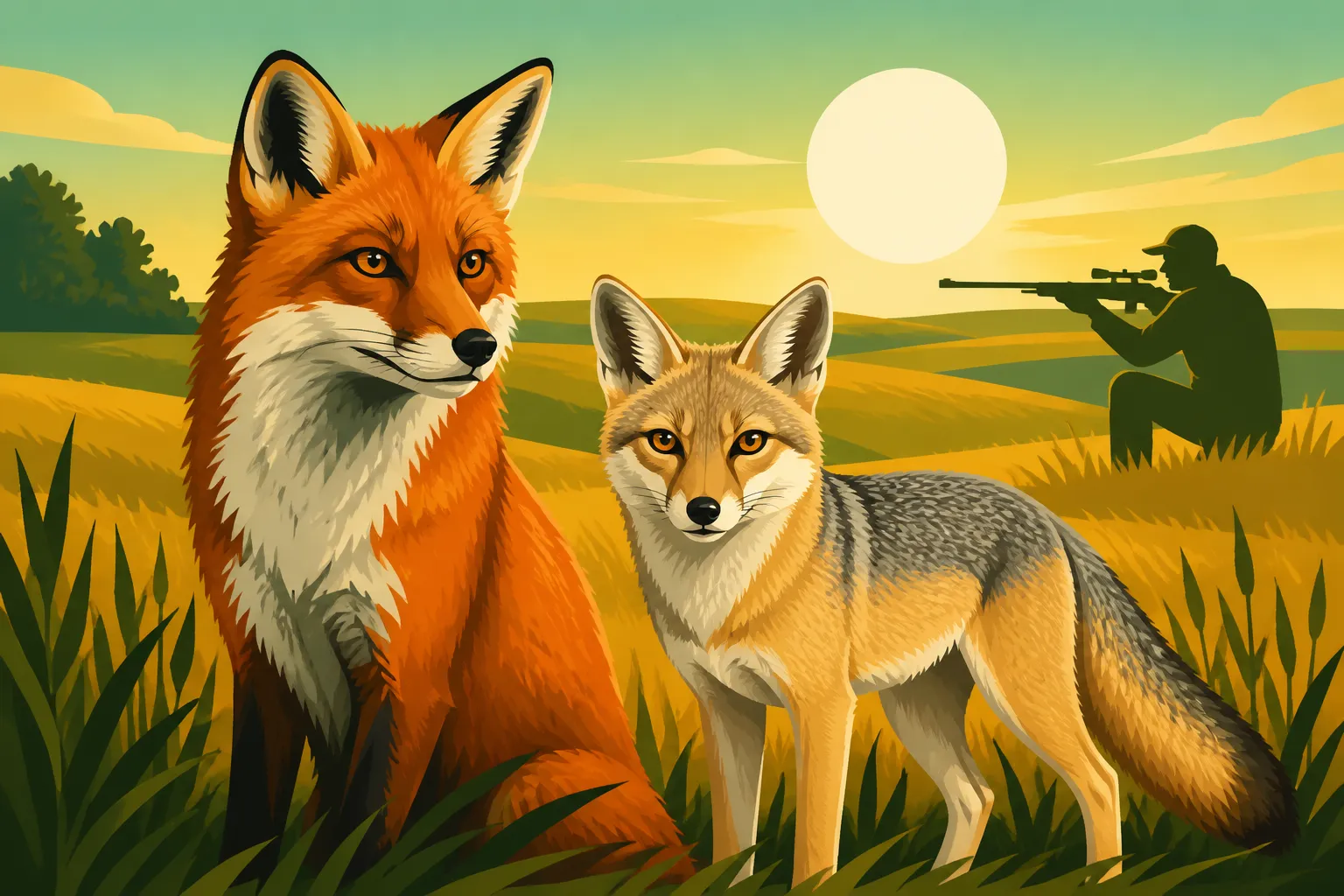
Identifying a swift fox can be a challenge, not just because of their rarity and elusive nature, but also because they are remarkably small. They are about the size of a house cat, weighing only 4 to 6 pounds, and standing approximately 12 inches tall at the shoulder. Their coat is typically a buffy yellow-orange to grayish-tan, with black patches on either side of their muzzle. Their ears are noticeably large relative to their head, and their tail is shorter and darker-tipped than a red fox's, lacking the prominent white tip.
When you compare them to the red fox, the swift fox just looks daintier, more compact, and incredibly streamlined – built for speed across the open prairie. Observing them requires patience and often good optics, as they can be quite shy and blend seamlessly into their grassland surroundings. If you're out hunting Upland Bird Hunting in Saskatchewan in the southwest, keep an eye out for these rare gems; they are a true indicator of a healthy prairie ecosystem.
Distinguishing Between Red and Swift Foxes
For anyone spending time in Saskatchewan's outdoors, being able to tell the difference between a red fox and a swift fox isn't just a matter of curiosity; it's vital for understanding our ecosystems and appreciating the unique roles each species plays. While both are canids and can appear somewhat similar at a quick glance, their differences are profound, especially in terms of size, habitat, and conservation status.
Size, Physical Traits, and Habitat Preferences
The most immediate and striking difference between these two fox species is their size. A swift fox is significantly smaller, often no bigger than a large housecat, with a dainty, delicate appearance built for agility on the open plains. Their weight rarely exceeds six pounds, and they stand quite low to the ground. In contrast, a red fox is a more robust animal, typically weighing between 10 to 15 pounds, and has a more substantial build, standing taller and looking much more like a small dog. Their longer legs and broader chest make them appear more powerful.
Beyond size, their physical features also diverge. The swift fox has notably larger ears in proportion to its head, an adaptation for hearing prey and predators in open environments, and a short, dark-tipped tail. The red fox has more "standard" sized ears and a long, bushy tail with a distinct white tip. The coat colour of a swift fox is generally a uniform buffy-tan, designed to blend in with prairie grasses, while red foxes, as discussed, exhibit a wider range of colours from brilliant red to black and silver, all retaining that signature white tail tip.
| Feature | Red Fox (Vulpes vulpes) | Swift Fox (Vulpes velox) |
|---|---|---|
| Size | Medium (10-15 lbs), small dog-like | Small (4-6 lbs), house cat-like |
| Coat Colour | Red, silver, cross (variable), often with a white belly | Buffy-tan, grayish-yellow (uniform), white belly |
| Tail Tip | Distinctive white | Dark or black |
| Ears | Proportional to head | Large in proportion to head |
| Habitat | Highly adaptable: farmland, parkland, forest fringe, urban edges | Specialist: shortgrass and mixed-grass native prairie |
| Distribution | Widespread across Saskatchewan | Restricted to southwestern Saskatchewan (reintroduced areas) |
| Conservation | Common, widespread | Endangered in Canada (federal status), protected in SK |
Their habitat preferences are another dead giveaway. If you're in the deep boreal forest or the aspen parkland surrounding cities, any fox you see will almost certainly be a red fox. They are truly the generalists of the fox world in Saskatchewan. Conversely, if you're in the vast, treeless native grasslands of the extreme southwest, particularly around areas like Grasslands National Park, then there's a chance you might spot a swift fox. Their presence acts as an indicator of truly pristine prairie habitat. Understanding these distinctions is crucial for anyone using a service like GoHunt to research specific wildlife management zones. Knowing the species distribution helps you focus your efforts.
Behavioural Differences and Conservation Status
Behaviourally, both are opportunistic hunters, but their specific tactics are tailored to their environments. Red foxes, with their larger size and varied habitat, can stalk through brush or pounce in open fields. They are bold and often habituate to human presence, sometimes even scavenging near human settlements. Their calls are varied, from barks to screeches. Swift foxes, on the other hand, are incredibly shy and secretive, relying on their speed and ability to disappear into the vastness of the prairie. Their calls are softer yips and growls. They rarely venture near human development, preferring remote, undisturbed grasslands.
Perhaps the most significant difference lies in their conservation status and management. The red fox is classified as a furbearer in Saskatchewan, and they are common throughout the province. There are generally open seasons for hunting and trapping them, though specific regulations always need to be checked in the current Saskatchewan Hunting Guide. However, the swift fox is listed as endangered in Canada and is a provincially protected species in Saskatchewan. This means there is absolutely no hunting or trapping allowed for swift foxes. Their recovery is still ongoing, and every effort is made to protect them. This difference in status underlines the critical importance of accurate identification in the field. When you are out Hunting Saskatchewan's Southern Prairie it's especially vital to be able to distinguish between these two species to ensure you are hunting ethically and legally.
Observing and Managing Fox Populations
For those passionate about Saskatchewan's wildlife, understanding how to observe and contribute to the management of fox populations is both a privilege and a responsibility. Whether you're a hunter, a photographer, or simply an enthusiast, your actions can play a role in the health of these unique creatures.
Ethical Observation and Photography
Observing foxes, particularly the elusive swift fox, requires patience, respect, and a commitment to not disturbing their natural behaviour. For red foxes, you might have opportunities to observe them from a distance in agricultural fields or even near the edge of bush roads, especially during the early morning or late evening. For swift foxes, your best bet is to focus on known swift fox reintroduction areas in southwestern Saskatchewan. A good pair of binoculars or a spotting scope is essential, as maintaining a respectful distance is paramount.
Always be mindful of your scent and sound. Move slowly, quietly, and try to use natural cover to your advantage. Never approach a den site, especially during the spring when kits are present, as this can cause undue stress to the parents and endanger the young. Using a mapping app like GoHunt can help you identify public lands or areas where observation might be appropriate, always ensuring you respect private land boundaries. A significant part of ethical observation is leaving no trace and ensuring the animals remain wild and undisturbed by your presence.
Managing Red Fox Populations
Red foxes, being common and widespread, are managed as a furbearer species in Saskatchewan. Their populations are generally healthy, and they play an important role in the ecosystem as both predators of small game and as a food source for larger predators. For hunters and trappers, understanding their habits and habitats is key to a successful and ethical harvest. They are often targeted for their fur, or as a means of predator control, especially in areas where they might impact domestic livestock or game bird populations.
When participating in the hunting or trapping of red foxes, it's essential to be fully aware of current regulations, seasons, and licensing requirements. The Saskatchewan Trapping Season Dates will outline specific periods when furbearers can be harvested. Understanding the role of red foxes within the broader context of Saskatchewan's Predators and Furbearers helps ensure responsible management practices. Their adaptable nature means that even with hunting pressure, they tend to maintain robust populations across their range.
Protecting the Swift Fox
The swift fox's status as an endangered species in Canada means that all efforts are focused on protection and population recovery. Any sighting of a swift fox, whether incidental or intentional, is valuable data for conservationists. If you are fortunate enough to spot one, try to note the location, date, and any specific behaviours, and report it to the provincial wildlife authorities. This information helps track their expanding range and population health.
Beyond reporting sightings, supporting conservation organizations that work on prairie habitat restoration and swift fox recovery is another way to contribute. Protecting native grasslands, especially in southwestern Saskatchewan, is crucial, as their survival is directly linked to the health of these unique ecosystems. Avoiding disturbance in known swift fox habitat, especially during denning season, is paramount. Even small actions like ensuring gates are closed on private land to prevent uncontrolled vehicle access can help protect their fragile habitat. Their journey from extirpation to tentative recovery is a delicate balance, and continued vigilance and respect from all outdoor enthusiasts are essential for their long-term survival.
Disclaimer
This article is for general informational purposes only and does not constitute professional advice. Laws, prices and regulations vary by location and change over time. Consult a qualified professional for guidance on your specific situation.