Saskatchewan’s Moose Population Trend
It’s a topic that weighs heavily on the minds of many Saskatchewan hunters: what’s really going on with our moose populations? We’ve all heard the whispers, seen the varying reports, and perhaps even experienced tougher hunting seasons firsthand. Understanding the health and trajectory of moose numbers across our vast and varied landscape is crucial, and this comprehensive guide will delve deep into the historical context, current trends, and the complex factors influencing these magnificent animals.
Understanding Saskatchewan's Moose Habitat
Saskatchewan is a huge province, and our moose don't just live in one type of environment. Their range is incredibly diverse, stretching from the deep woods of the north down into the agricultural lands, and each area presents its own unique challenges and opportunities for these adaptable creatures.
Boreal Forest Strongholds
For generations, the boreal forest has been the quintessential home for moose in Saskatchewan. This vast, dense wilderness of spruce, pine, and poplar, interspersed with wetlands, lakes, and rivers, offers everything a moose needs: abundant browse, water, and thick cover for protection from predators and the elements. Think about those long, cold winters up north; the thick canopy and dense undergrowth are vital for thermal regulation and finding sustenance when snow is deep. Historically, this region has been the bedrock of our moose population, the place where they could truly thrive away from significant human disturbance. Hunters who venture into these areas often find themselves in truly wild country, a stark contrast to the open fields further south. It’s here you’ll find the classic moose habitat, the kind that often comes to mind when you picture a bull moose standing in a remote lake. When you are Hunting a Boreal Muskeg Edge, you're stepping into prime traditional moose territory.
Farmland Expansion
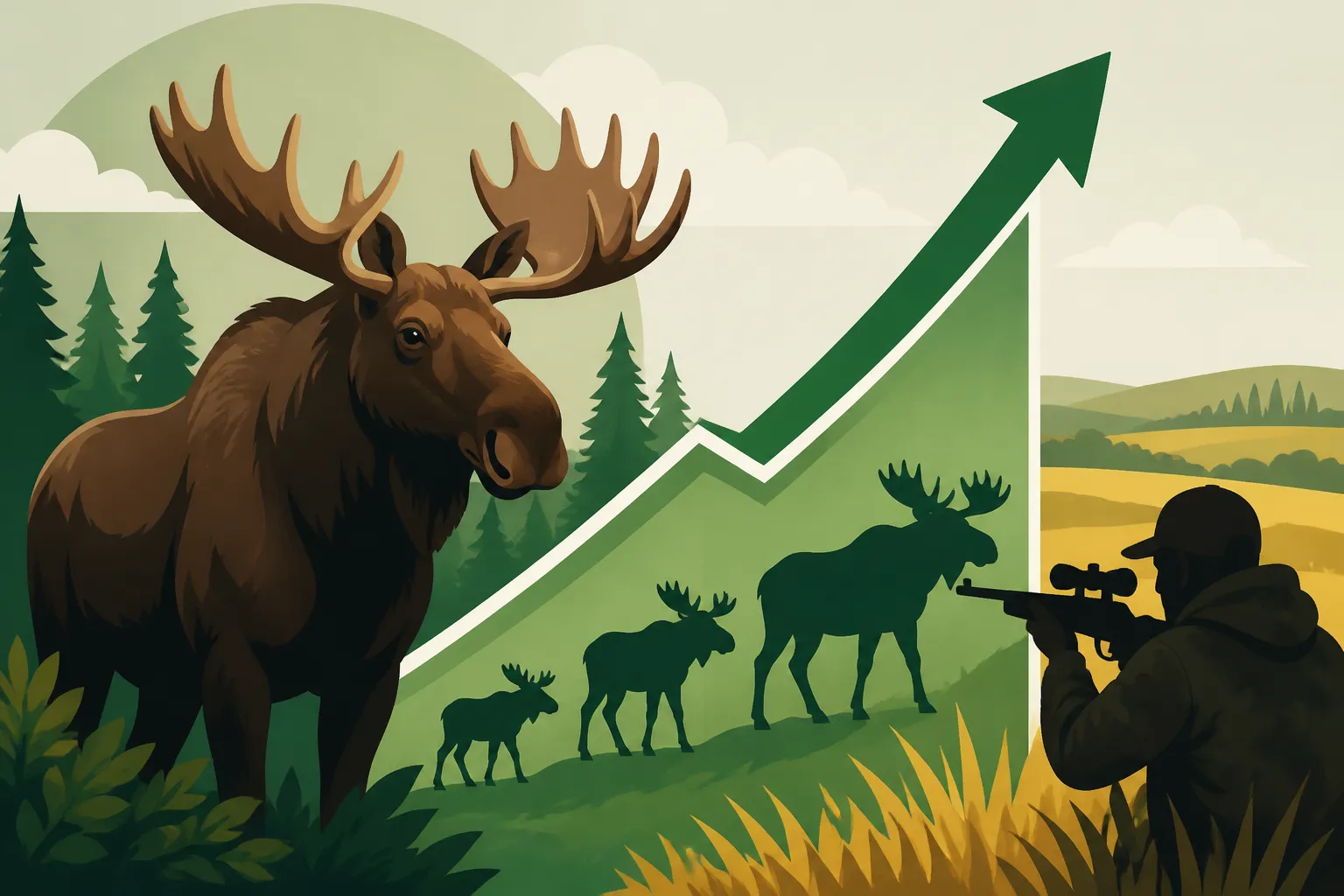
In recent decades, we’ve witnessed a fascinating shift: moose moving out of their traditional northern range and establishing themselves in the agricultural lands of central and even southern Saskatchewan. This isn't just a handful of rogue animals; it's a significant trend. These farmland moose have adapted incredibly well to a landscape dominated by human activity. They find excellent forage in fields of canola, peas, and cereal grains, which can be highly nutritious. The scattered bluffs, willow runs, and sloughs in these areas provide crucial cover, especially around water sources. While it might seem counterintuitive for such a large animal to thrive next to bustling farms, the abundant food resources and often reduced predator pressure (compared to the deep bush) have created a surprising new frontier for moose. This expansion has opened up new hunting opportunities, but also new challenges, such as crop damage and increased human-wildlife conflict. Many hunters are now focused on Hunting Farmland Moose in Saskatchewan, a testament to this shift.
Aspen Parkland Adaptations
Nestled between the boreal forest and the open prairie, the aspen parkland biome is a mosaic of trembling aspen bluffs, fescue grasslands, and wetlands. This transitional zone has proven to be an incredibly productive area for moose. The mixture of dense forest patches and open feeding grounds offers an ideal balance of food and cover. Moose in the parkland don't have to travel far to find what they need. They can graze in open areas at dusk and dawn, then retreat into the security of the bluffs during the day. The rich soil of the parkland supports a diverse array of plants, providing a varied and high-quality diet. This has historically been a popular area for deer hunting, but now moose are a much more common sight, often surprising hunters who are used to seeing only whitetails in these bluffs. These animals are often quite wary due to higher human presence, making them a challenging quarry.
Historical and Current Population Trends
Talking about moose populations is rarely straightforward. It’s a dynamic picture, influenced by decades of environmental changes, land use, and management decisions. It's safe to say that what we see today isn't necessarily what our grandparents saw, nor what we'll see in the next generation.
Past Abundance and Decline
If you talk to older hunters or delve into historical records, you’ll hear stories of incredible moose numbers in certain parts of Saskatchewan, particularly in the northern forest fringe. In the mid-20th century, following extensive logging and subsequent regrowth that created ideal browse, moose populations in some areas boomed. This period often saw more liberal hunting opportunities, and many recall easier times filling their tags. However, as habitats matured and other pressures mounted, some of these populations began to decline. Factors like unsustainable harvest levels in some localized areas, coupled with increasing predator populations and a lack of scientific understanding regarding moose ecology, contributed to these downturns. This led to more restrictive regulations and the development of the draw system we know today, aimed at allowing populations to recover and stabilize. It's a reminder that wildlife management is a constant balancing act.
Recent Surveys and Estimates
Today, understanding moose populations relies heavily on scientific surveys, aerial counts, and harvest data. The Ministry of Environment conducts regular aerial surveys in key Wildlife Management Zones (WMZs) to estimate population density and trends. These surveys, often supported by provincial hunter data and conservation organizations, provide critical insights. For instance, northern boreal populations tend to fluctuate, often linked to cyclical changes in habitat quality or predator numbers. Conversely, many parts of the agricultural and parkland zones have seen consistent or even increasing moose numbers in recent years, demonstrating their adaptability to these new environments. While precise province-wide numbers are hard to pin down due to the vastness of the landscape and the cost of surveys, the general consensus is a mixed bag: some areas are doing very well, others are stable, and a few are facing challenges. Hunters can often look to resources like GoHunt or similar provincial wildlife data portals to stay informed on specific zone trends, though detailed, real-time population counts are usually part of a broader government monitoring effort.
Regional Variations in Numbers
It's a mistake to talk about "the" Saskatchewan moose population as a single entity, because the reality on the ground varies significantly from one region to another. In the far northern reaches, where human density is low and the forest is vast, moose populations can be robust, albeit sometimes cyclical due to predator-prey dynamics. Here, hunters might encounter a healthy number of animals, though access can be a major challenge. As you move south into the forest fringe and aspen parkland, moose numbers are often quite strong, benefiting from the rich mix of forest and agricultural lands. These zones frequently see high draw success rates for antlerless tags, indicating healthy breeding populations. However, further south in the truly agricultural zones, while moose are present, their densities might be lower, and they can be more scattered, making them tougher to locate. This regional variation means that hunters really need to study their specific WMZ to understand local conditions, rather than relying on a provincial average. A great way to prepare is by Reading a Saskatchewan WMZ Map Before You Go to understand these differences.
The following table offers a simplified overview of general moose population trends across Saskatchewan's primary ecological zones, based on recent observations and government reports:
| Region | Primary Habitat Type | General Population Trend (Recent Years) | Key Contributing Factors | Hunting Opportunity Level |
|---|---|---|---|---|
| Northern Boreal Forest | Dense coniferous/mixed forest, wetlands | Stable to fluctuating | Predator presence, habitat maturity, winter severity | Moderate (access challenges) |
| Forest Fringe/Parkland | Mixed forest, aspen bluffs, grasslands | Stable to increasing | Abundant browse, agricultural influence, lower predator densities | High |
| Agricultural Farmland | Cropland, shelterbelts, willow bluffs | Increasing (from recent expansion) | High-quality forage, lower hunting pressure initially | Moderate (scattered animals) |
| Southern Prairie | Open grassland, coulees (limited) | Very low / incidental | Unsuitable habitat, limited cover, high human activity | Very Low (incidental only) |
Key Factors Influencing Moose Populations
Understanding moose population trends isn't just about counting animals; it's about dissecting the complex web of ecological factors that drive those numbers. From the smallest tick to the largest wildfire, everything plays a part in the delicate balance of life for Saskatchewan's moose.
Predation Pressure
Predation is a natural and essential part of any healthy ecosystem, and for moose, the primary predators are wolves and black bears. In Saskatchewan’s northern boreal forests, wolf populations can have a significant impact on moose numbers, especially calves. When wolf numbers are high, they can depress moose populations, and vice-versa, in a classic predator-prey cycle. It's a tough reality, but it ensures the strongest animals survive. Black bears, especially large boars, are known to prey on newborn moose calves in the spring, which can affect recruitment rates in localized areas. While these interactions are part of nature's design, an imbalance, perhaps due to other factors weakening moose, can exacerbate the pressure. This is a constant consideration for wildlife managers trying to set appropriate harvest levels.
Disease and Parasites
Unfortunately, disease and parasites are an increasing concern for moose populations across North America, and Saskatchewan is no exception. Chronic Wasting Disease (CWD), while more prevalent in deer, has been detected in moose in some regions, raising concerns about its potential impact. The mandatory CWD testing in certain zones for harvested deer, elk, and moose helps us monitor its spread and prevalence. You can find more details on Saskatchewan's CWD Testing Rules. Perhaps the most visible threat is the winter tick (Dermacentor albipictus), which can lead to "ghost moose" syndrome. Heavily infested moose scratch and rub off their fur, leading to severe hair loss, hypothermia, and anemia, particularly devastating for calves and yearlings. This parasite is often more prevalent in areas with warmer winters, which allow more ticks to survive. Then there’s brainworm (Parelaphostrongylus tenuis), a parasite carried by white-tailed deer that is typically harmless to them but lethal to moose. As deer ranges expand and overlap more with moose, this becomes a greater concern. Understanding How Winter Ticks Affect Northern Moose is crucial for appreciating one of the silent threats they face.
Habitat Loss and Fragmentation
As human populations grow and development continues, moose habitat can suffer. Logging practices, while sometimes creating new browse in the short term, can also lead to long-term fragmentation of critical wintering areas or calving grounds if not managed carefully. The expansion of agricultural land, while providing new forage opportunities in some areas, also removes extensive tracts of forest and wetland habitat that moose rely on for cover and shelter. Energy development, road construction, and other infrastructure projects can cut through travel corridors, isolate populations, and increase stress on animals. When moose habitat becomes smaller and more fragmented, it makes them more vulnerable to predators, disease, and human encounters, which can ultimately depress local numbers. This is a constant balancing act between economic development and wildlife conservation.
Climate Change Effects
Climate change is presenting new, complex challenges for moose. Warmer winters, for instance, can lead to increased winter tick survival and infestations, as mentioned before. Deeper, crustier snow can also impede moose movement, making it harder to escape predators or find food, though this is somewhat contradictory to the warmer winter scenario and depends heavily on specific weather patterns. Warmer summers can lead to heat stress for moose, especially large bulls, causing them to reduce their foraging activity during the day and seek shade, which can impact their overall health and reproductive success. Changes in precipitation patterns can affect the availability and quality of forage. These subtle, long-term shifts in climate are difficult to quantify, but many wildlife biologists believe they are already having an impact on moose populations, pushing them towards more northerly latitudes and higher elevations in other parts of their range.
Management Strategies and Conservation Efforts
The health of Saskatchewan’s moose populations doesn’t happen by accident. It's the result of ongoing, dedicated efforts by wildlife managers, conservation groups, and, importantly, hunters themselves. These strategies are continually evolving as we learn more about these incredible animals and the challenges they face.
Hunting Regulations and Draw Systems
One of the most direct and effective tools for managing moose populations is through hunting regulations. Saskatchewan employs a robust draw system for moose licenses, especially for antlered animals, in many zones. This system is designed to carefully control harvest levels, ensuring that only a sustainable number of animals are removed from the population each year. It allows managers to respond to population fluctuations, increasing or decreasing available tags as needed to promote herd health and recovery. For instance, if surveys indicate a decline in a particular WMZ, the number of tags might be reduced the following year. Conversely, in areas with stable or growing populations, such as some parts of the forest fringe or farmland, more tags might be issued, including antlerless permits, to help manage herd size and reduce conflicts with agriculture. This system aims to provide fair hunting opportunities while prioritizing the long-term sustainability of the moose resource. Knowing about Saskatchewan Moose Season Dates is key for any hunter planning their season.
Habitat Improvement Projects
Conservation isn't just about limiting hunting; it's also about actively improving the places where animals live. Various habitat improvement projects, often spearheaded by organizations like the Saskatchewan Wildlife Federation, Ducks Unlimited Canada, and government agencies, benefit moose. This can include maintaining and enhancing existing forest and wetland habitats, restoring degraded areas, or even creating new water sources in drier regions. Targeted forest management practices that create diverse age classes of trees, promoting new growth and varied browse, can be particularly beneficial for moose. Protecting crucial wintering areas, calving grounds, and travel corridors from undue disturbance or development is another vital component. These projects often require collaboration between landowners, industry, and conservationists, highlighting the need for a collective approach to wildlife stewardship.
Research and Monitoring Programs
You can't manage what you don't understand, and that's why ongoing research and monitoring are absolutely critical. The Saskatchewan Ministry of Environment, often in partnership with universities and other research institutions, conducts various studies on moose. This includes aerial surveys to estimate population size and distribution, tracking studies to understand movement patterns and habitat use, and health assessments to monitor for diseases and parasites. Hunters play a crucial role in this data collection by providing biological samples (like lymph nodes for CWD testing), reporting observations, and submitting detailed harvest information. Technologies and platforms, like those promoted by GoHunt, can sometimes assist hunters in understanding how to better contribute to these monitoring efforts by knowing what data is useful and how to submit it. This continuous stream of data helps wildlife managers make informed decisions, adapt regulations, and refine conservation strategies to ensure healthy moose populations for the future.
The Future of Moose Hunting in Saskatchewan
Looking ahead, the landscape for moose hunting in Saskatchewan is likely to continue to evolve. It's a blend of challenges and opportunities, requiring adaptability from hunters and continued dedication from conservationists and wildlife managers.
Challenges and Opportunities
The primary challenge lies in balancing growing moose populations in some areas (particularly farmland) with declining or stable-but-vulnerable populations elsewhere (especially in parts of the traditional boreal range). This means management strategies must become even more nuanced and localized. Climate change, with its potential to increase disease vectors and alter habitat, remains a significant long-term concern. However, there are also opportunities. The expansion of moose into agricultural zones has created new hunting opportunities where none existed before, distributing hunting pressure and potentially easing it on traditional areas. Increased public awareness and scientific advancements in wildlife management offer hope for more effective conservation. Hunters will likely face tougher decisions about where and how to pursue moose, but those willing to adapt and learn new strategies will continue to find success.
Hunter Involvement in Conservation
Hunters are, and always have been, key conservationists. Their financial contributions through license fees directly fund wildlife management and research. Beyond that, active participation in reporting observations, submitting samples for disease testing, and adhering to ethical hunting practices are invaluable. Hunters often act as the "eyes and ears" on the ground, providing crucial anecdotal evidence that complements scientific surveys. Joining organizations like the Saskatchewan Wildlife Federation or other local conservation groups is another powerful way for hunters to contribute to habitat projects, advocacy, and educational initiatives that benefit moose and other wildlife. It's a partnership: hunters get to pursue their passion, and in return, they play a vital role in ensuring that passion remains viable for generations to come.
Adapting Hunting Strategies
Given the shifting dynamics of moose populations and habitats, hunters will need to be increasingly adaptable. This might mean exploring new zones where moose numbers are strong, such as the mixed agricultural and parkland areas, rather than relying solely on traditional boreal strongholds. It could involve adjusting tactics, perhaps spending more time scouting crop edges and bluffs than deep forest, or learning techniques for Calling Moose in Saskatchewan's Bush specifically for these new environments. Understanding moose behavior in different landscapes – for example, how When Saskatchewan's Moose Rut Peaks might vary slightly based on local conditions – will become even more critical. Embracing technology for scouting, such as satellite imagery or specific hunting apps, can provide a significant edge. Ultimately, the successful moose hunter of the future will be the one who continuously learns, adapts, and remains committed to ethical hunting and conservation principles.
Disclaimer
Please note that hunting regulations, seasons, and population trends are subject to change. Always consult the most current Saskatchewan Hunters' and Trappers' Guide and provincial government resources before planning any hunting activity.