Where Hungarian Partridge Hold in Winter
When the crisp air of a Saskatchewan autumn gives way to the biting cold of winter, many upland bird hunters find themselves scratching their heads, wondering where all the Hungarian partridge have gone. It's a common frustration – one minute you're flushing coveys from stubble fields, the next, they seem to vanish into thin air, leaving you trudging through snow with nary a feather in sight. This guide is here to unravel that mystery, helping you pinpoint exactly where these elusive little rockets hold when the snow flies and the mercury drops.
Understanding Hungarian Partridge Winter Habits
Hungarian partridge, or Huns as we affectionately call them, are tough little birds, built for the prairie. But even they have to adapt their survival strategies drastically once winter truly sets in. Their entire world changes, and understanding these shifts is key to finding them.
The Critical Need for Cover and Food
Winter in Saskatchewan isn't just cold; it's often a relentless battle against wind, deep snow, and scarcity. For Huns, survival hinges on two things: finding adequate cover from the elements and predators, and consistently accessible food sources. During the milder months, they might roam more freely, feeding in open fields, but winter forces them into tighter, more defined patterns. Their choice of habitat becomes less about convenience and more about pure, unadulterated survival. They seek out places where they can escape the biting winds and find shelter that allows them to conserve precious body heat.
Food is another immense challenge. While they'll still forage for waste grain and weed seeds, these become much harder to access once covered by snow. This drives them to areas where vegetation might be taller, providing some elevation above the snow, or where persistent winds have scoured patches of ground clear. Imagine trying to find a meal when every potential bite is buried under a foot of white powder. That's the Hun's daily reality, forcing them to concentrate in very specific, often overlooked, locales.
How Snow Depth Affects Their Location
The amount of snow on the ground is perhaps the single biggest factor dictating where Hungarian partridge will hold in winter. A light dusting of snow is one thing; deep, crusty drifts are entirely another. In lighter snow conditions, Huns might still be found in denser weed patches or taller stubble fields, using the standing vegetation for minimal cover and still being able to scratch through to find seeds and grain. The snow might even offer a slight insulating layer for them to burrow into on colder nights.
However, once the snow piles up and freezes, or forms a thick, impenetrable crust, these open field locations become untenable. They simply cannot dig through to reach food, and the open exposure leaves them vulnerable to both the cold and aerial predators. This is when they move to more substantial, often permanent, cover. They'll seek out taller, thicker stands of vegetation that act like natural snow fences, creating pockets of shallower snow, or areas with dense woody cover that sheds snow more effectively. Their very survival depends on moving to these more protected microclimates where food remains accessible, even if scarce, and the elements are slightly less brutal.
Prime Winter Habitats for Huns in Saskatchewan
Knowing why Huns move is one thing; knowing where they end up is the real game-changer. In Saskatchewan's vast landscape, certain features consistently attract and hold partridge through the winter.
Shelterbelts and Field Edges
If there's one place you should always check for winter Huns, it's shelterbelts and the thick edges of fields, especially those bordering dense cover. These linear strips of trees and shrubs, often planted decades ago to protect fields from wind erosion, become crucial winter refuges. They act as natural windbreaks, creating calmer pockets where snow doesn't drift as deeply, allowing birds to access ground-level food. The dense growth within these belts provides excellent thermal cover, shielding birds from the frigid prairie winds.
Specifically, pay close attention to the south side of these shelterbelts, which catches more sunlight and can be a few degrees warmer, potentially melting or compacting snow just enough for easier foraging. The key is finding a shelterbelt that also has adjacent food sources, like a stubble field or a patch of weeds. The birds can feed quickly, then dive back into the safety and warmth of the cover. When hunting these areas, walk the length of the cover slowly and methodically, watching for birds flushing out ahead of you, or cutting back into the adjacent field. These are perfect spots to implement techniques you might use for Hunting Huns Along a Saskatchewan Shelterbelt.
Farmyards and Abandoned Homesteads
This might sound a bit counterintuitive for a wild bird, but actively used or, even better, abandoned farmyards are absolute gold mines for winter partridge. Hunters often drive right past them, focused on fields, but these spots offer an incredible combination of cover, food, and shelter. Think about it: old buildings provide windbreaks, machinery offers nooks and crannies, and dense thickets of caraganas, lilacs, or other hardy shrubs often grow up around them, providing impenetrable cover.
Furthermore, farmyards often have persistent weed patches, spilled grain, or even domestic bird feed that can sustain Huns through the leanest times. It's validating, isn't it, to finally find those "missing" birds hunkered down in a place you overlooked countless times? Remember to always obtain explicit permission before hunting any private property, especially around active farmyards, and exercise extreme caution. These spots are often small, so a slow, careful approach is best. Consider exploring areas that might also attract whitetails, as detailed in Hunting an Abandoned Farmyard, due to the shared desire for cover and residual food.
Heavy Grasslands and Native Prairie Pockets
While much of Saskatchewan's prairie is cultivated, pockets of native grassland and even heavily overgrown tame hayfields or pasture can be excellent wintering grounds for partridge, particularly during milder winters or in areas with persistent snow-scouring winds. These areas provide deep, unbroken cover that offers thermal protection from the cold. The standing grass helps to hold snow in a way that often leaves small, sheltered pockets at ground level, which the birds can use.
The key here is usually proximity to cultivated land. Huns will often roost or loaf in the thick grass, then move to adjacent stubble fields or weed patches to feed. Look for areas where these grasslands meet a field edge or a slight rise that might catch the wind and keep snow shallower. While often associated with Walking Up Sharp-Tailed Grouse in Saskatchewan, this habitat is equally valuable for Huns, as both species thrive on a mix of dense cover and accessible food. On days with a light, fresh snowfall, you might even spot their tracks leading from the grass into the feeding areas.
Strategies for Locating Winter Partridge Coveys
Finding Huns in winter requires more than just knowing where they might be; it demands a strategic approach to scouting and hunting.
Scouting and Reading the Landscape
The first step to a successful winter Hun hunt happens long before you ever step out of the truck. Scouting, both in person and from your armchair, is paramount. In the digital age, tools like GoHunt can be invaluable. Using satellite imagery, you can identify potential shelterbelts, thick bush pockets, and abandoned farmyards that might be holding birds. Look for those dense linear features, changes in vegetation texture, and areas where open fields meet heavy cover. This kind of digital reconnaissance saves you countless hours of driving and trudging.
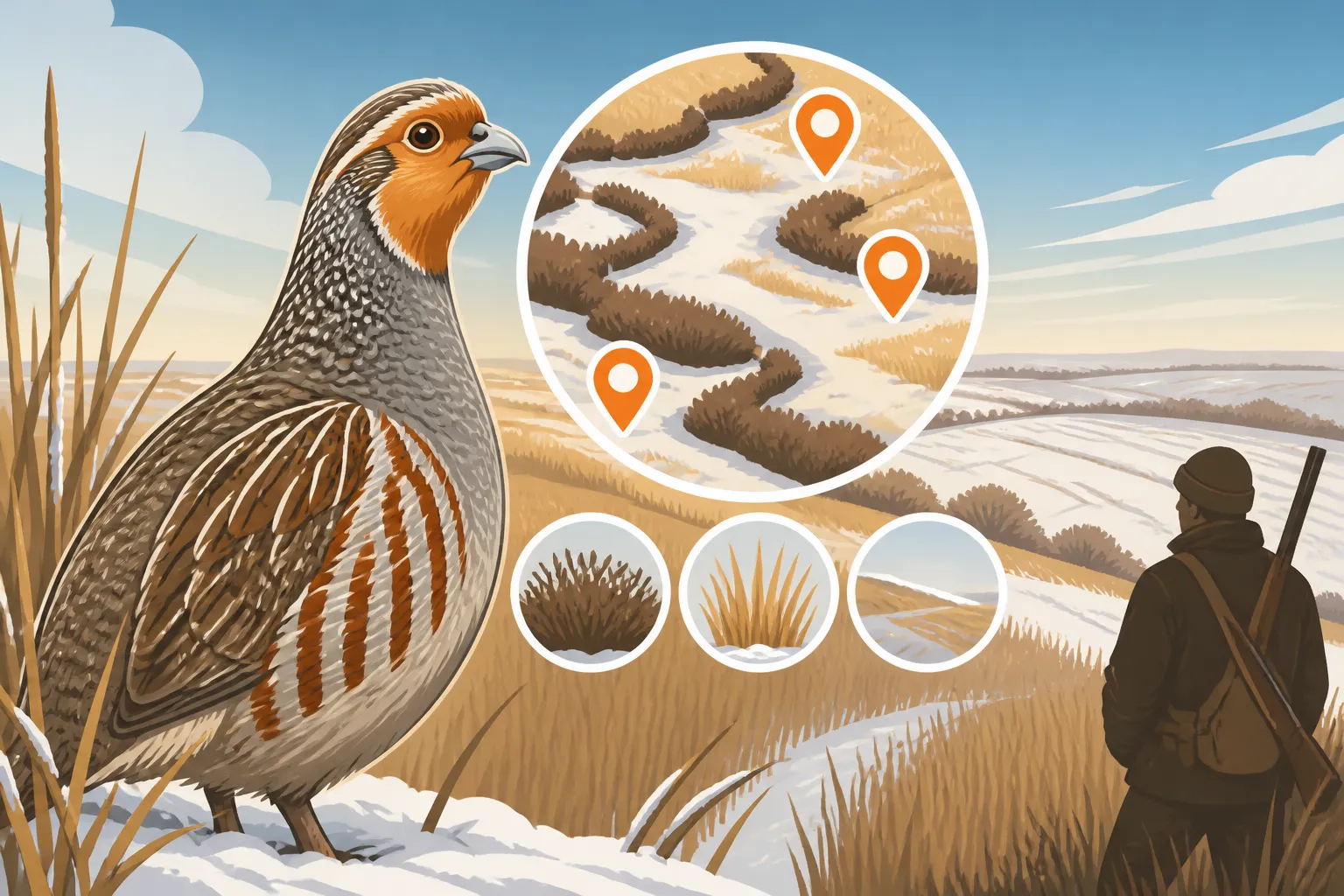
Once you're in the field, read the landscape like a book. After a light snowfall, look for tracks in the snow leading into or out of cover. Pay attention to "dusting" areas – patches of bare, dry ground where birds have been cleaning their feathers. These small clues can tell you a lot about recent activity. Focus on transition zones, where two different types of habitat meet, as these are often travel corridors and feeding edges. Remember to consider Scouting With Satellite Imagery in Saskatchewan not just for big game, but for these smaller, equally challenging pursuits.
Working With Dogs vs. Walking Them Up
Whether you hunt with a dog or prefer to walk them up, winter conditions present unique considerations. A good bird dog, especially a pointer or a flushing dog, is an incredible asset for winter partridge hunting. Their ability to cover ground and locate scent in dense cover where you might otherwise walk past birds is unmatched. However, cold, dry air can sometimes make scenting conditions difficult, so a dog's persistence and training are key. Ensure your dog is well-conditioned for cold weather and protected from extreme temperatures.
For those walking them up, patience and methodical coverage are crucial. Huns will hold tight in heavy winter cover, often not flushing until you're right on top of them. Walk slowly, pause frequently, and be ready for a sudden flush. When working dense shelterbelts or heavy brush, one person can walk inside the cover while another walks parallel in the adjacent field, ready for birds that flush out. This can be a particularly effective tactic when dogs aren't an option, or when the cover is too thick for a dog to work effectively. Having a well-trained partner, whether human or canine, makes all the difference, much like you'd strategize with Using a Pointing Dog on Saskatchewan Prairie or by optimizing for Using a Flushing Dog in Thick Cover.
Timing Your Winter Hunt
The time of day can significantly impact your success when hunting winter partridge. Unlike some big game that might be active at dawn and dusk, partridge often prefer the warmer, calmer parts of the day. Mid-day, when the sun is highest and the temperatures are at their peak, can often be the most productive. This is when birds are most likely to be out feeding or loafing, taking advantage of the relative warmth.
Hunting after a fresh, light snowfall can also be highly effective. The fresh snow not only reveals tracks, making it easier to pinpoint active areas, but it can also make birds stand out visually against the white backdrop. Conversely, high winds can make hunting extremely challenging. Birds will hunker down even tighter in cover during windy conditions, making them harder to flush and shoot. Consider the weather, specifically wind chill and snow depth, when planning your outing.
Respecting Landowners and Winter Ethics
Hunting in Saskatchewan, especially in winter, comes with a strong ethical responsibility, particularly regarding private land access and safe practices.
Gaining Permission on Private Land
The vast majority of prime Hungarian partridge habitat in Saskatchewan is on private land. This means that Saskatchewan Landowner Permission Law is critical, and obtaining permission from landowners is not just a legal requirement but a fundamental part of ethical hunting. Winter can present additional challenges for landowners, such as drifting roads, so approaching them with respect and understanding is key. Don't be afraid to Knocking on Doors in Saskatchewan Farm Country, but be prepared for a no, and always graciously accept their decision.
Sometimes, offering to help with a chore or simply sharing some of your harvested game can go a long way in building goodwill. Remember, these are their homes and livelihoods, and their generosity should never be taken for granted. Always clarify exactly where you are allowed to hunt and if there are any specific restrictions, such as avoiding certain fields with livestock or buildings.
Safe and Ethical Hunting in Winter Conditions
Winter hunting presents unique safety considerations that go beyond those of milder seasons. Firstly, always ensure you're wearing sufficient Saskatchewan Blaze Orange Rules to be highly visible to other hunters, even if you don't expect company. The stark winter landscape can make it harder to judge distances and identify targets.
Secondly, cold weather demands extra attention to personal safety and equipment. A well-stocked Winter Truck Kit for a Saskatchewan Hunt is non-negotiable, including extra warm clothing, emergency supplies, and recovery gear like a shovel and tow strap. Getting stuck or breaking down in deep cold is no joke. Finally, proper Meat Care in Saskatchewan's Cold Snaps is usually less of a concern than in warmer weather, but still important. Getting your birds cleaned and cooled quickly maintains meat quality, even if spoilage is slower in freezing temperatures. Respecting the land, the animals, and fellow hunters ensures that everyone can enjoy the incredible experience of winter partridge hunting in Saskatchewan.
Winter Hungarian Partridge Holding Areas
Here's a quick reference for typical winter holding areas for Hungarian partridge in Saskatchewan:
| Winter Habitat Type | Key Features | Hunting Strategy | Challenges |
|---|---|---|---|
| Shelterbelts | Dense shrubs, trees, linear windbreaks | Walk slowly along edges, focus on south side, use dogs | Birds hold tight, limited visibility, can flush quickly |
| Abandoned Farmyards | Old buildings, machinery, overgrown shrubs, weeds | Slow, methodical approach, check all corners and thickets | Private property permission crucial, potential safety hazards |
| Heavy Grasslands | Tall, dense grass, native prairie pockets | Wide sweeps with dogs, focus on field interfaces | Birds can run long distances, hard to pinpoint exact location |
| Thick Field Edges | Overgrown fence lines, brushy ditches, cattails | Walk parallel to cover, anticipate birds flushing into fields | Limited access, can be difficult to traverse |
| Slough Rims/Willows | Dense willows and brush around frozen sloughs | Systematically push cover, especially with a partner | Very thick cover, can be muddy or icy underneath |
Disclaimer
This article is for general informational purposes only and does not constitute professional advice. Laws, prices and regulations vary by location and change over time. Consult a qualified professional for guidance on your specific situation.