Hunting an Irrigation District Field Edge
Hunting the edges of irrigation district fields in Saskatchewan presents a unique set of opportunities and challenges for hunters. While these highly productive agricultural areas can be absolute magnets for big game and waterfowl, navigating the specific landscape, understanding game patterns tied to cultivated crops, and, most importantly, securing access can feel like a maze. This guide will walk you through everything you need to know to successfully plan and execute a hunt along Saskatchewan's irrigation district field edges, from initial scouting to effective hunting strategies.
Understanding Saskatchewan's Irrigation Districts
Saskatchewan might be known for its vast dryland farming, but tucked into certain regions are intensive irrigation districts. These areas transform the landscape, creating oases of lush forage and consistent water sources that draw in game like a magnet. You're not just looking at a typical stubble field here; you're dealing with a dynamic ecosystem influenced by controlled water.
The Landscape of Irrigated Farmland
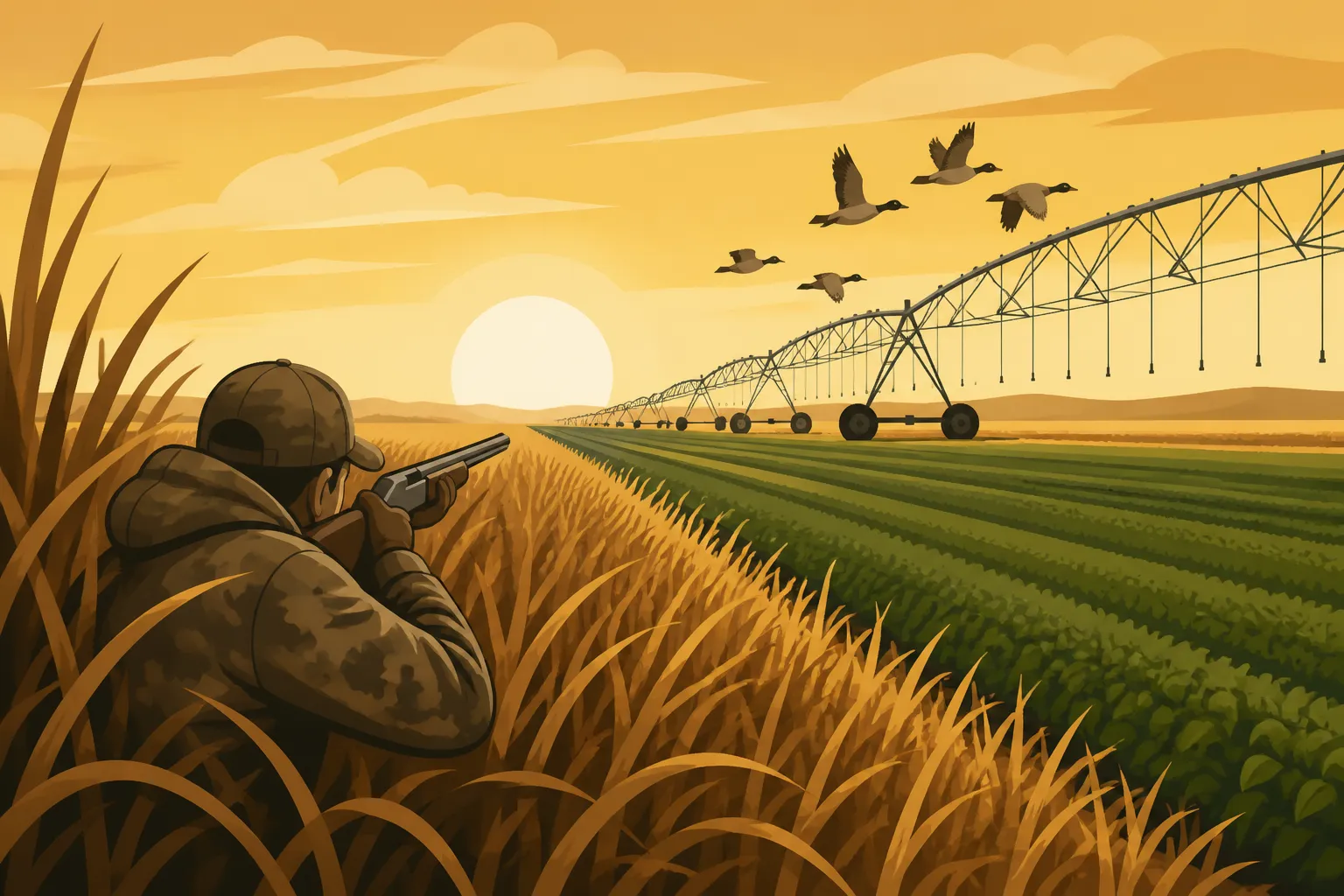
Imagine flat, often fertile ground crisscrossed by canals, ditches, and pivot irrigation systems, all nurturing crops that might struggle in non-irrigated areas. Potatoes, corn, various specialty crops, and even lush alfalfa can thrive here, extending the growing season and providing abundant feed long after surrounding dryland fields have dried up or been harvested. The consistent moisture leads to thicker cover along field edges, ditch banks, and non-cultivated pockets, offering bedding and thermal protection that might be scarce elsewhere. This consistent green-up, even in dry years, means an almost guaranteed food source for wildlife.
The sheer density of crops and the infrastructure of irrigation itself—like the raised banks of canals or the lines of trees planted as windbreaks—create fantastic travel corridors and secure hiding spots for game. Hunters often focus on the big bush blocks or vast prairie coulees, but these "food factories" can concentrate animals in surprisingly high numbers, making them prime real estate if you can decipher their patterns. It's an entirely different puzzle than Hunting a Saskatchewan Quarter Section or Hunting a Prairie Coulee Bottom.
Game Attraction in Irrigated Zones
So, what makes these irrigated field edges so appealing to wildlife? It boils down to the basic needs: food, water, and cover.
- Abundant, High-Quality Forage: Irrigated fields often mean higher protein crops, available consistently throughout the season. Deer, especially whitetails, will absolutely hammer crops like corn, peas, or alfalfa. Mule deer, while often thought of as prairie dwellers, won't turn down a lush meal. Moose, usually associated with Hunting Moose on a Saskatchewan Cutline or deeper bush, are increasingly showing up in agricultural areas, and irrigated fields offer them prime browsing and feeding opportunities.
- Consistent Water Sources: Canals, irrigation ditches, and even low-lying areas that collect runoff provide reliable water, which is a major draw, particularly during dry spells when natural sloughs might dry up. This is especially true for Hunting Pronghorn Near a Prairie Water Hole, but applies to all big game.
- Dense Edge Cover: The edges of these fields, often where the irrigation pivots stop or where natural drainage occurs, can grow up thick with willows, tall grasses, and other brush. These areas provide perfect security cover adjacent to the food source, allowing animals to feed, retreat quickly, and bed down without having to travel far.
- Thermal Regulation: During hot periods, the taller, denser crops and associated edge cover offer shade and cooler temperatures. In colder weather, this same dense vegetation can provide a break from the wind and trap snow, offering insulation. This microclimate effect is often overlooked but critical for game comfort.
This combination of factors makes irrigation districts hotbeds for game activity, often concentrating animals more effectively than surrounding dryland areas.
Scouting an Irrigation Field Edge Effectively
Effective scouting is paramount when hunting irrigation districts. You're not just looking for game; you're looking for patterns tied to highly managed agricultural cycles and landscape features. It requires a blend of digital homework and boots-on-the-ground detective work.
Pre-Season Digital Scouting with Mapping Tools
Before you even think about putting boots on the ground, leverage digital mapping tools. Services like onX Hunt or GoHunt are invaluable for understanding the layout of an irrigation district without disturbing the land or alerting landowners.
- Identify Irrigation Infrastructure: Look for the tell-tale circular patterns of pivot irrigation or the straight lines of canals and ditches. These are often easy to spot on satellite imagery. The presence of water means life, and game will use these features.
- Locate Potential Access Points: Identify grid roads, field approaches, and any adjacent Crown land (which can be hard to find, but Reading Saskatchewan Crown Land Layers on onX can help) or public access points. This helps you plan your physical scouting routes and understand how you might approach a property if permission is granted.
- Find Transition Zones: Game loves edges. Look for where irrigated fields meet natural coulees, shelterbelts, bush pockets, or treelines. These transition areas are often primary travel corridors. Identify potential bedding areas within natural cover adjacent to feeding fields.
- Study Historical Imagery: Some mapping tools offer historical satellite views. This can reveal how crops were rotated in previous years, where water tended to pool, or where persistent game trails might have been. A trail visible three years ago might still be active.
Digital scouting with tools like onX Hunt allows you to cover vast amounts of ground from your home, narrowing down your focus to the most promising areas before you even burn a drop of gas. This is a critical first step, especially when trying to pinpoint where to begin when you're Scouting With Satellite Imagery in Saskatchewan.
Boots-on-the-Ground Reconnaissance
Once you've done your digital homework and ideally secured permission to access specific properties, it's time for real-world scouting. Remember to be respectful of private property and harvest seasons.
- Walk the Edges and Transitions: Focus your efforts where field edges meet natural cover. Look for well-worn game trails leading into or out of the fields. Are they crossing through a specific fence line, heading down a ditch bank, or entering a bush bluff?
- Look for Fresh Sign:
- Tracks: Pay attention to size, direction, and freshness. Are they deer, moose, or elk? Are there multiple tracks indicating a herd?
- Droppings: Fresh droppings indicate recent activity.
- Rubs and Scrapes: For deer hunters, these are crucial indicators of buck activity. Are they along the edge of the field, or further back in the cover? Reading Whitetail Sign in Saskatchewan Bluffs applies even on flat land with smaller bluffs.
- Bedding Areas: Look for flattened grass or depressions in thicker cover where animals have rested, often with a good vantage point to the field.
- Assess Water Access: Even with irrigation, animals will have preferred drinking spots. Look for trails leading to specific points along ditches or canals.
- Note Prevailing Winds: Understand the typical wind direction in the area. This is vital for later stand or blind placement.
- Talk to Landowners: If you have permission, the farmer or rancher working the land is an invaluable resource. They see the game daily and know their property better than anyone. They might tell you where the biggest buck has been seen, or where the geese are consistently flying in. This personal interaction is part of Knocking on Doors in Saskatchewan Farm Country.
By combining detailed digital analysis with thorough physical reconnaissance, you'll gain a deep understanding of how game uses these irrigated field edges, setting yourself up for a much higher chance of success.
Strategies for Hunting Irrigation Field Edges
Hunting irrigation district field edges demands a strategy tailored to these specific environments. It's not just about finding game; it's about intercepting them predictably while being mindful of the unique conditions.
Stand and Blind Placement Considerations
Once you've identified key travel routes and feeding areas, the next step is strategic placement of your stand or blind.
- Wind Direction is King: Always prioritize prevailing wind direction. Animals, especially deer, rely heavily on their sense of smell. You must position yourself so your scent is carried away from where you expect game to approach or pass. Have multiple setup options for different wind directions if possible.
- Cover and Concealment: While you want a clear shot, you also need to be hidden. Utilize existing cover like brush lines, shelterbelts, or the edge of standing crops. If using a ground blind, brush it in thoroughly. For tree stands, choose a tree that offers good cover from behind and above. Remember, the goal is to become part of the landscape, not stick out like a sore thumb.
- Vantage Point and Shot Lanes: Choose a spot that offers a clear view of the game trails and feeding areas, but also ensures clear shooting lanes. You don't want a trophy buck stepping out only to be obscured by a rogue branch. Trim shooting lanes before the season, if possible and with permission, to avoid making noise during your hunt.
- Entry and Exit Routes: Plan how you'll get to and from your stand or blind without disturbing game. This often means walking through areas of dense cover or along ditches that provide concealment. Avoid walking directly across open fields, especially at dawn or dusk. Your approach needs to be as quiet and scent-free as possible. This is just as important as Hanging a Stand on a Saskatchewan Bush Edge.
Timing Your Hunt
Timing is critical when hunting near agricultural fields, and irrigation districts are no exception.
- Dawn and Dusk are Prime: Like most game, deer and moose are most active during the low-light hours of dawn and dusk as they move between bedding and feeding areas. Position yourself well before legal shooting light and stay until after legal shooting light to catch these movements. This is often the best time for Hunting a Standing Canola Field Edge or Hunting a Swathed Grain Field at Dusk.
- Mid-Day Lulls: While game activity generally slows during the middle of the day, don't rule out sitting all day, especially during the rut or cold weather. Animals might move short distances to water or simply shift bedding locations. If you're confident a big buck is bedded nearby, sitting tight can pay off.
- Post-Harvest: After crops like corn or potatoes are harvested, the fields become a massive buffet of dropped kernels or tubers. Game animals will often move in to glean these leftovers, sometimes staying out in the open for longer periods. This can be an excellent time to target them, but be aware that their patterns might shift dramatically once the main food source is gone.
- Weather Considerations: Overcast days or light rain can increase daytime movement. Cold snaps can also drive animals to feed more aggressively to maintain body heat. Conversely, high winds can make game nervous and unpredictable. Keep a close eye on the forecast and adapt your strategy.
Permission and Access
This is perhaps the single most critical factor for hunting irrigation district field edges, as the vast majority are on private land.
- Always Get Permission: Saskatchewan law is clear: you must have permission from the landowner to hunt on private land. This is not optional. Approaching landowners well in advance of the season, showing respect, and offering to help with chores can go a long way. Some farmers might even appreciate responsible hunters helping manage overpopulated deer or elk that cause crop damage. Refer to Saskatchewan Landowner Permission Law for more details.
- Respect Posted Land: If land is posted with "No Hunting" or "No Trespassing" signs, respect them. Never assume. Even if it's not posted, if you haven't received explicit permission, stay out.
- Understand Your Limits: When permission is granted, clarify exactly where you can hunt, what species you can hunt, and how you can access the property. Some landowners might allow foot traffic only, or restrict vehicle use to specific approaches. Always leave gates as you found them.
- Consider Hunting Leases: While common in some areas, hunting leases on prime agricultural land in Saskatchewan can be competitive and costly. However, they do offer guaranteed access. This is a different approach than simply knocking on doors, and you might research Saskatchewan Hunting Lease Costs if this is a route you wish to explore.
By diligently securing permission and acting as a responsible, respectful hunter, you can unlock incredible hunting opportunities on Saskatchewan's productive irrigation district field edges.
Gear and Safety Specifics for Irrigated Areas
Hunting around irrigation districts comes with its own set of gear and safety considerations. The presence of water, diverse crops, and active agricultural operations means you need to be well-prepared and extra vigilant.
Essential Gear for Water-Rich Environments
You're dealing with canals, ditches, and potentially muddy conditions, even if the fields themselves are dry.
- Waterproof Footwear: This is non-negotiable. Quality rubber boots or waterproof hiking boots are essential. Depending on the depth of ditches or canals you might need to cross (with permission, of course), hip waders or chest waders could be a game-changer. There's nothing worse than cold, wet feet when you're trying to sit still for hours.
- Binoculars and Rangefinder: These are standard hunting tools but are particularly useful in open agricultural settings where game can be spotted at long distances. A quality rangefinder helps confirm ethical shot distances across wide-open fields.
- Appropriate Clothing: Dress in layers for Saskatchewan's unpredictable weather. While irrigated fields can offer lush growth, they also often lack significant natural shelter from wind and cold, especially in late season. Insulated, waterproof outer layers are key. Remember your How Much Blaze Orange Saskatchewan Requires if it's rifle season.
- Mapping Device/GPS: Even if you've scouted digitally, having onX Hunt or GoHunt on your phone or a dedicated GPS is crucial for navigating property lines, marking stand locations, and finding your way back in low light. Boundaries in farm country can sometimes be subtle, and knowing exactly where you are helps you stay on approved property.
- Game Cart/Hauler: If you're fortunate enough to harvest a large animal like a deer or moose, getting it out of a field, potentially across ditches or soft ground, can be a major challenge. A robust game cart can save your back, especially when you consider Getting a Deer Out on a Frozen Trail if hunting late season.
Safety Concerns in Irrigation Districts
Beyond general hunting safety, irrigated areas pose specific risks.
- Getting Stuck: Ditches, canals, and field edges can be soft and muddy, especially after rain or irrigation. Be very cautious if driving vehicles off established approaches. It's easy to get a truck or quad stuck, leading to a long, cold walk and potentially an expensive tow. Always assess ground conditions before proceeding. For guidance on appropriate vehicle use, consult Quad and Side-by-Side Rules on Crown Land.
- Cold Water Hazards: If you must cross water, be aware of the depth and current. Cold water exposure is a serious risk, especially in cooler temperatures. Even a quick dunk can lead to hypothermia.
- Active Farm Machinery: Remember, these are working farms. During planting, growing, and harvest seasons, heavy machinery might be operating at any time of day or night. Be aware of your surroundings, wear blaze orange, and assume you might encounter equipment. Yield to farm vehicles and make sure operators can see you.
- Pesticides and Herbicides: While hunting safety typically focuses on firearms, be mindful of any recent spraying. While unlikely to pose a direct threat to hunters, it's something to be aware of, especially if handling harvested game that has been in contact with treated crops.
- Posted Land and Trespass: As mentioned, respecting private land is paramount. Accidental trespass can lead to legal issues and give all hunters a bad name. Clearly understand the boundaries of your permitted hunting area. If you find yourself on unpermitted land, exit immediately and legally. Review Saskatchewan Trespass Penalties for Hunters to understand the repercussions.
- Communication: Cell service can be spotty in rural Saskatchewan. Carry a fully charged phone, and consider a satellite messenger or two-way radio if hunting alone or in remote areas. Let someone know where you're going and when you expect to return. This is always a good practice, whether you're hunting in an irrigation district or Hunting the Boreal Muskeg Edge.
By being well-equipped and highly aware of the unique hazards of irrigation districts, you can ensure a safer and more enjoyable hunting experience in these productive Saskatchewan landscapes.
| Scouting Method | Pros | Cons | Best For |
|---|---|---|---|
| Digital (onX Hunt, GoHunt) | Covers vast areas quickly; identifies infrastructure, boundaries; historical imagery. | Doesn't show real-time sign; requires interpretation; relies on map accuracy. | Initial planning; identifying potential hot spots; understanding landscape. |
| Physical (Boots-on-ground) | Confirms fresh sign; identifies subtle game trails; assesses cover/wind firsthand. | Time-consuming; can disturb game; requires landowner permission; physically demanding. | Confirming digital findings; pinpointing stand locations; real-time intel. |
Disclaimer
This article is for general informational purposes only and does not constitute professional advice. Laws, prices and regulations vary by location and change over time. Consult a qualified professional for guidance on your specific situation.