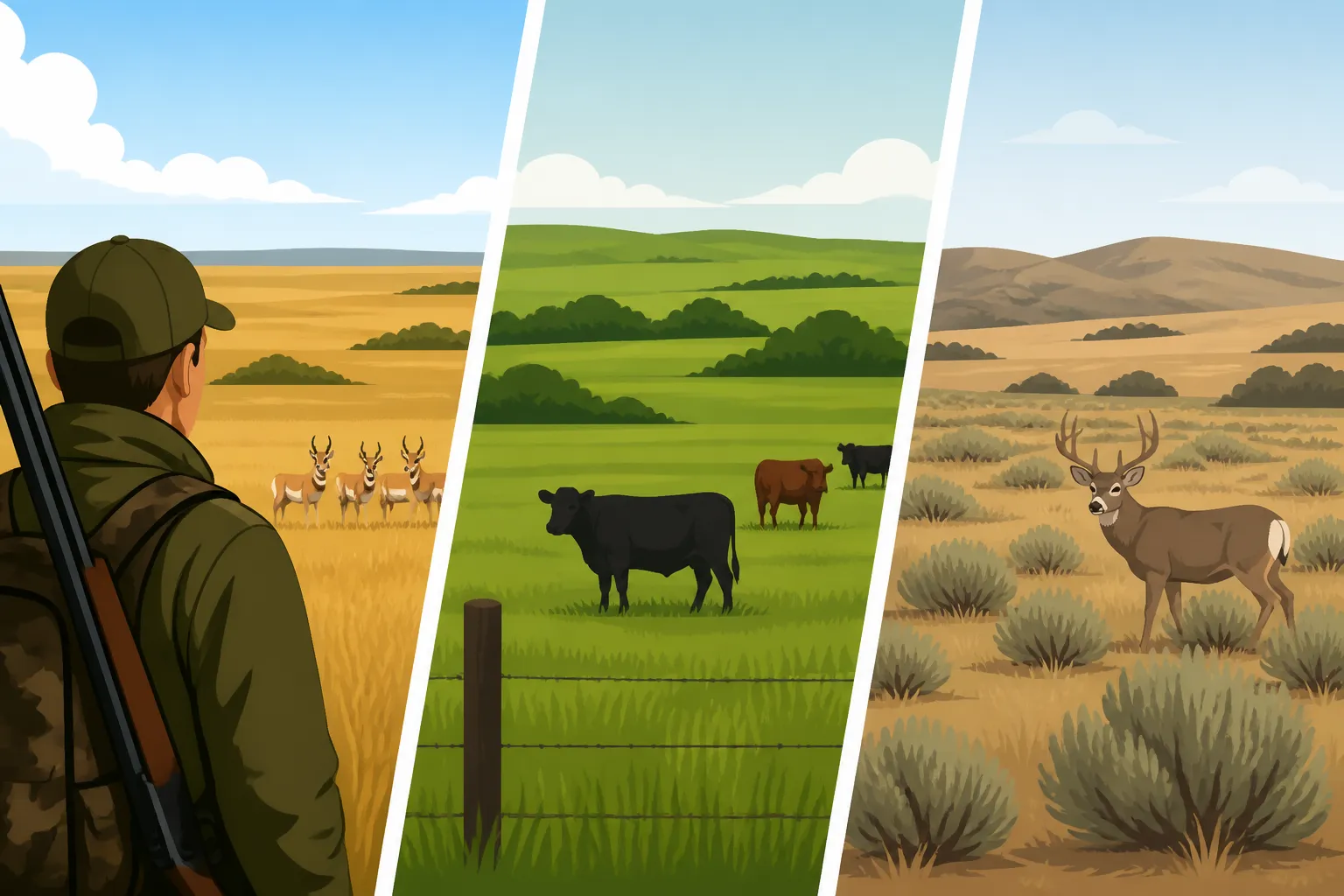
Saskatchewan’s Three Kinds of Community Pasture
Hunting in Saskatchewan often conjures images of endless stubble fields or dense boreal forest, but a significant portion of the landscape, especially in the transitional zones, falls under a unique category: community pastures. For many hunters, these vast tracts of land can be a real head-scratcher when it comes to understanding access, who manages them, and what kind of hunting opportunities they present. It’s not simply public land, nor is it strictly private, and this guide is here to untangle the complexities of Saskatchewan’s three primary kinds of community pastures, helping you navigate them for your next hunting adventure.
Understanding Saskatchewan's Community Pastures and Their Unique Role
Community pastures are a fascinating and vital part of Saskatchewan's agricultural and ecological landscape. They are essentially large areas of land, often thousands of acres, that were originally set aside for grazing livestock, primarily cattle, for multiple local patrons. While their primary purpose has always been agricultural, their sheer size and contiguous nature mean they often provide exceptional wildlife habitat, creating unique opportunities and challenges for hunters.
More Than Just Grass: Habitat and Wildlife Value
Think about it: huge expanses of native prairie, mixed grasslands, or aspen bluffs, often bordered by croplands, undisturbed by cultivation for decades. This creates incredible biodiversity. These pastures frequently contain a mosaic of habitats – grasslands, willow bluffs, sloughs, and creek bottoms – that serve as crucial bedding, feeding, and fawning grounds for everything from white-tailed deer and mule deer to sharp-tailed grouse and Hungarian partridge. The lack of intensive farming on these lands means a more stable environment for wildlife, often allowing animals to grow older and larger, especially whitetails in the aspen parkland belt. Why Saskatchewan Bucks Grow So Large
These areas act as ecological anchors in many agricultural landscapes, providing refugia for species that struggle in heavily cultivated areas. Hunters often overlook them, assuming they're just "cow pastures," but beneath the grazing herds lies a vibrant ecosystem that supports a remarkable array of game animals. The historical context of their management has often meant less human disturbance than surrounding private lands, making them excellent locations to scout for undisturbed wildlife.
The Evolution of Public Access on These Lands
Access to community pastures has always been a point of discussion. Historically, many assumed a broad public access right due to their "community" nature, but the reality is more nuanced. Over time, as management structures shifted and local groups took over, the rules around recreational access have evolved. It’s not like simply walking onto Crown land; there are specific protocols and permissions often required, depending on which of the three types of community pasture you’re looking at.
This evolution is driven by the need to balance livestock operations, ecological health, and public recreational use. Land managers, whether federal, provincial, or local, have a responsibility to the land and the patrons who depend on it. This means that hunters need to approach these lands with respect and a clear understanding of the rules, which can vary significantly even between adjacent pastures. The key is to never assume access; always do your homework and make contact.
Federal Community Pastures: A Transition to New Management
For decades, many of Saskatchewan's largest and most well-known community pastures were managed by the federal government under the Prairie Farm Rehabilitation Administration (PFRA). These were vast tracts, some over 100,000 acres, established to rehabilitate drought-stricken land and provide grazing for local farmers. When the PFRA program was dissolved, it led to a significant shift in how these lands are managed and accessed today.
A Rich History: The P.F.R.A. Era
The PFRA pastures were iconic. Established during the Dirty Thirties, they were designed to prevent further soil degradation and provide a stable grazing resource for farmers. They were a testament to large-scale land management, often employing professional pasture managers and extensive infrastructure like fences, corrals, and dugouts. From a hunter's perspective, these lands were often excellent. Their size meant minimal pressure in many areas, and the blend of native grass, brush, and water held significant populations of deer, antelope, and upland birds. These pastures are part of the legacy of conservation and land stewardship in the province, and their impact on both agriculture and wildlife is still felt today.
During the PFRA era, general recreational access was often permitted, though certain rules applied. This history has led many older hunters to assume similar, easy access to all community pastures, which is no longer the case. The winding down of the federal program truly marked the end of an era and ushered in a new chapter of decentralized management.
The Transition to New Management Entities
When the federal government divested itself of the PFRA pastures, the land was primarily transferred to the Province of Saskatchewan, which then, in turn, often leased the management to local patron groups, First Nations, or other entities. This transition was a huge undertaking and resulted in a patchwork of new management structures. Some pastures became provincially managed, while others became patron-managed.
This shift created a complex landscape for hunters. What was once a relatively uniform system under the PFRA became a diverse collection of individually managed operations, each with its own nuances regarding access and regulations. Understanding these new entities is crucial because the "who to ask" question became much more localized and specific.
Understanding Access on Former Federal Lands
Today, if you're looking at a former federal PFRA pasture, you'll need to figure out who is currently managing it. If the land was transferred to the province and remains under provincial oversight, it will likely fall under the provincial community pasture rules. However, many were leased to local groups of patrons (the farmers who graze cattle there), and these often operate as patron-managed pastures. Hunting a Federal Pasture Section
The key takeaway is that the federal government no longer directly manages these lands, nor do they set access rules. You cannot assume blanket access. You must identify the current management entity and seek permission from them directly. Using mapping tools like onX Hunt or GoHunt can be incredibly helpful here, as they often have updated land ownership and management overlays, helping you identify who holds the lease or manages the specific parcel you're interested in. Without this due diligence, you risk trespassing, which is something no hunter wants to do. Reading Saskatchewan Crown Land Layers on onX
Provincial Community Pastures: Managed for Multiple Uses
Beyond the former federal lands, Saskatchewan also has a number of community pastures that are directly managed by the provincial government, typically under Saskatchewan Agriculture. These pastures are managed with both agricultural production and environmental stewardship in mind, providing a somewhat clearer pathway for hunters, but still requiring permission.
Managed by Saskatchewan Agriculture
These provincial pastures are managed by regional offices of Saskatchewan Agriculture, often with a dedicated pasture manager overseeing operations. Their mandate includes sustainable grazing practices, weed control, and maintaining infrastructure, while also recognizing the ecological value of these lands. Because they are directly managed by the province, the general framework for recreational access tends to be more consistent than with privately managed entities, but it is not entirely open.
The managers are focused on the health of the pasture and the well-being of the livestock. Any recreational activity, including hunting, must not interfere with these primary objectives. This is where communication becomes paramount – understanding their schedule, where cattle are grazing, and any specific areas that might be sensitive during your hunt.
Permits and Regulations for Recreational Users
For provincial community pastures, hunters typically need to contact the pasture manager to request permission. This isn't just a courtesy; it's often a requirement. Managers need to know who is on the land, when, and for what purpose, to ensure safety for both hunters and livestock, and to prevent conflicts with agricultural operations. Some provincial pastures might have specific permit systems or designated access points.
It’s not uncommon for these pastures to have specific regulations regarding vehicle use, no-hunting zones near corrals, or restrictions during certain times of the year, such as calving season. Being upfront about your intentions and respecting their rules will go a long way in securing access for future hunts. Remember, you are a guest on these lands, even if they are provincially managed. Contacting a Pasture Manager for Access
Working with Pasture Managers
Building a good relationship with a pasture manager is key to consistent access. Call ahead, introduce yourself, explain what you're hoping to hunt, and ask about any specific concerns they might have. They often have an intimate knowledge of the land and the wildlife on it, and can even offer valuable insights into game movement or areas to avoid.
For example, a manager might tell you that the mule deer tend to bed in a particular coulee on the far side, but the cattle are currently grazing that area, suggesting you try a different part of the pasture that day. This kind of local knowledge is invaluable. Be flexible, be courteous, and always follow through on any agreements made, like calling when you're leaving or if you harvest an animal. Your conduct reflects on all hunters.
Patron-Managed Community Pastures: Local Control, Local Access
This is perhaps the most common, and sometimes the most challenging, type of community pasture for hunters to navigate. Patron-managed pastures are those that are leased from the province by local groups of farmers and ranchers (the "patrons") who then manage the pasture themselves for their livestock. While the land is still technically Crown land, the day-to-day management and, crucially, access permissions, are entirely at the discretion of the patron group.
The Role of the Local Patron Group
In a patron-managed pasture, a board or committee of local ranchers oversees the operation. They hire a pasture manager, make decisions about stocking rates, infrastructure, and all other aspects of the pasture's use. Their primary concern is the welfare of their cattle and the profitability of their operations. Because the land is leased to them, they have significant control over who comes onto the property and for what reason.
This model fosters strong local ownership and responsibility but means that access for hunters isn't guaranteed and requires direct engagement with the local group. It’s not just a matter of showing up; it’s about understanding their operations and respecting their investment in the land.
Direct Contact and Building Relationships
To hunt a patron-managed community pasture, you absolutely must get permission from the local patron group or their designated manager. This is essentially like getting permission to hunt on private land. You'll need to find out who the contact person is for that specific pasture – this might involve calling the local R.M. (Rural Municipality) office, asking at a local co-op, or looking for signs posted at pasture entrances. Getting Private Land Permission in Saskatchewan
A face-to-face conversation, or at least a phone call, is almost always necessary. Explain your intentions, offer to share your contact information, and ask about their specific rules or concerns. Be prepared for a "no," as some groups may have policies against hunting, or may simply prefer not to have recreational users on the land due to liability concerns or conflicts with their livestock operations. However, a polite, respectful approach often yields positive results, especially if you can demonstrate you understand their concerns and will be a responsible user.
Varying Rules and Expectations
The rules and expectations on patron-managed pastures can vary wildly from one pasture to the next. Some might be quite open to responsible hunters, asking only for a phone call before you arrive. Others might have very strict rules, allow access only to local residents, or forbid hunting entirely. It truly is on a pasture-by-pasture basis.
For instance, one patron group might allow archery hunting for deer but prohibit rifle hunting during the cattle-gathering season, while another might be fine with bird hunting but not big game. Always clarify:
- What species are you allowed to hunt?
- Are there specific areas to avoid?
- Are there any dates or times when access is restricted?
- What are the rules for vehicle access?
- Do they want a call when you're done?
The more you understand and respect their specific requests, the better your chances of gaining and retaining access.
Navigating Access on Community Pastures
Understanding the different types of community pastures is the first step; the next is knowing how to practically gain access. This involves a combination of modern tools and old-fashioned courtesy.
Leveraging Mapping Tools: onX Hunt and GoHunt
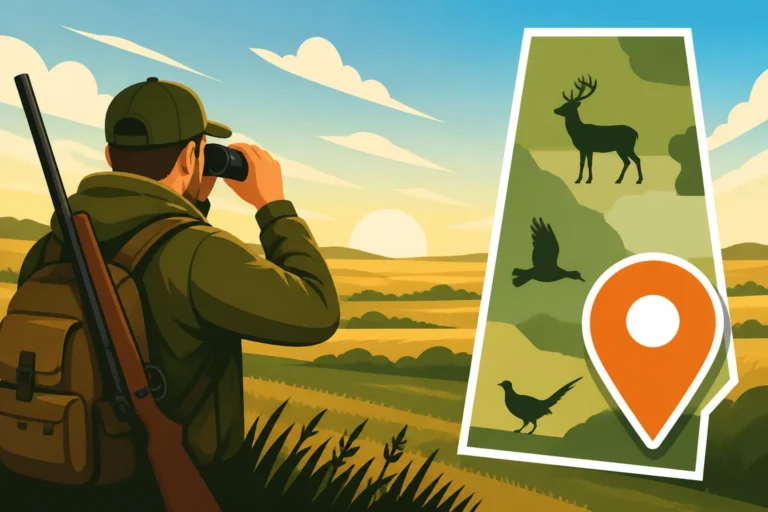
Modern mapping applications are an absolute game-changer for hunters trying to decipher land ownership and management in Saskatchewan. Tools like onX Hunt and GoHunt often provide layers that differentiate between Crown land, various types of private land, and sometimes even highlight specific community pastures. While they might not tell you who the specific pasture manager is for a patron-managed pasture, they will at least identify the land as a community pasture or leased Crown land, indicating that further investigation is required.
These apps allow you to visually see boundaries, roads, and topography, helping you pinpoint exactly where you want to go and who you need to contact. You can mark potential access points, note areas where you've seen sign, and plan your approach while respecting boundaries. Before heading out, always use these tools to confirm the land status of your intended hunting area. Scouting With Satellite Imagery in Saskatchewan
The Importance of "Knocking on Doors"
Even with the best digital maps, nothing beats direct communication. For any community pasture – federal, provincial, or patron-managed – "knocking on doors" (or more likely, making phone calls) is essential. This means finding the contact information for the pasture manager or the local patron group and having a respectful conversation.
| Pasture Type | Management Entity | Hunter Access Protocol | Key Consideration |
|---|---|---|---|
| Former Federal (PFRA) | Provincial Ag or Local Patron Group | Identify current manager, seek permission directly. | Requires research to determine current manager. |
| Provincial | Saskatchewan Agriculture | Contact pasture manager, typically requires permission. | Generally more consistent rules, but still requires permission. |
| Patron-Managed | Local Patron Group | Contact patron group/manager, treat like private land access. | Rules vary widely; relationship-building is crucial. |
This direct interaction not only secures your permission but also helps build positive relationships between hunters and landowners/managers. Many farmers and ranchers are keen hunters themselves and appreciate the respect shown. It’s also an opportunity to ask about livestock locations, gates that need to be closed, or recent wildlife activity they might have observed. Knocking on Doors in Saskatchewan Farm Country
Understanding Posted Land Signs
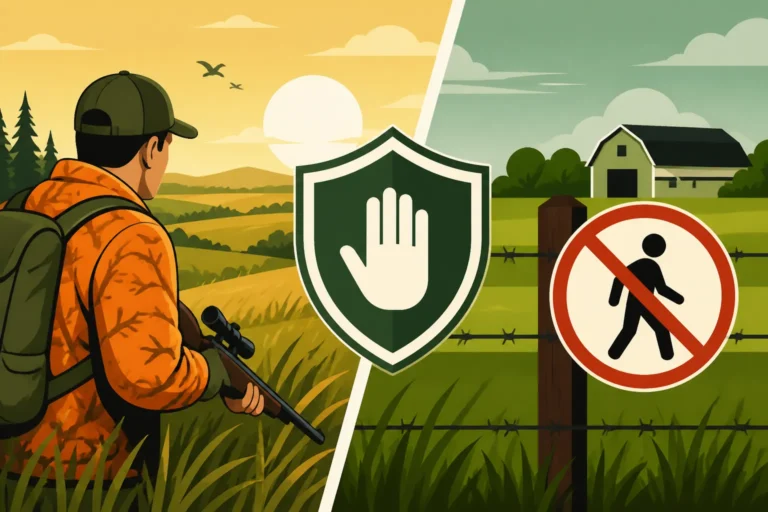
Like any other land in Saskatchewan, community pastures can have posted land signs. These signs, whether on private property or Crown land under lease, signify that permission is required for entry. Saskatchewan Posted Land Sign Rules It’s vital to understand what these signs mean and to respect them. A "No Hunting" sign means exactly that. A "Permission Required" sign means you must seek and obtain permission before stepping foot on the property.
Even if you think a certain pasture has generally open access, if you see a "Posted Land" sign, it overrides any assumptions. Always look for signs at all primary access points. Ignoring these signs is trespassing, which carries penalties and severely damages the reputation of all hunters. Responsible hunters always respect posted land and secure permission.
Hunting Strategies for Community Pastures
Once you’ve gained permission to hunt a community pasture, you’ll find that these areas offer some truly unique and rewarding hunting experiences. However, their specific characteristics often require different strategies than those you might employ in dense bush or across vast crop fields.
Species You'll Encounter: Whitetails, Mule Deer, and Birds
Community pastures, particularly those in the aspen parkland or southern prairie, are prime habitat for a variety of game species. White-tailed deer are often abundant, finding excellent cover in willow bottoms and aspen bluffs within the pasture, and then feeding in adjacent agricultural fields. Hunting Whitetails on Saskatchewan Farmland You might also find good numbers of mule deer, especially in the more open, rolling coulee country of the southwest. Mule Deer Hunting Saskatchewan's Prairie
Beyond big game, these pastures are fantastic for upland birds. Sharp-tailed grouse thrive in the native grasslands, often flushing from denser patches of cover or along brushy draws. Hungarian partridge can be found along the edges of cultivated fields bordering the pasture, or hunkered down in the pasture's thicker grass. Waterfowl, particularly ducks, will use the numerous potholes and sloughs scattered throughout many pastures. Each species requires a slightly different approach, but the habitat diversity within a single pasture can make for a great mixed-bag hunt.
Approaching the Landscape: Open Country Tactics
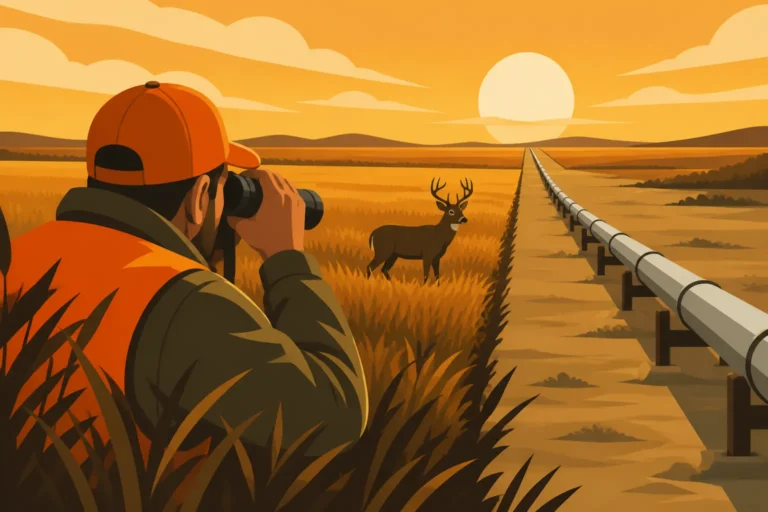
Many community pastures are characterized by expansive, open terrain. This means spot-and-stalk hunting often comes into play, especially for mule deer or for trying to get on a whitetail buck that’s bedded down in a distant bluff. Glassing is paramount; spend time with good binoculars or a spotting scope, searching for deer or elk at long distances, especially at first light and last light. Spot-and-Stalk Mule Deer in Saskatchewan
For upland birds, covering ground on foot is usually the best approach, often working into the wind. Walk out fingers of brush, slough edges, and thick grass patches where birds might hold. Be prepared for long walks and bring plenty of water. If permitted, a good pointing or flushing dog can be an invaluable asset in these open, often vast areas, helping to locate birds and retrieve downed game in thick cover.
Respecting Livestock and Infrastructure
This cannot be stressed enough: when hunting on community pastures, you are sharing the land with active agricultural operations. This means respecting livestock, fences, and other infrastructure is non-negotiable. Always be aware of where cattle are grazing and give them a wide berth. Never shoot towards or near livestock. If you encounter a fence, use a gate if available, or cross carefully without damaging the wires. Always close gates behind you, even if you found them open.
Vehicles often have restricted access, and if you are permitted to drive on the pasture, stick to established trails. Leave no trace of your presence – pack out all your garbage, spent casings, and any other items you bring in. Remember, the continued privilege of hunting these unique lands rests entirely on the ethical and responsible behavior of every hunter. Treat the pasture, its livestock, and its managers with the utmost respect, and these valuable hunting grounds can remain accessible for years to come. Quad and Side-by-Side Rules on Crown Land
Disclaimer
This article is for general informational purposes only and does not constitute professional advice. Laws, prices and regulations vary by location and change over time. Consult a qualified professional for guidance on your specific situation.