Group Size and Hunter to Guide Ratio
Planning a guided hunting trip to Saskatchewan brings with it a whole host of considerations, and one that often catches folks off guard is the subtle yet significant impact of your group size and the hunter-to-guide ratio. It’s not just a number on a booking sheet; it profoundly affects everything from the individual attention you receive to the flexibility of your hunt. This guide will help you unpack what these ratios truly mean for your next Saskatchewan adventure, ensuring you choose an experience that aligns perfectly with your expectations.
Understanding Hunter to Guide Ratios in Saskatchewan
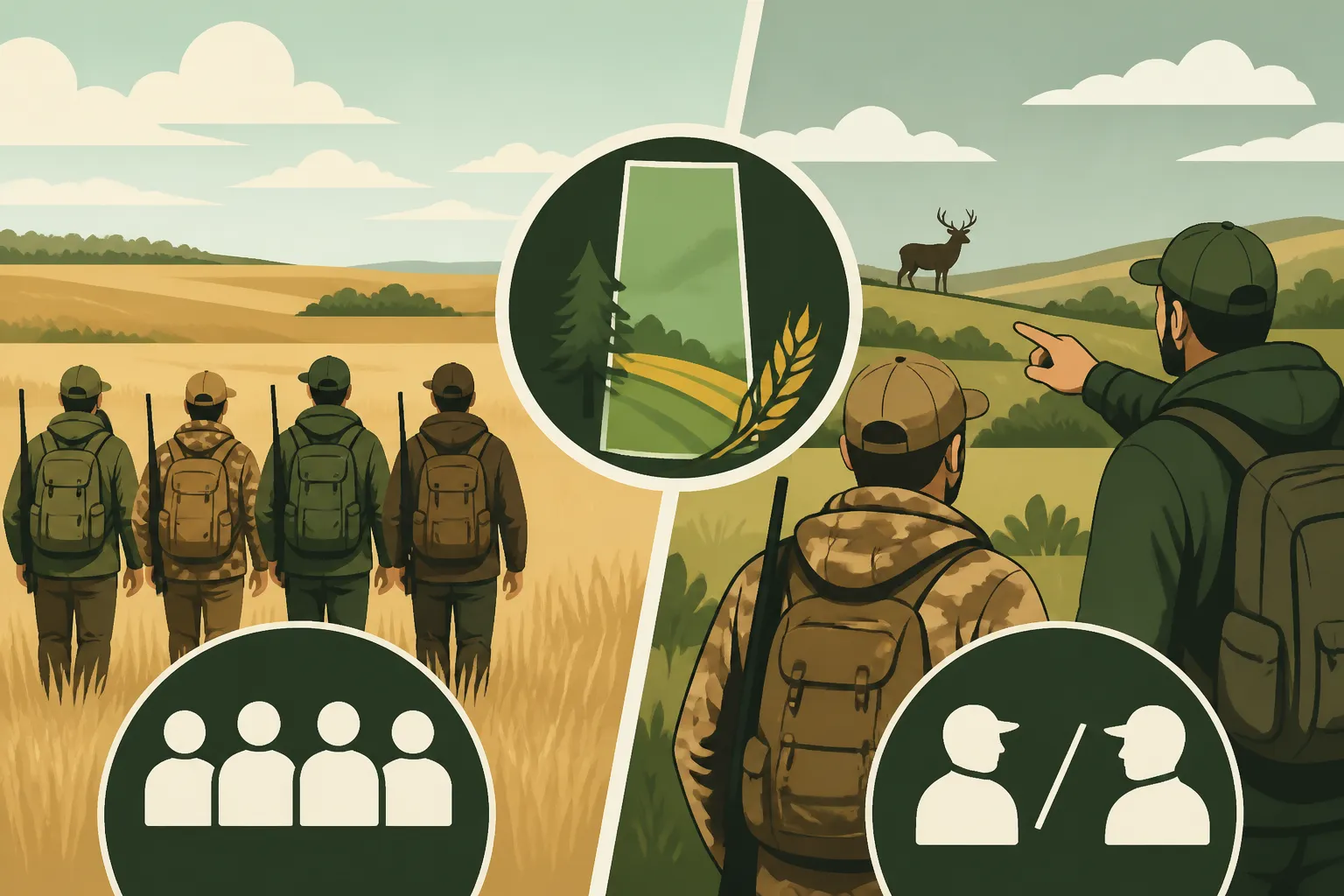
When you're looking at booking a guided hunt, whether it's for whitetails in the Parkland or black bears up north, you'll inevitably come across terms like "1:1 ratio" or "2:1 ratio." These numbers are absolutely critical because they define the dynamic of your hunt. Simply put, the hunter-to-guide ratio tells you how many hunters are assigned to a single guide. It's a fundamental aspect of any guided experience, dictating the level of personal attention, the flexibility in hunting styles, and even the pace of your days in the field.
Think about it this way: if you're a first-time hunter, or perhaps someone who truly values having an expert right beside them every step of the way, a 1:1 ratio offers an unparalleled level of dedicated support. The guide's entire focus is on you, your needs, and maximizing your opportunities. On the other hand, a 3:1 or even higher ratio might mean a more shared experience, which can be great for camaraderie but might require a bit more independence from each hunter. This balance is something you absolutely need to consider when looking at different outfitter packages on platforms like BookYourHunt, where various options are often laid out clearly.
The choice of ratio isn't just about the numbers; it's about the quality of the experience you're after. Some hunters prefer the solitude and focused approach that a low ratio provides, while others thrive in a more social group setting, even if it means less direct, constant supervision. Knowing what you want out of your hunt before you even start looking at Saskatchewan Hunting Licences and What They Cost will save you a lot of time and potential disappointment.
What the Numbers Actually Mean for Your Hunt
Let's break down these ratios a bit more practically. A "1:1" ratio means one hunter per one guide. This is often seen as the premium experience, offering the highest degree of personalization. Your guide is literally your shadow, your mentor, and your spotter. They're there to cater to your specific hunting style, whether that's slow-and-steady still-hunting through thick bush for a White-Tailed Deer, Saskatchewan's Signature Animal or setting up a ground blind for a black bear.
When you see "2:1," it means two hunters share one guide. This is a very common and popular option, especially for pairs of friends, spouses, or a parent-child duo. It offers a good balance between personalized attention and a more economical price point. The guide splits their time and focus between the two hunters, often working in tandem to spot game or coordinate stalks. While you still get significant attention, it's naturally not as intense as a 1:1.
For "3:1" or even higher ratios (say, 4:1 for certain types of bird hunts), you're looking at a scenario where three or more hunters are with a single guide. This setup tends to be more budget-friendly and is excellent for larger groups of friends or family who enjoy sharing the hunting experience. However, the guide's attention is spread thinner, and hunters might need to be more self-reliant or willing to adapt to group decisions on strategy and location. This might be perfectly fine for Field Hunting Geese in Saskatchewan Stubble, where multiple hunters are set up in a large spread, but less ideal for a nuanced stalk on a mature whitetail buck.
The specific implications vary greatly depending on the species and method. For instance, in a duck or goose blind, a 3:1 or 4:1 ratio works seamlessly, as the guide is primarily managing decoys, calling, and ensuring safety, with individual shooting opportunities presenting themselves to all. However, if you're stalking Mule Deer Across Saskatchewan's Prairie in coulees, a 1:1 or 2:1 ratio becomes far more critical for quiet movement, precise communication, and minimizing disturbance.
Common Ratios and Their Implications
The hunter-to-guide ratio profoundly shapes the very fabric of your hunting trip. It influences everything from the tactical decisions made in the field to the overall atmosphere back at camp. Understanding the nuances of each common ratio can help you set realistic expectations and ensure your investment leads to the experience you're dreaming of. Many outfitters offer different packages tied to these ratios, so it's worth digging into the details of what each entails.
One-on-One Guiding: The Ultimate Personalized Hunt
The 1:1 hunter-to-guide ratio is often considered the gold standard for many big game hunts, particularly for challenging species or if you're seeking a highly immersive, educational experience. With a dedicated guide whose sole focus is on you, the opportunities for personalized instruction, strategic discussion, and adaptability in the field are maximized.
Imagine you're on a Whitetail Hunting in Saskatchewan trip. With a 1:1 guide, every move you make, every piece of sign you find, can be discussed and analyzed in real-time. If you spot a buck across a field that needs a careful stalk, your guide can devote their full attention to guiding your approach, judging the wind, and communicating silently. There's no need to consider another hunter's pace, preferences, or physical capabilities. This individual attention is invaluable for newer hunters who are still learning the ropes, as the guide can act as a constant mentor, helping with everything from reading terrain to refining shooting positions. For experienced hunters, it means the guide can fully align with your specific trophy goals or preferred hunting methods, whether that's sitting all day in a blind or covering ground aggressively. The drawback, of course, is typically the higher cost, as you're essentially paying for the guide's exclusive time and expertise. This premium service means you're not splitting the guide's time or resources with anyone else, leading to a much more focused and tailored adventure.
Two-on-One Guiding: Balancing Partnership and Economy
The 2:1 hunter-to-guide ratio is a sweet spot for many hunters, especially those traveling with a friend, family member, or a hunting partner. It offers a commendable balance between personalized attention and a more accessible price point compared to a 1:1 setup.
In a 2:1 scenario, the guide works with two hunters simultaneously. This can be fantastic for camaraderie, allowing you to share the experience directly with someone you know. For instance, if you and a buddy are Hunting Saskatchewan's November Rut for whitetails, your guide might set you both up in adjacent stands overlooking a prime travel corridor, or strategically position you for a simultaneous push through a small bluff. The guide will split their time, attention, and effort between both hunters. This means that while you still get significant individual interaction and guidance, it won't be as continuous as a 1:1 hunt. Flexibility in the field might be slightly reduced, as the guide needs to consider the needs and opportunities for two individuals. However, the shared experience can also be a huge advantage. You have someone else to share the anticipation with, discuss strategies, and celebrate successes. For many, this partnership aspect enhances the overall enjoyment of the trip without sacrificing too much of the guided experience. It's often an excellent choice for hunting methods where two sets of eyes are better than one, such as glassing Mule Deer Hunting Saskatchewan's Prairie from a high point, with the guide coordinating the stalk for both hunters once game is spotted.
Group Guiding (3:1 and Up): Community and Cost-Effectiveness
When you see ratios of 3:1 or even higher, you're generally looking at a more communal hunting experience. These larger group ratios are often the most budget-friendly option and are particularly well-suited for specific types of hunting, or for larger groups of friends or clubs traveling together.
Consider a typical Waterfowl Hunting Saskatchewan's Grain Fields trip. It's common to have a single guide managing a spread of dozens or even hundreds of decoys for three, four, or even more hunters in a large blind. The guide's role shifts slightly from direct, constant instruction to managing the overall logistics, calling birds, ensuring safety, and coordinating the hunt. Individual hunters are expected to be more self-sufficient in terms of their shooting and understanding the flow of the hunt. While the direct, one-on-one attention is significantly reduced, the shared experience can be incredibly rewarding. The cost per hunter is typically lower, making it an attractive option for groups. This setup is less common for big game hunts that require intricate stalks or precise positioning for individual animals, like Moose Hunting Saskatchewan's Farmland and Forest, where a guide might need to focus intently on a single hunter's shot opportunity. However, for certain big game applications, such as still-hunting large tracts of land where hunters are spread out but operating under a guide's general direction, a larger ratio might be feasible. The key takeaway here is that larger ratios prioritize shared experience and affordability, and hunters should be prepared for a more independent role within the guided framework.
| Hunter to Guide Ratio | Pros | Cons | Best Suited For |
|---|---|---|---|
| 1:1 | Maximum individual attention; Tailored experience; High flexibility; Ideal for novice hunters or specific trophy goals | Highest cost; Can feel isolated for some | Big game (whitetail, bear, moose); First-time hunters; Stalking/Spot-and-stalk; Highly specific hunting styles |
| 2:1 | Good balance of attention & cost; Excellent for partners/friends; Shared experience | Less individual attention than 1:1; Slight reduction in flexibility; Requires coordination between hunters | Big game (deer, elk); Couples/duos; General guided experience |
| 3:1+ | Most cost-effective; Great for large groups/camaraderie; Social atmosphere | Minimal individual attention; Less flexibility; Hunters need to be more self-reliant | Waterfowl (ducks, geese, cranes); Upland birds (grouse, huns); Predator calling; Budget-conscious groups |
Factors Influencing Your Ideal Ratio
Choosing the right hunter-to-guide ratio isn't a one-size-fits-all decision. It hinges on a variety of personal and practical factors that combine to define what kind of hunting trip will truly satisfy you. Before you start looking at different outfitters or putting down a deposit, take some time to genuinely assess what's most important for your Saskatchewan adventure. This internal reflection can save you from potential frustrations down the line.
Your Budget and How It Shapes Options
Let's be realistic: money talks, and your budget is often the most significant factor in determining your hunter-to-guide ratio. Generally, the more personalized the experience, the higher the cost. A 1:1 guided hunt provides exclusive access to a guide's time, knowledge, and effort, which naturally comes at a premium. Outfitters factor in their guides' wages, insurance, equipment, vehicle use, and the logistical complexities of dedicating one person entirely to one client. As the ratio increases (2:1, 3:1, etc.), the cost per hunter typically decreases, as you are essentially sharing the expense of that guide's services with other hunters.
For instance, a solo hunter on a tight budget might find a 2:1 or even 3:1 package more appealing, as it allows them to participate in a guided hunt that might otherwise be out of reach. Conversely, if your budget allows for it, investing in a 1:1 ratio can provide an unparalleled level of dedicated service that many hunters find invaluable, especially if it's a once-in-a-lifetime trip or a hunt for a specific trophy animal like the Why Saskatchewan Bucks Grow So Large. It's crucial to be upfront with yourself about what you're willing and able to spend, and then look for outfitters that offer packages within that range. Platforms like BookYourHunt or GoHunt are excellent resources for comparing different packages and understanding the typical What a Saskatchewan Guided Hunt Costs associated with various ratios. Just remember, while a lower ratio might seem like a bargain, make sure it aligns with your other expectations for the hunt.
Hunting Style and Species Considerations
The type of hunting you plan to do, and the species you're pursuing, play a huge role in determining the optimal hunter-to-guide ratio. Some hunting methods inherently lend themselves better to certain ratios than others.
For example, if you're planning a spot-and-stalk hunt for Mule Deer Hunting Saskatchewan's Prairie across vast open coulees, a 1:1 or 2:1 ratio is almost essential. This allows the guide to focus intensely on spotting game, planning a precise approach, and moving silently with minimal hunters to manage. Trying a nuanced stalk with three or more hunters and one guide can quickly become a logistical nightmare, increasing the chances of being spotted or making too much noise. Similarly, if you're specifically targeting a trophy-class animal and need a highly focused, patient approach, a 1:1 ratio provides the dedication required for success.
Conversely, for high-volume hunts like waterfowl, a higher ratio (3:1, 4:1, or even more) often works perfectly. When you're in a large decoy spread, waiting for waves of ducks or geese to commit, the guide's primary role is calling, managing the spread, and ensuring everyone is safe and ready. Individual instruction on shooting is minimal, as the opportunities come fast and furious. Similarly, for a stationary hunt like Baiting Black Bear in Saskatchewan from a stand, one guide can often oversee multiple baits and check in with different hunters throughout the day, as the action at each site is independent.
Think about the physical demands and the specific techniques involved. Is it a quiet, stealthy pursuit? Or is it more about waiting and shooting opportunities? Your answers will guide you toward the most appropriate ratio.
Experience Level and Expectations
Your own hunting experience, and that of anyone in your group, is another critical factor. A seasoned hunter who has many successful trips under their belt might be perfectly comfortable with a 2:1 or 3:1 ratio, perhaps even enjoying the added independence. They might not need constant guidance on fieldcraft, shot placement, or reading game sign. For them, the guide's role might be more about access to prime hunting land, scouting, and general logistical support.
However, if you're a novice hunter, or perhaps someone bringing a youth hunter along for their first big game experience, a 1:1 ratio can be incredibly beneficial. It provides consistent instruction, immediate feedback, and a much safer, more controlled learning environment. The guide can teach everything from proper gun handling in the field to ethical shot placement and Meat Care in Saskatchewan's Cold Snaps after the animal is down. For a new hunter, having that dedicated mentor right beside them can make all the difference between a frustrating trip and a lifelong passion. Many outfitters offer Saskatchewan Youth and Mentored Hunting programs, which often implicitly or explicitly lean towards lower ratios for a better learning experience.
Beyond experience, consider your expectations. Are you seeking solitude and intense focus on a single animal? Or are you looking for a fun, social trip with friends where the shared experience is paramount? Your answer will strongly influence whether a low-ratio, high-attention hunt or a higher-ratio, more communal adventure is right for you. It's really about knowing yourself and what kind of satisfaction you derive from the hunt.
Making the Right Choice for Your Group
Deciding on the perfect hunter-to-guide ratio for your Saskatchewan hunt requires honest communication within your group and clear questions for any potential outfitter. It's about aligning expectations and ensuring everyone is on the same page before you commit. This due diligence can transform a good hunt into a truly great one.
Communicating Within Your Group
Before you even start looking at outfitters, sit down with your hunting partners and talk openly about what each person expects from the trip. This conversation should cover:
- Individual Goals: Is someone looking for their absolute dream buck, while another is simply happy to harvest any legal animal? Do some want a lot of hands-on guiding, while others prefer more independence?
- Budget Comfort Zones: Everyone needs to be honest about what they're willing and able to spend. This will immediately narrow down your options significantly.
- Desired Pace and Intensity: Does the group want an early-to-late hunt every day, or a more relaxed schedule? How physically demanding do you want the hunt to be?
- Experience Levels: Acknowledge the experience levels of all participants. If there's a wide disparity, a lower ratio might be beneficial to support less experienced hunters without holding back veterans.
Having these discussions upfront helps prevent misunderstandings and ensures everyone feels heard. If your group has wildly different expectations, it might even be worth considering splitting up into different ratio packages if the outfitter allows, or choosing an outfitter that caters to diverse needs. You can look at resources like GoHunt to research outfitters that specifically highlight their ability to customize experiences for various group dynamics.
Questions to Ask Potential Outfitters
Once you have a clear idea of your group's preferences, it's time to engage with outfitters. Don't be shy about asking detailed questions about their hunter-to-guide ratios and what that truly means in practice. Remember, Choosing the Right Saskatchewan Outfitter involves digging deep into their operation.
Here are some specific questions to pose:
- "What is your standard hunter-to-guide ratio for [specific species, e.g., whitetail deer]?" Get a direct answer, as some outfitters might offer variations.
- "If we choose a 2:1 ratio, how do you typically manage two hunters in the field? Are we usually hunting together, or are we split up?" This is crucial. Some 2:1 operations might have both hunters in the same blind or stand, while others might drop one hunter off and then take the other to a different location, rotating throughout the day.
- "What kind of individual attention can we expect with a [specific ratio]?" Ask them to elaborate on a typical day.
- "Do you offer 1:1 guiding, and if so, what is the additional cost?" Always ask, even if it seems expensive, to understand all your options.
- "How many hunters are typically in camp at any given time, and how many guides do you have on staff?" This gives you a sense of their overall operation size and how stretched their resources might be, even if your direct ratio is low.
- "Can we speak with references who have hunted with you at the ratio we are considering?" This is one of the best ways to get an honest, unbiased perspective. Ask about Asking a Saskatchewan Outfitter for References.
- "How do you handle situations where a hunter needs extra assistance or has unique needs within a given ratio?" This will reveal their flexibility and commitment to client satisfaction.
Remember, a good outfitter will be transparent and happy to answer these questions. If they're vague or reluctant, it might be a red flag. Clear communication upfront ensures that the hunter-to-guide ratio you choose aligns perfectly with the Saskatchewan hunting experience you envision. It's an investment, after all, and you want to ensure you're getting exactly what you pay for.
Disclaimer
This article is for general informational purposes only and does not constitute professional advice. Laws, prices and regulations vary by location and change over time. Consult a qualified professional for guidance on your specific situation.