Setting a Goose Spread in Swathed Barley
There's nothing quite like the sight of a thousand geese spiraling down into a field, but getting them to commit to your field, especially one as open and challenging as swathed barley, can feel like trying to win a chess match against nature's savviest strategists. Many hunters get frustrated with geese flaring at the last minute, convinced their spread isn't "right." This guide is all about breaking down the art and science of setting a goose spread in swathed barley, turning those frustrating flares into successful retrieves.
Understanding Goose Behavior in Swathed Barley
Hunting geese in Saskatchewan's vast agricultural landscape is a quintessential experience, and swathed barley fields are often prime real estate. But why do geese flock to them, and how does understanding their natural habits translate into a more effective hunting strategy?
Why Swathed Barley is a Magnet for Geese
Swathed barley fields are like a five-star buffet for migrating geese. When barley is swathed, it's cut and laid in rows to dry before combining. This process leaves a significant amount of grain on the ground, creating an easily accessible, high-energy food source. Geese, whether Canada geese, snow geese, or specklebellies, are constantly seeking out the most nutritious and readily available food to fuel their long migrations and sustain them through colder weather. Unlike standing stubble or even combined fields where some grain might be missed, swathed barley presents a concentrated, exposed feast.
Imagine being a goose that has flown hundreds of miles. You're hungry, and you see acres of delicious, carbohydrate-rich barley lying openly on the ground, ready for the picking. It's a low-effort meal in a relatively safe environment. The stubble provides just enough cover to break up their silhouettes slightly while feeding, and the open nature of these fields allows them a wide-ranging view for predators. This combination of abundant food and perceived safety makes swathed barley incredibly attractive, drawing in massive numbers of birds year after year. Understanding this fundamental draw is the first step in replicating an inviting scene for them.
Reading the Field and Flight Patterns
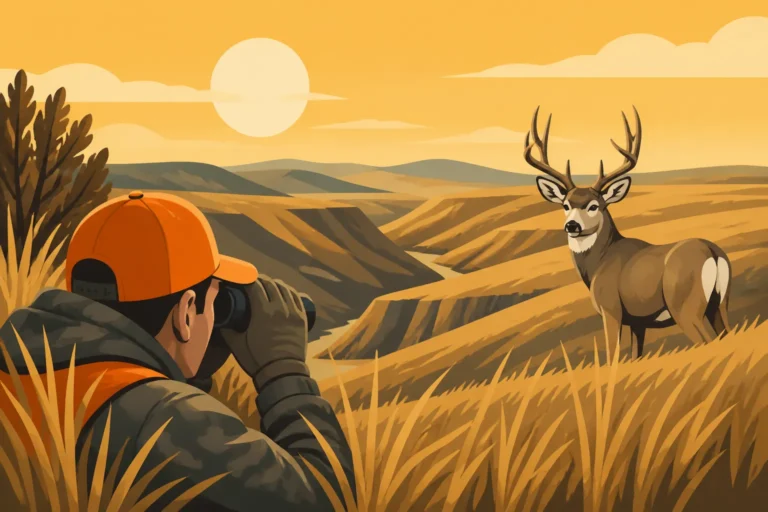
Before you even think about setting a single decoy, you need to become a detective. Geese are creatures of habit, and their patterns are often predictable if you know what to look for. Start by spending time observing the fields, ideally from a distance with good optics, to see exactly where birds are feeding and how they're approaching. You might spot them Scouting Fields for Saskatchewan Waterfowl from a few miles away. Look for "X" marks – the exact spots where geese are feeding. Pay attention to the wind direction, as geese almost always land and take off into the wind. This is a non-negotiable aspect of their flight, and it will dictate the orientation of your spread and your blind.
Observe their flight paths: Are they coming in from a specific lake or river? Do they hug a treeline or a section of bush before dropping into the field? Do they consistently land in one corner, or are they spread out? Are they Hunting a Swathed Grain Field at Dusk or in the morning? You'll notice certain entry and exit points. A prime feeding field will show evidence of geese everywhere: droppings, disturbed stubble, and perhaps even some feathers. Using a reliable mapping application like GoHunt can help you mark these precise locations and develop a plan based on the terrain. It’s not just about finding any geese, it’s about finding their preferred landing strip and dining room.
Timing Your Approach and Hunt
The timing of your hunt in a swathed barley field is crucial, almost as much as your setup. Geese typically feed twice a day: once in the early morning shortly after leaving their roost, and again in the late afternoon before heading back for the night. The morning flight is often the most consistent and aggressive, as birds are genuinely hungry. However, an afternoon hunt can also be incredibly productive, especially if you've patterned birds using a particular field for their second meal.
Your approach to the field needs to be stealthy and well-planned. If geese are already on the field, you've likely missed your chance for that particular flight. They have excellent eyesight and will spot any unusual movement or vehicle. Ideally, you want to be set up and concealed long before the first birds start moving from their roost. This often means waking up well before dawn, navigating in the dark, and patiently waiting for legal shooting light. Likewise, in the evening, you need to be in place well before the geese start returning. Respecting the geese's daily routine and maintaining a low profile are paramount to success. Don't rush, don't make noise, and absolutely don't skylight yourself or your vehicle on the skyline.
Essential Gear for Your Barley Spread
Once you've done your reconnaissance, it's time to gather the right tools for the job. The vast, open nature of a swathed barley field demands specific gear choices to ensure both realism in your spread and effective concealment for yourself.
Decoys: Silhouettes, Full-Bodies, and Wind Socks
When it comes to goose decoys, variety and quantity are your friends. A mixed spread often looks the most natural and appeals to different species.
- Full-Body Decoys: These are the most realistic, offering 3D realism that fools wary birds up close. They come in feeder, sentry, and rested poses, mimicking a relaxed flock. Full-bodies are expensive and bulky but are invaluable for the core of your spread, especially around your blinds. Brands like Avery Outdoors (now under Rogers Sporting Goods) and Final Approach make excellent, durable full-body decoys that stand up to the Saskatchewan elements.
- Shell Decoys: A more affordable and stackable option, shells provide some dimension without the bulk of full-bodies. They're great for adding numbers to your spread, especially in the mid-range. You can mix and match them with full-bodies to create a denser, more attractive pattern.
- Silhouette Decoys: These flat, 2D decoys are incredibly light, portable, and can be deployed in massive numbers. While not as realistic up close, they create the illusion of a huge flock from a distance, which is often enough to draw birds in. They are particularly effective for Hunting Saskatchewan's Snow Goose Migration where sheer numbers are key. Placing some silhouettes facing different directions adds to the realism of a dynamic, feeding flock.
- Wind Socks (Socks or Flyers): These flexible decoys catch the wind, creating subtle motion that breathes life into your spread. This movement is incredibly important in open fields like barley, as static decoys can look unnatural to discerning geese. You can use large numbers of these, especially for snow geese, to simulate a massive, bustling feed.
A good rule of thumb for Canada geese is to aim for at least 6-12 dozen decoys for a truly effective spread in open country. For snow geese, you might be looking at hundreds, if not thousands, of decoys to truly replicate a giant flock.
Here's a quick comparison of decoy types:
| Decoy Type | Realism | Portability | Cost (per dozen) | Best Use Case |
|---|---|---|---|---|
| Full-Body | High | Low | High | Core of spread, close to blinds, finishing birds |
| Shell | Medium | Medium | Medium | Adding bulk and density, mid-range attraction |
| Silhouette | Low | High | Low | Large numbers for distance, creating illusion of mass |
| Wind Sock/Flyer | Low | High | Low | Adding crucial motion, especially for snow geese |
Blinds and Concealment
Geese possess incredible eyesight, and in a wide-open swathed barley field, there's little natural cover to hide a human hunter. This is where specialized blinds become indispensable.
- Layout Blinds: These low-profile blinds allow you to lie flat on your back, becoming virtually invisible in the stubble. They are designed to blend seamlessly with the contours of the field, especially when brushed in with natural vegetation from the surrounding area. Modern layout blinds are comfortable, offer quick pop-up shooting positions, and protect you from the elements. Look for models with durable fabrics and sturdy frames that can withstand Saskatchewan's winds and cold. Brands like Avery, Final Approach, and Rogers Sporting Goods offer excellent options that are often camouflaged specifically for stubble fields.
- A-Frame Blinds: While more visible than layout blinds, A-frames can be incredibly effective, especially if you have a slight ditch, fence line, or larger swaths of uncut barley to help break up their outline. They provide more comfort and allow hunters to sit upright. The key with A-frames is meticulous brushing. You need to gather large amounts of barley stalks, straw, and any other natural vegetation to completely cover the blind, making it disappear into the field. If done correctly, a well-brushed A-frame can be surprisingly effective for Field Hunting Geese in Saskatchewan Stubble.
Regardless of your chosen blind, the most critical step is brushing it in. You need to collect actual barley swaths, stubble, and dirt to cover every inch of your blind, making it indistinguishable from the surrounding field. Any unnatural lines, shiny surfaces, or dark spots will be instantly flagged by circling geese. Don't be afraid to overdo it – you can never be too concealed.
Calls and Other Accessories
No goose hunt is complete without the ability to communicate with the birds.
- Goose Calls: A good goose call is more than just a noisemaker; it's an instrument that can mimic the entire range of goose vocalizations, from soft clucks and moans to excited honks and double-clucks. For Canada geese, a short-reed call is standard, allowing for precise control and realism. For snow geese, electronic calls are often legal and highly effective, creating the massive cacophony of a snow goose flock. Practice is key – a poorly used call can do more harm than good, scaring wary birds away.
- Flagging: A goose flag is a simple but incredibly effective tool for attracting attention from a distance and drawing birds closer. Mimicking the flapping wings of a landing goose, a flag can turn a hesitant flock toward your spread. Different types, like Canada goose flags or snow goose rags on poles, are available. Knowing when and how to flag—subtly for wary Canadas, aggressively for distant snows—is an art in itself.
- Headlamps: Essential for setting up in the dark and navigating the field before sunrise or after sunset. Choose a headlamp with a red light option to preserve your night vision and minimize disturbance to wildlife.
- Non-Toxic Shot: Remember, for migratory birds, you must use Non-Toxic Shot for Saskatchewan Waterfowl. Steel shot is the most common, but bismuth and tungsten are also excellent, albeit more expensive, alternatives. Make sure your shotgun is patterned correctly with your chosen non-toxic load.
- Warm Clothing: Saskatchewan weather can be unpredictable. Layers are always the answer, including thermal base layers, insulating mid-layers, and a waterproof/windproof outer shell. Hand warmers and insulated boots are also a must when sitting still in a layout blind for hours.
Designing and Laying Out Your Spread
The layout of your decoys is where strategy truly meets artistry. It's about creating a scene so convincing that approaching geese see no reason not to join what appears to be a happy, contented flock.
The Core Family Group Setup
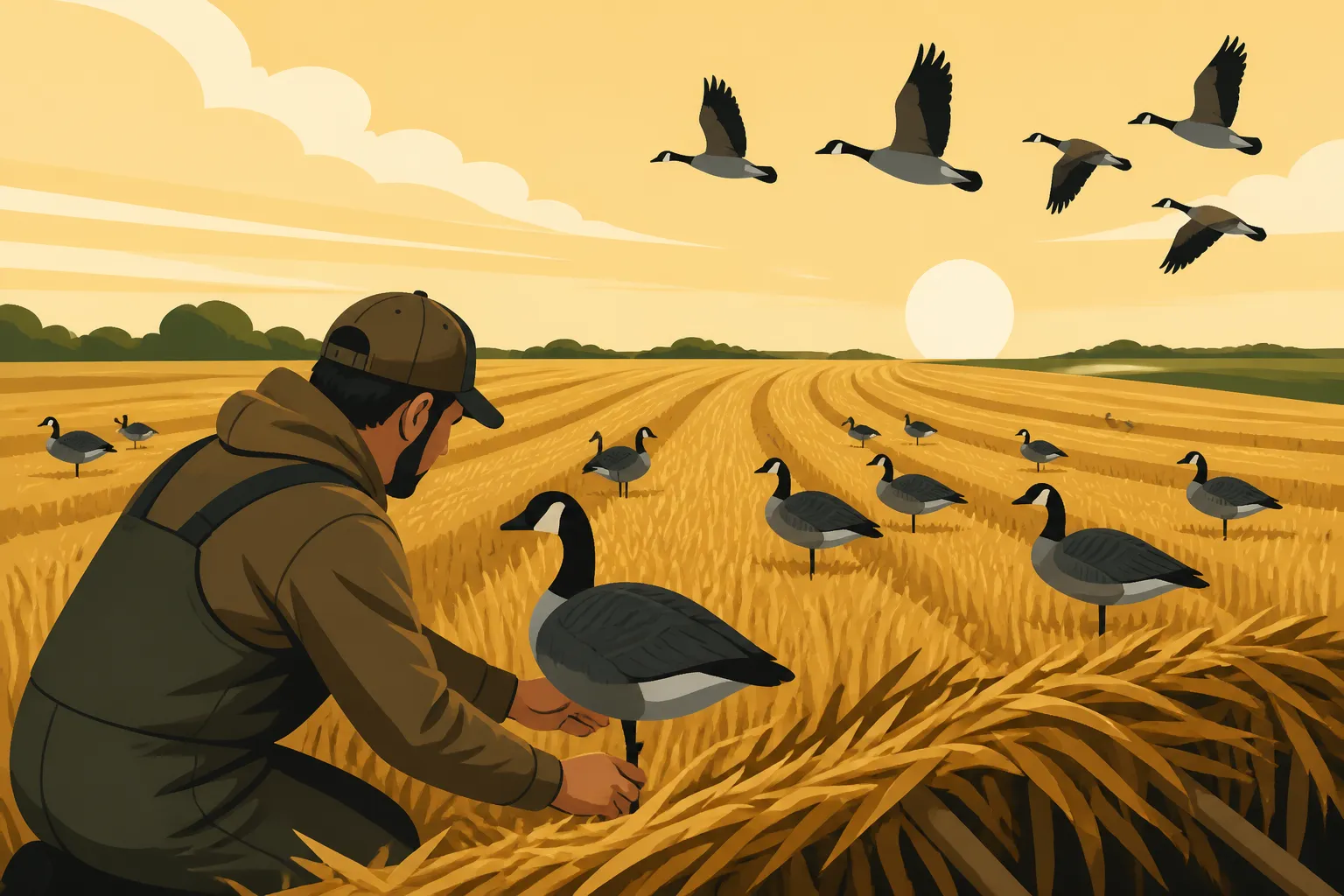
Geese are social animals, and they often travel and feed in family groups or small clusters. Your spread should reflect this natural behavior rather than a uniform, spread-out pattern. Start by establishing "family groups" of 3-6 decoys, placing them somewhat tightly together, mimicking how birds would naturally huddle while feeding. Mix up your full-body decoys here, including feeders, resters, and a couple of active head positions.
These family groups should be scattered throughout the prime feeding areas you identified during your scouting. The key is to avoid straight lines or perfect symmetry. Nature is messy, and your spread should reflect that. Think about how wind might push a small cluster of birds together, or how a family might claim a small patch of particularly good stubble. Some groups can be a little tighter, others a little looser, but always with a sense of purpose. This core setup makes up the bulk of your spread and creates the initial visual appeal for distant birds. When considering your overall strategy, remember to review the Saskatchewan Goose Season Dates to ensure you're hunting within legal periods.
Adding Feeder and Sentry Decoys
Beyond the core family groups, you need to add specific decoy types to enhance the realism and draw.
- Feeder Decoys: The vast majority of geese in your spread should be in feeder positions, heads down, bottoms up. This is the most reassuring pose for approaching geese – it signals that the area is safe and full of food. Sprinkle these liberally between and around your family groups, always maintaining that natural, somewhat random look. These feeder decoys are particularly crucial in swathed barley, reinforcing the idea of a rich food source.
- Sentry Decoys: While most birds are feeding, a few are always on watch. Place 2-4 sentry or upright decoys on the periphery of your spread, usually facing into the wind or positioned to look out over potential approach paths. These sentries add realism and also act as visual cues for incoming birds to know which direction to land from (into the wind). They should be positioned subtly; too many sentries can make the flock look nervous, which might deter wary geese. A single sentry at the "head" of a family group can be very effective, appearing to guard the feeding birds.
Remember, the goal is to create a tableau of a relaxed, secure flock. Any element that suggests unease or artificiality will be picked up by sharp-eyed geese.
Creating Landing Zones and Kill Holes
This is perhaps the most critical aspect of your spread design: controlling where the geese want to land. You don't want them landing all over the place; you want them to commit to a specific, open area directly in front of and within comfortable shooting range of your blinds. This open area is called the "landing zone" or "kill hole."
Typically, the landing zone should be directly downwind of your blinds. Geese will always land into the wind, so placing your blinds on the upwind side of your landing zone ensures that they will approach from over your decoys, offering optimal shot opportunities as they cup their wings to land. The landing zone itself should be free of decoys and roughly 20-30 yards from your blinds, creating a comfortable "safe space" for the geese to land.
You can shape this landing zone with your decoy placement. Imagine a "U" or "J" shape, with the open end of the "U" facing directly into the wind, inviting the geese to fly in and settle. You can extend the "arms" of the "U" with more decoys to funnel them into the sweet spot. Sometimes, a subtle pocket within a large group of decoys, or a break in a "V" formation, can also work. The best setup for a specific day might even involve a large 'blob' of decoys with a large opening near your blinds. Using a scouting app like GoHunt to sketch out your intended spread and landing zone can really help you visualize the setup before you even get to the field.
Advanced Tactics for Wary Geese in Barley
Even with a perfect spread, geese can be incredibly challenging, especially after a few weeks of hunting pressure. It takes adaptability and a deep understanding of their psychology to consistently pull in wary birds.
Adjusting for Weather and Pressure
Geese are highly sensitive to weather changes and hunting pressure. A bluebird, calm day might call for a more subtle approach, while a blustery, overcast day could mean more aggressive calling and flagging.
- Wind: Wind is your best friend in goose hunting. It provides motion for your decoys and dictates the geese's landing patterns. On windy days, position your blinds closer to the decoys, as the birds will drop faster. On calm days, spread your decoys out a bit more, as birds will circle and hover. You'll also need to consider how the wind will carry your calls and how it affects the geese's ability to hear.
- Cloud Cover and Precipitation: Overcast days often mean geese fly lower and might be more willing to commit. Rain, snow, or fog can make birds seek out fields more urgently for feeding. However, severe weather can ground birds entirely. Adapt your calling: louder and more persistent in windy or adverse conditions, softer and more interspersed on calm days.
- Hunting Pressure: After a few weeks of the season, geese become incredibly "educated." They learn what human presence looks like, what unnatural sounds are, and where the safe spots aren't. In high-pressure areas, you might need to increase your decoy count significantly, use even more realistic decoys, and be absolutely meticulous with your concealment. Sometimes, hunting a field that others overlook, like Hunting a Pea Field After Harvest if geese are hitting those, can pay dividends when the barley fields are getting hammered. Also, considering all the regulatory information around Saskatchewan Migratory Bird Permits and The Federal Migratory Game Bird Permit is key to staying legal and safe.
Calling Strategies in Open Fields
Calling geese in wide-open barley fields requires a nuanced approach. It’s not just about making noise; it’s about communicating.
- Volume and Aggression: Early in the season or on high-wind days, you might need louder, more aggressive calling to get the attention of distant birds. Honks and excited greetings are good here. As birds get closer, or on calm days, switch to softer clucks, murmurs, and feeding calls. You want to sound like a contented flock that's already on the ground, inviting them to join the feast.
- Timing: Call when birds are distant and looking away, or when they turn to leave. Don't call constantly when they're locked in and working your spread. Let your decoys do the work at that point. A well-timed series of clucks or a soft moan as they commit can be the final convincer.
- Multiple Callers: If you have multiple hunters, ensure you're working together. One person can be the primary caller, while others add background clucks and murmurs, mimicking the natural chorus of a flock. Avoid over-calling or sounding like a chaotic mess. It's more about quality than quantity.
The Power of Motion Decoys
In the static world of a decoy spread, motion is king. Geese are constantly moving, heads bobbing, wings flapping, squabbling over food. Replicating this motion can be the difference between a flare and a finish.
- Flapping Decoys: Battery-operated "flappers" or motorized decoys that simulate a goose landing or stretching its wings can be incredibly effective, especially for Canada geese. Place these strategically within your landing zone or just inside the decoy perimeter.
- Rotators and Swimmers: For water applications, these are obvious, but on dry land, specialized rotary-wing decoys can simulate a goose in flight above your spread.
- Flags and Kites: As mentioned earlier, hand-held flags are a must-have. Use them to get the attention of distant birds, turn them, and encourage them to commit. Snow goose kites or large windsock-style flags can also add a huge visual pull, especially for high-flying snow geese.
- Natural Motion: Don't underestimate the power of wind. Set your decoys so that they can swivel and turn with the breeze. Even a subtle head turn on a full-body decoy can make a huge difference in realism.
The goal with motion decoys is to add life to your spread without making it look artificial. Too much erratic, unnatural motion can be just as detrimental as no motion at all. Use them judiciously and with purpose, always aiming to mimic the natural, dynamic behavior of a feeding goose flock.
Disclaimer
Hunting is an activity that carries inherent risks. Always prioritize safety, follow all local and federal hunting regulations, and obtain appropriate licenses before heading into the field. The information provided here is for educational and entertainment purposes only and should not replace professional guidance or official regulatory documents. Ensure you have proper landowner permission before hunting on private land.