When Saskatchewan’s Whitetail Rut Peaks
As hunters, we all dream of hitting that sweet spot in the season – the whitetail rut. It's that magical, often frustrating, time when deer behavior changes dramatically, offering unique opportunities and challenges. If you've ever felt like you're constantly guessing when the bucks will really start moving in Saskatchewan, you're not alone. This guide is here to cut through the confusion and give you a realistic, in-depth look at when Saskatchewan's whitetail rut peaks, what drives it, and how you can best prepare to be in the right place at the right time.
Understanding the Whitetail Rut Cycle in Saskatchewan
The whitetail rut isn't a single day; it's a dynamic, multi-week process influenced by a mix of biological and environmental factors. For many of us, it feels like this elusive window that can make or break our season. Trying to pinpoint the exact moment of peak activity can drive a hunter absolutely bonkers, especially when you're dedicating precious vacation days to the pursuit. But understanding the stages helps tremendously in managing expectations and adjusting your tactics.
The Science Behind the Rut: Photoperiod and Hormones
At its core, the whitetail rut is primarily triggered by changes in photoperiod – the amount of daylight in a 24-hour cycle. As the days shorten in late summer and fall, a deer's brain registers this change, initiating a cascade of hormonal shifts. Testosterone levels in bucks surge, driving them to seek out does, while does enter estrus, becoming receptive to breeding. This biological clock is remarkably consistent year after year, which is why the rut generally occurs within a predictable timeframe, regardless of mild weather fluctuations.
However, it's not quite as simple as "daylight = rut." While photoperiod sets the stage, other factors can influence the intensity and visible activity of the rut. Think of photoperiod as the main engine, and things like weather and deer density as the accelerator and steering wheel. A cold snap can suddenly make bucks move more actively during the day, making it seem like the rut has "turned on," when in reality, the underlying biological process was already well underway. This is often where hunters get confused, mistaking increased visibility for the actual onset of the rut, leading to frustration when warm weather follows and deer activity seems to drop off.
Factors Influencing Rut Activity (Not Onset)
While photoperiod is the unyielding driver of the biological rut, certain environmental factors can definitely make bucks more visible and active during daylight hours, which is what most hunters consider "the rut." These factors don't start the rut, but they can certainly crank up the excitement. A sudden cold snap after a period of mild weather, for instance, often sees a burst of activity as deer feel more comfortable moving in cooler temperatures.
Weather fronts, particularly those bringing cooler temperatures and perhaps a light dusting of snow, can stir deer into action. High deer density in an area can also lead to a more intense, competitive rut, as more bucks are vying for a limited number of does. This competition can translate to more daytime movement, more aggressive behavior like fighting and sparring, and more visible rut sign. Access to good nutrition throughout the year also plays a role in buck health and antler growth, which can make a buck more dominant and active during the rut. For hunters researching potential areas, tools like those offered by GoHunt can provide insights into historical success rates and potential deer numbers, helping you pick zones where these factors might align favorably.
Pinpointing the Peak: Early, Mid, and Late Rut Phases
Understanding that the rut unfolds in distinct phases is key to successful hunting. It's not a light switch, but rather a dimmer, slowly turning up the intensity before hitting a peak and then gradually fading. Each phase demands a slightly different approach, and knowing what to expect can vastly improve your odds.
Early Rut: The Chase Phase (Late October to Early November)
The early rut, often called the "chase phase" or "seeking phase," typically kicks off in late October and builds into the first week or two of November. This is when the testosterone in bucks is boiling over, and they are actively looking for the first does to come into estrus. You'll start to see increased scraping and rubbing activity, signaling bucks are marking their territory and leaving scent for receptive does. It’s an exciting time, as bucks that were nocturnal just weeks before begin to stretch their daytime boundaries.
During this phase, bucks are often covering a lot of ground, sometimes moving miles in a day as they try to locate does. They're not necessarily locked down with a doe yet; they're cruising. This is a fantastic time for hunters who are patient and willing to sit all day. Bucks might pop up unexpectedly, following scent trails or checking traditional doe bedding areas. This is also when rattling and calling can be incredibly effective, as bucks are highly responsive and aggressive. I've had some heart-stopping encounters during this period by simply imitating a good fight. If you’re considering Rattling and Calling Farmland Whitetails, this is prime time.
Peak Rut: The Breeding Phase (Mid-November)
Ah, the peak rut. This is what most hunters dream about, and in Saskatchewan, it generally falls around mid-November. While there can be slight variations, you can typically count on the period from about November 8th to November 20th as the sweet spot where the majority of does come into estrus. During this time, bucks are no longer just seeking; they are actively breeding. This means bucks will be "locked down" with does for 24-36 hours, guarding them fiercely until breeding is complete.
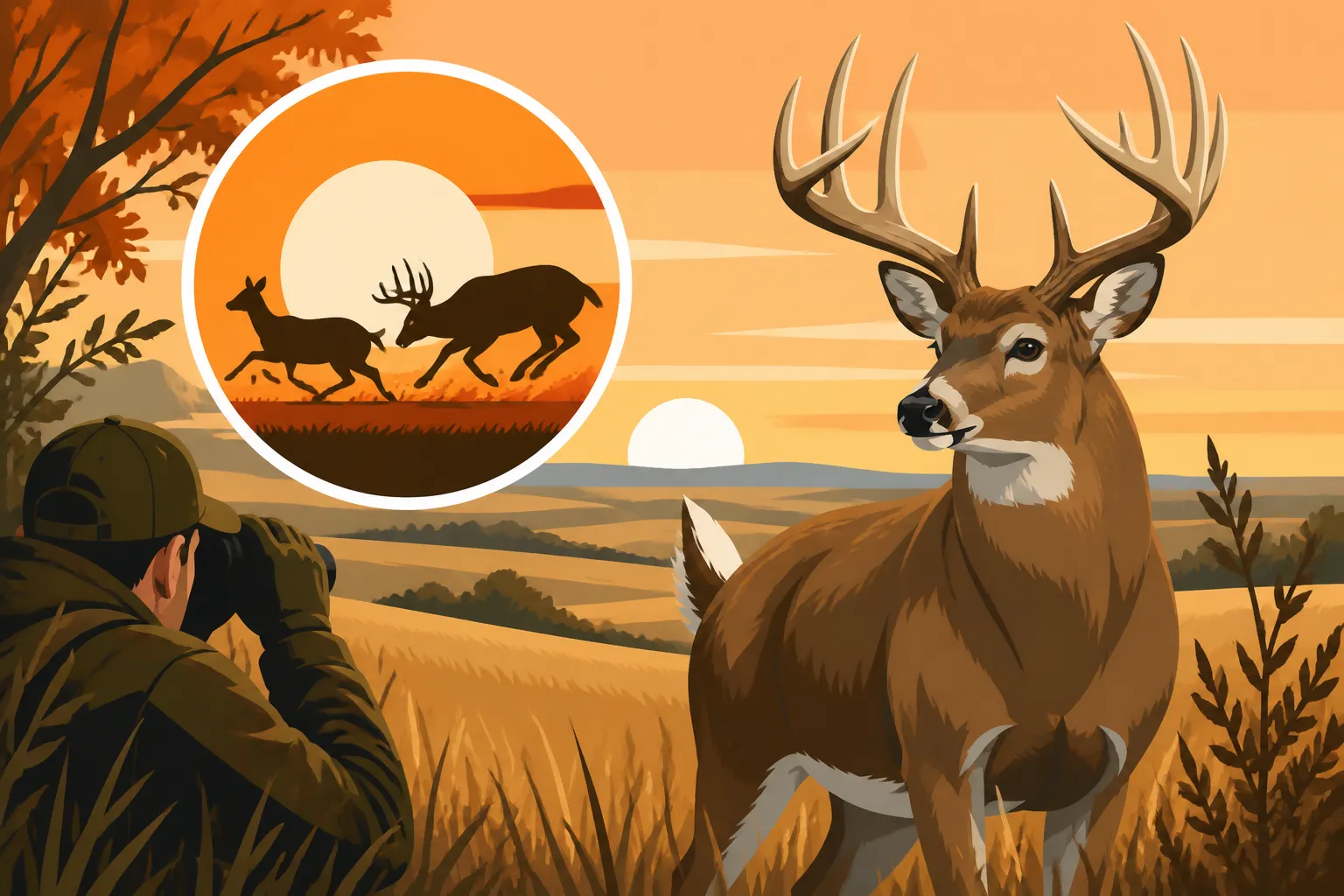
While locked down, a buck won't be moving much, making him harder to locate. However, once he's bred one doe, he'll immediately be on the prowl for the next receptive female. This constant cycle creates incredible daytime movement. You'll see bucks trotting with their noses to the ground, chasing does, fighting with other bucks, and generally throwing caution to the wind. This phase often coincides perfectly with the Rifle Hunting Saskatchewan's Whitetail Rut season, offering fantastic opportunities. Weather permitting, sitting all day can pay huge dividends, especially in areas with good cover like Hunting the Forest Fringe for Big Bucks. This is when all those pre-season scouting efforts pay off, as bucks will show up in unexpected places, following the scent of does.
Late Rut: Secondary Estrus and Exhaustion (Late November to Early December)
As mid-November wanes and we push into late November and early December, the primary breeding surge starts to cool off. This is the late rut, and it’s characterized by two main things: exhaustion for the bucks and secondary estrus for does that weren't bred during the peak or for young does coming into their first estrus. Bucks are often visibly thinner, their ribs showing, and their energy levels are significantly depleted from weeks of relentless chasing and fighting.
While the intense, widespread chasing of the peak rut is over, there are still opportunities. Lone, weary bucks might be seen cruising for a last-ditch effort to find a receptive doe. This is also when younger bucks, which might have been pushed around during the primary rut, become more active and less timid. It's a great time to focus on food sources, as bucks are now trying to recover lost body weight, making them predictable. Also, don't overlook doe groups, as there might be a few unbred does or fawns coming into estrus that will still attract buck attention. Hunting a field edge near a standing crop or a heavy bush line where does frequent can be a smart play. Knowing the Saskatchewan Whitetail Season Dates by Zone is crucial here, as some seasons may be winding down.
Here's a quick overview of what to expect during each phase:
| Rut Phase | Approximate Timing | Buck Behavior | Hunting Strategy Focus |
|---|---|---|---|
| Early Rut | Late Oct. – Early Nov. | Seeking, cruising, making rubs/scrapes, aggressive | Calling, rattling, still-hunting, observation |
| Peak Rut | Mid-Nov. (approx. Nov 8-20) | Breeding, chasing, locking down with does, fighting | All-day sits, covering ground, checking doe hangouts |
| Late Rut | Late Nov. – Early Dec. | Exhausted, seeking secondary estrus, focused on food | Food sources, doe bedding, glassing open areas |
Practical Tips for Hunting the Saskatchewan Rut
Understanding when the rut peaks is only half the battle. The other half is knowing how to effectively hunt during this dynamic period. From scouting to shot placement, every detail counts when you're after that Saskatchewan buck of a lifetime.
Pre-Season Scouting and In-Season Adjustment
Even though the rut is largely driven by photoperiod, effective pre-season scouting remains critical. You need to know where the deer live, where they eat, and where they travel. Use satellite imagery, like those found on tools that GoHunt offers or similar platforms, to identify pinch points, funnels, bedding areas, and food sources long before the season even opens. Look for those natural travel corridors, whether it's a Hunting a Willow Run for Whitetails between two fields or a Bush Bluff separating prime habitat. Identifying these areas beforehand allows you to place stands or blinds strategically.
Once the season starts and the rut begins to unfold, you need to be flexible. The "perfect" stand location from October might not be the best during the peak of the rut. Pay attention to fresh sign – new scrapes, hot tracks, and deer sightings. If you're seeing a lot of doe activity in a particular area, chances are a buck will eventually show up to check them out. Don't be afraid to move your setup or try different tactics if what you're doing isn't working. Deer are constantly moving during the rut, so your approach should be fluid too. This adaptability is key to success.
Effective Calling and Decoy Strategies
During the early and peak rut, calling and decoy strategies can be incredibly effective, especially when bucks are feeling aggressive and competitive. Grunt calls can lure in curious bucks, while fawn bleats can attract does, which in turn can bring in bucks. Rattling Volume in Open Parkland can really grab a buck's attention, simulating a fight that he might want to investigate or break up. Remember, during the rut, bucks are often looking for trouble or an easy breeding opportunity.
Using a decoy, particularly a buck decoy, can also be a game-changer. Set it up where it's visible but not immediately obvious, perhaps peeking over a rise or from behind some brush. The sight of a "rival" buck can often bring a cruising or even locked-down buck right into range. Just be sure to position yourself downwind and out of sight of the decoy, as an approaching buck will often circle downwind to get a sniff. Always be aware of your surroundings and any other hunters in the area when using decoys, and make sure to use blaze orange when walking in or out, especially during the rifle season, as covered in Saskatchewan Blaze Orange Rules.
Patience and Persistence: All-Day Sits
The single most important strategy during the peak of the Saskatchewan rut is patience. Bucks are moving at all hours of the day, not just dawn and dusk. This means that Sitting All Day in a Saskatchewan Blind can dramatically increase your chances of encountering a mature buck. I know, it's tough. The cold can be brutal, especially when Hunting Whitetails at Thirty Below sets in, and boredom can be a real struggle. But those midday hours, when other hunters are back at camp eating lunch, are often when a big buck will appear, cruising for does.
Bring plenty of warm layers, snacks, and water. Make sure your blind or stand is comfortable enough for long stretches. Think about every detail, from hand warmers to a good thermos of coffee. The more comfortable you are, the longer you can stay, and the longer you stay, the higher your odds. If you're hoping to tag one of those monsters that make Why Saskatchewan Bucks Grow So Large a common question, you've got to put in the time when they're most vulnerable. This means being out there when the conditions might not be ideal but the deer are moving.
Regional Nuances and Long-Term Considerations
Saskatchewan is a vast province, and while the core rut timing remains consistent, there can be subtle differences in how the rut plays out in different regions, and how long-term factors might influence deer populations.
Rut Intensity in Different Saskatchewan Habitats
The expression of the rut can vary significantly between different habitats across Saskatchewan. For instance, in the dense cover of the boreal forest fringe, like the areas described in Hunting Saskatchewan's Boreal Forest Fringe, buck activity might be harder to observe due to the thick vegetation. However, the intensity of vocalizations, rubbing, and scraping can be just as high, if not higher, as bucks work hard to delineate their territory in a visually restrictive environment. Hunters in these zones might focus more on fresh sign and subtle movements rather than relying on long-range glassing.
Conversely, in the more open agricultural lands or aspen parkland zones, such as those found while Hunting Whitetails on Saskatchewan Farmland, rutting bucks might be more visible as they cross open fields or check small bluffs and shelterbelts. The ability to glass large tracts of land, often from elevated positions or through good optics, becomes a primary strategy. Here, a buck might cover greater distances in the open to find does, making them more susceptible to spot-and-stalk tactics or intercepting them in travel corridors between feeding and bedding areas. Understanding the specific characteristics of your chosen Scouting a Saskatchewan Wildlife Management Zone is critical to adapting your rut hunting strategy.
Impact of Population Dynamics and CWD
Population dynamics and disease can also play a subtle, long-term role in how the rut manifests. Areas with very high deer densities might experience a more condensed and competitive rut, as bucks have to work harder to find and breed does. This can lead to increased stress on the deer herd, especially bucks, post-rut. Conversely, areas with lower deer numbers might see a more spread-out rut, where a buck has to cover more ground to find receptive does, potentially extending his rutting activity.
Chronic Wasting Disease (CWD) is another factor that, while not directly influencing the timing of the rut, can impact overall herd health and buck numbers over time. CWD is a serious concern in Saskatchewan, and hunters play a vital role in monitoring its spread. During the rut, deer often congregate more, which can facilitate disease transmission. Understanding Saskatchewan's CWD Testing Rules and submitting heads when required is essential. A healthy deer population with strong genetics will generally exhibit a more robust and predictable rut, leading to more productive hunting seasons and contributing to Why Saskatchewan Bucks Grow So Large. This is why proper wildlife management and hunter participation are so important for the long-term health of our deer herds.
Disclaimer
This article is for general informational purposes only and does not constitute professional advice. Laws, prices and regulations vary by location and change over time. Consult a qualified professional for guidance on your specific situation.